Book review

Strewn with foreign bodies

From our UK edition

Ghosts of the Past by Marco Vichi (Hodder, £18.99) is unashamedly nostalgic in tone. The title could not be more apposite. The action takes place in 1967, when Inspector Bordelli of the Florence police force is called to a house where a wealthy industrialist has been run through with a sword. Each member of the family is acting suspiciously, as are the various colleagues and associates of the deceased. Bordelli’s life is further complicated when an old friend, Colonel Arcieri, turns up in dire trouble and needing protection. The case unfolds in a slow haze of interviews and recollections. Vichi takes his time to explore Bordelli’s mind, his thoughts and his feelings, especially concerning the past and love lost. The book yearns for a bygone age.

Trouble for Lucia

From our UK edition

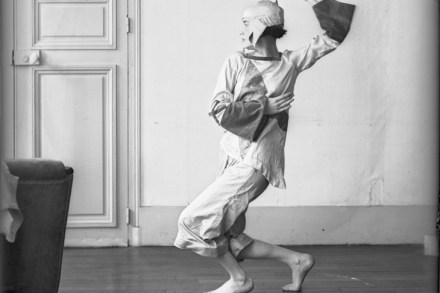
In 1988, James Joyce’s grandson Stephen destroyed all letters he had from, to or about his aunt Lucia Joyce, the novelist’s daughter. Many saw the destruction of documents pertaining to Lucia, who had spent the majority of her life in asylums and had been close to her father, as the destruction of keys to understanding her father’s work. Stephen replied: ‘No one was going to set their eyes on them [the letters] and re-psychoanalyse my poor aunt.’ Stephen, still alive today, appears — though with his name blacked out — in this novel, an imagining of the life and legacy of Lucia. ‘A silly old cunt,’ he is called by a character we are made to sympathise with.

When voters lose faith

From our UK edition

If social media manipulation has influenced elections, and dark money has influenced our elected representatives, then we are already on the road to unfreedom, as Timothy Snyder, the well-known historian of Russia, argues in his new book. He sees threats to democracy in Europe and America as following the Russian model of oligarchic takeover: ‘The stabilisation of massive inequality, the displacement of policy by propaganda, the shift from the politics of inevitability to the politics of eternity.’ Snyder focuses on the Ukrainian crisis, noting how this conflict became a theatre of cultural memory: during the Russian invasion it was once again 1941, the enemies were Nazis, and tanks were even painted with slogans such as ‘For Stalin’.

Miss Marple to the rescue

From our UK edition

Girl with Dove is a memoir by Sally Bayley, a writer who teaches at Oxford University, of growing up in a squalid, dilapidated house in a Sussex seaside town. It contains her mother Ange, her aunt Di, her grandmother, an unspecified number of siblings and a variety of temporary inhabitants who joined the Zion-seeking cult that evolved around Ange and Di. There are also a few longer-lasting denizens, such as Uncle David (first encountered unconscious on the sitting room floor), the sinister Woman Upstairs, and Poor Sue, who later seems to come to some kind of Poor End.

Coming of age in Nazi Germany

From our UK edition

The distinguished historian Konrad Jarausch’s new book is a German narrative, told through the stories of ordinary people who lived through his chosen period. Six dozen Germans — mostly from the generation born in the 1920s — testify through their memoirs to how it was to be Christian or Jewish, working-class or upper- middle-class, a young Nazi or a young anti-Nazi. The main characters constitute, as Jarausch explains it, ‘a stratified sample of individuals who represent a broad range of personal and collective experiences’ seen from the bottom. The book begins with the grand-parents of this generation, and the stability of Wilhelmine Germany with its pre-1914 confidence and prosperity.

Stories about stories

I wonder what your idea of a good novel is. Does it embody the attributes of solid plotting, characterisation and an impermeable membrane between invention and reality — the novel, that is, being a box from which nothing can leap out, and into which nothing, except what the author has chosen to put there, can leap in? And does it conform to the conventions laid down by the great writers of the 19th century? That’s what I assumed, during my schooldays; and the little that had filtered down to me of Don Quixote, which is claimed by many to be the ‘first’ novel, did not alert me to the fact that it was anything more than a story. As opposed to — to put it very simply indeed — a story about stories.

How to infuriate the French

From our UK edition

Fine wine rarely makes it into the public consciousness, but one event in 1976 has proved of perennial interest: the so-called Judgment of Paris. It heralded the arrival of wine from the New World, but also tapped into popular prejudice. Who can resist French wine snobs being made to look foolish? So these memoirs by Steven Spurrier, the man behind that notorious tasting, have been keenly anticipated. It was a glass of 1908 Cockburns port that Spurrier tried at the age of 13 that sparked a lifelong interest in wine. Rather than go to university, as expected, he worked in the cellars of a wine merchant, Christopher’s, in Soho. In his early twenties he inherited £250,000 (the equivalent of £5 million today) when the family gravel business was sold.

Manners maketh the Englishman

In the gap between what we feel ourselves to be and what we imagine we might in different circumstances become, lies civility. Keith Thomas’s marvellous new book addresses the subject of ideal behaviour. It shows the way that early modern England formed notions of civilisation and proper conduct, in contrast to what was termed ‘the Other’. These alternative people were labelled ‘barbarians’ or ‘savages’ when found abroad or on the Celtic fringe. If the unacceptable was found within England, rural or impoverished, they would be called ‘clowns’ or ‘clodhoppers’.

A cat, a dog and a ghost

From our UK edition

Whereas in an unabashed thriller, in the TV series The Missing, for example, the object of the exercise is well understood — a child is lost — and the viewer, with certain advantages, rides through the unfolding events saddled up on the back of a questing protagonist, in Alison Moore’s Missing, as in her Booker-shortlisted first novel The Lighthouse, the reader is placed in a very different position. Jesse Noon, a divorced mother approaching 50, is followed round her house in Hawick in the Scottish Borders by a cat and a dog, and the reader follows too. Something is wrong — several things. One morning less than a year earlier, her partner Will, a train driver, upped and left, leaving a message written on a steamed-up mirror.

The weight of womanhood

From our UK edition

‘I don’t think this was something I ever felt’, Sheila Heti writes in Motherhood — ‘that my body, my life, belonged to me.’ Heti’s narrator is childless, nearing her forties and living with her boyfriend. In semi-diaristic vignettes, she navigates the space of childlessness; the ‘sensation of life tapping its foot’. She reckons with the feeling that her body is not fully her own, that it exists to make space for another. The narrator encounters friends and strangers, speaks to psychics and, in regular passages, uses a method of flipping three coins (two or three tails — no; two or three heads —yes) to find answers. ‘I’m projecting onto you, coins, the wisdom of the universe,’ the narrator admits.

Getting their kicks on Route 66

In 1973, four years before he disappeared down the Star Wars rabbit hole, George Lucas directed the film American Graffiti, eulogising his days as a teenage car fanatic in Modesto, California; parking at drive-ins, hot-rodding and cruising for dates. This vanished world was only a decade away —‘Where were you in 62?’ said thepublicity — the equivalent of someone today getting dewy-eyed about 2007. Yet the clashes and strife of the late 1960s in mainland America and the deepening quagmire of the Vietnam War had already made those days look like an age of lost innocence.

As full of grief as age

From our UK edition

Why are rehearsal diaries so compelling? One approaches them with cynicism and then ends up reading with racing heart through to the early hours, hurtling with a shared terror towards the described first night. First and foremost, there is the gossip, the sense of being behind closed doors, and gaining off-guard glimpses into the nature of those who are frequently well-fortressed. The character of this gossip changes markedly as the actor-diarist grows older. In youth it is all about which tearaway deals the best cocaine to enable company shagging: in age it morphs into which besuited figure makes the most ruefully telling remark at the latest in a series of memorials for fallen comrades.

Free-wheeling flakiness

From our UK edition

Early on in his introduction of nearly 60 pages, Owen Hatherley writes: ‘I find the Britain promised by Brexiters quite terrifying — xenophobic, paranoid, enclosed, pitifully nostalgic, cruel. But in much of the country that landscape never went away.’ One’s heart sinks. This isn’t even polemical; it’s just silly. The introduction, subtitled ‘What is a European city?’, continues to push the line until something like a position is reached: Britain is awful, Europe is wonderful. I was reminded of certain of my French, Italian and German friends who are excited by the new horizons of living anywhere but in their own homelands, which they find every bit as stultifying as Hatherley does his.

Breaking bad news

From our UK edition

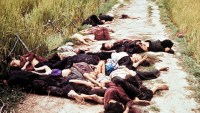
The humble title of Seymour Hersh’s memoir is somewhat at odds with the tone of the book. He says the celebrated New York Times Vietnam War correspondent David Halberstam once wrote to him saying: ‘You are, my friend, a national treasure. Bless you.’ Another New York Times star, Harrison Salisbury, is quoted in reference to the Watergate scandal: It was as though Sy Hersh had been born for this moment. At long last the great investigative story and the great investigative reporter had been linked. To be fair, Hersh has much to be immodest about. He is best known for exposing what happened in the village of My Lai, Vietnam, where First Lieutenant William L.

Fish in troubled waters

From our UK edition

‘Help!’ I thought, when I read the Author’s Note. ‘It’s about salmon, and I hate fishing.’ But by the first page I was hooked. Adam Weymouth writes well. He is poetic, but also precise. His subject is the return of the ‘king’ salmon to their birthplace and final destination, the north ridge of McNeil Lake in Canada. These fish are many pounds of muscle, toned from years of swimming headlong into Pacific storms, and their flesh is as red as blood. They force against the Yukon’s current, shouldering their way upriver, setting their fins like sails. Eventually they will push thousands of miles into North America’s interior. They will reach mountain lakes; they will reach the clouds.

From New York to the New Hebrides

From our UK edition

Publication of a debut novel is an experience comparable with the birth of a first child. Literary gestation is normally a longer process, and delivery of a book is more deeply fraught. Here is some evidence that the labour can be worthwhile. Asymmetry (Granta, £14.99) by Lisa Halliday, a young American now living in Milan, is a lopsided triptych of admirable erudition and stylishness — in effect, two novellas and a short story: a Manhattan romance, an Iraqi reminiscence of the devastation of Baghdad, and a BBC interview on Desert Island Discs. In the initial, most enjoyable episode, Alice, an assistant editor of a New York publishing house, would like to move to Europe to write.

Keeping Faith

It’s because it’s the land of the loner that the United States is so loved or loathed. Yet to me the most beguiling novels that have zipped across the Atlantic in the past half-century or so are mostly about groups, specifically groups on campus, usually a rather classy campus at that. Mary McCarthy’s Group were at Vassar; Donna Tartt’s The Secret History is set in an elite liberal arts college in Vermont. Even The Catcher in the Rye, though legendary as a portrait of moody adolescence, is also a brilliant picture of life at the sort of college Salinger himself went to. But no novelist I can think of has majored on the group portrait with quite such verve, wit and sympathy as Meg Wolitzer.

Women on the warpath | 31 May 2018

From our UK edition

In a 2013 interview with a Canadian newspaper, Rupert Thomson acknowledged the strange place he occupies in the literary world. ‘If I had a dollar,’ he mused, ‘for every time I’d heard someone say, “Why aren’t you more well known?...”’ Looking back on his reviews, you can certainly see what he means. For more than 30 years, virtually all his novels have been not only warmly acclaimed; they’ve also been greeted with the sadly inaccurate declaration that now, at last, he’s bound to achieve the wider fame he deserves. But, as Thomson also acknowledges, in the past decade those missing dollars have taken on a less metaphorical significance.