Book review

The marvellous humanity of Meg Wolitzer

It’s because it’s the land of the loner that the United States is so loved or loathed. Yet to me the most beguiling novels that have zipped across the Atlantic in the past half-century or so are mostly about groups, specifically groups on campus, usually a rather classy campus at that. Mary McCarthy’s Group were at Vassar; Donna Tartt’s The Secret History is set in an elite liberal arts college in Vermont. Even The Catcher in the Rye, though legendary as a portrait of moody adolescence, is also a brilliant picture of life at the sort of college Salinger himself went to. But no novelist I can think of has

You didn’t have to be mad to work for Tommy Nutter — but it helped

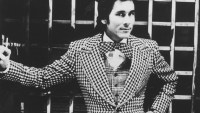
The tailor’s art is a triumph of mind over schmatte. Not just in the physical cutting and stitching, but in the faith that style makes content. This, not the question of which way you dress, is the secret compact between tailor and client. ‘Every faculty of his soul, spirit, purse and person is heroically consecrated to this one object, the wearing of clothes wisely and well, so that as others dress to live, he lives to dress,’ Carlyle wrote of the dandy in Sartor Resartus. Tommy Nutter was one of Tommy Carlyle’s dandies, a ‘clothes-wearing man’ and a ‘poet of the cloth’. From 1969 to 1976, Nutter bestrode the world

‘Steer clear of that cave boy, James Dean, and grease ball, Elvis Presley’

Lucky bastard. Such are the words that come constantly to mind while you’re reading Clancy Sigal’s two volumes of posthumously published autobiography. Blacklisted as a (self-confessedly lousy) actor for refusing to name names in the McCarthy era, working as the agent for the likes of Peter Lorre, Rod Steiger and — sigh — Barbara Stanwyck in 1950s Hollywood and freelancing on Fleet Street in countercultural London (including reviewing films for The Spectator), Sigal was at the centre of every piece of action going. Should Black Sunset and The London Lover ever be gathered into a single volume (perhaps taking Sigal’s earlier memoir, Going Away, along for the ride), ‘Been there,

The Empty Quarter is a great refuge for lonely hearts

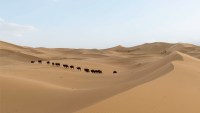
Here’s a treat for desert lovers. William Atkins, author of the widely admired book The Moor, has wisely exchanged the dank, wind-lashed chill of Britain’s moorland for eight of the world’s fieriest deserts, from the Empty Quarter of Oman and Egypt’s Eastern Desert to the Taklamakan in China and an unlikely stint at Burning Man in America’s Black Rock Desert. It’s not entirely clear what prompted these particular journeys or this specific quest. We learn in the second sentence that a long-standing girlfriend has gone to live and work abroad and Atkins is not going with her; so perhaps a retreat into the desert is the wholly appropriate response in

Did Ronald Reagan almost spark a nuclear war?

In 1983, Soviet spies skulked in our midnight streets to check the lights were out.The Kremlin, convinced the West was planning nuclear war, launched Project RYAN, whereby agents watched for signs of impending attack. One was that lights would burn all night in government buildings, as fiendish mandarins drew up the war plans. It didn’t occur to them that lights might indicate nothing more than cleaners on a late shift. Soviet paranoia was such that they saw menace everywhere, and agents, eager to please Moscow, reinforced this fear. ‘The more alarming the reports, the more the agents were congratulated for their diligence.’ RYAN became self-fulfilling.In an easy, accessible history of

Who needs Jordan Peterson when we have Ferdinand Mount?

You will by now doubtless be familiar with the University of Toronto academic Jordan Peterson. He’s the unlikely YouTube star and scourge of political correctness whose book 12 Rules for Life: An Antidote to Chaos has become a worldwide bestseller, beloved of serious young men seeking intellectual challenge and good old-fashioned fatherly advice. Summary: ‘Sort yourself out, bucko.’ We don’t really need the likes of Peterson here: we’ve got Ferdinand Mount. The book we should all be reading to sort ourselves out, buckos, is Prime Movers. Mount is, admittedly, an unlikely intellectual hero. Modest and self-deprecating almost to the point of absurdity, in his memoir Cold Cream: My Early Life

From Stalin’s poetry to Saddam’s romances: the terrible prose of tyrants

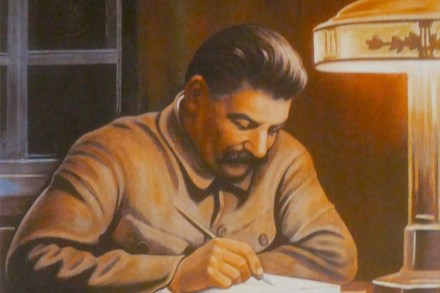
‘Reading makes the world better. It is how humans merge. How minds connect… Reading is love in action.’ Those are the words of the bestselling author Matt Haig and though I wouldn’t put it quite like that, I too feel that there is something inherently good about reading. Daniel Kalder has no such illusions. His latest book Dictator Literature (published in the US as The Infernal Library) looks at the dark side of the written word. It’s a study of what the great and not so great dictators of modern times read and wrote. In lesser hands this would be a romp (romp isn’t quite the right word, is it?)

The tragedy of Syria: how protest spiralled into savagery

The fateful day five years ago began like any other for the family. A pot of black tea with cardamon seeds sat on the table as Sara roused her youngest children and prepared them for school. But there were tiny clues. Leila, just turned 16 and wearing a floor-length dress, unusually offered to help. Her older sister Ayan appeared from her bedroom with a suitcase, which she said was being lent to a friend. Before they left, Leila whispered to each of her parents that she loved them. The pair did not return after school. Sara tried to call them, but their phones were switched off. She knew they were

The most bizarre museum heist ever

They don’t look like a natural pair. First there’s the author, Kirk Wallace Johnson, a hero of America’s war in Iraq and a modern-day Schindler who, as USAID’s only Arabic-speaking American employee, arranged for hundreds of Iraqis to find safe haven in the US. In the process, he developed PTSD, sleepwalked through a hotel window, flung himself from a ledge and plunged, nearly, to his death. Then there’s the stranger-than-fiction Edwin Rist, a brilliant young flautist who, on a pitch-black night nine years ago, in pursuit of an obsession with rare bird feathers, risked years in jail in one of the most brazen and bizarre museum heists ever accomplished. Yet

Texas: the myriad contradictions of the Lone Star state

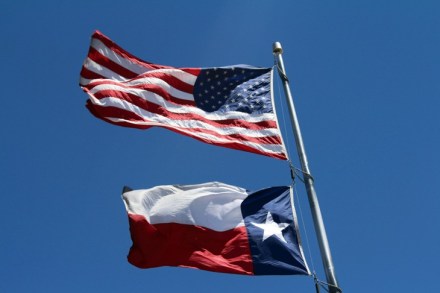
The subtitle of Lawrence Wright’s splendid God Save Texas (‘A Journey into the Future of America’) would be alarming if I found it entirely convincing. It’s hard to imagine a future where the Catholic Texan spirit of individualism would seriously overwhelm Yankee Puritanism, however mutated. In New England it’s about hard-earned old money shrewdly invested. In Texas it’s about striking it rich on a hunch, and new money rashly spent. There are contradictions in Texas which allow you to select almost any argument you like from her. She is beautiful and she is barren; corrupt and honourable. Whatever you want to say about her, she will supply abundant evidence. Texans

Give me Shakespeare’s Macbeth over Jo Nesbo’s any day

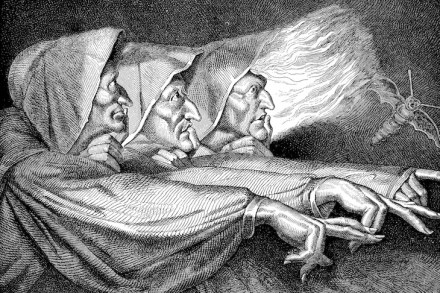
It must have seemed a good idea to someone: commissioning a range of well-known novelists to ‘reimagine Shakespeare’s plays for a 21st-century audience’. The first six novels have come from irreproachably literary authors of the calibre of Jeanette Winterson (The Winter’s Tale) and Margaret Atwood (The Tempest). Now, however, we have something a little different: Jo Nesbo, the Norwegian crime writer, has recast Macbeth as a thriller, allegedly set in 1970, though this timeframe should not be taken too literally. The plot is very loosely connected with Shakespeare’s. The location is a crumbling city in a dystopian country where many of the names have a Scottish ring. Prostitution, gambling and

The changing face of war and heroism

On War and Writing by Samuel Hynes is hardly about war at all. There is little about combat here, or the actual business of fighting and killing — what Shakespeare wryly called ‘the fire-eyed maid of smoky war/ All hot and bleeding’. Hynes is an august scholar of English literature and particularly the literature of 20th-century warfare. But he also served as a bomber pilot in the Pacific during the second world war, and has written an engaging, plain-spoken memoir of his service called Flights of Passage, published in 1988. His two vocations, he explains in the introduction to his new book, are ‘professor’ and ‘pilot’, and here the professor

The codes and codswallop surrounding Leonardo da Vinci

‘If you look at walls soiled with a variety of stains or at stones with variegated patterns,’ Leonardo da Vinci advised fellow painters, ‘you will therein be able to see a resemblance to various landscapes graced with mountains, rivers, rocks, trees, plains, great valleys and hills in many combinations.’ By an irony of history, Leonardo (1452–1519) has come to resemble that stained wall: a Rorschach blot in which viewers discern phantoms of their own imagination. This is, of course, to some extent the fate of all celebrities, and Leonardo was the first true artist celeb — the forerunner of a long line descending through his younger contemporaries Michelangelo and Raphael

The enduring enigma of Nefertiti

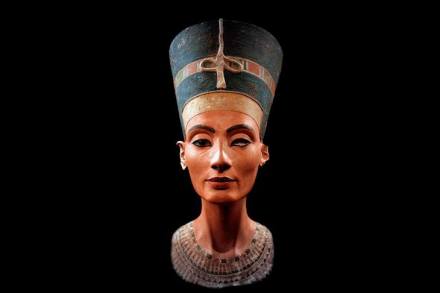
Often dubbed the Mona Lisa of the ancient world, the bust of the Egyptian queen Nefertiti is as immediately recognisable as the pyramids and the Rosetta Stone. Yet almost everything about this sculpture is mysterious at best, or bitterly controversial at worst, from the context of its creation to questions surrounding its acquisition by the Berlin Museum. The cultural and political capital of ancient culture is sharply in our awareness — think of the Elgin marbles or Palmyra — so writing a biography of Nefertiti’s bust requires the author to navigate hotly competing opinions. Nefertiti was queen and consort to Akhenaten, a pharaoh who held power between about 1352 and

Why do the Japanese despise sex?

There are two sorts of people: those who can’t wait to grow up, and those who wish they never had to. It’s fair to say that women figure predominantly in the first group and men in the second, hence the preponderance of male fans of science fiction and fantasy — and dewy-eyed reminiscence about children’s television. I’ve been in many female friendship groups and can’t remember a single occasion on which we’ve sat around thinking about past puppets. On the contrary, the childish things we typically recall are our awful choices of make-up and clothes, and our adoration of the pretty-boy pin-ups in our teenage bedrooms: that is, the things

1968 and the summer of our discontent

’68 will do as shorthand. Most of ’68, as it were, didn’t happen in 1968. It was, at most, the centrepoint of a long accumulation of radical protest. It began with duffle-coated marches against nuclear war, a well-mannered and respectful movement whose spirit persisted to the end of the decade. (In October 1968, a rally against the Vietnam war finished with demonstrators linking arms with policemen and singing ‘Auld Lang Syne’). It continued into the 1970s with real political violence — the Baader-Meinhof gang and many other groups. It is not very much like 1848 as a year of political upheaval, more the symbolic statement of a large-scale change of

Who knew that Arabic has more than 30 words for wine?

You know you’re in good hands when the dedication reads: ‘To the writers, drinkers and freethinkers of the Arab and Islamic worlds, long may they live.’ Abu Nuwas was all three, and a complete hoot. Why he is so little known in Britain should be a mystery. But outward-looking as we are as a nation, we remain peculiarly parochial in our literary tastes outside the Western canon. Born in the late 750s in Ahvaz, Abu Nuwas came to Baghdad during the reign of the Abbasid caliph Harun al Rashid in what was Islam’s golden age. In and out of favour as much as he was in and out of prison,

Are the French right to be obsessed with their Gaulish ancestry?

This book reminded me of Kurt Andersen’s Fantasyland — but where Andersen thinks only Americans have lost their minds, David Andress thinks everyone has. I can’t say I disagree, being a subscriber to the Hourly Outrage, also known as Twitter. Andress refers to Brexit, Donald Trump’s election and Marine Le Pen’s rise in French politics as things that should have been ‘punchlines’, comparing those who voted for them to dementia sufferers. And that’s just in the first couple of pages. So I’m guessing that as a Leave voter, I’m not the intended audience — nor do I, as someone with a PhD in history, fit into Andress’s analysis of uninformed

How Christianity saw off its rivals and became the universal church

In the reign of Constantine, whose conversion to Christianity in AD 310 set the entire Roman world on a course to becoming Christian, a Palestinian scholar named Eusebius pondered the reasons for the triumph of his faith. Naturally, he saw behind it the guiding hand of God; but he did not rest content with that as an explanation. The purposes of heaven were to be traced in the patterns of earthly history. ‘It was not merely as a consequence of human agency that the greater part of the world’s peoples came to be joined under the sole rule of Rome — nor that this should have coincided with the lifetime

The Raven – bird of ill omen

With bird books the more personal the better. Joe Shute was once a crime correspondent and is today a Telegraph senior staff feature writer. It is his investigative journalism, a series of meetings with people who deal with ravens first-hand, which provides novelty. Historical, mythological and other diversions add ballast. In the prologue he writes: ‘I was born in 1984, making me the flag-bearer of a strange generation.’ Raised comfortably and lovingly in London, his future seemed serene. Then ‘came the financial crash of 2007; and with it the collapse of all the misplaced entitlement of my youth… Rather than better, it was going to get far worse’. At this