William Leith

New trials for Frank Bascombe: Be Mine, by Richard Ford, reviewed

From our UK edition

Frank Bascombe, the narrator of Be Mine and several other novels by Richard Ford, is, as always, living a horribly tragic life. In previous books, his son dies, his wife leaves him, he can’t find love, he gets cancer and has radioactive devices implanted in his prostate. He fails as a writer, but finds success as an estate agent. There’s something vital and winning about the way he describes all this. He’s a great philosopher: he tries to accept the world as it is, and just grind on towards the grave. Now he’s 74. In a previous novel, Independence Day, he is 43, recently divorced and trying to bond with his surviving son, Paul. But everything goes wrong. Paul has a bad head injury, and Frank finds himself in a hospital, calling his ex-wife with the news.

Was this footballer killed for scoring against the Nazis?

From our UK edition

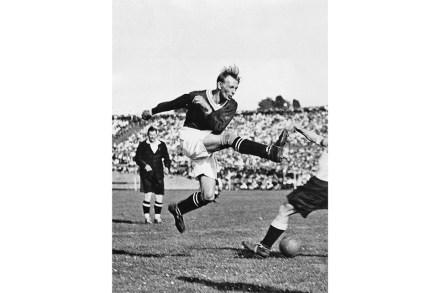
Vienna, April 1938. To mark the Anschluss, the annexation of Austria by the Third Reich, the German football team plays a match against the Austrian team, which will cease to exist when the match is over. The Austrians are much better, but can’t seem to score – aha, the match has been fixed by the Nazis. And then, in the 70th minute, Austria’s best player, Matthias Sindelar, can’t take the pretence any more and puts the ball in the German net. At the end of the match, to underline his feelings, he performs a victory dance in front of the Nazi dignitaries. This might sound like fiction but it really happened. Sindelar, the ‘Paper Man’ of this book’s title, was 35 at the time, and, in his prime, had been probably the best player in the world.

Is there intelligent life on other planets?: Bewilderment, by Richard Powers, reviewed

From our UK edition

We open with Theo, our narrator, and Robin, his son, looking at the night sky through a telescope. ‘Darkness this good was hard to come by,’ Theo tells us. He calls Robin ‘my sad, singular, newly turning nine-year-old, in trouble with this world’. We’re in the American Midwest, where Theo is a nerdy computer scientist — a data engineer whose professional world consists of looking for life on other planets. Robin, we soon see, might have ADHD. He’s brilliant, but unpredictable and testy. Alyssa, Theo’s wife and Robin’s mother, a former animal rights activist, is dead. Apart from Theo’s not-quite-friend Martin, an extreme super-geek of a neuroscientist, these are our main characters.

No one ‘got’ the Sixties better than David Bailey

From our UK edition

What caught my eye towards the end of Look Again was this conversation between David Bailey and the shoe designer Manolo Blahnik. They are talking about a brief golden age, a perfect moment in their lives: Blahnik: So sometimes I just have to sit down and say: ‘God, did all this happen?’ All the excitement, it doesn’t exist any more, maybe because I’m old.Bailey: It’s not because you’re old. It doesn’t exist. This is the autobiography of David Bailey, as told to James Fox (‘my collaborator’). It starts with Bailey as a child in the East End, and ends with Bailey returning there as an old man.

Living on a nuclear submarine does your head in

From our UK edition

Richard Humphreys spent a good part of five years, between the ages of 18 and 23, living inside a nuclear submarine, which he describes variously as ‘sleek, black and athletic looking’, and ‘this fierce black messenger of death’, and ‘this huge, black leviathan’, and ‘a killing machine’, and ‘silent as death’. The first time he sets foot on it, he tells us, ‘I was shitting it.’ This is not the last we will hear of his negative emotions, or the state of his bowels. We are in the latter part of the Cold War. Humphreys is a sailor. The submarine is HMS Resolution, part of the Polaris fleet. It is 425ft long, 33ft wide and 30ft from top to bottom. Humphreys describes it as ‘cigar-shaped’.

Closure at last | 1 August 2019

From our UK edition

This is horrible. But it’s a book by Mark Bowden, who wrote Black Hawk Down and Killing Pablo, so it’s compelling: an almost perfect true crime story. Two sisters, aged ten and 12, disappeared from a shopping mall in 1975 and were never seen again. What happened to them was a mystery for 40 years. In The Last Stone, Bowden tells you about two things. He tells you how the mystery was solved, and he tells you what happened to the girls. The first thing is compelling. The second will make you sick. The girls, Kate and Sheila Lyon, went to the Wheaton Plaza shopping mall in Montgomery County, Maryland on 29 March. They were supposed to be home by 4 p.m. They weren’t. They vanished. The police interviewed lots of people. They searched the surrounding area.

A deadly box of chemicals

From our UK edition

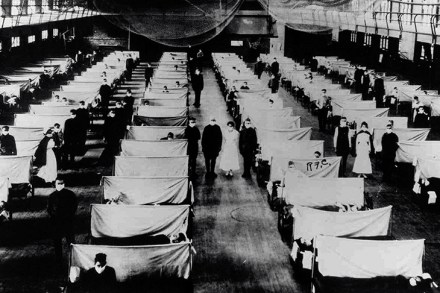
Do you remember the swine flu panic a decade ago? Jeremy Brown, the author of this book, describes it here. In March 2009, 60 people died in Mexico. The cause: a flu-type virus. The Mexican government ‘closed schools, banned public gatherings, and ordered troops to hand out face masks at subway stations’. This flu crossed the border into the United States. The media monitored the outbreak with grim enthusiasm. Soon, people in 74 countries were infected. The WHO ‘declared it a pandemic’. Or perhaps you don’t remember the swine flu panic of 2009. Not many people do. The main reason I do is that I met an epidemiologist on a train in March of that year; he was having the most intense week of his life.

The spirit of Christmas past

From our UK edition

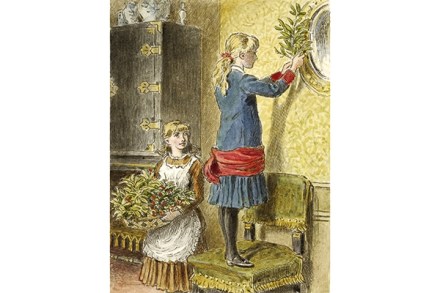
This book, an excellent history of Christmas, made me think of a Christmas cartoon strip I once saw in Viz magazine. There’s a couple. It’s Christmas Eve. The man goes out to buy the woman a present. On the way, he steps into a pub for a few drinks. Much later, drunk, having missed the shops, he tries his luck at a petrol station. But too many people have had the same idea; the only thing left to buy is engine oil. This, anyway, is how I remember it, ending deliciously with the man in a terrible dilemma. Why, you might ask, would this genteel book about the history of Christmas, with its sections on carols, and Christmas trees, and the choir of King’s College, Cambridge — why would all this remind me of a drunk in a petrol station?

Soaked in blood and symbolism

We’re in Virginia, in the 1850s. A girl called Emily is tormenting her dog, Champion, and her father’s teenage slave, Rawls. Seeing this, Emily’s father, Bob, beats her with his belt and kicks the dog. Of Rawls, Bob says: ‘Now leave him be so he can get about my business!’ A girl, a dog, a slave, and a slave-owner.The owner addresses the girl with words and violence, and abuses the dog. He helps the slave get down from the fencepost he’s standing on. But he does not talk to the slave. He talks about the slave. Thinking this over, Rawls looks at Emily,‘sprawled out and wailing in the grass’, and envies her. Her pain is temporary; his is permanent.

Drugs, guns and blood

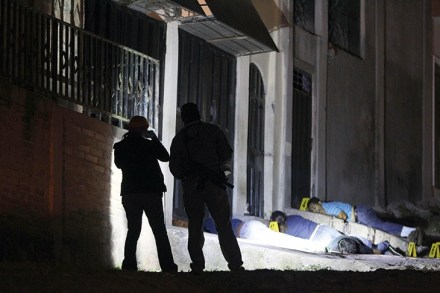
The Spanish journalist Alberto Arce worked for Associated Press in Honduras in 2012 and 2013. After a year, he says: ‘My wife and daughter left me. It was the right choice.’ Arce stayed on in the capital, Tegucigalpa, ‘fighting against addictions, sadness and depression’. He believes he ‘won’ that fight, ‘but only because each morning I counted down the days until I could leave’. So: Honduras, says Arce, is bad. How bad? He tells us that ‘Tegucigalpa is the most dangerous capital city in the world without a declared war.’ And that ‘in 2012 and 2013, more people were murdered in Honduras than in Iraq, even though the population in Honduras is three times smaller’. Also that in 2012, there were 7,100 murders.

Sweet dreams are made of this

From our UK edition

I’ve read several books​ ​about​ ​sleep recently,​ ​and​ ​their​ ​authors​ ​all​ ​tell​ ​me​ ​the same​ ​three​ ​things.​ ​The​ ​first​ ​is​ ​that,​ ​in​ ​the modern​ ​world,​ ​it’s​ ​hard​ ​to​ ​get​ ​enough sleep.​ ​The​ ​second​ ​is​ ​that​ ​sleep​ ​is​ ​very important.​ ​Every​ ​night,​ ​we​ ​pass​ ​out.

Manning up

From our UK edition

Is this the best book I’ve ever read on the subject of masculinity? Maybe it is, I thought, the first time I read it. And then I thought, Tom Wolfe’s A Man in Full is about masculinity. So is Hemingway’s Death in the Afternoon, David Vann’s Goat Mountain and Bret Easton Ellis’s American Psycho. But this book is different. It is really about ​masculinity. The maleness here feels very raw. I say raw for a particular reason. I’ll get to that in a minute. But first let me introduce you to William Giraldi. He was born into an Italian-American family in blue-collar New Jersey. ‘My hometown’s name, Manville, lets you know precisely what you’re getting: pure Jersey,’ he writes.

Two dark tales

From our UK edition

Just over halfway through this grim and gripping book, the author describes herself and her girlfriend ‘lying on my bed kissing’. She says: ‘I love kissing her.’ And: ‘We kissed and kissed, and soon my hands were at her shirt and I was tugging it off.’ And: ‘I kissed her again.’ And: ‘I reached down between her legs.’ And: ‘She reached down to touch me and then we were moving together and it felt good and I moaned and it felt good again.’ Then she says: ‘And then it didn’t.’ The sex feels good. Then it doesn’t. Something has happened to the author, deep in her past, and it comes back to haunt her. ‘I realised I was going under, into the memory,’ she tells us.

Cold comfort | 25 May 2017

From our UK edition

All animals, Scott Carney tells us, seek comfort. But human beings are a bit different. We don’t need to spend much time actively seeking it. He’s right: it’s all around us — in your nice warm house, your air-conditioned car, your shoes, your bed, the temperate shopping mall you visit. Here in the affluent west, we eat comfort food in comfortable chairs, and then we recline on cushions, tweaking our dimmer switches and thermostats and adjusting the brightness on our screens. Good for us, you might think. We can ‘control and fine-tune our environment so thoroughly that many of us can live in what amounts to a perpetual state of homeostasis’.

His and her healthcare

From our UK edition

When I started this book, I have to admit, I did not think it would be as absolutely fascinating as it turned out to be. It’s by a professor of obstetrics and gynaecology, and it’s about the medical differences between men and women. There are lots of medical differences between men and women — something doctors in general should bear in mind during treatment. But they don’t, says Dr Glezerman — or, at least, not enough. This is all in the realm of the fairly interesting.

A force for good

From our UK edition

When I saw this book, a biography of Huw Wheldon, who was managing director of BBC Television between 1968 and 1975, I thought ‘Aha!’ Inevitably, my mind was filled with images -of Jimmy Savile and Stuart Hall, of the Led Zeppelin guitar riff at the start of Top of the Pops, of the men in charge who had no idea what was going on. Might Wheldon have been one of the guys who had no idea what was going on? I tried to put this thought to one side. The book is by Wheldon’s son, Wynn. It’s a very moving account of a son’s love and regard for his father. Wynn is telling the story of a man he reveres and misses. He thinks Huw was a wonderful person — charming and brilliant, a huge life force.

A sex vampire on wheels

From our UK edition

The title of this book tells you a lot. Jack Sutherland, who grew up in London and Los Angeles, worked as a personal assistant to Michael Stipe, the singer in REM and, later, to Mickey Rourke. He also worked as a limo driver in Hollywood. A drug addict, he gravitated toward crystal meth, which can make you both wired and horny, sometimes for days on end. So we know to expect a particular brew of glamour, indignity and recrimination that perhaps some readers (including me) have come to enjoy. Sutherland certainly delivers — with a bit of glamour, an awful lot of indignity and not too much recrimination. But there’s something else going on here. This book is a collaboration between Jack the addict and his adoptive father John Sutherland.

Warning: this book only contains strong language

From our UK edition

Dan Marshall, the author of this memoir, loves to swear. ‘It’s very difficult for me to write a sentence without using a bad word,’ he tells us. ‘That last sentence, for instance, was fucking impossible for me to write.’ Dan is young, rich and American. One day, in his twenties, he and his girlfriend, Abby, were on holiday, lying poolside at the Marriott resort in Desert Springs, California. He is in a world of material and sexual abundance. ‘My siblings and I were lucky, living with the proverbial silver spoon jammed firmly up our asses,’ he tells us. He has lots of sex. So does his gay brother Greg. His mother’s cancer was ‘under control’.

Even worms and vampire bats do it

From our UK edition

I used to think we had five senses — sight, hearing, taste, smell and touch. And I used to think I knew how they worked. Using specialised instruments, such as eyes, ears and fingertips, they gave us information about the outside world. I imagined that the eye saw things, and then told the brain what those things looked like. I imagined that the fingertips touched things, and then told the brain what those things felt like. But now, every time I look at a book on neuroscience, I see that this nice cosy picture is absolutely wrong. Before I continue with this line of thought, let me say that this book is about the sense of touch, it’s by a professor of neuroscience at the Johns Hopkins School of Medicine, and it’s excellent.

Stuck at K: we know very little about vitamins except that they’re good for us (in small quantities)

From our UK edition

Before I read this book about vitamins, I thought I knew what it would be like. It would be vaguely reassuring. It would tell me that I was consuming the right vitamins, but perhaps in the wrong quantities. Medically speaking, I expected it to point me in a certain direction. There would be chapters about scurvy and beriberi, and how these diseases can easily be cured, now we know about vitamins. There would be stuff on cancer. For a while, I would eat a lot of carrots. Well, I was partly right. Catherine Price, a fastidious reporter, has given us the stories of scurvy and beriberi, and how these scourges were cured with vitamins. She also tells us about night-blindness, a condition that can make your eyes develop ulcers, but that can be cured with small doses of vitamin A.