Rodric Braithwaite

Sir Rodric Braithwaite was the British ambassador to Moscow, 1988-1992.

Peter Mandelson’s rocky path to Trumpworld

From our UK edition

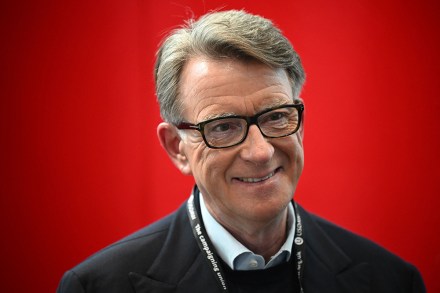
The muddle about who’s to be the next British ambassador in Washington has been only a small part of the grandiose confusion which surrounds Donald Trump’s assumption of power. Sir Keir Starmer announced that Lord Peter Mandelson would bring ‘unrivalled experience to the role and take [the Anglo-American] partnership from strength to strength’, apparently without checking first that President Trump would be willing to accept him. The US President’s campaign manager, Chris LaCivita, said Mandelson was ‘an absolute moron’ who should ‘stay home’. He did nothing to improve his prospects when he described Trump as ‘reckless and a danger to the world’ How ambassadors get appointed is a mystery to most people. Why do we waste the money on them anyway?
The Crimean War spelt the end of hymns to heroism and glory

From our UK edition

Leo Tolstoy served as a young artillery officer in the defence of the great Russian naval base of Sevastopol against British and French invaders in the middle of the 19th century. The first of his three short stories, collected as Sevastopol Sketches, came out as the siege was still in progress. In it he spelled out as no writer had done before the way people died in shattered trenches, their bodies shredded by shell fire and left to rot in the mud; or in filthy, overcrowded hospitals, where overwhelmed doctors hacked off limbs without anaesthetic. He wrote not about the generals but about the ordinary soldiers, the men and women caught up in the fighting, the Russian people themselves.

China’s role in Soviet policy-making

From our UK edition

Why should we want to read yet another thumping great book about the collapse of the Soviet empire? Sergey Radchenko attempts an answer in his well-constructed new work. Based on recently opened Soviet archives and on extensive work in the Chinese archives, it places particular weight on China’s role in Soviet policy-making. The details are colourful. It is fun to know that Mao Tse-Tung sent Stalin a present of spices, and that the mouse on which the Russians tested it promptly died. But the new material forces no major revision of previous interpretations. Perhaps the book is best seen as a meditation on the limitations of political power.

Why Russia couldn’t give up on empire  

From our UK edition

One hundred years ago this December, delegations from the core nations of the East Slavs, Russia, Ukraine, Belarus signed the ‘Declaration and Treaty on the Formation of the Union of Soviet Socialist Republics’. They had with them representatives of the ‘Transcaucasian Soviet Socialist Republic’ artificially constructed by the Communists who had just won a horrifically bloody civil war. In theory it was a free association of states. In practice Stalin quickly imposed even more ruthless centralisation than before. By the end of the second world war he had recovered all the territories of Imperial Russia, and achieved domination of almost the whole of Eastern Europe.

How the West misunderstood Russia’s military capabilities 

From our UK edition

Books about Putin’s war against Ukraine are like the No.11 bus: you wait for ages, then a whole bunch turn up at once. Owen Matthews and Mark Galeotti are among the first. They will eventually be superseded by the scholarly histories. Meanwhile they bring clarity to a picture confused by instant comment in the media. Both are prolific and engaging writers, long-standing and reliable observers of the Russian scene. Both pepper their accounts with illuminating comments by their innumerable Russian and Ukrainian contacts. Matthews’s involvement in the story is deeply personal. His mother descends from a Mongol who defected to Moscow five centuries ago. An ancestor was appointed by Catherine the Great to help manage newly conquered Ukraine and Crimea.

Will Russians soon realise how remarkable Mikhail Gorbachev was?

From our UK edition

Mikhail Gorbachev, the final president of the Soviet Union who died last night, was remarkable both as an international politician and as a domestic reformer. I first met him when he came to London in December 1984, when Mrs Thatcher said that she liked him and could do business with him. He was open, friendly, and spoke without notes: the opposite of his predecessors. Some of Thatcher’s own officials suspected that he was merely an old-fashioned communist who had learned new tricks, and that his charm was seducing her from her clear view of the Soviet threat. Thatcher was right, and the sceptics were wrong. By that time, the Soviet system was in serious trouble. It could just about keep up with American military technology.

The unedifying Afghan blame game

From our UK edition

A year ago we scuttled out of Afghanistan. We abandoned the aim we and the Americans had proclaimed so noisily of bringing Afghanistan into the twenty-first century so that the Taliban could never triumph again. We left behind many Afghans who had helped us at the risk of their lives. To most of the world it was obvious that the Americans and their allies had been comprehensively defeated. Our own politicians, generals, diplomats, spies and aid advisers have been tumbling over one another to distance themselves from the mess. At first they tried to argue that it was too soon to reach such a depressing conclusion. After all, the Taliban had promised the Americans that they would no longer harbour international terrorists.

Putin will not survive a failed war in Ukraine

From our UK edition

Vladimir Putin has had a very bad week. His army, allegedly refurbished after its poor performance in the war against Georgia in 2008, has failed to deliver the promised blitzkrieg. It has launched a brutal bombardment of Kharkhiv, Ukraine’s second largest city, full of Russian-speakers who were supposed to welcome Putin's soldiers as liberators. Meanwhile, Ukraine’s capital Kiev, which Russians like to call 'the mother of Russian cities', looks as if it is about to suffer the same fate. The Ukrainians are fighting more fiercely than anyone had expected, perhaps even than they themselves. And they are winning the information war, out-hacking and out-twittering Putin’s people in the most ingenious ways.

Why autocracy in Russia always fails in the end

From our UK edition

Churchill was wrong: Russia is neither a riddle nor an enigma. Russians themselves concoct endless stories to glorify their country’s achievements and minimise its disasters and crimes. But the rest of us do much the same, as we try to explain Britain’s imperial history or the impact slavery still has on America’s revolutionary ideals. Russia is little harder to understand than anywhere else. But you need to separate the facts from the myths, as Mark Galeotti does in A Short History of Russia, an informative, perceptive and exhilarating canter through 1,000 tumultuous years. He starts with two founding events, each a mixture of fact and myth.

Putin’s nightmare is becoming a reality

From our UK edition

'Those he commands move only in command, nothing in love'. Shakespeare always gets it right. I remembered his words about Macbeth as I watched a shifty Vladimir Putin force the members of his Security Council to bob up and down as they tremulously affirmed their support for his wise policy on Ukraine. This enforced compliance among Russian's politicians has continued in the days since, as Putin's invasion of Ukraine has continued. Russian officials are not openly criticising Putin (yet). But the faces of his generals – serious professionals who know how dangerous these things are – spoke volumes as he ordered them to up the nuclear alert. And they will not be the only ones around him to worry.

Has Putin lost control?

From our UK edition

As the Soviet Union fell to pieces around our ears, we in the Moscow embassy used to discuss the Weimar precedent. A great nation, humiliated by a lost war and economic misery, tries but fails to set up a democracy. It then falls victim to a dictator who promises to restore his country’s greatness and bring justice to the millions of fellow countrymen who have been trapped in foreign countries which only exist as a result of maps drawn by the victors. British, French, and American diplomats may have been incompetent and pusillanimous before 1939. But one man, and one man only, was responsible for the outbreak of war: Adolf Hitler when he invaded Poland. Putin is no Hitler, and Russians resent any comparison.

Glasnost merely confirmed Russia’s deep-seated suspicion of democracy

From our UK edition

Thirty years ago the Soviet Union was guttering to its close. Those of us who were there remember the exhilarating hope, the apprehension, the illusion. For everyone else it is a distant echo. Russia was always likely to lose the Cold War competition with America. It was unmanageably large, too poor and too reliant on too few products. Stalin’s bloody grip had enabled the Soviet Union to defeat the Germans at a terrible cost to his people. When he died in 1953 his system entered a protracted agony. Over the next decade Nikita Khrushchev tinkered with half-baked solutions. They misfired, and he was overthrown by the hard men in the party, the KGB, and the army. His more cautious successors managed to equal America’s military might.

Afghanistan and the end of the American hegemony

From our UK edition

We used to sneer at the way the Russians were chased out of Afghanistan by a ragtag of mujaheddin armed only with Kalashnikovs and American Stinger rockets. No longer.  The last superpower to be defeated in Afghanistan withdrew in good order, having negotiated the arrangements with Kabul and the mujaheddin. They left behind a competent government, and an Afghan army capable of fighting the mujaheddin to a standstill. That government survived as long as the Russians went on supplying food and ammunition. Then the Russian government, close to meltdown, stopped deliveries. The mujaheddin swept to victory and fell straight into a bloody civil war. Many Afghans were relieved when the Taliban restored order.

The true diplomat considers the future more than the present

From our UK edition

The 17th-century diplomat Sir Henry Wotton said that an ambassador was ‘an honest man sent to lie abroad for his country’. It is a neatly punning definition. An ambassador is a messenger, who has to live (lie) abroad long enough to understand the interests, the preoccupations and the driving emotions of the people he deals with. He has to be honest if his own government and his foreign interlocutors are to trust him to manage their business effectively. He may occasionally have to be economical with the truth to further his government’s interests. If he doesn’t relish that, he can resign; few do. He may find himself disobeying his masters’ instructions if that is the only way he can achieve what they need.

Demystifying the world of espionage

From our UK edition

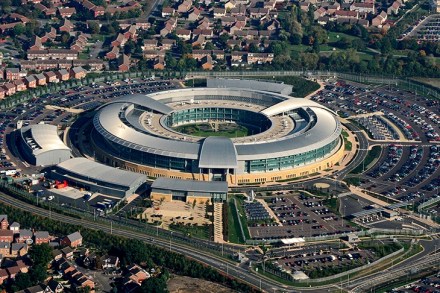
John le Carré once wrote sadly that he felt ‘shifty’ about his contribution to the glamorisation of the spying business. David Omand doesn’t deal in glamour. He was at the top of the Ministry of Defence and the Home Office, director of the code-braking Government Communications Headquarters, chairman of the Joint Intelligence Committee, and responsible for structuring the government’s current anti-terrorist organisation. He thinks and writes deeply about the intellectual and moral problems thrown up by a business that depends on stealing other people’s secrets. He knows what he is talking about. How Spies Think is engagingly readable, even though the arguments are complex.

The Big Three who ended the Cold War

From our UK edition

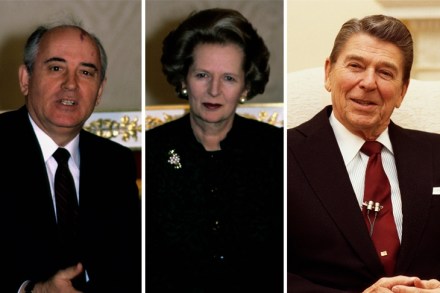
Historians argue endlessly and pointlessly about the extent to which the human factor rather than brute circumstance determines the course of events. History, geography and economic reality always constrain personal freedom of action. But within these limitations the individual can make a decisive difference. Britain’s war would have taken a different turn if Halifax rather than Churchill had become prime minister in May 1940. Archie Brown’s thesis is that the Cold War could have ended quite differently— much later and perhaps much more bloodily — had it not been for the fortuitous combination of Ronald Reagan, Margaret Thatcher and Mikhail Gorbachev.

Yalta was a carve-up — and the Poles are understandably still bitter about it

From our UK edition

‘The strong do what they can. The weak suffer what they must.’ Thucydides’ principle expresses an uncomfortable truth. The eight-day meeting between Stalin, Roosevelt and Churchill at Yalta in the Crimea in February 1945 settled the fate of Eastern Europe and beyond. Its effects are still with us. President George W. Bush compared it with the way Britain, France and the Soviet Union sold out to Hitler before the war began: he called it ‘one of the greatest wrongs of history’. ‘Yalta’, like ‘Munich’, has become a synonym for the cynical betrayal of the weak by the strong. It is an oft-told, well-documented and controversial story. Diana Preston retells it fluently, perceptively and with meticulous scholarship.

When the Grand Design met ‘le Grand Non’: Britain in the early 1960s

From our UK edition

Peter Hennessy is a national treasure. He is driven by a romantic, almost sensual, fascination with British history, culture, and the quirky intricacies of British democracy and the government machine. His curiosity is insatiable, his memory infinitely capacious. His innumerable contacts confide in him freely because his discretion is absolute. His tireless work in the archives is spectacularly productive. His generosity towards his students is boundless. His books — 14 at the last count — are gossipy, erudite, discursive, intensely personal: not your conventional academic history, but all the better for that. His latest book — the third in a history of post-war Britain — ranges over the early 1960s.

Behind the irony curtain

From our UK edition

The comedy of Ruslan Boshirov and Alexander Petrov, the two glum Russian ‘tourists’ who denied on television that they were involved in the poisoning of Sergei Skripal, seems set to run and run. The Moscow press tells us that Russia’s ‘Golden Brand’ has offered them a brand name for a company specialising in tourism, women’s clothing, and chemicals for the scent industry. The two tried to persuade the world that they had come to Britain simply to admire Salisbury cathedral, its 123 metre-high steeple and its ancient clock. Alas, they lamented, luck was against them. First they were driven back by snow. (Really? Russians can cope with snow. Russian trains, unlike British ones, continue to run even when the snow is an inch deep.

Knowing your enemy

Espionage, Christopher Andrew reminds us, is the second oldest profession. The two converged when Moses’s successor Joshua sent a couple of agents to spy out ancient Jericho. There they were sheltered by the madam of the local brothel. All three are heroes in Israel today. Generals and politicians have always needed secret information to track and outmanoeuvre their foreign and domestic enemies. So they place spies, suborn traitors, eavesdrop, decipher other people’s messages, subvert their governments, assassinate their servants and sabotage their property. The technology has changed massively over the centuries; the aims and the basic methods have not.