Book review

From persecutor to preacher: the journey of St Paul

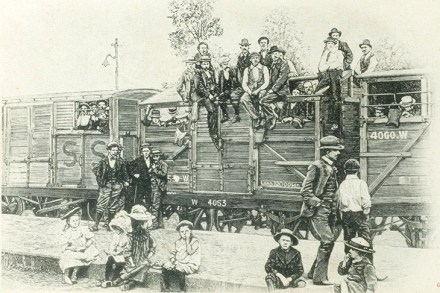
Saint Paul is unique among those who have changed the course of history — responsible not just for one but two critical historical developments 15 centuries apart. First, he persuaded the early followers of Jesus of Nazareth that gentiles as well as Jews could belong to their nascent church. This enabled its spread throughout the Roman empire, until Christianity become the state religion under the Emperor Constantine, and remained the official creed of all European nations until the French revolution. Second, there was his teaching on justification by faith alone —a ticking time bomb detonated by Martin Luther in the 16th century. ‘If we were to do justice to Paul

How to make quantum physics fun

We all know that physics and maths can be pretty weird, but these three books tackle their mind-bending subjects in markedly contrasting ways. Clifford V. Johnson’s The Dialogues is a graphic novel, seeking to visualise cosmic ideas in comic-book style. Darling and Banerjee’s Weird Maths is a miscellany of fun oddities, ranging from chess-playing computers to prime-counting insects. Philip Ball’s Beyond Weird argues that we’ve got quantum mechanics all wrong: it’s not so weird actually, but quite sensible. All three books do a fine job for their respective audiences. Just make sure you know which target group you’re in. The Dialogues is a sequence of illustrated conversations, often between pairs

Kevin Allocca glosses over YouTube’s terrifying power

On 25 April 2005, Jawed Karim sent an email to his friends announcing the launch of a new video site — intended for dating — called youtube.com. Within 18 months, the site was being used to view 100 million videos a day. Last year it had more than a billion users, watching five billion videos every day, with creators uploading 300 hours of video to YouTube every minute. Given this almost incomprehensible scale, it’s fitting that the word Videocracy — the title of YouTube Head of Trends Kevin Allocca’s history of the site — evokes the idea of an authoritarian dystopia. Like any approved account from such a regime, its

The lost art of Roman winemaking

Taste has a well-noted ability to evoke memory, so it is curious how infrequently most wine writers mine their pasts for inspiration. You wouldn’t think that some had ever fallen in love, read a novel or even got drunk. Instead they obsess over scores, sulphur and diurnal temperature variation. Thank heavens for Nina Caplan, who brings a bit of hinterland to this often dry subject in her weekly New Statesman column. Characteristically, The Wandering Vine, her first book, is about much more than wine. It’s a heady blend of travel, literature, memoir, history and what I can only describe as psychogeography, though don’t let that put you off. The publishers

In 1968, even Boston was ankle-deep in LSD

‘And this is good old Boston/, The home of the bean and the cod,’ John Collins Bossidy quipped in 1910, ‘Where the Lowells talk to the Cabots/, And the Cabots talk only to God.’ Also home, in 1968, to Mel Lyman, a folk musician turned LSD guru who believed he was God, and to Van Morrison. The music business abounds with stories about Morrison being grumpy. In my experience, he’s perfectly reasonable. You’d be grumpy if your job obliged you to consort with thieves, liars and drummers who can’t keep time. You’d be especially irritated by people asking how you wrote Astral Weeks. Sensibly, Morrison explains that Astral Weeks was

Only an idiot would choose to live at any other time than the present

Steven Pinker’s new book is a characteristically fluent, decisive and data-rich demonstration of why, given the chance to live at any point in human history, only a stone-cold idiot would choose any time other than the present. On average, humans are by orders of magnitude healthier, wealthier, nicer, happier, longer lived, more free and better educated than ever before. Moreover, as Bill and Ted’s Excellent Adventure noted: ‘Bowling averages are way up, minigolf scores are way down, and we have more excellent waterslides than any other planet we communicate with.’ Some of the many graphs in this book slant from the bottom left towards the top right, showing the rise

Thomas Paine: spendthrift, scrounger and polemicist of genius

‘We have it in our power to begin the world over again.’ Ronald Reagan made this most unconservative of lines a leitmotif of his 1980 presidential campaign, knowing its radicalism would highlight his energy, personal optimism and desire for change. As it duly did. The astonishing power over words of its author, Thomas Paine, persists to this day. In a letter of 1805, the former president John Adams said of Paine that there can be no severer satyr on the age. For such a mongrel between pig and puppy, begotten by a wild boar on a bitch wolf, never before in any age of the world was suffered by the

Napoleon’s dazzling victories invited a devastating backlash

On 20 July 1805, just three months before the battle of Trafalgar destroyed a combined French and Spanish fleet, the Emperor Napoleon ordered his chief-of-staff to ‘embark everything’ for the invasion of England that he had been dreaming of for two years. ‘My intention is to land at four different points,’ he explained to Berthier, ‘at a short distance from one another… Inform the four marshals there is not an instant to be lost.’ While there is possibly no saga in his whole astonishing career — Russia included — that so vividly exposes the curious and almost wilful blind spots in Bonaparte’s make-up, his enemies would have done well to

How a 14th-century Arab thinker influenced Ronald Reagan

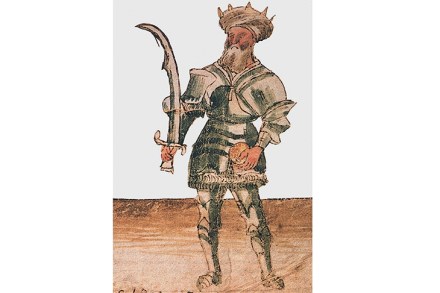
  At a press conference in October 1981, Ronald Reagan quoted Ibn Khaldun (1332–1406) in support of what is known as supply-side economics. Although the 14th- century politician and thinker wrote extensively about economics and was almost unique among medieval Arab writers in so doing, it is quite ‘marvellous’ writes Robert Irwin, the author of a new intellectual biography of this famous North African, that he ‘should have anticipated American Republican party fiscal policy’. Irwin wears his immense erudition lightly and gives an often very funny account of how orientalists, historians and modern Arab nationalists have interpreted Ibn Khaldun’s most famous work, the Muqaddima (also known as the Prolegomena) more

How the CIA lost Afghanistan

Early every morning through the spring of 2002, US troops at Bagram airfield on the Shomali plains north of Kabul assembled on a makeshift parade ground. After the daily briefing, an officer announced the number of days since 9/11, read a short obituary of a victim of the attack and reminded the troops of their mission: to capture or kill those responsible for the worst terrorist strike ever in the US. Only a year previously, Bagram had been captured by the Taliban, who then exercised nominal control over 80 per cent of Afghanistan. Reduced to bombed-out buildings and a potholed, unusable airstrip, it was of limited strategic importance. Within weeks

Boxing not so clever

For Horace Hopper, the half-breed protagonist of Willy Vlautin’s bleak new novel, essential truths come slowly, and usually too late to do him any good. Abandoned by his Native American mother and Irish American father, he has exiled himself from the only people who love him, an elderly couple on a sheep ranch in deepest Nevada. His one idea for becoming ‘somebody’ is to transform himself into a world-champion lightweight boxer with a wholly fabricated Mexican identity. ‘Mexican boxers are the toughest… true warriors who never quit,’ he believes. Only well into the novel does it dawn on him that his self-inflicted loneliness is ‘a sort of disease’, not a

Culinary cold war at the White House

‘Tell me what you eat and I shall tell you what you are.’ The best known adage in food literature, penned by the French politician and gastronome Jean Anthelme Brillat-Savarin, divides all of us generally: the gourmands from the picky, the greedy from the careful, one nation from another, one culture from the next. Laura Shapiro’s book about six famous women and their ‘food stories’ made me want to re-read a few biographies for those food moments. Shapiro claims that food in life stories is undervalued as a subject, considering how much time people spend eating. Their tastes, loves, hates, phobias, habits and cravings can tell us as much about