Ferdinand Mount

Ferdinand Mount was head of the No. 10 policy unit under Margaret Thatcher. He is author of a number of books, including ‘The New Few: Power and Inequality in Britain Now’.

Ferdinand Mount: Big Caesars and Little Caesars

From our UK edition

40 min listen

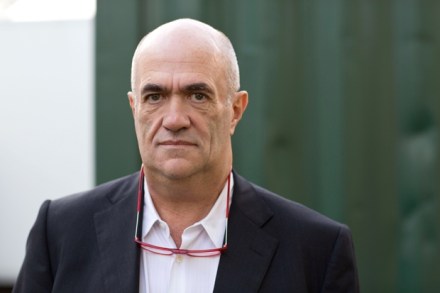
In this week's Book Club podcast I'm joined by Ferdinand Mount who in his long career has been literary and political editor of this very magazine, as well as editor of the TLS and head of Margaret Thatcher's Number Ten policy unit. We discuss his new book Big Caesars and Little Caesars: How They Rise and How they Fall, from Julius Caesar to Boris Johnson. He tells me why he thinks it's fair to compare our recent former prime minister with a cast of despots and autocrats from Indira Gandhi and Oliver Cromwell to Louis Napoleon and even Adolf Hitler, and why he sees the impulse to autocracy as an ineradicable thread in human history.

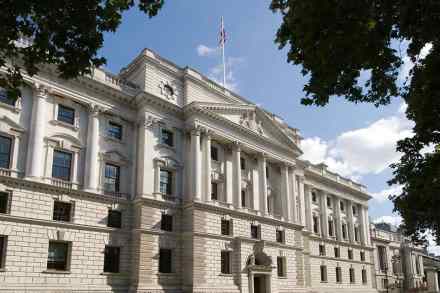
What shape is the Treasury in now?

From our UK edition

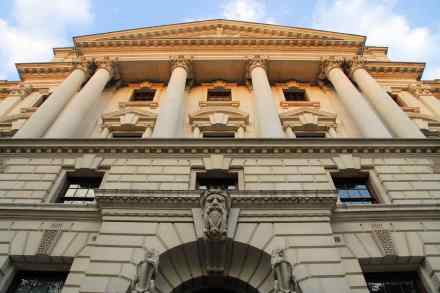
Don’t bring a bottle. Your chances of finding a party in full swing down those chilly corridors are close to zero. At most, you might hear the sound of a distant flute playing a courante by Lully. As Sir Howard Davies puts it in this insider’s view, which manages to be both authoritative and quite cheeky: The Treasury does not cultivate a warm and cuddly working environment. You may well not know if your immediate boss has a spouse or partner, and would certainly never meet them if they exist. Social events are at a premium. Yet this notoriously ascetic culture is not in the least hierarchical.

How the Treasury maintains its power

From our UK edition

Don’t bring a bottle. Your chances of finding a party in full swing down those chilly corridors are close to zero. At most, you might hear the sound of a distant flute playing a courante by Lully. As Sir Howard Davies puts it in this insider’s view, which manages to be both authoritative and quite cheeky: The Treasury does not cultivate a warm and cuddly working environment. You may well not know if your immediate boss has a spouse or partner, and would certainly never meet them if they exist. Social events are at a premium. Yet this notoriously ascetic culture is not in the least hierarchical.

Keeping Faith

It’s because it’s the land of the loner that the United States is so loved or loathed. Yet to me the most beguiling novels that have zipped across the Atlantic in the past half-century or so are mostly about groups, specifically groups on campus, usually a rather classy campus at that. Mary McCarthy’s Group were at Vassar; Donna Tartt’s The Secret History is set in an elite liberal arts college in Vermont. Even The Catcher in the Rye, though legendary as a portrait of moody adolescence, is also a brilliant picture of life at the sort of college Salinger himself went to. But no novelist I can think of has majored on the group portrait with quite such verve, wit and sympathy as Meg Wolitzer.

Is the main purpose of the cabinet secretary to frustrate the PM?

From our UK edition

The minister’s private secretary wrote to another cabinet minister about the previous day’s cabinet meeting: They cannot agree about what occurred. There must have been some decision, as Bright’s resignation shows. My chief has told me to ask you what the devil was decided, for he be damned if he knows. Will you ask Mr G. [Gladstone] in more conventional and less pungent terms? That was in 1882. Twenty years later, the fog still reigned. Sir Robert Morant, the driving force behind Balfour’s 1902 Education Act, wrote: Impossible to find out after a cabinet meeting what has actually been the decision. Salisbury does not seem to know or care, and the various ministers who do care give me contradictory versions.

Secrets of the secretaries

From our UK edition

The minister’s private secretary wrote to another cabinet minister about the previous day’s cabinet meeting: They cannot agree about what occurred. There must have been some decision, as Bright’s resignation shows. My chief has told me to ask you what the devil was decided, for he be damned if he knows. Will you ask Mr G. [Gladstone] in more conventional and less pungent terms? That was in 1882. Twenty years later, the fog still reigned. Sir Robert Morant, the driving force behind Balfour’s 1902 Education Act, wrote: Impossible to find out after a cabinet meeting what has actually been the decision. Salisbury does not seem to know or care, and the various ministers who do care give me contradictory versions.

Bored and lonely in Kathmandu

From our UK edition

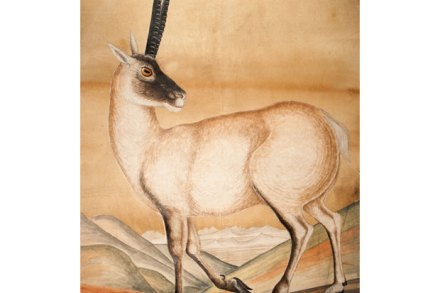
It started as a ‘shoke’ — the Anglo-Indian slang word for ‘hobby’. Bored and lonely in Kathmandu, the young Assistant Resident, Brian Hodgson, began studying the flora and fauna of the hills, about the only occupation he was allowed to pursue apart from shooting woodcock and snipe under the constraints imposed by the Raja. The unicorn of the Himalayas had cantered through Chinese mythology for centuries. In no time, Hodgson found a living specimen in the King’s menagerie, a panting antelope from the Tibetan plateau which, alas, soon expired, unable to survive at lower altitudes, but not before Hodgson had established that it in fact possessed two horns.

Spectator books of the year: Ferdinand Mount on Colm Tóibín

From our UK edition

I have always loved Arnold Bennett’s The Old Wives’ Tale. I now have an equal fondness for Sathnam Sanghera’s Marriage Material (Heinemann, £14.99), which is a reworking of the Black Country classic translated to a Punjabi corner shop in Wolverhampton. Every bit as rich and sad and comic as the original. Meanwhile, back in the subcontinent, M.J. Carter’s The Strangler Vine (Fig Tree, £14.99) follows the trail of the Thuggees, the throttling sect of Kali-worshippers, and comes up with a startling denouement. Is it a thriller, or an anti-colonial satire or Wilkie Collins with saris? Irresistible any way you take it.

Religion does not poison everything – everything poisons religion

From our UK edition

It slips so easily off the tongue. In fact, it’s a modern mantra. ‘Religion causes all the wars.’ Karen Armstrong claims to have heard it tossed off by American psychiatrists, London taxi-drivers and pretty much everyone else. Yet it’s an odd thing to say. For a start, which wars are we talking about? Among the many causes advanced for the Great War, ranging from the train timetables on the continent to the Kaiser’s withered left arm, I have never heard religion mentioned. Same with the second world war.

Piketty’s decaff Marxism would be just as oppressive and intrusive as the old variety

From our UK edition

If a title works once, the chances are it will work again. Half the punch of Marx’s masterwork is in its name. Better in German of course, with the kick of the K and the ominous echo of Kaput. But even in English when blocked out in red caps on a  fat spine, CAPITAL sends a thrill along any bookshelf. Its fond midwives at Harvard can scarcely have expected to sell 200,000 copies of a 600-page treatise by a French economist unknown in the English-speaking world, but that only shows we must never underestimate the beauty of telling the target audience what it wishes to hear — in this case, that Marx is back in town. This, though, is certainly not the first impression you get from the book.

Ferdinand Mount’s diary: Supermac was guilty!

From our UK edition

You have to hand it to Supermac. Fifty years after the event, he is still running rings round them. The esteemed Vernon Bogdanor (The Spectator, 18 January) tells us that Iain Macleod was wrong in claiming that Sir Alec had been foisted on the Conservative party by a magic circle of Old Etonians. On the contrary, the soundings had ‘revealed a strong consensus for Home. So Macmillan was not slipping in a personal recommendation when he advised the Queen to send for him — he was doing precisely what he was supposed to do.’ This is a deliciously selective account.

Isaac & Isaiah, by David Caute – review

From our UK edition

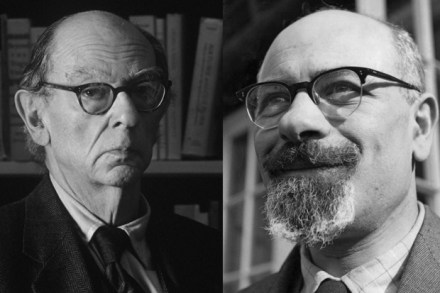
The scene is the common room of All Souls College, Oxford, in the first week of March 1963. It is the idle half-hour after lunch when fellows slump into armchairs and gaze out of the window at the sparrows in the Fellows’ Garden. David Caute, a young first-class mind in his mid-twenties, is buttonholed by the revered figure of Sir Isaiah Berlin. What did Caute think of Isaac Deustcher? Did he admire him, as so many young scholars on the left did? Well, Caute replied cautiously, he knew Deutscher’s book on Stalin and his trilogy on Trotsky.  ‘Quite sufficient.’ And Berlin bounded off into one of his rapid-fire bombardments: there were Marxist historians such as Eric Hobsbawm and E.H.

Mrs Thatcher’s triumph

From our UK edition

There was never a more disenchanted victory. The moment the size of the Tory swing was known, the doubts began, not least among those hundreds of thousands who had voted Conservative for the first time in their lives. Would the unions allow Mrs Thatcher to govern? Would the promised tax cuts be blown in betting shops and strip clubs, instead of fructifying in the pockets of the people? Would investors once again be fatally attracted to the hustlers and twisters? Was there any way of bridging the growing gulf between North and South? Did the British people as a whole have any stuffing left in them? Could any government muster the zest to halt the de-industrialising of Britain? Was this to be yet another false dawn, a surrender to a fresh set of illusions?

Oh, Calcutta!

From our UK edition

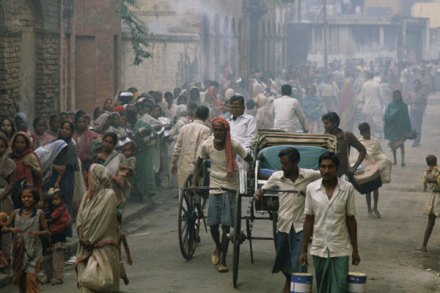
The Chandan Hotel is not a bit like the Exotic Marigold Hotel. It occupies, not a rambling rundown mansion, but a piece of pavement, about six feet by six feet, on Free School Street in downtown Calcutta. Here under the hotel sign, from time to time men doss down on string beds, shrouded from head to toe in sheets to keep out the sound and light of the Indian afternoon. Next to the Chandan Hotel stands Nagendra with his heavy iron and ironing board, and on the same pavement there is Ramayan Shah’s restaurant where you can also sleep if no one is eating or chopping vegetables there. It’s the human equivalent of those buildings by modern architects where all the ventilation and plumbing pipes are on the outside.

A life of sad romance

From our UK edition

‘What porridge had John Keats?’ Browning offers this as the crass sort of question that stupid people ask. But in fact the first person to answer it would have been John Keats himself. He loved to talk about food, good and bad. He writes to his dying brother Tom from Kirkcudbright that ‘we dined yesterday on dirty bacon, dirtier eggs and dirtiest potatoes with a slice of salmon’. As Keats and his Hampstead friend Charles Brown tramped round Loch Fyne, he complained that all they had to live off were eggs, oatcake and whisky: I lean rather languishingly on a rock, and long for some famous beauty to get down from her Palfrey in passing; approach me with her saddle bags  — and give me a dozen or two capital roast beef sandwiches.

Class is back

From our UK edition

…and the divisions are more bitterly felt than ever Until recently, the British middle classes felt quite good about themselves. The class war was over, and they had won it. Pretty much everyone wanted to join the middle classes. If they were not already members, the way things were going they very soon would be. ‘Embourgeoisement’ was the sociologists’ word for what was happening. Contrary to Marx’s flight plan, the bourgeoisie was turning out to be the preferred destination of History. No longer was British society shaped like a pyramid, with a steepling summit of idle toffs and an enormous broad base of deprived and discontented proles.

Spiritual superhero

From our UK edition

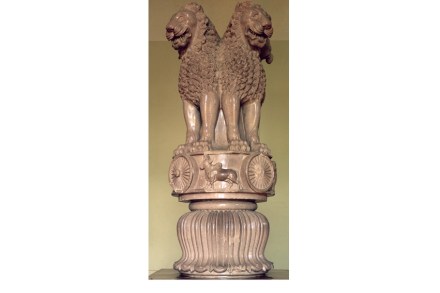
When totting up the positives from the British Raj, people often put the railways first, followed by the Indian Civil Service or the Indian Army. The Empire was won by the sword and held by the sword. It was racially exclusive, its taxes were often predatory, and its punishments savage. But at least it left an institutional legacy that helped to make independent India a startling success against all the odds, after the bloody wound of Partition and despite the excruciating poverty of the second most populous nation on earth. But what the British bequeathed to India was not only a usable future but a usable past. This may sound paradoxical. In the millennia of India’s more or less recorded history, the years of British dominance were an eyeblink.

Ferdinand Mount’s books of the year

From our UK edition

What strange persons get themselves chosen to govern us. I have spent quite a bit of the past year reading some brilliant lives of our prime ministers, each of them heavy enough to sprain a wrist but light enough to tickle the imagination: in historical order, David Brown’s Palmerston, D. R. Thorpe’s Supermac: The Life of Harold Macmillan, and Philip Ziegler’s Edward Heath. Pam, Supermac and Ted managed to put across very different images of themselves, but all three were essentially solitary and implacable personalities who kept their enmities in better repair than their friendships, all unpopular in youth and chilly in old age.

The Letters of Samuel Beckett: Volume II, 1941-56, edited by George Craig, Martha Dow Fehsenfeld, Dan Gunn and Lois More Overbeck

From our UK edition

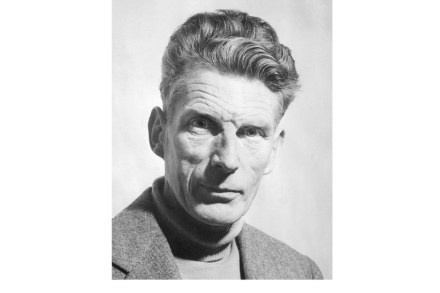
The die was miscast from the start, more’s the pity. As we reach the halfway point in this massy four-volume edition of the letters of Samuel Beckett, I cannot stifle a small sigh or whimper, of the type exhaled by one of those Beckett characters buried up to their necks. And there is no one to blame but the author of the letters. For it was Beckett himself who in his letter of 18 March, 1985, gave his blessing to Martha Fehsenfeld ‘to edit my correspondence in the sense agreed on, i.e. its reduction to those passages only having bearing on my work’. So the tussle began and continued long after the author’s death four years later.  What did ‘only having bearing on my work’ mean exactly?

Elegy for wild Wales

From our UK edition

If you drive West out of Carmarthen on the A40, you pass through a landscape of dimpled hills and lonely chapels and little rivers full of salmon trout. This is Byron’s Country, the place where Byron Rogers was brought up in the late Forties, not knowing a word of English, until at the age of five he made the momentous journey a few miles east into Carmarthen town. It is a very odd place. In the graveyard at Cana, just beside the road, you will find the grave of Group Captain Ira Jones DSO, MC, DFC and bar, MM, one of Wales’s greatest war heroes. He was famous for killing Germans who had baled out and were dangling from their parachutes.