Book review

The Devil in the mirror

From our UK edition

As a kid growing up in Scotland in the 1950s, Dennis O’Donnell was aware of ‘loonies’, and the men in white coats who were supposed to take them away. Then, as a student, he became one of the men in white coats. At first, he thought he’d find himself in a world of Beckettian absurdity and insight. But it was grim. One man believed he was the King of Egypt. Another man smoked rolled-up bits of lavatory paper. One poor soul spent his time waiting for a visit from his daughter, who never came. When a patient died, O’Donnell was on hand to carry out official procedure: ‘Orifices have to be plugged — need I say more?’ He went back to university, where he was studying English literature.

Painful truths

From our UK edition

Juan E. Méndez has a fantastic CV. Mercilessly tortured in Argentina, the country of his birth, when 30, he is now, four decades on, the UN Special Rapporteur on Torture, in other words, its chief investigator. In between, he has worked for Human Rights Watch for 15 years and been the United Nations First Special Adviser to the Secretary General on the Prevention of Genocide. Why does torture still exist? The author points out the painful truth: that many ordinary people have come to believe it to be not only inevitable but often even desirable. And some regimes try to deny that ‘enhanced interrogation techniques’ — waterboarding, sleep deprivation, stress positions, for example — constitute torture at all, thereby lending them legality.

Rather a cold fish

From our UK edition

Published first novel (Salmon Fishing in the Yemen) at the age of 59, Richard and Judy choice, won Bollinger Everyman Wodehouse Prize for Comic Fiction; spent his whole career in industry; lives in Northumberland, wears tweed cap, likes fishing…These are the facts you read about Paul Torday time and again, and he must be getting tired of them.    That first book really was good: the kind of novel you wish you’d written yourself, all done in emails, extracts from diaries and letters, snatches of Hansard, articles in newspapers, transcripts of interrogation sessions. It was a charming satire, about politicians, entrepreneurs and fish. His late career-change and success gave hope to thousands of 59-year-olds.

Bookends: An unreal world

From our UK edition

Even by Hollywood standards, Carrie Fisher is pretty crazy. She was born a Hollywood princess, and remembers her parents — Debbie Reynolds and Eddie Fisher — as ‘not really people in the traditional sense’. Nor, obviously, was her stepmother Elizabeth Taylor, let alone her friend Michael Jackson. And nor is she herself, shackled, as she feels, to the image of ‘a stern-looking girl wearing some kind of metal bikini lounging on a giant drooling squid’, as Princess Leia in Star Wars, aged 19, while these days looking, as she sportingly repeats, more like Elton John.

Portrait of a singular man

From our UK edition

The posthumous publication of Hugh Trevor-Roper’s wartime diaries continues the restoration of his reputation, says Geoffrey Wheatcroft Nothing is more elusive than reputation. A writer’s standing goes up and down like a share price, during his life and after, for no obvious or objective reason, as D. J. Taylor observed in a recent perceptive essay in the TLS on the fall from favour of Angus Wilson, although I still read his novels if no one else does. Then again, others recover. Terence Rattigan’s stock was very low when he died in 1977, long sneered at as the epitome of middlebrow, middle-class West End theatre. But lo, there has been a startling Rattigan renaissance.

Currents of imagery

From our UK edition

In the first book of his scientific-cum-philosophical poem ‘De rerum Natura’ — or ‘On the Nature of Things’ — Lucretius draws the reader’s attention to the power of invisible forces. The wild wind, he wrote, whips the waves of the sea, capsizes huge ships, and sends the clouds scudding; sometimes it swoops and sweeps across the plains in tearing tornado, strewing them with great trees, and hammers the heights of the mountains with forest-spitting blasts. It was a description I was well placed to appreciate as I read this whimsical, scholarly and original book while staying in a Georgian folly on a country estate in Kent.

Poison Ivy

From our UK edition

‘Who was she?’, a browser might ask on finding three re-issued novels by Ivy Compton-Burnett, and ‘Why should I read them?’ Dame Ivy Compton-Burnett (1884-1969) was one of 13 children of a Victorian physician. After his death, his widow wrapped herself in anger and subjected her children to cruel, neurotic tyranny. Their verbal laceration continued after her death in 1911, for Ivy took control of her siblings, and enforced a sadistic autocracy learnt from her mother. On Christmas Day 1917, the two youngest girls, ‘Topsy’ and 18-year-old ‘Baby’, for whom family life seethed with aggression, nerve storms and spite, locked themselves in a bedroom, and died in one another’s arms of overdoses of barbiturates.

Funny old world

From our UK edition

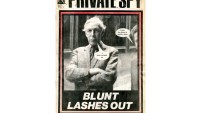
The most remarkable thing about this book is that it should have been published at all. No one could have imagined in 1961 that Private Eye — a blotchy reproduction stapled together on what looked like yellow scrap paper — would still be going 50 years later, selling hundreds of thousand of copies every fortnight and apparently employing about 50 people. Adam MacQueen has not written a history of the paper but has compiled a biographical album of contributors, staff, stories and various dramas in its history. The author suggests that it could be read from cover to cover, but that would be hard work even for a satirical anorak. It is much better approached on a random basis, following the cross-references or just leafing through it.

Soaring splendour

From our UK edition

The glorious monuments built in India by the Mughal emperors, from Babur in the early 16th century to Bahadur Shah Zafar II in the mid-19th century, have long deserved a comprehensive illustrated survey in one volume. George Michell is the ideal author. He is both a great scholar and a fervent communicator on many aspect of India’s cultural history. He has worked as a hands-on archaeologist on major Indian sites and recently established a Deccan Foundation to protect the wonders of that little-known region. He has been extremely well served in this magnificent book by the photographs of Amit Pasricha, who describes himself as a ‘panoramic photographer’. His photographs are staggeringly beautiful and impossible to praise too highly.

Guilty by association

From our UK edition

It has become increasingly obvious that something went terribly wrong with British intelligence-gathering, both its methods and morality, after the destruction of the Twin Towers on 11 September 2001. Earlier prime ministers had displayed scruples about the use of intelligence gained from torture. But during the Blair premiership this changed. Britain became part of a nightmarish universe where the standards which we claim to represent were undermined and sabotaged. It is important to stress that there is no evidence at all that our intelligence officers were (unlike their gung-ho counterparts at the CIA) directly engaged in torture.

Friends across the sea

From our UK edition

On 12 February 1952 the novelist Anthony Powell received a letter from a bookseller in New York. Robert Vanderbilt Jr was the proprietor of a couple of Manhattan bookstores and a great admirer of Powell’s. He wrote to ask if he might himself publish a couple of the novelist’s out-of-print works. Powell was delighted. The two titles chosen were Venusberg and Agents and Patients, the covers of both to be designed by Powell’s old friend Osbert Lancaster. As their letters make clear, Powell and Vanderbilt quickly found they had much in common, and as Powell had worked in publishing before the war, he was able to engage very much on a level with Vanderbilt when discussing the more technical aspects of the process.

A kind of tenderness

From our UK edition

The son of a grocer, Anton Chekhov was born in 1860 in Taganrog, on the Sea of Azov. While studying medicine at Moscow university, he published hundreds of comic sketches in order to pay his way and support his parents and siblings. After becoming famous in the late 1880s, he practised as a doctor only intermittently; most of his medical work was on behalf of the peasants, and unpaid. In 1890 he made the difficult journey across Siberia to Sakhalin Island, where he investigated the living conditions of the convicts, around 10,000 of whom had been exiled there. During the 1890s Chekhov’s tuberculosis worsened and from 1897 he had to spend most of his time in the Crimean resort of Yalta.

Wearing well

From our UK edition

Born in the same year as John Lennon (1940), I was a sucker for the Beatles from the start. They were the accompaniment of my youth, love’s obbligato. I liked their music because it replaced the raw animality of rock ‘n’ roll with sophisticated melody. I think Schubert would have been proud to have composed ‘Yesterday’ or ‘Hey Jude’. Also, unlike most of the rock ‘n’ roll hunks, the Beatles were skinny. So was I — grievously thin — and it was a relief that we skeletons could now come out of the cupboard. In the early photographs of the Fab Four, wearing the monkey-suits their manager Brian Epstein insisted on, they look quite tame; but their hair was already long enough to outrage rednecks.

Oh brother!

From our UK edition

Long in the writing, deep in research, heavy to hold, this is the latest of umpteen biographies of Vincent van Gogh (1853-90). But it should be said straightaway that it is extremely readable, contains new material and is freshly, even startlingly re-interpretative of a life whose bare bones are very familiar. The more one reads, the more absorbing it becomes, both in its breadth of approach and its colossal detail. Potential readers, however, should be warned: this is no sentimentalising study, no apologia for the excesses of the ‘mad genius’ of popular renown. Quite the contrary: one’s dismay intensifies as the self-crucifixion of Van Gogh’s life unfolds, disaster after disaster on page after page.

Bookends: A metropolitan menagerie

From our UK edition

London has always loved its animals. James I kept elephants in St James’s Park (allowed a gallon of wine per day each to get through the English winter), while as recently as Live Aid an urban myth arose that the revolving stage was pulled by horses. The capital’s no different from the rest of the country; if the British showed as much concern for their fellow humans as they do for their dogs, life would be easier. The latest book tapping this market is Animal London (Square Peg, £9.99). Not that the photographer Ianthe Ruthven has gone for fluffy or cute. Her animals are inanimate, either because they’re statues, monuments, carvings, bits of graffiti or dead (pet cemetery, Hyde Park).

Bookends: Saving JFK

From our UK edition

Stephen King’s latest novel is a time-travel fantasy about the assassination of John F. Kennedy. At almost 750 pages, 11.22.63 is drawn-out even by blockbuster standards. Critics have bemoaned its surfeit of period detail (bobby socks, Hula Hoops, big-finned cars). I rather enjoyed it. King, now an august-looking 64, is a writer of towering cleverness, whose fiction manages to appeal to a reading public both popular and serious. Much of what passes these days for literary fiction is mere creative writing. Give me genre fiction (John le Carré, Martin Cruz Smith) any day. A fiction without a story — Kings knows — is scarcely worth its weight in paper. Before King was the emperor of bestsellerdom he studied English at the University of Maine (his birthplace). 11.22.

A gimlet eye

From our UK edition

We should be grateful to families which encourage the culture of writing letters, and equally vital, the keeping of them. Leopold Mozart, for instance, taught his son not only music but correspondence, and as a result we have 1,500 pages of letters which tell us everything we know of interest about the genius. His younger contemporary Jane Austen also came from a postman’s knock background. We have 164 of her letters, from January 1796, when she was 21, to the eve of her death in 1817. Some have been cut by the anxious family, and some suppressed altogether, but the remainder are pure gold. As in her novels, she never wasted a word. These are not exercises in epistolary elegance but crammed with personal news and comment.