Book review

Soaring splendour

From our UK edition

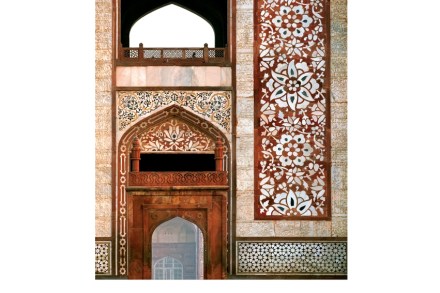
The glorious monuments built in India by the Mughal emperors, from Babur in the early 16th century to Bahadur Shah Zafar II in the mid-19th century, have long deserved a comprehensive illustrated survey in one volume. George Michell is the ideal author. He is both a great scholar and a fervent communicator on many aspect of India’s cultural history. He has worked as a hands-on archaeologist on major Indian sites and recently established a Deccan Foundation to protect the wonders of that little-known region. He has been extremely well served in this magnificent book by the photographs of Amit Pasricha, who describes himself as a ‘panoramic photographer’. His photographs are staggeringly beautiful and impossible to praise too highly.
Guilty by association

From our UK edition

It has become increasingly obvious that something went terribly wrong with British intelligence-gathering, both its methods and morality, after the destruction of the Twin Towers on 11 September 2001. Earlier prime ministers had displayed scruples about the use of intelligence gained from torture. But during the Blair premiership this changed. Britain became part of a nightmarish universe where the standards which we claim to represent were undermined and sabotaged. It is important to stress that there is no evidence at all that our intelligence officers were (unlike their gung-ho counterparts at the CIA) directly engaged in torture.

Friends across the sea

From our UK edition

On 12 February 1952 the novelist Anthony Powell received a letter from a bookseller in New York. Robert Vanderbilt Jr was the proprietor of a couple of Manhattan bookstores and a great admirer of Powell’s. He wrote to ask if he might himself publish a couple of the novelist’s out-of-print works. Powell was delighted. The two titles chosen were Venusberg and Agents and Patients, the covers of both to be designed by Powell’s old friend Osbert Lancaster. As their letters make clear, Powell and Vanderbilt quickly found they had much in common, and as Powell had worked in publishing before the war, he was able to engage very much on a level with Vanderbilt when discussing the more technical aspects of the process.

Wearing well

From our UK edition

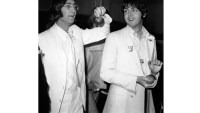
Born in the same year as John Lennon (1940), I was a sucker for the Beatles from the start. They were the accompaniment of my youth, love’s obbligato. I liked their music because it replaced the raw animality of rock ‘n’ roll with sophisticated melody. I think Schubert would have been proud to have composed ‘Yesterday’ or ‘Hey Jude’. Also, unlike most of the rock ‘n’ roll hunks, the Beatles were skinny. So was I — grievously thin — and it was a relief that we skeletons could now come out of the cupboard. In the early photographs of the Fab Four, wearing the monkey-suits their manager Brian Epstein insisted on, they look quite tame; but their hair was already long enough to outrage rednecks.

Oh brother!

From our UK edition

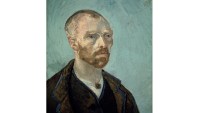
Long in the writing, deep in research, heavy to hold, this is the latest of umpteen biographies of Vincent van Gogh (1853-90). But it should be said straightaway that it is extremely readable, contains new material and is freshly, even startlingly re-interpretative of a life whose bare bones are very familiar. The more one reads, the more absorbing it becomes, both in its breadth of approach and its colossal detail. Potential readers, however, should be warned: this is no sentimentalising study, no apologia for the excesses of the ‘mad genius’ of popular renown. Quite the contrary: one’s dismay intensifies as the self-crucifixion of Van Gogh’s life unfolds, disaster after disaster on page after page.

Bookends: A metropolitan menagerie

From our UK edition

London has always loved its animals. James I kept elephants in St James’s Park (allowed a gallon of wine per day each to get through the English winter), while as recently as Live Aid an urban myth arose that the revolving stage was pulled by horses. The capital’s no different from the rest of the country; if the British showed as much concern for their fellow humans as they do for their dogs, life would be easier. The latest book tapping this market is Animal London (Square Peg, £9.99). Not that the photographer Ianthe Ruthven has gone for fluffy or cute. Her animals are inanimate, either because they’re statues, monuments, carvings, bits of graffiti or dead (pet cemetery, Hyde Park).

Bookends: Saving JFK

From our UK edition

Stephen King’s latest novel is a time-travel fantasy about the assassination of John F. Kennedy. At almost 750 pages, 11.22.63 is drawn-out even by blockbuster standards. Critics have bemoaned its surfeit of period detail (bobby socks, Hula Hoops, big-finned cars). I rather enjoyed it. King, now an august-looking 64, is a writer of towering cleverness, whose fiction manages to appeal to a reading public both popular and serious. Much of what passes these days for literary fiction is mere creative writing. Give me genre fiction (John le Carré, Martin Cruz Smith) any day. A fiction without a story — Kings knows — is scarcely worth its weight in paper. Before King was the emperor of bestsellerdom he studied English at the University of Maine (his birthplace). 11.22.

A gimlet eye

From our UK edition

We should be grateful to families which encourage the culture of writing letters, and equally vital, the keeping of them. Leopold Mozart, for instance, taught his son not only music but correspondence, and as a result we have 1,500 pages of letters which tell us everything we know of interest about the genius. His younger contemporary Jane Austen also came from a postman’s knock background. We have 164 of her letters, from January 1796, when she was 21, to the eve of her death in 1817. Some have been cut by the anxious family, and some suppressed altogether, but the remainder are pure gold. As in her novels, she never wasted a word. These are not exercises in epistolary elegance but crammed with personal news and comment.

Settling old scores | 10 December 2011

From our UK edition

As a boy, Brian Sewell was unimpressed by opera but enraptured by pantomime which, he reveals in Outsider, sowed in him ‘an undying ambition, never fulfilled, to play the Widow Twanky in Aladdin’. Panto’s loss has been art criticism’s gain for, his tremendous erudition and exquisite prose aside, Sewell is surely the funniest art critic of our time, and easily the campest. In his ‘Prelude’ he remarks that he has ‘dug deep into indiscretion’, and ‘some may say that I have dug deeper still into prurience’. They would have a point. The first chapter, which is about his mother, or ‘principal demon’,  sets the tone.

The greatest show on earth | 10 December 2011

From our UK edition

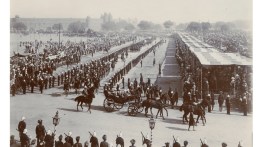
Jessica Douglas-Home’s aptly titled book is based on the diaries of her grandmother Lilah Wingfield, who attended the Delhi Durbar in 1911 and then spent some weeks touring India. It is a glimpse of Empire from a privileged position since Lilah was the daughter of a viscount and the grand-daughter of an earl, brought up at Powerscourt Castle in Ireland and spending her summers at Holkham Hall in Norfolk. She sat in the grandstand for ‘Distinguished Spectators’ at the Durbar and was the guest of several Indian rulers during her tour. She did not, however, ‘share the assumption of superiority that afflicted many of the officials of the Raj’, her granddaughter writes. ‘She was too Irish for that.

Voyages of discovery

From our UK edition

Roger Louis is an American professor from the University of Texas at Austin who knows more about the history of the British Empire than any other two academics put together. When the Oxford University Press embarked on its mammoth history of the Empire the general editor they chose —to the chagrin of certain professors from the Commonwealth — was Roger Louis. Among his other responsibilities is the British Studies seminar, which was founded at Austin 36 years ago. But Professor Louis is not the university’s only attraction. The Harry Ransom Center houses one of the most, if not the most, important collection of modern literary manuscripts in the English-speaking world.

A beautiful bloody world

From our UK edition

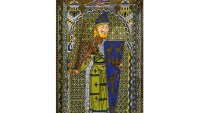
The half-millennium or so that followed the division of the Carolingian empire in 843 AD was a time of profound social and political change in Europe. Kingdoms were established, new forms of law and theories of power were developed and military technology and tactics were revolutionised. Relations between church and state were transformed. The emerging European states developed new cultural identities, while western Christendom as a whole also began to define and assert itself against the Islamic states in the Middle East and north Africa, and the ailing remnants of the Byzantine empire to the east.

Lifelong death wish

From our UK edition

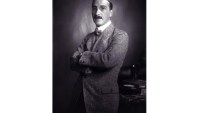
In February 2009, in a review in these pages of Stefan Zweig’s unfinished novel, The Post Office Girl, I wrote: ‘Here surely is what Joseph Conrad meant when he wrote that above all he wanted his readers “to see.’’  In The Post Office Girl Zweig explores the details of everyday life in language that pierces both brain and heart.’ Especially the details of loneliness, I should have added. Intimations of suicide darken this novel, and in 1942, with the manuscript incomplete, Zweig, age 60, and his much younger second wife, Lotte, poisoned themselves in a small Brazilian town and died in bed with her embracing him. It is telling that she did the embracing.

Wizard of the Baroque

From our UK edition

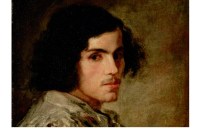
Not content with being the greatest sculptor of his age and one of its most gifted architects, Gian Lorenzo Bernini had some talent as a painter and draftsman. Surviving self-portraits reveal him as the possessor of a positively overstated physique du role. In its most youthful incarnation the face has an air of presumption and entitlement which adulthood will darken with a combativeness that is almost wolfish. Even in the chalk drawing made around his 80th birthday (now in the Royal Collection at Windsor) the glance, under bushy white eyebrows, still smoulders and the slightly parted lips seem poised to challenge or command.

Recent crime novels | 3 December 2011

From our UK edition

The crop of recent crime fiction is generously sprinkled with well-known names; as far as its publishers are concerned, Christmas is not a time of year for risk-taking. The Impossible Dead (Orion, £18.99) is the second novel in Ian Rankin’s post-Rebus series featuring Inspector Malcolm Fox of ‘The Complaints’, the team that investigates allegations of misconduct among the police themselves. Fox and his colleagues arrive in Kirkcaldy, where a detective constable stands accused of corruption — by his own uncle, who is in the same force. But the case mushrooms into something far more momentous that leads to some dark corners of the Scottish nationalist movement in the 1980s.

A serenely contented writer

From our UK edition

Beaming Sir Pelham Grenville Wodehouse, KBE, D.Litt. (Oxon), Mark Twain medallist and co-founder of the Hollywood Cricket Club (1881-1975), personified a rare oxymoron: he was a serenely contented writer. Shortly before the Queen awarded him a knighthood and the Queen Mother, a devoted fan, wrote a letter congratulating him, Madame Tussaud’s sent an artist from London to the final Wodehouse home, in Remsenburg, Long Island, to measure him for waxwork portrayal, which, up to that time, he said, was ‘the supreme honour’. He wrote his first short story at the age of five (the first of more than 300) and at 93 took the half-completed manuscript of his 97th book, a Blandings Castle novel, to his hospital deathbed.

The original special relationship

From our UK edition

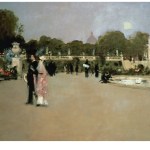
Of all the cities in all the world, Paris dominates the American imagination more than any other. Although Americans may admire Rome or London, more have enjoyed a love affair with the French capital since Benjamin Franklin represented the 13 rebellious colonies at the court of Louis XVI. Josephine Baker captured that sentiment with her theme song, ‘J’ai deux amours/Mon pays et Paris.’ And more Americans than Rick Blaine in Casablanca have mused from afar, ‘We’ll always have Paris.’ Just how many Americans had Paris before Woody Allen’s Midnight in Paris crowd becomes clear in David McCullough’s delightful panorama of American life in Paris during the 19th century.