Book review

Real and imagined danger

From our UK edition

What was the Cold War? For Professor John Lewis Gaddes, it was a conflict between two incompatible systems, democracy and communism, each with a different vision of liberty and human purpose. The result was a potential third world war, in which we risked being crushed by dictators or destroyed by nuclear weapons. And the US saved us. ‘The world,’ he writes, ‘I am quite sure, is a better place for the conflict having been fought in the way that it was and won by the side that won it. For all its dangers, atrocities, costs, distraction and moral compromises, the Cold War was a necessary contest.’ Andrew Alexander disagrees. And Alexander — who has long exposed the myopia and self-deception of the establishment — should be taken seriously.

A holy terror

From our UK edition

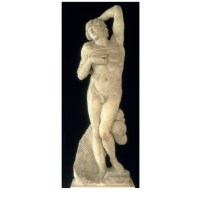
In the summer of 1520, Michelangelo Buonarotti wrote a letter of recommendation on behalf of his protégé, the painter Sebastiano del Piombo, to Cardinal Bibbiena, an influential figure at the court of Pope Leo X. The testimonial carried some weight, for Michelangelo was by now Italy’s most admired sculptor, with what are nowadays called ‘signature achievements’ such as the David, the Pietà and the Dying Slave to his credit. Seven years earlier, what is more, he had completed the magisterial decoration of the Sistine Chapel ceiling, among the most ambitious  projects in the history of painting, for Pope Julius II.

Time to sit and stare

From our UK edition

Hermitic, oneiric withdrawal from responsibilities and threats is the most effective way of alleviating the pangs of middle age, suggests Marcus Berkmann. In his fifties, he is a frank and eloquent expert on ageing, by turns indignantly curmudgeonly and philosophically resigned. He is observant and witty, but there were moments when he reminded me of complaints in Punch of neighbours who failed to return borrowed lawnmowers — perhaps my fault, rather than his. He recommends a shed of one’s own as a refuge in which to escape from stressful reality. ‘If I had a garden,’ he writes, ‘I would have a shed. In fact the main reason for getting a garden would be to get a shed.

Frank exchange of views

From our UK edition

Solomon Kugel is morbidly obsessed with death: his own, and that of those he loves, including his wife Bree and his only son Jonah. He spends his idle hours writing down possible last words in a notebook, and contemplating the undignified and senseless extinctions that await him around every corner. His outlook is not helped by his therapist, Professor Jove, who is convinced that hope is the cause of all human suffering and works hard to extinguish it; nor by his brother-in-law, the unsubtly named evolutionary biologist Pinkus Stephenor — a professional optimist whose latest book is You’ve Got To Admit It’s Getting Better, A Little Better All The Time. (He is a best-seller; Jove can’t get his book published.

Bookends: Short and sweet

From our UK edition

Before texts and Twitter there were postcards. Less hi-tech, but they kept people in touch. Angela Carter (pictured above) and Susannah Clapp were friends, and over the years, postcards from Carter arrived from wherever her travels took her. They could be quirky, surreal — from America a huge chicken swallowing a truck; the Statue of Liberty drowning in a lake. Others were greetings, scribbled comments, hand-drawn cartoons. Fourteen are scattered through Susannah Clapp’s A Card from Angela Carter (Bloomsbury, £10): black-and-white reproductions evoking experiences riotous with colour,  charting the progress of a turbulent life that ended too soon. Carter died of lung cancer in 1992 aged 51.

‘A world dying of ugliness’

From our UK edition

Some writers’ lives are estimable, some enviable, some exemplary. And some send a shudder of gratitude down the spine that this life happened to somebody else. It isn’t necessarily about success or acclaim — most rational people would very much prefer to have had Rimbaud’s life rather than Somerset Maugham’s. But sometimes it is. In the ranks of Mephistophelean terror, there are few more frightening stories than the life of the Austrian novelist Joseph Roth. Everything went wrong for him, and it must have been simply appalling to have had to live within that head, with those thoughts. That he is also a great novelist merely adds to the horror that this collection of his letters conveys. He saw too clearly for his own sanity.

Talking tough

From our UK edition

This thoughtful, challenging and deeply depressing book takes as its launch pad the Nuremberg Trials, in which the author’s father played so prominent a part. Churchill would have executed the Nazi leaders out of hand. Eisenhower wanted to exterminate all the German General Staff as well as all of the Gestapo and all Nazi Party members above the rank of Major. Wiser counsels prevailed. The Nazi leadership must be put on trial, it was agreed, and not in such a way as would rubber-stamp a verdict that had already been tacitly agreed. ‘You must put no man on trial under the forms of judicial proceeding,’ said the distinguished jurist Robert Jackson, ‘if you are not willing to see him freed if not proven guilty.

Making sense of a cruel world

From our UK edition

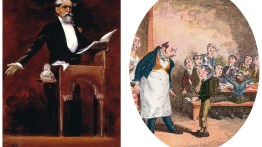
The actor-biographer Simon Callow has played Dickens, and has created Dickensian characters, in monologues and in a solo bravura rendition of A Christmas Carol. Now he suggests that the theatricality of Dickens’s own life is a subject worthy of exploration in book form. So it is, and if Callow had done so, it might have made a useful addition to what he rightly identifies as the ‘tsuanami’ of books that are appearing for Dickens’ bicentennial. But in this cursory biography, he merely makes token gestures in that direction: we learn rather a lot about Charles Mathews’ one-man shows; and Callow describes the theatrical impulses behind some of the novels.

Triumph of the redcoats

From our UK edition

Given the choice between philosophising in the company of Socrates or fighting in the army of the soldier-monarch Charles XII of Sweden, most men, Dr Johnson observed, would prefer arms to argument. That physical danger should offer a more appealing prospect than logical thought remains one of the Great Cham’s more provocative insights. At one level, it explains why universal peace will not soon arrive, and at another why military history commands a larger readership than philosophy. In recent years, a golden generation has set the bar pretty high in this field.

Bookends: Trouble and strife

From our UK edition

It isn’t true that Joanna Trollope (pictured above) only produces novels about the kind of people who have an Aga in their kitchen: what she writes about are families. Her books have a knack of chiming with current social concerns, of examining how the family is adapting to changing social mores. She is deservedly a very popular writer, but she isn’t a frivolous one. The Soldier’s Wife (Doubleday, £18.99) is a cracking read and has clearly been thoroughly researched. All the little details which animate a novel ring true. It centres on the homecoming of a Major who has been on a six-month tour of duty in Afghanistan, the effect of this supposedly joyous reunion on his wife and children — and himself.

Gunboat diplomacy

From our UK edition

Britain’s links with the Continent were once  deeper and more extensive than those of any other European country. Paris, Rome and German universities played as vital a role in British culture as many native cities. Mediterranean connections were especially strong. Most cities on its shores contain an English church and cemetery. From Minorca to Cyprus, there are few Mediterranean islands that have not been occupied by British troops: the oldest company in Beirut is Heald and Co., the shipping agents (est.1837). Blue-Water Empire aims to tell the story of ‘the British in the Mediterranean since 1800’: 1800 is the year that Malta, soon to be the headquarters of the British Mediterranean fleet, was conquered from France, with Maltese help.

Chaos and the old order

From our UK edition

If Gregor von Rezzori is known to English language readers, it is likely to be through his tense, disturbing novel Memoirs of an Anti-Semite (partly written in English), and/or his ravishing memoir Snows of Yesteryear. Rezzori was born in 1914 in Czernowitz in Bukovina, when it belonged to the Austro-Hungarian Empire. After the first world war he became a citizen of Romania, from where, as a so-called ethnic German, he was ‘repatriated’ to Germany during the second world war. From the 1960s he lived in Italy, at Santa Maddalena, the home that he shared with his second wife near Florence, which she has since set up as a writers’ retreat. In the garden there is a porphyry pyramid, a monument to the deceased writer on which is inscribed ‘citizen of Czernopol’.

The phantom lover

From our UK edition

Driving past several long abandoned second- world-war airfields in East Anglia last year I was struck by how spooky they seemed, just like the decommissioned army base that used to exist near me. Places where people have not only lived and worked but which form the background of wartime drama, and from which men went to their deaths, are bound to be haunted, and in Helen Dunmore’s short novel, it is an airfield that once saw Lancaster Bombers fly out into the night that forms a ghostly scene. Isabel is newly married to a doctor, Philip, and the two have moved to Yorkshire where he is now a GP. It is the early 1950s, the country is still redolent of wartime hardships, ration books, nasty linoleum in rented flats and nosey landladies.

A feast of vanities

From our UK edition

The name of Savonarola slides off the tongue as if concocted for an orator’s climax. But when it came to names, whether by melody or reputation, the Florence he knew offered aggressive competition. Pico della Mirandola, Lorenzo ‘il Magnifico’ de’ Medici, Botticelli, Michelangelo and Machiavelli all shared his era. In an unexpected and sympathetic conclusion to the radical friar’s latest biography, Donald Weinstein defends one of George Eliot’s least loved novels, Romola: Eliot’s success in bridging the 400-year historical and cultural divide between herself and Savonarolan Florence was remarkable, and her judgment of the Frate himself nuanced and independent.

The frontiers of freedom

From our UK edition

The problem with Nick Cohen’s very readable You Can’t Read This Book is the way that you can, glaringly, read this book. This isn’t quite as glib an observation as it sounds. Cohen’s central point is that the censors’ pens did not fall down with the Berlin Wall. And yet here he is, very obviously free to tell us about them. Cohen is a rambunctious pessimist.

Fall from grace

From our UK edition

Barack Obama is not up to the job. That is Ron Suskind’s oft-repeated contention. The President, he states, compromised with, rather than curbed, failing American financial institutions, and has surrounded himself with warring staffers who are either no more competent than he is or, if expert, disregard his wishes. Following a picture caption that reads ‘Obama showed real weakness in managing his own White House,’ Suskind, a Pulitzer Prize winner, justifies his title: The confidence of the nation rests on trust.Confidence is the immaterial residue of material actions: justly enforced laws, sound investments, solidly built structures . . . . Gaining the trust without earning it is the age-old work of the confidence men.

Finding Mr Wright

From our UK edition

The film When Harry Met Sally may be infamous for the scene in which the heroine mimics orgasm in a crowded café, but the real point of the story is a question: can a man and a woman ever be true friends, or must sex always get in the way? Jack Holmes and His Friend poses the equivalent question about a straight man and a gay one. If it’s made into a movie, the working title will surely be When Harry Met Gary. Homosexual writers seem to be much better than straight ones at combining high literary style with vastly enjoyable descriptions of really filthy sex. Edmund White is a master of both. This novel is like one from the French 18th century, where passages of intricate social comedy alternate with carnal episodes of Baroque detail.