Book review

The woman in black | 3 December 2011

From our UK edition

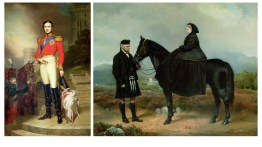
The history of the royal family is punctuated by dramatic, premature deaths which plunge the monarchy into crisis. The most disastrous of these — historically more significant by far than the death of Princess Diana — was the death of Prince Albert in 1861. By the time he died, aged 42, this minor German prince, the second son of the obscure and dissipated Duke of Coburg, had taken over the entire public work of the monarchy. After 21 years of marriage, his wife Victoria had become deskilled and emotionally dependent upon him. His death left the monarchy in tatters and condemned Queen Victoria to a lifetime of black dresses. Helen Rappaport, who is best known as a writer about the Romanovs, has chosen an excellent subject.

Trading places | 3 December 2011

From our UK edition

Thirty years ago Sir Keith Joseph, portrayed by Sir Ian Gilmour, a fellow minister, as owning ‘a Rolls-Royce mind without a chauffeur’, sent a newly published book to every Cabinet colleague. Most groaned, some murmured oaths, and a lucky few skimmed it. The book was English Culture and the Decline of the Industrial Spirit (1850-1980) by Martin Weiner. The author, like Correlli Barnett before him, assailed Victorian and Edwardian entrepeneurs and inventors for ignoring family business. Scores and scores of tycoons yearned to be assimilated into the landed establishment by spurning their own mills and factories. They denied the infernos of noise and squalor the capital investment required for new technology.

Saladin: hero or infidel?

From our UK edition

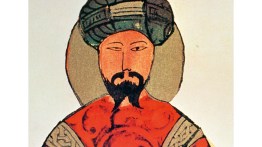
In Baghdad in the 1980s there was a children’s book published called The Hero Saladin. The cover bore an image of Saddam Hussein, identified, in what his biographer drily describes as ‘the second and longer part’ of the book, as ‘Saladin II Saddam Hussein’. Given that Saladin was actually Kurdish — and knowing what we do about Saddam’s respect for that section of his population — the gesture seems even more crass and insolent than it might otherwise. But then, it’s also absolutely standard. Jinnah was Saladin. Assad was Saladin. Saladin is, in modern Arab and Muslim political mythology, more icon than historical figure.

Cookery Books: Back to classics

From our UK edition

The truth is, we could probably all get by with three or four cookbooks; half a dozen at most, which makes my own collection of dozens seem a bit OTT. But what you need among them is a book that covers all the essentials, so that if you’re stuck to know what to do with a pheasant or how to make pastry or need to do something imaginative with cauliflower, you’ve got it all to hand. One all-purpose volume is the classic Constance Spry Cookery Book (Grub Street, £30), by Constance Spry and Rosemary Hume, first published in the Fifties and now reissued with metric as well as imperial measurements. It’s very much of its time, obviously, and unabashedly French in temperament, but it’s a cracking, really useful book.

Jekyll and Hyde figure

From our UK edition

Jonathan Swift’s Gulliver believed that the ideal British prime minister was a creature wholly exempt from joy and grief who applies his words to everything except to the indication of his mind. Swift’s dilation on the virtues of political froideur is only one of many ghosts evoked by Paul Bew’s riveting portrait of the man who seemed certain to be the first Irish prime minister of the Victorian age. In a characteristic confection of intimate portraiture and high-political history, Bew assesses the astonishing career of a lacklustre Protestant landlord who brought a Catholic populace to the threshold of parliamentary self-government in 1886.

A literary curio

From our UK edition

Jean-Louis Lebris de Kerouac, better known as Jack Kerouac (1922-1969), the son of French-Canadians spiced with the blood of Mohawk and Caughnawaga Indians and subdued, no doubt, by migration from Quebec to Lowell, an old mill town in Massachusetts, eventually fulfilled his adolescent ambition to live the life of the eccentric ‘artist’ . . . a high form of aesthete who has nothing to do with this maddening world of Philistines. He hoped that ‘lingual spontaneity’ would enable him to achieve ‘Supreme Reality’. In fact, On the Road (1957) did indeed serve as a guide to all America for the Beat Generation of the Fifties and after.

What’s going on?

From our UK edition

An early sentence in this collection of stories, first published between 1979 and the current issue of Granta, runs thus: We were in the late stages now, about 45 minutes out, and I was thinking it could still change, some rude blend of weather might yet transform the land, producing texture and dimension, leaps of green light, those waverings and rays, and the near consciousness we always seem to find in zones of overgrown terrain. [The speaker is a tourist in the back of a taxi on his way to an airport in the Caribbean.] It’s not hard to see why the Atlantic critic B. R.

Rumbled in the jungle

From our UK edition

This book is a mess. Simon Mann may have been brought up on John Buchan, educated at Eton and Sandhurst, and taken Conrad and the Iliad with him on his African travels, but his style is appalling — a sort of demotic militarese. Short sharp sentences. Few verbs. Acronyms sprinkled like confetti. The third sentence reads: ‘Rock-crag fingers claw my arse.’ And we skip all over the place, between Angola, Equatorial Guinea, South Africa and Sierra Leone, with flashbacks and fast-forwards and no index. The publisher’s boast that identities would be revealed and the mighty shaken on their thrones turns out to be empty. ‘The Boss’ goes unnamed, as does ‘the Croc’.

… in the battle for London

From our UK edition

Charlatan, fornicator, liar, inebriate, pugilist, Marxist, anti-Semite; Ken Livingstone has been called many things but never a writer. Actually, that’s a shame because his words following the 2005 London bombings were brilliantly defiant; perhaps the most powerful speech by a British politician in the last decade. He can be witty — the former leader of the Greater London Council abolished by Margaret Thatcher began his speech accepting the Mayoralty with the words: ‘As I was saying before I was so rudely interrupted 14 years ago ...’ Even Tony Blair, who effectively forced Livingstone to leave the Labour party in order to stand, eventually admitted his misjudgment.

Opening salvos …

From our UK edition

When a man is tired of Johnson, he’s liable to vote for Livingstone. Boris has decided to head Londoners off at the pass by writing a book about them, or rather about 18 of their famed predecessors. From Boudica and Alfred the Great, through Shakespeare and Robert Hooke to Winston Churchill and Keith Richards, we meet people who shaped the city of their birth and/or residence. The stories of both the subjects and the city are brilliantly told. It just so happens that, in passing, we learn such facts as ‘London’s buses are carrying more people than at any time in history’. When Boris visits the Midland Grand Hotel he notes that the traffic outside is ‘flowing smoothly’.

Children’s Books: Myth and magic

From our UK edition

It was the second week of term and my grandson’s birthday. He had just started at primary school and the only alternative to social suicide seemed to be to invite the whole class to his party. With a few old friends that made a total of 30. They ran yelling in various enjoyably noisy games up and down the church hall, then they departed, and my daughter was left confronting a table groaning with 30 presents, some of them embarrassingly expensive. How do you give 30 presents to one five-year-old? The same problem comes up every Christmas, and the answer, it seems to me, is books.

Pure and simple

From our UK edition

It might be that the stage musical is now pretty well over as a form. Certainly, the gloomy parade of ‘juke-box’ musicals through the West End doesn’t give one much hope for the future. It is difficult to pick out a worst offender, but the Ben Elton We Will Rock You, confected from the Queen catalogue, is as bad as any. Its premise, of taking the work of a curious-looking, homosexual, Parsi, excessive genius like Freddie Mercury and turning it into an idiotic story about two clean-cut stage-school kids Putting the Show on Right Now says something truly terrible about the musical: it says that it can only deal with conventional views of conventional subjects.

High-class fraud

From our UK edition

You can always find a thief in financial markets. That is where the money is. Most frauds are quite dull affairs, and some are never uncovered. A few, however, are spectacular. The scale of loss, or the glamour of the perpetrator, or the failure of the ‘system’ to spot and prevent the crookery, may contribute to make a good story. One case, almost within living memory, which has all of these elements, was that of Gerard Lee Bevan. He was born in 1869 into a highly respected City banking family. The Bevans were among the founders of Barclays and continued to be involved in the management of the bank until recently. However, Gerard Bevan did not make the grade for the bank.

Pea-soupers and opium dens

From our UK edition

So: does Moriarty exist, or not? Well no, not really, and not just in the literal sense of being a fictional character. He’s hardly even that. We have no evidence beyond Sherlock Holmes’s word, and if you look at Holmes’s behaviour in ‘The Final Problem’ you can see an almost classic case of paranoia — brought on, no doubt, by a heavy cocaine binge. Michael Dibdin, in his The Last Sherlock Holmes Story, therefore proposes that Holmes and Moriarty are the same person, which does redeem Holmes’s otherwise hasty and implausible dispatch by his creator over the Reichenbach Falls. Anyway, he appears here, in the same year (as far as I can tell) as the events described in The Final Problem; but the meeting is with Dr Watson, so we know it must be true.

Art Books: A sumptuous tour

From our UK edition

In 1930 Evelyn Waugh, already at 27 a famous novelist, spent two days in Barcelona. He came upon one of the art nouveau houses designed by Antonio Gaudí, who had died four years earlier. Waugh was captivated by the swooshing ‘whiplash’ lines of the building. He hired a taxi and asked the driver to take him to any other buildings in the same style. So he saw a number of Gaudí’s fantastical creations, including his church (often mistakenly called a cathedral), La Sagrada Familia. It took an extra-ordinary leap of taste for Waugh to admire this flamboyant architecture at the height of the Modern Movement, with its insistence on ‘clean lines’ and ‘form follows function’.

Chagrin d’amour

From our UK edition

The horror of love: Nancy Mitford’s first fiancé was gay; her husband, Peter Rodd, was feckless, spendthrift and unsympathetic, and her great amour, Gaston Palewski, was endlessly unfaithful. She met him during the war in London and was in love with him for the rest of her life. Palewski was Charles de Gaulle’s right-hand man. He organised the French Resistance in London and commanded the Free French forces in East Africa. After the war, he was appointed De Gaulle’s chief of staff and he became known as the sinister éminence grise behind De Gaulle’s presidency. He and Nancy shared a love of France, beauty and jokes.

The meanest flowers that blow

From our UK edition

Sarah Raven comes of a botanising family. Her father John, a Cambridge classics don, travelled all over the British Isles studying wildflowers. Like his own father, Charles Raven, he was a gifted watercolourist, and between them they drew almost every plant in the British flora. Sarah still possesses 18 volumes of their watercolours. Nevertheless, to illustrate her huge, learned and comprehensive book of 500 wildflowers, she chose a photographer, Jonathan Buckley. This was partly because she had written with him before on other books, but mainly because they could travel and work together. They visited over 100 sites to track down the specimens, often 20 or 30 in one favoured place, where he would ‘lie on his stomach for hours at a stretch photographing them’.

A man who quite liked women

From our UK edition

It is noticeable that the kind of young woman that a clever public man most likes talking to is intelligent but totally unchallenging. This is pleasant for both. She gets to pick up useful knowledge, while he can hold forth, happy that she doesn’t have the inclination or firepower to disagree, argue or interrupt.    Dr Johnson was a bit like that. He wanted women to be equal ‘but not too equal’.  Hannah More, a successful playwright young enough to be his daughter, had too much natural self-belief for him, and he did not admire her dress sense. He was wary and in awe of the confident poet Elizabeth Carter, who knew more Latin and Greek than he did.