Book review

Portrait of a Guardian music critic

From our UK edition

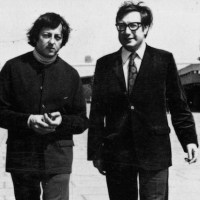
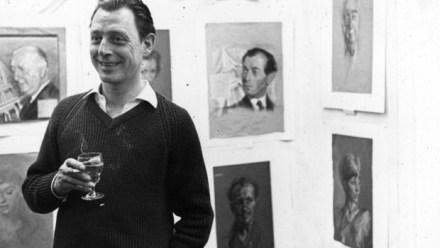
We critics seldom write our memoirs, perhaps because we skulk away our lives in dark corners, avoiding the public gaze, plying our shameful trade like streetwalkers or pushers of hard drugs. We might occasionally, in desperation, recycle our ephemera between hard covers. Edward Greenfield, the former record and music critic of the Guardian, has daringly come out, in a volume of reminiscences that carefully avoids the title memoir (about oneself) and instead labels itself as portraits (about other people). But a man is judged by the company he keeps, so we soon come back to the book’s subtitle and find ourselves reading a concealed ‘life’. Ted Greenfield has been unusual among music critics for a number of reasons.

Has land ownership changed our lives for better or for worse?

From our UK edition

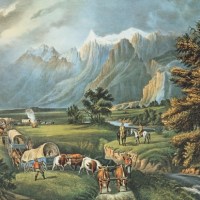
If the gentle reader has any concerns that a study of land ownership might tend to the dry, they will be dispelled in the very first pages of this book by the spectacular flamboyance of its opening. There is not an economist in sight. Instead, we have the piratical figure of the Sir Humphrey Gilbert — Elizabethan seadog, soldier and mathematician, ‘openly bisexual’, and with the arresting habit of ‘decapitating his enemies after battle [and] then lining the path to his tent with their severed heads’ — returning in 1583 from the first expedition to create an English colony in North America. Sir Humphrey Gilbert stands proxy for a momentous historical transformation.

A creepy father, a lustful music teacher, four virgins — and one genuine love affair

From our UK edition

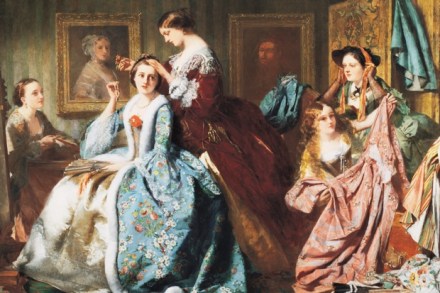
London, 1794. It’s a different world from that portrayed by the Mrs Radcliffes and Anons of the time: rich young women are not all naïve and swoony in Katharine Grant’s first novel for adults. In Sedition, five girls (two of them sisters, the others unrelated) are more or less put up for sale by their calculating parents, who want to attract titled sons to help them complete a leap from trade into the aristocracy. From the start, the parents’ scheme of buying a pianoforte and hiring a music teacher to help the girls appear eligible seems destined to backfire momentously.

Was Flann O’Brien at his best when writing about drink? (Answers on a damp stressed envelope, please)

From our UK edition

On his deathbed in Dublin in the spring of 1966, Flann O’Brien must have been squiffy from tots of Paddy. A bottle of the amber distillate was smuggled in to the hospital on April Fool’s Day by a couple of well-wishers. O’Brien rang the bell to summon a nurse. ‘Sister,’ he told her solemnly, ‘I have two friends who are constipated and need a dose. Would you bring two glasses?’ Within a matter of hours the poker-faced Count O’Blather (O’Brien’s preferred authorial pseudonym) was dead. Flanneurs everywhere had reason to lament the passing of a notable Dublin wit and a writer of comic genius. But all was not lost.

What seamen fear more than Somali pirates

From our UK edition

If a time traveller were to arrive in our world from, say, 1514 — a neat half-millennium away — what single feature would strike them most? What could they use on their return to try and explain the sheer weirdness of the future? A crowded mega-city? A hospital? An international airport? A computer? What about this — a container ship, a fifth-of-a-mile of steel transport travelling thousands of miles across unknown oceans filled with 150 tonnes of New Zealand lamb, 138,000 tins of cat food, 12,800 MP3 players and any amount of the paraphernalia for which the frenetic people of the 21st century work so hard to be able to afford? In fact, you don’t need to come from the Tudor period to be amazed by the scale and extravagance.

Australia’s entrancing Sheila

From our UK edition

The ‘dollar princesses’, those American heiresses who crossed the Atlantic in search of a titled husband, are familiar figures from the 19th and early 20th century. Less well known are the young ladies who made the much longer journey from Australia, and who, like their transatlantic counterparts, arrived in England with large fortunes, ready to be launched on an intensely competitive marriage market. Sheila Chisholm was one of these arrivals from ‘the Land of the Wattle’, as the colony was often described. The daughter of a wealthy grazier from New South Wales, she reached London in July 1914 with barely enough time to be presented at court before the outbreak of war.

How miserable a marriage can be

From our UK edition

In Never Mind Miss Fox, Olivia Glazebrook’s second novel, the revelation of a long buried secret releases a Pandora’s Box of disasters. At the heart of the book is a disturbing sex scene between a 16-year-old girl and an older, soon-to-be-married man. With intelligent restraint, Glazebrook gives only a partial description of the event itself. Alcohol and the distorting effect of time and memory render the details hazy. But the ramifications of the brief affair play out with devastating consequences. The novel turns on the lives of Clive and Martha, a successful, if slightly dull couple who, during the course of the book, marry and have a child. On one level, Never Mind Miss Fox is simply a powerful cautionary tale about marital infidelity and dishonesty.

When intellectuals are clueless about the first world war

From our UK edition

No one alive now has any adult experience of the first world war, but still it shows no sign of respectable ossification; no armistice of opposing historians seems in prospect. It maintains a terrible, vivid, constantly mutable life. Like the French Revolution, its meaning shifts from generation to generation and according to which politician happens to be speaking at the moment. In 1989 Mrs Thatcher took the opportunity to deliver a highly tactless speech to the French on the real origins of political liberty. In recent weeks, Michael Gove, Sir Richard Evans and Tristram Hunt have embroiled themselves in an argument about the significance of the war which showed none of the abstruse nature of most discussions about history.

What Englishmen learnt from Europe

From our UK edition

The pattern of foreign travel by wealthy young Englishmen that became known as the Grand Tour began in the Renaissance and matured in the 17th century. In its origins it was a training for statesmanship. The state’s takeover of the church, which had done so much of the state’s official business, enlarged the employment opportunities of the nobility and gentry. So did the expansion of the government’s administrative resources and ambitions. But with the opportunities came challenges. Monarchs needed their advisers and officials and diplomats to be skilled and knowledgeable. So noblemen and gentlemen urged their sons to look beyond the accustomed pleasures of the hunting field and get down to educational business.

Hope for one of the most turbulent, traumatised regions in the world

From our UK edition

John Keay’s excellent new book on the modern history of South Asia plunges the reader head first into some wildly swirling currents. Here are India, Pakistan, Bangladesh, not to mention Sri Lanka and Nepal, and a supporting cast of mini-states present and past that you may not even have heard of, all tumbling, overlapping, in a state of perpetual contradiction and collision, flowing like a tide of crazed tsunami debris down some great tropical floodplain. This is the world’s biggest population zone, and possibly even the world’s coming economic superpower, in full and violent flow. Midnight’s Descendants is primarily about the partition of India, the moment in 1947 that initially created independent India and a new state called Pakistan.

A cruel novel about an India-born, world-famous, possibly real-life author

From our UK edition

It is six years since Hanif Kureishi’s last novel Something to Tell You, a kaleidoscopic meditation on life and death seen through the eyes of a Freudian analyst striving to make sense of middle age. It was regarded as a return to the highs of The Buddha of Suburbia, Kureishi’s first and still best-loved novel, populated by irresistible characters who ploughed through life with a feckless sexual voracity. The Last Word displays a similar chutzpah, although things are hampered by an unlikely story which over-sexualises every character in the claustrophobic atmosphere of a shabby country house.

Write what you know — especially if it’s the second world war

From our UK edition

Adam Foulds’s latest novel is less successful than its predecessor. In 2009 he reached the Booker shortlist with The Quickening Maze, which saw Victorian poets orbit a lunatic asylum in Epping Forest. Now, with In the Wolf’s Mouth, he has shifted his attention to the Mediterranean theatre of the second world war. Will Walker is an English field security officer, Ray Marfione an American GI. Both find themselves in North Africa and Sicily, as ancient corruption permeates Allied liberation. The subject matter is Foulds’s primary failing. The Quickening Maze fizzed because the author, who has a separate reputation as a poet, knows what it is to write verse and that informed his resurrection of Alfred Tennyson and John Clare.

The two people who brought us The Grapes of Wrath

From our UK edition

John Steinbeck (1902–1968), an ardent propagandist for the exploited underdogs of the Great Depression, had barely enough money for subsistence during the years he spent preparing and writing The Grapes of Wrath, the protest novel regarded as his masterpiece. It made him a Nobel laureate and a very rich man. The Nobel committee praised his ‘realistic and imaginative writing, combining . . . sympathetic humour and keen social perception’. Seventy-four years after first publication, the book still sells more than 100,000 copies a year. In his Nobel acceptance speech in 1962, Steinbeck said that ‘a writer who does not passionately believe in the perfectibility of man has no dedication nor any membership in literature’.

Why are Scandinavians so happy when they should be so sad? 

From our UK edition

As I sit here in my Sarah Lund Fair Isle sweater, polishing my boxed sets of Borgen and nibbling on a small piece of herring, it briefly occurs to me that perhaps I too have fallen victim to the prevailing mania for all things Scandinavian. Just about the only person who’s stayed resistant, it seems, is Michael Booth, the author of this book. At home in Copenhagen — he’s married to a Dane — watching the incessant drizzle falling through the perpetual twilight, Booth begins to think he’s losing his mind. How come every survey ever commissioned into human happiness puts the Scandinavians at the top of the list?, he wonders.

From Nasser to Mubarak — Egypt’s modern pharaohs and their phoney myths

From our UK edition

Reporting Egypt’s revolution three years ago, I had a sense of history not so much repeating itself as discharging sparks which seemed eerily familiar. Smoke was billowing into my hotel bedroom from the building next door, the headquarters of the Mubarak dictatorship which protestors had set alight; yet also visible from my balcony in Cairo that night were the flickering lights of Zamalek, the island of privilege in the River Nile where my father grew up before fleeing the flames of the Nasser regime on a flying boat in 1956. At last comes a book which links the coups and revolutions witnessed by father and son. The Cambridge sociologist Hazem Kandil has produced a compelling history of Egypt’s 60-year power struggle.

The Good Lord Bird, by James McBride – review

From our UK edition

James McBride’s The Good Lord Bird is set in the mid 19th century, and is based on the real life of John Brown, the one who lies a-mouldering in his grave. Recently it won a National Book Award in the USA. Brown, the Old Man, was a religious fanatic who believed that he had the nod from God to free the slaves. Early in his harum-scarum life he killed and beheaded some pro-slavery opponents with God’s sanction; like many fanatics he had a direct line to the Almighty. But it all ended in tragedy when, with his small band of followers, very few of whom were slaves, he took a federal government arsenal at Harper’s Ferry in West Virginia. The plan was to distribute thousands of guns to the ‘negroes’ (as McBride calls them).

When No Man’s Land is home

From our UK edition

Countless writers and film-makers this year will be trying their hand at forcing us to wake up and smell the first world war.  How do they plant a fresh, haunting, horrifying image into our unwilling and saturated heads? We know it all: the trenches, the mud, the shell holes, the rats, the man plodding towards the house with the telegram, the local surnames repeated with different initials on the war memorial. All very much in the ‘too sad to think about’ department, particularly if you love Edwardian children’s stories and start contemplating What Happened to Oswald Later. Helen Dunmore, an assured writer who in a previous novel has forced us to live through the siege of Leningrad with its freezing and starving babies, does not shirk from her task.

Reviewing reviews of reviews — where will it all end? 

From our UK edition

About halfway through reading this collection of essays I had one of those hall-of-mirrors moments. These are mostly book reviews, you see: high-toned, long-form New York Review of Books-type review-essays, given — but book reviews nevertheless. There I was, dutifully noting what David Lodge wrote about what Martin Stannard had to say about Muriel Spark, for instance. At once I found myself entertaining the baseless, pleasing notion that, some years from now a collection of my own book reviews would appear in an edition called something awful like Writing Things Down or Twelve-Point Garamond.