Simon Baker

While Holmes is away

From our UK edition

Careful Sherlockians, on returning in adulthood to the four novels and 56 short stories that they devoured uncritically in their teens, tend to notice an endearing vagueness on the part of Sir Arthur Conan Doyle when it comes to details. There is Watson’s old war wound, for instance, which journeys absent mindedly between shoulder and leg. And there is Doyle’s inability to remember dates or even his own characters’ names. In ‘The Creeping Man’ the client, Trevor Bennett, is met by his fiancée with a gushing, ‘Oh, Jack, I have been so dreadfully frightened.’(Watson himself has form here. In ‘The Man With the Twisted Lip’ his wife calls him James and he does not find it odd, even though his name is John.

The gambler’s daily grind

From our UK edition

Lord Doyle is a shrivelled English gambler frittering away his money and destroying his liver in the casinos of Macau. Aptly, since he is in a place filled with mock-Venetian canals and poor reproduction paintings, he himself is a fake: the man is not a real lord, and the money is not his own. He is a disgraced solicitor of modest origin, who ran off with a client’s savings after befriending her. Lawrence Osborne’s novel is a bleak and enjoyable account of someone who, perhaps through unacknowledged guilt, finds bitter solace in losing and in driving himself towards extinction.

Madness and massacre in the jungle

From our UK edition

In his new novel, Children of Paradise, Fred D’Aguiar, a British-Guyanese writer, returns to the Jonestown massacre, previously the subject of his 1998 narrative poem, ‘Bill of Rights’. D’Aguiar often examines brutal historical episodes from the perspective of a survivor or escapee. In Feeding the Ghosts (1997), the drowning of 140 slaves in 1798 so that the Liverpool-based owners could claim on the insurance is told through the story of Mintah, the one slave who did not die. In the new novel we have Joyce and her daughter, Trina, Americans who, having fallen for the messianic allure of ‘the preacher’ (a figure based on Jim Jones) and followed him to a promised land in Guyana along with a thousand others, now question their decision and want to leave.

A creepy father, a lustful music teacher, four virgins — and one genuine love affair

From our UK edition

London, 1794. It’s a different world from that portrayed by the Mrs Radcliffes and Anons of the time: rich young women are not all naïve and swoony in Katharine Grant’s first novel for adults. In Sedition, five girls (two of them sisters, the others unrelated) are more or less put up for sale by their calculating parents, who want to attract titled sons to help them complete a leap from trade into the aristocracy. From the start, the parents’ scheme of buying a pianoforte and hiring a music teacher to help the girls appear eligible seems destined to backfire momentously.

Village life can be gripping

From our UK edition

Black Sheep opens biblically, with a mining village named Mount of Zeal, which is ‘built in a bowl like an amphitheatre, with the pit winding gear where a stage would be’. It is divided into Lower, Middle and Upper Terrace, the last-mentioned known by the locals as Paradise. If, like many bookshop browsers, you judge a novel by its first page rather than by its cover, you might think, at this early point, that Susan Hill’s fairly recent theological studies sit heavily on the structure. You might expect (not necessarily with wild excitement) a familiar tale of stock characters and their moral failings. But it’s not like that. The opening page or two mislead benignly, giving a generalised feel to what is, in fact, a personal and moving novella.

Novel ways of writing

From our UK edition

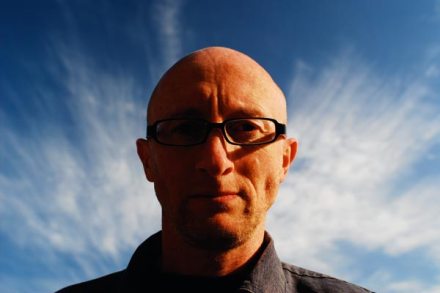
If you consider ‘gripping metafiction’ a self-contradictory phrase (surely metafiction disables tension through its wink-at-the-audience style?), Nicholas Royle’s First Novel (Cape, £16.99), which is in fact his seventh, may change your mind. Royle (pictured above) teaches creative writing at Manchester Metropolitan University, and in this book he gives us Paul Kinder, who teaches creative writing at Manchester while trying to write a novel. The comparisons that we are invited to draw are clear, but to complicate things the novel also contains ‘Nicholas’, a character in a novella by Grace, one of Paul’s students; Nicholas has the same name and is the same age as the author.

Friendships resurrected

From our UK edition

A fact which often surprises those who pick up the Bible in adulthood, having not looked at it for years, is how very short the stories are. Adam and Eve, Noah’s Ark, the Feeding of the Five Thousand — in spite of their familiarity they are raced through in just a few lines. It is, however, perhaps the very terseness of the Bible that has caused at least as much ink as blood to be spilled in its cause; had it spelled the answer out, for instance, medieval scholars could never have whiled away so many jaw-droppingly fatuous hours in wondering how many angels could dance on the head of a pin, and other pressing questions. In his new novel Richard Beard draws attention to this brevity and uses it as a springboard.

The man who came to dinner

From our UK edition

Each year Genevieve Lee holds an ‘alternative’ dinner party, to which she invites, along with her friends, a couple of people she wouldn’t ordinarily mix with — a Muslim, say, or homosexual. Each year Genevieve Lee holds an ‘alternative’ dinner party, to which she invites, along with her friends, a couple of people she wouldn’t ordinarily mix with — a Muslim, say, or homosexual. At her latest party a guest named Miles, whom she’s never met before, locks himself in the spare room, and refuses come out. In the first of the novel’s four sections, Genevieve contacts Anna, who had met Miles during a holiday in 1980, hoping that a familiar voice will persuade him to leave, but it does not.

BOOKENDS: In the bleak midwinter

From our UK edition

Salley Vickers name-checks (surely unwisely) the granddaddy of all short stories, James Joyce’s ‘The Dead’, in the foreword to her first collection, Aphrodite’s Hat (Fourth Estate, £16.99). Salley Vickers name-checks (surely unwisely) the granddaddy of all short stories, James Joyce’s ‘The Dead’, in the foreword to her first collection, Aphrodite’s Hat (Fourth Estate, £16.99). However, the less desirable influence of Roald Dahl seems to preside more tellingly in many of these yarns, which recall Tales of the Unexpected in their predictable twists and spooky presences.

Bookends: In the bleak midwinter

From our UK edition

Here is the latest Bookends column from this week's issue of the Spectator: Salley Vickers name-checks (surely unwisely) the granddaddy of all short stories, James Joyce’s ‘The Dead’, in the foreword to her first collection, Aphrodite’s Hat (Fourth Estate, £16.99). However, the less desirable influence of Roald Dahl seems to preside more tellingly in many of these yarns, which recall Tales of the Unexpected in their predictable twists and spooky presences.

The loneliness of the long distance salesman

From our UK edition

If only E. M. Forster hadn’t beaten him to it by exactly a century, Jonathan Coe could have coined the enigmatic phrase ‘only connect’ in this novel. If only E. M. Forster hadn’t beaten him to it by exactly a century, Jonathan Coe could have coined the enigmatic phrase ‘only connect’ in this novel. Maxwell Sim cannot connect at all. A depressed salesman approaching 50, he is adrift from his father, who moved to Australia 20 years ago, from his wife, an aspiring writer who left him to live in the Lake District, and from his daughter, who hardly speaks to him. He has 70 Facebook ‘friends’, but they are of course not real friends.

Anything for a quiet life

From our UK edition

Jim, Crace’s latest novel, All That Follows, marks a deliberate change from past form. Jim, Crace’s latest novel, All That Fol lows, marks a deliberate change from past form. Gone are the musical, metaphorical sentences and the fanciful narratives, and in come realism, character and dialogue. It’s not all completely new, in that the novel is set partly in 2024, and partly in Bush’s Texas in 2006; but then again the 2024 of this novel is merely the present day with even more governmental nannying and some unlikely-sounding ‘telescreens’ (which sound like a view of the future as conceived in the 1950s).

Just the bare bones

From our UK edition

It is impossible (as I prove in this sentence) to review Philip Roth without mentioning the surge of creativity that began when the author was around 60 and which now sees him publishing a novel every year (his next one, Nemesis, is already finished). However, I would argue that it is only recently that we have seen Roth’s genuine late style. In three of his last four books — Everyman (2006), Indignation (2008) and this one, The Humbling — there has been a shift towards winter in his writing. Those are short works, lacking the manic humour that energised Roth’s earlier fiction.

The ex factor

From our UK edition

At first, the plot of Nick Hornby’s new novel, Juliet, Naked, seems too close to that of his first novel, High Fidelity (1995). At first, the plot of Nick Hornby’s new novel, Juliet, Naked, seems too close to that of his first novel, High Fidelity (1995). We have the no-longer-young man — Duncan this time — who refuses to move on in the usual ways (children, marriage, etc.) and devotes his time instead to pop music, and in particular to the reclusive singer-songwriter Tucker Crowe, a less famous (and fictional) peer of Dylan and Springsteen, who has not released anything since his masterpiece album, Juliet, in 1986. We also have the long-suffering girlfriend — this time, Annie.

Past imperfect | 5 August 2009

From our UK edition

We Are All Made of Glue, by Marina Lewycka The Rehearsal, by Eleanor Catton Yalo, by Elias Khory, translated by Humphrey Davies We Are All Made of Glue is Marina Lewycka’s third novel — or, more accurately, her third published novel, since she famously made her way through several other works and a rain-forest’s worth of rejection-slips before finding success with A Short History of Tractors in Ukrainian (2005) at the age of 59. It is a multi-stranded book narrated by Georgie Sinclair, a Yorkshire-born woman in her forties who now lives in London.

One out of five

From our UK edition

Nocturnes is a collection of five longish short stories, four about musicians and a fifth about friends who once bonded over musical tastes. As the title neatly suggests, the book is filled with characters living in obscurity; the stories are populated by people, often musicians, who have been forced to downgrade their ambitions dramatically. While the title also suggests classical music, however, jazz and its related forms feature more prominently. The standout success among the five is ‘Malvern Hills’, which features a university drop-out who is trying (like countless others) to write songs, while helping out at his sister’s café in Worcestershire.

Dark fantasies

From our UK edition

Rhyming Life and Death, by Amos Oz Rhyming Life and Death is set in Tel Aviv during one night in the early 1980s, and concerns a man we know only as ‘the Author’, who spins fiction from his surroundings to pass the time. The Author is a famous middle-aged novelist, who happens also to be an accountant — a contrast suggesting that his artistic life is an intensely private matter which he deliberately keeps hidden beyond a functional day-to-day persona. Perhaps unsurprisingly, therefore, he is not looking forward to the evening ahead, since he is to deliver a talk at a nearby community centre, and expects to be assailed with the usual questions about his writing habits and what he considers to be the meaning of his work.

A choice of first novels | 5 November 2008

From our UK edition

A Fraction of the Whole, by Steve Toltz Pollard, by Laura Beatty Chatto & Windus Inside the Whale, by Jennie Rooney Chatto & Windus Slaughterhouse Heart, by Afsaneh Knight Doubleday AFraction of the Whole, by Steve Toltz, was one of two debut novels on the Booker shortlist — and is, one could argue, a more distinguished offering than the other debutant, which won. A rambling and hilarious tale about perpetual failure, it takes the form of an immense anecdote from a father, Martin Dean, to his son, Jasper. Martin has lived his life in the shadow of his brother, Terry, Australia’s most notorious (and oddly popular) criminal. Terry began life as a sports star, but soon diverted his energies into less innocent pursuits, eventually becoming a modern-day Ned Kelly.

A furious, frazzled youth

From our UK edition

Indignation, by Philip Roth Indignation, Philip Roth’s 29th book, is about the sophomore year of its narrator, Marcus Messner, who attends college in 1951, a time when the Korean War hangs in the background, waiting to devour America’s youth. Marcus is a brilliant student, the first of his family to enter university, but he has recently suffered unrest. He spent his freshman year at college in his native Newark, which enabled him to live at home. It should have been ideal for a quiet boy such as Marcus, who wanted nothing more than to achieve good grades, but his normally easy-going father had a breakdown of sorts which made him irritable and intrusive to the point where Marcus could no longer live with him.

Deceit and dilemma

From our UK edition

Simon Baker reviews a collection of short stories by Tobias Wolff  This book contains ten new stories from Tobias Wolff, plus a selection from the three volumes of short stories he published between 1981 and 1997. It affords the reader a fascinating panorama of Wolff’s entire career, and shows that, like Bach’s variations, Wolff’s stories move around the same central themes, exploring them in different ways so as to extract every possible nuance from them.