Blair Worden

Rebellion without a cause: Peter Ackroyd’s curious Civil War

From our UK edition

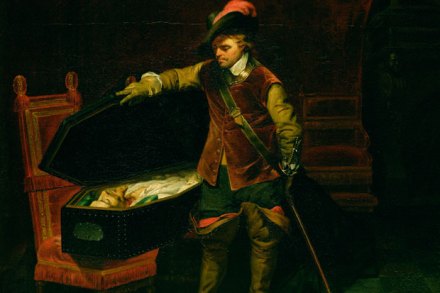
How our perceptions of 17th-century England are dominated by the convulsions of the two decades at its centre! Peter Ackroyd’s book, the third of what have been announced as six volumes of his History of England, covers the period from the accession of James I in 1603 to the overthrow of his grandson James II in 1688. His priority is established by his title and by the facing portraits of Charles I and Oliver Cromwell on the front cover. He gives proportionately much more space to the conflicts of 1640–60 than to events on either side of them.
What Englishmen learnt from Europe

From our UK edition

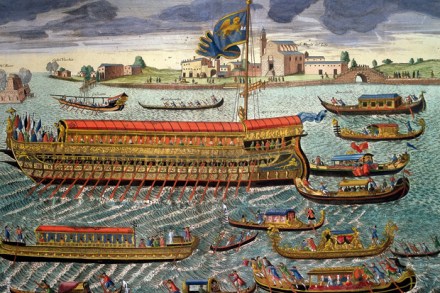
The pattern of foreign travel by wealthy young Englishmen that became known as the Grand Tour began in the Renaissance and matured in the 17th century. In its origins it was a training for statesmanship. The state’s takeover of the church, which had done so much of the state’s official business, enlarged the employment opportunities of the nobility and gentry. So did the expansion of the government’s administrative resources and ambitions. But with the opportunities came challenges. Monarchs needed their advisers and officials and diplomats to be skilled and knowledgeable. So noblemen and gentlemen urged their sons to look beyond the accustomed pleasures of the hunting field and get down to educational business.

The Rainborowes, by Adrian Tinniswood – review

From our UK edition

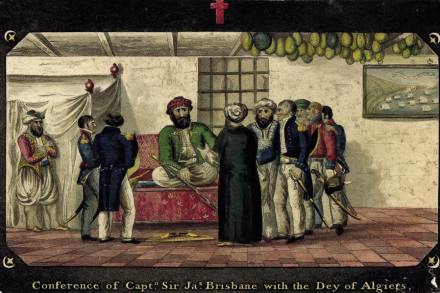
Adrian Tinniswood, so gifted and spirited a communicator of serious history to a wide readership, here brings a number of themes from his previous books together. The Verneys recounted the individual experiences of 17th-century members of a leading Buckinghamshire family. The Rainborowes, set in the same period, applies the same technique to a less substantial family of Londoners. As in his study of the great fire of London in 1666, By Permission of Heaven, Tinniswood takes us into the daily life of the capital, though here his emphasis is on the suburban world of commercial enterprise and religious dissent from which the Rainborowes emerged. Tinniswood’s previous book, Pirates of Barbary, showed Europeans doing battle with the corsairs of the Mediterranean.

A cavalier attitude to monarchy

From our UK edition

Historians have long been more interested in the Roundheads than in the Cavaliers. It was the parliamentarians who achieved England’s revolution, or the nearest thing the country has come to one. It was they who overthrew the monarchy, the House of Lords and the bishops, they whose insistence on parliamentary rights, and whose attainment of a measure of religious toleration under Cromwell, apparently pointed ahead to modern values. Now the balance is changing. Historians have become less ardent for progress. Under their increasingly sceptical gaze the gap between parliamentarian thinking and the outlook of its later congratulators seems ever wider. Besides, over-population has driven students of the parliamentarian cause into neighbouring pastures.

Death comes for the archbishop

From our UK edition

Posterity has always embellished Thomas Becket. After his death in Canterbury Cathedral in December 1170 the Church idealised and canonised him; his tomb inspired miracles and became the most famous shrine in Christendom; the local monks grew rich and fat on the tourist trade that would attract Chaucer’s pilgrims. The 18th century invented Henry II’s hint, ‘Who will rid me of this turbulent priest?’ Playwrights spice the dish. Tennyson’s drama about Becket was staged by Irving; everyone remembers Eliot’s chorus, living and partly living; and Anouilh’s play, which turned the Norman immigrant into a Saxon, gave him, in the screened version, a wide and charismatic appeal.

A place in the Pantheon?

From our UK edition

Hugh Trevor-Roper might have been a great historian, taking his place in the Pantheon alongside the great historians of the past, from Xenophon to Macaulay. But the mark of a great historian is that he writes great books, on the subject that he has made his own. By this exacting standard [Trevor-Roper] failed. Adam Sisman’s assessment, in his compelling new biography (Hugh Trevor-Roper, Weidenfeld, £25), though I dissent from it, is a measured one. It is balanced by recognition of the extent of Trevor-Roper’s achievements. Many of Sisman’s reviewers have been less measured.

The devil and the deep sea

From our UK edition

The sea, the sea. Land-lubbers who write or read England’s history omit it from its heart. At least, we have done so since the aeroplane and electric communications reduced the maritime components of warfare and wealth and travel. The popular imagination banishes piracy, Adrian Tinniswood’s subject, to romance and comic-strips. So we are startled by its modern re-emergence as a major hazard and impediment on the African and Indonesian coasts. That development is much closer to the 17th-century predicaments recounted by Tinninswood than is the swashbuckling glamour of Captain Kidd or Errol Flynn. Then as now, great powers were taunted by seaborne flouters of international law and by their surreptitious political accomplices.

Playing the opportunist

From our UK edition

In historical writing the Restoration era has been the poor relation of the Puritan one before it. It is true that we all have graphic images, many of them supplied by Samuel Pepys, of the years from the return of the monarchy in 1660: of the rakish court and the mistresses of the merry monarch; of the Restoration playhouses and the newly-founded Royal Society; of the disasters of the great plague and the fire of London and the Anglo-Dutch naval war. Yet until very recently there has been no equivalent to the scholarly foundations which were laid by Victorian narratives of the civil wars and the republic, and on which the successive controversies about the Puritan revolt, from the ‘gentry controversy’ of the 1950s onwards, have been erected.

Where statesmen and authors met

From our UK edition

Blair Worden reviews Ophelia Field's latest book What a wonderful subject Ophelia Field has found, and how adroitly she has handled it. In the Kit-Cat Club, the coterie of Whig writers and politicians that began in the last years of the 17th century and lasted into George I’s reign, she finds both a mirror and a source of great movements of taste and power. The club’s founder was the cultivated publisher Jacob Tonson, who gathered and fed his authors at the Cat and Fiddle in Gray’s Inn Lane (‘kat’ being slang for a small fiddle).

Winner by a nose

From our UK edition

When, after his exertions on behalf of the love-struck Gussie Fink-Nottle, Bertie Wooster hears himself compared to Cyrano de Bergerac, his literary knowledge rises to the occasion: ‘the chap with the nose’. It was Edmund Rostand’s play of 1897 that brought Cyrano and his protuberance their modern fame. The 17th-century soldier and writer who gave Rostand his model, and who has been overshadowed by his theatrical counterpart for more than a century, would have lain beyond Bertie’s range of reference. Rostand’s drama belongs to a 19th-century French tradition which romanticised the nation’s involvement in the brutal conflict of the Thirty Years War.

Too much in Arcadia

From our UK edition

The century or so before the Civil War, the era of the Tudors and early Stuarts, did not think well of itself. Contemporaries lamented the decline of social responsibility in the nobility and gentry, the erosion of honour and virtue, the spread of enclosures, the parasitism and arrivisme of wealth, and the emptiness and falsity of its display. The picture has often been endorsed in later generations, from both the traditionalist Right and the anti-aristocratic Left, but Adam Nicolson has an altogether happier image of the period. There flourished, he tells us, a ‘communal wisdom’, ‘in which principles of hierarchy and of mutuality were deeply embedded’.

Man with a mission | 14 July 2007

From our UK edition

There has not been an abler or more decent prime minister than Sir Robert Peel, and peacetime has not produced a more courageous one. Perhaps none has assembled a more gifted ministry or commanded Cabinet more effectively. Before and during his premiership he made huge choices and implemented them with skill and resolve. Like Attlee or Thatcher he stamped the future. Yet what chance would he have stood before our feral media, or with the public which indulges them? Viewer-friendliness would have been beyond him. ‘Such a cold, odd man’, Queen Victoria found him. He won her round, but such adjectives as ‘chilly’, ‘frosty’ and ‘frigid’ have adhered to him from his time to ours.

The end of merriment

From our UK edition

‘Political correctness’, which divides and galls our society, is a modern manifestation of an old impulse which periodically demands, in the cause of social improvement, the curtailment of pleasure and the inhibition of language and thought. It happened with the rise of Puritanism midway through the reign of Elizabeth I, when stage-plays and popular enjoyments came under fire. Something like it occurred a century or so later, in the wake of the Glorious Revolution, with the cult of ‘politeness’. Ben Wilson’s subject is the emergence of what contemporaries called ‘cant’ over (roughly) the first three decades of the 19th century, when the preconditions of Victorian propriety and conformity were established.