Book review

The Roth of tenderness and of rage

From our UK edition

In the autumn of 2012, Philip Roth told a French magazine that his latest book, Nemesis, would be his last. The storm of interest this created was surprising, given that he was 78. His creative spurt in his seventies (inexplicable, according to Roth: ‘my breakfast cereal stayed the same’) had given fans the illusion that, in the words of his fictional alter-ego Nathan Zuckerman, ‘one’s story is not a skin to be shed….You go on pumping it out till you die, the story veined with the themes of your life.’ Roth, however, has now shed the skin of fiction; he is ‘unbound’ because he is no longer ‘chained to his talent’. (In one interview, he extols the sheer joy of taking naps.

How we lost the seasons

From our UK edition

So, what are you doing with your Christmas decorations? Still up? Did the tree get put out on 2 January? Maybe you’re holding out until the Twelfth Day, on the basis that it’s bad luck to have the decorations up after that? Or are you going out on a limb and keeping your holly, bay and ivy up until 2 February, Candlemas? This last is in fact the correct answer for traditionalists; prior to Victorian times, people kept the Christmas season going, along with the greenery, right up until Candlemas. Mind you, given that Christmas trees only caught on with Prince Albert, pre-Victorians didn’t have the problem of pine needles dripping all over the carpet.

When we dropped the Bomb by mistake

From our UK edition

In January 1976 New York’s late-lamented National Lampoon produced a bicentennial calendar as a contribution to the general rejoicing. For every day of that year a selection of disastrous news events was commemorated. Presidents of the United States were cut down, marine life was wiped out by oil spills, native Indian women and children were butchered by the US cavalry, young girls leapt to their deaths from blazing sweat shops, thousands of sheep were felled by army nerve gas shells, 11 military incursions into Canada were ignominiously repulsed — and so on. The calendar portrayed 200 years of American history as one long disaster. Repeated nuclear accidents formed a significant part of the farcical story: 13 were logged in.

The long and winding story of the Danube

From our UK edition

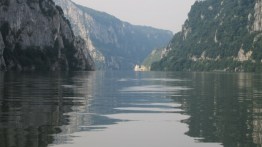
For much of its history the Danube has been a disappointment. It looks so tempting on the map but, far from being a natural motorway for trade and ideas, its sheer awkwardness has thwarted generations of visionaries, engineers, soldiers and dictators. Freezing up, expanding into baffling flood-plains, racing through narrow defiles and randomly scattered with dangerous islands and hidden rocks, it has at best tended to function only for fishermen and the most local trade. Until the 19th century there was the additional problem, from a western point of view, of its lower reaches having Turkish owners who, as customers, had the disadvantage of wanting to kill or enslave everyone upriver.

The men who invented Napoleon

From our UK edition

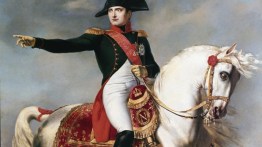
Writing about Napoleon is a risky business. It exposes the author to the brickbats of the blind worshippers for whom he is a numinous hero and the equally challenged detractors who see in him only the petty tyrant. By the same token, most historians find themselves negotiating a slippery path between approval and censure of this most controversial and somehow still very relevant figure. It is one of Philip Dwyer’s great merits that he remains so detached from his subject that he makes the reader forget his own prejudices. He approaches it with the discipline of a chemist in his laboratory: he is understanding of his protagonist but not sympathetic.

To see how good Journey’s End is, just look at who it’s offended

From our UK edition

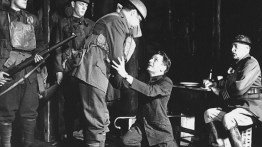
‘You have no idea,’ wrote the publisher Ralph Hodder-Williams in 1929 to one of his authors, what terrible offence Journey’s End has given — and terrible pain too, which is a great deal more important. I think you will agree that the chronic alcoholic was extraordinarily rare. He was referring to R.C. Sherriff’s controversial tragedy of the trenches, which was then, 11 years after the war, enjoying an unexpected box-office success in the West End, where it played for nearly 600 performances. Its success came as a surprise, not only because Sherriff (1896–1975) was an unknown writer, and exclusively male war plays were not particularly popular, but also because audiences were expected to sympathise with an unusual war hero.

Why is Doris Kearns Goodwin raking up old muck?

From our UK edition

Theodore Roosevelt and the Progressive Era are well-worn subjects for both professional and amateur historians, so it’s pertinent to ask why Doris Kearns Goodwin devoted so many words —and her considerable reputation — to the writing of The Bully Pulpit. Kearns’s thesis seems clear enough: at the close of the 19th century, mythically egalitarian America was in reality teetering on the brink of genuine class warfare. Something urgently needed to be done to prevent an explosion between a furious, increasingly violent labour movement and a cohort of arrogant monopoly capitalists, whose collusion with corrupt politicians had made them virtually invulnerable. Economic strife had stretched the social fabric to breaking point.

What nannies know

From our UK edition

Soon after moving to London at the age of 20, Nina Stibbe wrote to her sister Vic saying, ‘Being a nanny is great. Not like a job really, just like living in someone else’s life.’ She was working for Mary-Kay Wilmers, the editor of the London Review of Books, and her letters home to Lincolnshire give a hilarious picture of her new life. She gets on well with her charges, Sam (ten) and Will (nine), treating them as equals and often playing tricks on them: Sam was invited to supper at the Tomalins’ — his first ever (official, evening) meal. Told him that Claire had rung to ask him to bring a potato with him. Will and me thought it was hilarious when Sam set off with a potato in one hand and his football cards in the other.

Weaving Scotland’s history

From our UK edition

A couple of years ago, while tracking down paintings for the Public Catalogue Foundation in the far north of Scotland, I had the chance to see a rarely displayed sequence of banners, created in 1993, telling the story of Earl Rognvald’s epic voyage to Jerusalem in 1151. Suspended between the pillars of the shadowy nave of St Magnus Cathedral in Kirkwall, the 14 huge paintings, the work of four different artists with words by George Mackay Brown, had an extraordinarily powerful and moving effect. The scale of the enterprise, the narrative, and the fact that it was the product of collaboration seemed to be as much a part of the success as the quality of the work itself.

What took Francis Mitterrand to the top?

From our UK edition

Of a dashing political rival, François Mitterrand once remarked: He was more intelligent than I was, he thought faster than I did, he was more seductive to women. In some ways, he gave me a complex. But he lacked perseverance. The man of whom Mitterrand spoke was a certain Félix Gaillard, whose claim to fame during the Fourth Republic was to become France’s youngest ever prime minister at the age of 38. He lasted barely five months in the job (1957–58) and was never heard of again. As Philip Short — who has previously written works on Mao and Pol Pot — makes mordantly clear in his well-rounded, albeit meandering biography, Mitterrand’s career path to the summit of French politics was an altogether more tortuous and drawn out affair.

Deserter, wifebeater, great poet: the shame and glory of Vernon Scannell

From our UK edition

Vernon Scannell was a thief, a liar, a deserter, a bigamist, a fraud, an alcoholic, a woman-beater and a coward. Plenty of material for a biography, then, especially given that he was also a novelist, a critic, a memoirist, a boxer, a teacher, a broadcaster, a loyal friend, a passionate lover and ‘a fun grandfather’. Most of all, he was a poet. Walking Wounded was the title of a Scannell poem and collection published in 1965, and James Andrew Taylor is right to use it as the title for this biography. Beaten viciously by a thug of a father, uncomforted by an unloving mother, by the time he was 19 he was himself a father (of a son he never met) and a soldier, and soon to be a deserter, wounded chronically in mind if not in body.

In defence of Herodotus

From our UK edition

How many writers would give their eye teeth to have a book reissued 2,500 years after their death? It certainly beats being pulped after a year or two. And who better to receive the Penguin Hardback Classic treatment than Herodotus, the fifth-century BC ‘Father of History’, he to whom historians today owe so much, whether they know it or not? This is a new translation. of a book that remains more relevant than ever. by the popular historian Tom Holland, with an introduction by the Cambridge professor Paul Cartledge, doyen of classicists, citizen of Sparta and a Herodotean to the core.

Secrets of the Kremlin

From our UK edition

A building bearing testimony to the power of eternal Russia; a timeless symbol of the Russian state; a monument to Russian sovereignty. To the modern eye, the Kremlin fortress seems as if it had always been there, as if it had never changed and never will. All of which is utter nonsense, as Catherine Merridale’s fascinating history reveals: the story of this famous compound is not one of continuity, but of construction, destruction and reconstruction. Every reincarnation of the Russian state over the centuries — and there have been many — has been accompanied by a corresponding reincarnation of the Kremlin. Its history is thus a metaphorical history of Russia, as Merridale understands very well.

How honest was Bernard Berenson?

From our UK edition

When the great Jewish-American art expert Bernard Berenson died in 1959, he had acquired the status of a sort of sage. He was the relic of a prewar culture that had vanished. He was an embodiment of the idea of connoisseurship that had at once given birth to a great boom in art collecting and yet that was, by the end of his life, being superseded. When Berenson embarked on the career that would see him widely accepted as the world’s foremost authority on Old Masters, the painters of the Italian Renaissance were barely regarded in the US. He died — at 94 — in the age of Andy Warhol. The very span of his life gives his story resonance.

The mad, mum-fixated maiden aunt of modernism

From our UK edition

Marianne Moore’s poems are notoriously ‘difficult’ but her personality and the circumstances of her life are as fascinating today as they were to the avant-garde writers and artists of 1920s New York. Much of the fascination lies in the contrast between what Linda Leavell calls Moore’s ‘maiden-aunt persona’ and her position as a ground-breaking modernist, whose highly idiosyncratic verse and technical experimentation dazzled and baffled her contemporaries.

Google Images can’t spoil the fun — here are the most gorgeous art books of the season

From our UK edition

Good news for the festive season — the inexorable rise of the virtual image on our computer screens, tablets, and mobile phones would appear to have done nothing to diminish the flood of gorgeously produced art books being published. This year’s selection ranges in time from the third century AD to now, and reaches all over the globe. First up is Antony Eastmond’s The Glory of Byzantium and Early Christendom (Phaidon, £59.95, Spectator Bookshop, £49.95), which is in essence a sumptuous anthology of 267 unusually carefully chosen highlights, bookended by a short but profound introduction and an exceptionally useful glossary.

Hugo Rifkind’s My Week reminds me why it’s worth getting up on Saturdays

From our UK edition

‘Nothing’s funny any more’ has become the daily mantra of this magazine’s cartoon editor, Michael Heath. Thanks to Leveson, political correctness, taste and common decency, lampooning public figures in particular has become more difficult than ever. Hugo Rifkind still has the right idea. From the despair of trying to conjure up a column for the Times’s Saturday edition, he came up with ‘My Week’, and these diaries, in which he takes aim at someone — usually in politics — who has dominated the news, are now the first thing many people turn to. This compilation brings together his best sketches in an enticing bible of satire. The merriment gained from the material is dependent on whom Rifkind has to work with.

The book that Boris should give to all seniors, along with their Freedom Passes

From our UK edition

The Death of Ivan Ilyich is a story for the older reader. One might go so far as to suggest that local authorities should give ‘seniors’ a copy free with their euphemistically named ‘Freedom Pass’ as a reminder of the longest journey they will ever take. Boris’s memento mori. Perversely, because it is short and by a writer whose name is better known than his work is read, The Death of Ivan Ilyich routinely appears on ‘Great Books’ courses for the young — to whom the story manifestly does not speak, since the young know they will never die. The narrative opens with the announcement of the death of a senior public prosecutor, Ivan Ilyich, to his assembled colleagues. Their faces are properly grave on receiving the sad news.