Jesse Norman

Daily life at the 18th-century Bank of England

From our UK edition

The England cricket team was once greeted at an Ashes test by an Australian banner with the immortal words ‘WOTHAM IS A BANKER’, the simple genius of the line being that you knew Wotham was being insulted before you had worked out quite who Wotham was, or what exactly he was being accused of. But, as Anne Murphy reminds us, the word ‘banker’ was not always just a word of abuse; it could also denote personal probity, sobriety, a certain nitpicking stolidity of thought, above all a preoccupation with credit and public confidence. It was not automatically oxymoronic to think of ‘virtuous bankers’.

How the rebels plan to finish off Boris

From our UK edition

45 min listen

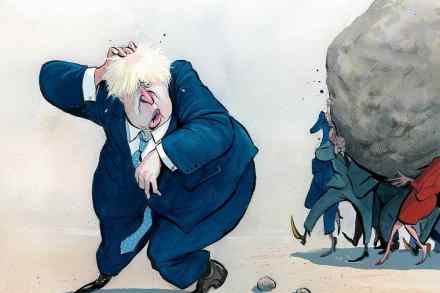
In this week’s episode: Is the Prime Minister a dead man walking? Spectator Political Editor James Forsyth and MP Jesse Norman who expressed no confidence in Monday's vote discuss the future of Boris Johnson and the Conservative Party. (00:45)Also this week:Why is there so much virtue signalling in modern advertising? Spectator Columnist Lionel Shriver and veteran copywriter Paul Burke discuss its origins, its prevalence, and its effectiveness. (20:20)And finally:Is the dinner party dead? Gus Carter writes in The Spectator this week about how he is never invited to any. He’s joined by Mary Killen to give him some tips on planning a sophisticated bash on a budget.

Why I can no longer support Boris Johnson

From our UK edition

Dear Boris, As you know, I have supported you throughout your career in politics: for Mayor of London in 2008 and 2012, and for Leader in 2016 and 2019. As Prime Minister, you have been dealt a very difficult hand with Covid and Ukraine, and you deserve great credit for much of the way in which the Government has handled these twin crises. Your recent visit to Kyiv was a conspicuous act of leadership. When I stepped down from the Treasury last September, you raised the topic of the next reshuffle, and we discussed the potential for me to run a department of state. I have always been deeply committed to public service.

The Enlightenment was a many-splendoured thing

From our UK edition

History used to be so much easier. There were the Wars of the Roses, then the Reformation, the Civil War, the Enlightenment and finally the Victorians. Each one had its own century and its distinctive tag. Throw in Henry VIII and Elizabeth I, garnish with a few zealots and adventurers, some glorious triumphs and some grisly deaths. It was all part of our Island Story. You knew where you were. Take the Enlightenment, for example. Everyone knew that this was the Age of Reason: the moment when science finally started to impose order and banish religion. The French rationalists had their heyday, Voltaire, the philosophes and all that, before they were vanquished by the Scottish empiricists David Hume and Adam Smith and the great commercial acceleration of the late 18th century.

My clash with Cameron

From our UK edition

MPs have a standard approach to political biographies, which falls into three phases: first, preliminary gossip about what will or won’t (always a lot more interesting) be in it; second, mildly salacious enjoyment of the usually tepid leaks and excerpts in the press beforehand; and third, once the book comes out, the inevitable furtive rummaging through the index to see if they get any mentions. Stage three is hardly restricted to MPs, of course: William F. Buckley famously sent Norman Mailer a book with ‘Hi Norman’ inscribed in the index, knowing Mailer would look there first.

Wrong but revered

From our UK edition

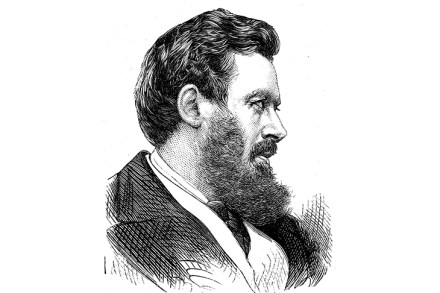
Who was Walter Bagehot? For generations of politics students he has been the all-but-unpronounceable — Bayge-hot? Baggott? — author of the magisterial The English Constitution (1867). Since the 2008 crash he has enjoyed a vogue among central bankers for Lombard Street (1873), his brilliant anatomisation of the City of London. He remains the most revered, though not the first, editor of the Economist. The historian G.M. Young wrote in 1937 of him: We are looking for a man who was in and of his age… with sympathy to share and genius to judge… whose influence… can still impart, the most precious element in Victorian civilisation, its robust and masculine sanity. In short, ‘the greatest Victorian’.

Politics trumps trade

From our UK edition

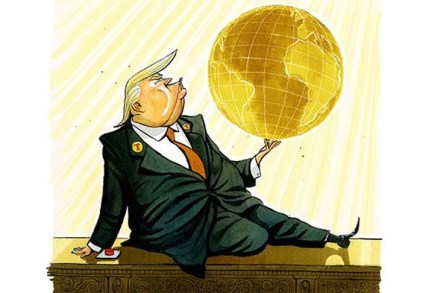
‘What the hell is going on?’ That anxious wail of economic incomprehension has been heard ever since President Trump decided last January to impose tens of billions of dollars of tariffs on China and other countries, including Canada, Mexico and the member states of the EU. The wail went up another octave last week as the White House announced a further $200 billion in tariffs. Among the politicians and think tanks of Washington DC, where I have spent the past few days, there is talk of little else; talk rendered more feverish by the prospect of midterm elections in November. A hundred billion here, a hundred billion there — pretty soon we could be talking real money.

John Law pioneered ideas about banking and monetary policy that are important to this day

From our UK edition

John Law was by any standards a quite remarkable man. At the apogee of his power in 1720, he was the richest private citizen in Europe and controller-general of finance in France, responsible not merely for the country’s income and expenditure but for its commerce, navigation, agriculture and industry. He created and presided over one of the earliest and greatest of all stock market boom-and-busts, that of the ‘Mississippi Company’, and inspired another, the South Sea Bubble. And he pioneered ideas about banking, monetary policy and financial markets that were revolutionary in his own time, and retain their importance three centuries later. Yet Law was not French, not a noble, not an intellectual.

A law unto himself

From our UK edition

John Law was by any standards a quite remarkable man. At the apogee of his power in 1720, he was the richest private citizen in Europe and controller-general of finance in France, responsible not merely for the country’s income and expenditure but for its commerce, navigation, agriculture and industry. He created and presided over one of the earliest and greatest of all stock market boom-and-busts, that of the ‘Mississippi Company’, and inspired another, the South Sea Bubble. And he pioneered ideas about banking, monetary policy and financial markets that were revolutionary in his own time, and retain their importance three centuries later. Yet Law was not French, not a noble, not an intellectual.

Polemicist of genius

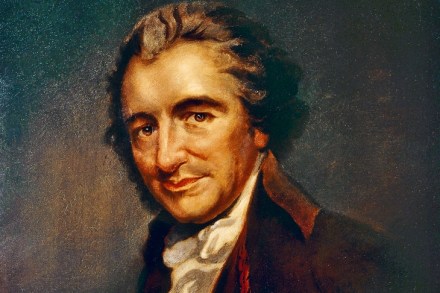
‘We have it in our power to begin the world over again.’ Ronald Reagan made this most unconservative of lines a leitmotif of his 1980 presidential campaign, knowing its radicalism would highlight his energy, personal optimism and desire for change. As it duly did. The astonishing power over words of its author, Thomas Paine, persists to this day. In a letter of 1805, the former president John Adams said of Paine that there can be no severer satyr on the age. For such a mongrel between pig and puppy, begotten by a wild boar on a bitch wolf, never before in any age of the world was suffered by the poltroonery of mankind, to run through such a career of mischief.

Passion, authority and the odd mini-rant: Scruton’s conservative vision

From our UK edition

Roger Scruton is that rarest of things: a first-rate philosopher who actually has a philosophy. Unfortunately at times for him, that philosophy is a conservative one. But his personal loss has been our great collective gain. As his new book again demonstrates, over the years his has been one of the few intellectually authoritative voices in modern British conservatism. In 1980, at the outset of the Thatcher decade, Scruton wrote The Meaning of Conservatism, a book which reportedly blighted his academic career: it remains an embarrassment to the British Academy that he was not made a Fellow until 2008. Academia may be softening at last, as his various professorships at Oxford and St Andrews testify. Yet living by his wits has not served him so badly.

Where did the Right and the Left come from? 

From our UK edition

What is the origin of left and right in politics? The traditional answer is that these ideas derive from the French National Assembly after 1789, in which supporters of the King sat on one side and those of the revolution on the other. Yuval Levin in The Great Debate, however, argues not for seating but for ideas: that left and right enter the Anglo-American political bloodstream via the climactic public clash in the 1790s between Edmund Burke and Thomas Paine, the prime movers in a pamphlet war that convulsed opinion and engaged readers on two continents. If this is right, then the touchstone of modern political debate in Britain and America is not capitalism v. socialism, or religious fundamentalism v.

Diary – 7 July 2012

House of Lords reform is like a dose of the clap: it may feel good at the time, but the result is an unending pain in the proverbials. I can’t, er, speak from personal experience, but even the briefest glance at the government’s plans to elect the Lords makes the point. The new bill comes to the Commons next week, for what promises to be a stormy debate. It’s a disastrous hotchpotch which will create a free-floating class of electorally empowered senators on 15-year terms, with no constituencies and no possibility of re-election to discipline them. Even Lord Strathclyde, Leader in the Lords, has admitted that the new senators will have no accountability. Result: competing chambers, legislative gridlock, cronyism, and a free pass for the government of the day.

Borneo Notebook

From our UK edition

••• After a week in the jungle, it is perfectly clear to me that in any contest for creepy-crawly capital of the world, Borneo would be right up there with no questions asked. They tell you about the mosquitoes. What they don’t tell you about are the leeches, which are everywhere. The ordinary brown kind lie in wait on the path, rearing up like two-inch mini-Godzillas full of gangster attitude and the will to win. Used to chomping through boar and mouse-deer hide, they made short work of my hiking socks. They pump up from matchstick to chipolata size in a few minutes if you don’t catch them quickly, and inject an anticoagulant so you end up bleeding for hours after the bite.