Book review

The harrowing, inspiring life of Andrew Sachs

From our UK edition

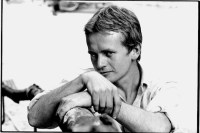
Comedians always like to claim that they started making jokes after childhoods made harsh by poverty; that at a formative age they were tormented by appalling cruelty and neglect. Griff Rhys Jones had to leave Wales at the age of six days, for instance. Nevertheless, the Chaplin family could afford a maid in Kennington. The Leeds of Alan Bennett and the Morecambe of Victoria Wood always sound cosy — as does the Hadley Wood of Eric Morecambe; and there was not much wrong with Barry Humphries’s salubrious Melbourne, though I concede it has been knocked flat by ‘developers’ since. But with Andrew Sachs the horrors were very real. Aged eight, ‘I stood open-mouthed as a number of men, wielding wooden clubs, shattered the front of a shoe shop.

Queen Victoria with the naughty bits put back

From our UK edition

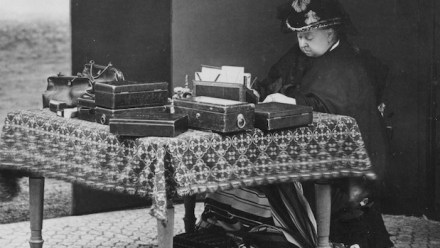
Queen Victoria was the inventor of official royal biography. It was she who commissioned the monumental five-volume life of Prince Albert, a controversial and revealing work. She wrote most of the personal sections herself. She also published bestselling volumes, such as Leaves from a Journal of Our Life in the Highlands. She was a gifted and prolific writer, penning an estimated 2,500 words a day. When she died in 1901, however, there was no authorised biography. Instead, the decision was made to publish her letters. People tend to assume that letters are the truth but, as Yvonne Ward shows in this original and engaging book, selection is everything. The idea of editing Victoria’s letters originated with Lord Esher.

A master craftsman of the anecdote

From our UK edition

One of the many charms of this book is its sheer unexpectedness, which makes it hard to review, for to reveal the brilliancies too fully would spoil their effect. My copy is splattered with exclamation marks. For example, on page 65 the author is working on a piece of delicate silver jewellery that will become the ‘Two Turtle Doves’ of the title while singing along to ‘Hersham Boys’ by Sham 69, a punk band of the 1970s associated with skinhead violence. Exclamation mark. Two pages later, and years earlier, he is playing ping pong with Benjamin Britten. Two exclamation marks.

What other job lets you swear in front of your parents?

From our UK edition

There aren’t many jobs that allow a nice middle-class Jewish boy to say ‘fuck’ in front of his parents. But Jonathon Green found one: compiling slang dictionaries. This memoir of a life spent exploring the grubby margins of the English language reveals plenty about both that language and Green himself. When a man loves reading so much that he does it even while brushing his teeth, material won’t be lacking. The ‘parents’ line is Green’s stock reply to the ‘why did you choose your job’ question. But the analysis goes deeper. ‘That Jew thing’, as he calls it, features heavily.

Gay Paree: food, feuds and phalluses – I mean, fallacies

From our UK edition

In his preface to The Joy of Gay Sex (revised and expanded third edition), Edmund White praises the ‘kinkier’ aspects of homo-erotic life. Practical advice is given on frottage, spanking, sixty-nining, cruising, blowjobs, fisting, rimming and three-ways. Of course, Proust-inspired poetic exaltations to homosexual love have long characterised White’s fiction, from A Boy’s Own Story to Hotel de Dream. Yet White is no mere popinjay in thrall to high-flown campery; his mind is drawn to some very dark places. Between 1983 and 1999, as an ardent Francophile, White elected to live in Paris.

Can anyone make a good case for the Stuart kings?

From our UK edition

Historians have generally not been kind in their assessment of Britain’s first two Stuart kings. Their political skills are regarded as meagre; their objectives malign; their one undisputed talent an unerring ability to alienate their subjects — with rebellion and civil war as the result. To his credit, Tim Harris, in his formidably large and well-researched new ‘study of the kingship’ of James I and Charles I, raises a voice in dissent. He is by no means blind to the Stuarts’ failings: James’s profligacy, and fondness for the sound of his own voice; Charles’s unbending self-righteousness and notorious aloofness from his subjects and even his own court.

Lawlessness, corruption, poverty and pollution: the city where we’re all headed

From our UK edition

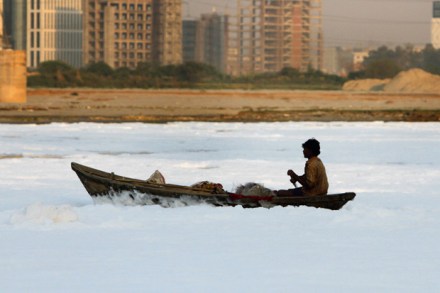
Rana Dasgupta, who was born and brought up in Britain, moved to Delhi at the end of 2000, principally to pursue a love affair and to write his first novel. He soon found himself mixing in bohemian circles, spending his evenings in ‘small, bare and, in those days, cheap’ apartments, talking with ‘artists and intellectuals’. These are not the people, nor is this the life or the city that he describes in Capital. The book’s title is in fact a pun, since its principal subject is money: how it is acquired, how it is spent and what it has done to Delhi and its citizens.

What E.M. Forster didn’t do

From our UK edition

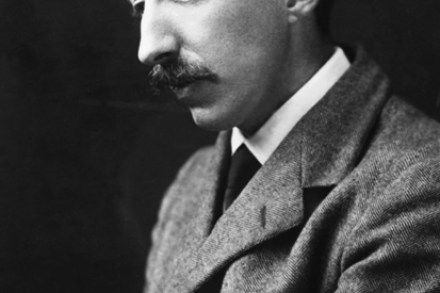
‘On the whole I think you should write biographies of those you admire and respect, and novels about human beings whom you think are sadly mistaken,’ said Penelope Fitzgerald in 1987. The South African novelist Damon Galgut has reversed this formula — with mixed results. He has written a novel about a fellow novelist, E.M. Forster, using episodes and quotations taken from a conscientious reading of biographies, diaries and letters. He salutes Forster as a writer and commends his humanity; but it is not clear whether he thinks Forster was sadly mistaken in his sexual bearings or lame in his choices.

Sometimes one story is worth buying a whole book for. This is one of those times

From our UK edition

Any new book by Lorrie Moore is a cause for rejoicing, but her first collection of short stories for 16 years demands bunting, revelry and tap-dancing. She is one of a handful or two of writers (I’d nominate Anne Tyler, William Trevor, Martin Amis, Kazuo Ishiguro among the rest) whose work is always worth buying. With lesser authors a tepid review might discourage purchase, but Lorrie Moore can fall foul of critics yet still be immensely entertaining. So it is with Bark. The book begins with an absolutely marvellous long story, ‘Debarking’, in which almost every paragraph contains a fresh delight, something so funny and so true that the reader must exclaim aloud.

How Denmark’s Jews escaped the Nazis

From our UK edition

Of all the statistics generated by the Holocaust, perhaps some of the most disturbing in the questions they give rise to are the following. Of the Jews in Hungary, the Netherlands, Greece, Latvia and Poland, between 70 and 90 per cent died, while the corresponding figures for Estonia, Belgium Norway and Romania were between 40 and 50. In France and Italy somewhere around 20 per cent perished. In both Bulgaria and Denmark, however, just one. Bo Lidegaard’s Countrymen is the story of how Denmark to a great extent saved its  Jewish population from the labour and extermination camps, but it inevitably raises issues of equal relevance to the rest of Europe.

Lords, spies and traitors in Elizabeth’s England

From our UK edition

There are still some sizeable holes in early modern English history and one of them is what we know — or, rather, do not know — about the aristocracy. Of course, peers who held high office under the Crown often have their biographers. But there is still a rooted assumption among scholars that the aristo-cracy as a caste or class was in decline during and after the later 16th century. If the papers have not survived, we are left with little idea about a peerage family apart from snippets of information and the odd anecdote. Also, the sort of documents which tend to get kept are the ‘boring’ ones — estate papers, rent rolls and such like. Much less frequently preserved are the family’s private and confidential papers and letters.

The spy who came in from le Carré

From our UK edition

The single most terrifying moment of my adult life occurred at 8.55 a.m. on the morning of Tuesday 5 August 2008. I had a written a novel, Typhoon, in which disenfranchised Uighur Muslims in China’s Xinjiang province riot against the Han government. By coincidence, a few days before publication, large numbers of Uighurs started doing exactly that, in a curious real-life echo of the book. James Naughtie had read Typhoon and wanted to get me onto the Today programme to talk about it. It was like receiving a royal summons. But as the minutes ticked down towards the interview, I was transformed into a pitiless, gibbering wreck, so nervous of making a fool of myself on national radio that I was tempted to bolt for the door. Naughtie could see he had a problem.

The Edward Snowden scandal viewed from planet Guardian

From our UK edition

Last summer a National Security Agency (NSA) contractor called Edward Snowden leaked a vast trove of secret information on the mass data-gathering of his erstwhile employer and Britain’s GCHQ. He was widely lauded on the political left and libertarian right as a principled whistle-blower. Elsewhere he was derided as a naïve enabler of America’s enemies or as a traitor. His revelations provoked outrage from South America, cold fury from Germany and a warm smile from China and from Russia — where Snowden is currently granted asylum. The Guardian newspaper co-operated with Snowden in releasing this material, as they did with Julian Assange before him.

Kim Philby got away with it because he was posh

From our UK edition

The story of Kim Philby is, of course, like so many English stories, really one of social class. He was one of the most scandalous traitors in history, and from within the security services sent specific information to the Soviets during the early years of the Cold War that resulted directly in the deaths of thousands of men and women. Among them were the Albanian guerrillas, hoping to liberate their country, who found Soviet-sponsored troops waiting at their landing places to shoot them. A list of non-communist opposers to the Nazis in Germany was passed on to the Russians who, advancing into Germany in the last years of the war, summarily executed 5,000 named people.

‘One warm night in June 1917 I became the man who nearly killed the Kaiser’

From our UK edition

The traditional story told about the first world war is that it changed everything: that it was the end of the old world and the beginning of the modern age, and that art and poetry could never be the same again. So it is refreshing to find, not far into Lance Sieveking’s amiable and haphazard memoirs, the claim that ‘I didn’t realise it at the time, but in 1919 I was a comparative rarity: a complete young man, a man with two arms, two legs, two lungs, two eyes.’ He had fought in the war, and came home unscathed, and that was that. Airborne: Scenes from the Life of Lance Sieveking is a slightly otherworldly book: a collection of agreeable stories drawn from a colourful life, all told with good humour and very little fuss. It reads like a document from a lost time.

Sex, secrets, and self-mortification: the dark side of the confessional

From our UK edition

I have a confession to make. I really enjoyed this book. It’s been a while since I admitted something of the sort, and I feel ashamed, because, although it’s smartly, smoothly written, my pleasure was partly based on titillation. I smirked — I occasionally snickered — at the madder facts of self-mortification, whereby in the Middle Ages the (frequently female) faithful might flaunt their holiness in acts of rank humility. Elizabeth of Hungary kissed the feet of lepers; Margaret Marie Alacoque ate vomit; Catherine of Genoa, it’s said, sucked the pus of a plague victim. More than this, though, John Cornwell’s history of confession is preoccupied with sex, which always helps the pages riffle past.

Want Hollywood’s conventional wisdom? Then read Blockbusters

From our UK edition

You can learn a lot from this book. Latin America has a smaller economy than Europe. Big companies can spend more on advertising than small ones. Maria Sharapova is attractive. Given that the book is written in the dullest of academic prose, there may even have been a paragraph I missed about how there is a Tuesday in next week. I’ve often wondered what they taught in business schools and if this book, which has Harvard Business School plastered all over it, is a guide then the main subject is the stunningly obvious. On 20 June 1975 Universal released Steven Spielberg’s movie Jaws with a spend on television advertising and an opening in hundreds of cinemas, both of which were unprecedented at that time.

Pick of the crime novels

From our UK edition

Stuart MacBride’s new novel, A Song for the Dying (HarperCollins, £16.99, Spectator Bookshop, £14.99), is markedly darker in tone than his excellent Logan McRae series. Set in a fictional Scottish city where a miasma of corruption oozes out of the very stones, most of its characters are sadistic, victimised or both. The narrator, Ash Henderson, appeared in an earlier, equally bleak novel. Now an ex-detective inspector, he’s being systematically persecuted in prison (where most of the other inmates seem to be former cops as well). Matters look up, at least for Henderson, when he is temporarily, if implausibly, seconded to help investigate a serial killer known as the Inside Man, who murders women and sews dolls into their stomachs.