Bbc

The best radio at the moment is on the BBC World Service

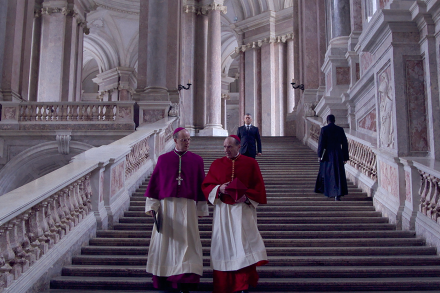
Online viewings of Conclave increased threefold following the death of Pope Francis last month. At least some of the traffic was rumoured to have come from the Vatican itself. This raises many questions, but the most pertinent for me this week is, what did the cardinals think of the carpets? Do they really have coffee machines in their rooms like Tremblay? Minibars like Bellini? Their peace spoiled by the sounds of a lift shaft as in the case of long-suffering Lawrence? If any of these details passed you by, it’s worth watching the film again. In fact, after listening to an interview with the production designer, to be broadcast on BBC World Service next week, you will feel positively compelled to do so.

Those remaking Threads mustn’t soften the horror

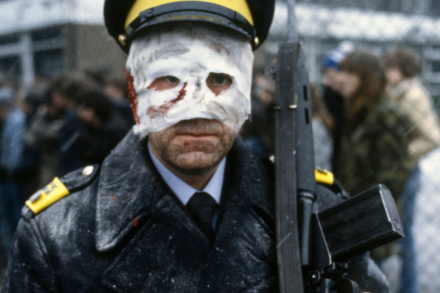
I was 11 years old when I saw the mushroom cloud go up but this wasn’t Hiroshima or Nagasaki in the 1940s – it was Sheffield in the 1980s. I was one of nearly seven million people who sat down on the evening of 23 September 1984 to watch a BBC drama called Threads, written by Barry Hines. For many viewers, choosing to watch this film about a nuclear attack on Britain turned out to be an epochal decision. Threads begins as a kitchen-sink drama, focused around a young couple in Sheffield. The realism of their lives is deftly blended with a documentary narration, making everything seem as real as any fictional drama ever could.

My friend the people smuggler

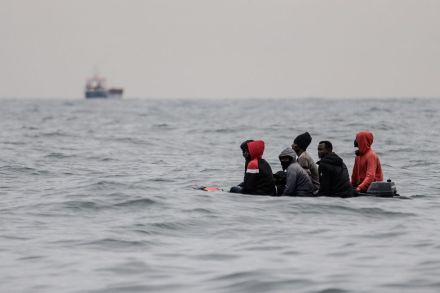
Usually when I start listening to a true-life podcast, I don’t know how it ends. That’s not the case with The Smuggler, BBC Radio 4’s new investigation into people smuggling. Across ten episodes, its Orwell Prize-winning presenter, Annabel Deas, tells the story of ‘Nick’, on the face of it an unlikely protagonist. Nick is white, English and a former soldier in the British Army. He’s also a friend of mine. We met in jail in 2021 and have stayed in contact ever since. So I know Nick’s story. I even know how it ends. Despite all this, I found myself absolutely gripped by The Smuggler. This is partly because it’s such a fascinating, and timely, topic. Migration is rarely out of the news. Keir Starmer keeps promising to ‘smash the gangs’ and ‘stop the boats’.

The BBC’s war on the SAS

The SAS is under fire, not from terrorists or insurgents, but from ill-informed commentators and our state broadcaster. Our Special Forces are globally respected, they have been a vital part of Britain’s national security capability for nearly 80 years and they run enormous risks so that we might all be kept safe. Nevertheless, an exercise in making sure that they, like all who serve the Crown, are held properly to account risks being used by the ignorant, the sensationalist and the malicious to undermine the regiment and weaken our security.

The BBC’s problems go far beyond Gary Lineker

As one might expect from a 103-year-old organisation, the BBC has a very high opinion of itself. Outside Broadcasting House stands a statue of George Orwell. Inscribed next to it is a quotation by him: ‘If liberty means anything at all, it means the right to tell people what they do not want to hear.’ A noble sentiment, and a more flattering testament to the corporation than Orwell’s description of it after working there during the second world war: ‘Something halfway between a girl’s school and a lunatic asylum.’ In his growing outspokenness, the football pundit Gary Lineker might have thought that he was channelling Orwell.

The overlooked brilliance of BBC’s The Hour

With reluctance – but enticed by its surprisingly starry cast and the fact that it had landed, ironically enough, on Netflix – I recently tuned in to The Hour, the BBC’s 2011 political drama series. It's about a BBC TV news programme being launched in 1956, against the backdrop of the Suez Crisis. And, goodness me, isn’t it good? Better than good, in fact – it’s a high-carat television diamond, and not some lab-grown job either, but the real, romantic, sparkling deal hewn out of the earth and hawked via Antwerp before ending up in the Imperial State Crown.

Biden has learned nothing from his foreign-policy experience

From our US edition

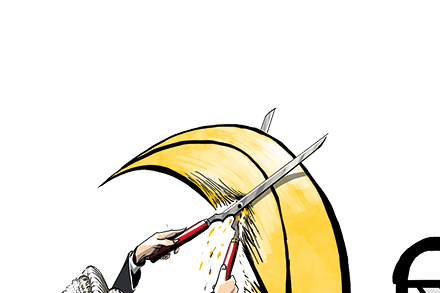
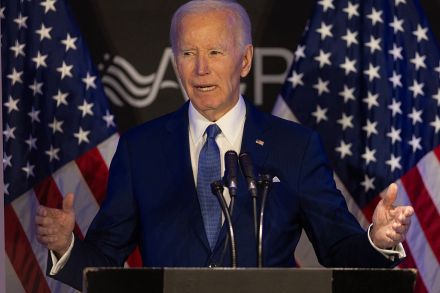
Historically, ex-presidents spend their golden years on the speaking circuit, writing their memoirs or planning for the inauguration of their presidential libraries. What they don’t do is lash out at their successors when they disagree with a policy or decision. Joe Biden, however, has no intention of keeping quiet. A little more than three months after vacating the White House, Biden is unencumbered from conventional decorum and feels free to speak his mind. Last month, he gave his first post-presidency speech in Chicago, where he blasted the Trump administration for taking a sharp hatchet to the federal workforce, including the Social Security Administration.

biden russia

The Kirsty Wark Edition

30 min listen

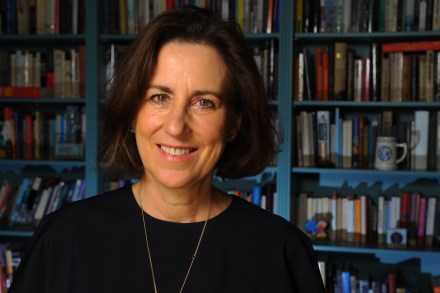
Kirsty Wark has worked for the BBC for almost 50 years and is one of the UK’s most recognisable broadcasters. In 1976 she joined BBC Radio Scotland as a graduate researcher. Having produced and presented several shows across radio including The World At One and PM, she switched to television, and went on to present shows such as Breakfast Timeand The Late Show. However, she is best known for presenting BBC Newsnight for over 30 years, which saw her interview key political and cultural leaders. Having stood down after the 2024 election, she now presents Front Row, The Reunion, and documentaries like Icons of Style.

‘I’ve seen controllers come and go’: Radio 3’s Michael Berkeley interviewed

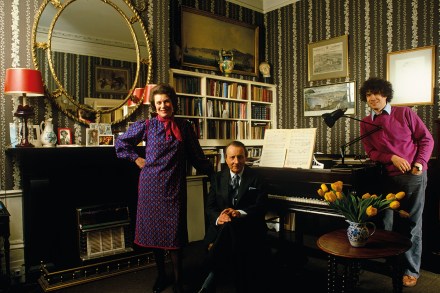
A few years ago I had a panic-stricken phone call from a female friend. ‘Help!’ she wailed. ‘Remind me what classical music I like. I think I’m going to be a guest on Private Passions.’ I could understand her anxiety. The programme, which celebrated its 30th birthday this month, is BBC Radio 3’s lofty version of  Desert Island Discs. Eminent writers, scientists, artists and businessmen, plus the occasional book-plugging celeb, explain how music – mostly but not exclusively classical – is, well, one of their private passions. Even if, as in the case of my friend, it isn’t. It’s an honour to be asked on the show, which is presented by Michael Berkeley – the first classical composer since Benjamin Britten to be elevated to the House of Lords.

When will the BBC ever learn?

They say that death and taxes are the only certain things in this life. I would add BBC bias into that mix. It was probably about 20 years ago that I first went on Newsnight. In those days Jeremy Paxman ruled the roost and taught me an early lesson in live television. Jeremy asked me my view and I gave it. He then turned to the other guest and duffed him up a bit. I made the mistake of smiling briefly, only for Paxman to turn on me and say something along the lines of: ‘I don’t know what you’re grinning about.’ He then proceeded to duff me up a bit too. Lesson learned. Back then, when you left the Newsnight studio, your phone would explode. Like Question Time some decades ago, it was must-watch television.

Impeccable history of the free market – and from the BBC too

The launch of Radio 4’s Invisible Hands series has been both blessed and cursed by timing. It tells the story of Britain’s ‘free market revolution’, just as President Donald Trump overhauls the free trade consensus of the past 40 years and world leaders grapple with how to respond. The problem is the hypotheticals posed at the start of the first episode – that free market capitalism ‘might be in crisis’; that ‘the global free market might be under threat’ – are already out of date. It’s settled. Free trade is out, tariffs are in. Welcome to the trade wars. The world could do worse than look to the ‘Invisible Hands’ for a solution to the crisis.

Heaven is an oeuf en gelée

The cherry blossom was at its finest as I made my last early morning trip through Regent’s Park to Broadcasting House to present Radio 3’s Breakfast. When hire-bikes arrived in London, the planners were thoughtful enough to install a docking station outside my flat. I have used the heavy cycles for my commute ever since. Over the past 14 years I have become accustomed to the regular faces on my route: the man in an elegant dressing gown, surveying the morning scene while waiting for his dog to pee; the jogger who for some reason processes backwards along the pavement (whatever the supposed health benefits of his technique, I’ve always wondered how he avoids colliding with one of the elderly lampposts, some of which date back to the reign of George IV).

The liberating, invigorating music of Pierre Boulez

‘When you’re not offensive in life, you obtain absolutely nothing,’ declares a twinkly-eyed Pierre Boulez in one of the archive films that the Barbican were screening to celebrate the composer’s centenary. What a joy to be reminded of the young Boulez – the unashamed elitist, the unbeatable snob. Not even allies such as Schoenberg (too trad) and Messiaen (‘vulgar’) were safe from his tongue. To Boulez, pop music wasn’t good or bad; it didn’t exist. Ditto his own life. ‘I will be the first composer without a biography’, he proclaimed. Forget that Boulez was entangled in a love triangle with Camus’s mistress and for most of his time on earth screwing his valet, Hans… The music was everything.

Why did the BBC say ‘Muslim reverts’?

‘Revert’ as a noun rather than a verb sounds like one of those Victorian terms that went out of fashion in the 1960s and is now considered a slur. However, this was the term that the BBC website felt was appropriate to describe people who had converted to Islam, in an article published on Friday, before hurriedly amending it on Saturday morning. As it happens, this is the term used by some converts to Islam to describe their status within their new faith, based on the theological principle of fitra; the innate predisposition within all humans toward recognising the oneness of God. By this way of thinking, one does not become a Muslim, one ‘reverts’ to one’s true natural state. Nevertheless, it is not a term by any means in universal use.

Why no news is good news

I’m hiding from something I used to love: the news. It’s a common tendency these days – Loyd Grossman noted it in his Spectator diary recently, calling himself a ‘nonewsnik… unable to deal with a daily diet of misery and despair’. I understand the need to escape the depressing effects of war and economic turmoil. That’s part of my own reasoning too. But my main point is slightly different: it’s not so much that the news is depressing, it’s that the news is boring. We’ve been here before. Whatever the issue, we’ve faced the same old problems and run through the same old arguments. For my 50th birthday, a friend gave me a copy of the front page of the Times from the day I was born.

We need a modern Wogan

Nowadays whenever an elderly celebrity dies – consider the death last month of Gene Hackman as a case in point – one of the first things that happens is that a chunky clip of them appearing on a talk show such as Wogan or Parkinson gets shared on social media. Before you know it, you’ve spent three or four minutes listening to them regale television-watchers of the 1970s, 1980s or 1990s with a reflective anecdote or a personal story that reveals something important or even profound about their lives and animating passions or influences.

How ‘toxic’ poisoned our national conversation

There was a time when the word ‘toxic’ was applied in only a handful of circumstances. There was the stuff that occasionally oozed out of a power station into the North Sea and made the fish go funny. Or there was the substance that Christopher Lloyd would stick in the gull-wing doored DeLorean to make it go back to 1955. More prosaically there was the category of toxicity that included rat poison, bottles of bleach or those small sachets that drop out of cardboard boxes containing newly purchased electronic goods. They were generally labelled ‘toxic’ and for good reason. But then this all changed. I’m not exactly sure when it happened, but at some point in the space since Britney Spears’ 2003 hit of the same name and about five years ago, the word went bananas.

The woke movement is finally over

Is the ‘Cathedral’ about to fall down? That’s the name given by the right-wing blogger Curtis Yarvin to denote the 21st century’s most prestigious intellectual institutions, particularly in journalism and academia. He’s talking about the BBC, CNN, the Guardian, the New York Times, the Washington Post, Reuters, Oxford, Cambridge, Imperial, Harvard, Yale, Princeton, etc. But we can enlarge the definition to include nearly all the West’s high-status institutions and professions. One of the mysteries of the Cathedral, he says, is that the people in these power centres seem to be members of the same cult-like religious movement – the Great Awokening, Wokus Dei – even though there’s no Holy See responsible for its official doctrine.

The comedy genius of John Shuttleworth

There is a certain comic archetype that is particularly British. The likes of Pooter, Mainwaring, Hancock, Fawlty and Brent are in a tradition – going back to Falstaff, perhaps further – of hopelessly optimistic yet socially oblivious dreamers. One such character is John Shuttleworth, created and played by Graham Fellows. For the uninitiated, John Shuttleworth is a retired security guard and aspiring singer-songwriter from Sheffield who lives with his dinner lady wife and two children, Darren and Karen. He performs mainly at hospices and drop-in centres, often for no more than his travel money. His career is inexpertly managed by his next-door neighbour with whom John enjoys a generally warm, though occasionally fractious, relationship.

Booze now has its own Rest is History-style podcast

Intoxicating History is the perfect title for drinks expert Henry Jeffreys and food critic Tom Parker Bowles’s new podcast. Its theme is alcohol, but its contents are predominantly historical, which is good news if, like me, you are quick to apply the word ‘bore’ to any man who talks about wine for more than eight minutes. The first episodes came out before Christmas but they have been gathering momentum since Dry January. Today’s drinking culture, which has spawned this bizarre annual group sacrifice, has an interesting pedigree. Europeans have apparently been on their guard against boozing Englishmen for nearly a millennium. The Portuguese were certainly left in no doubt as to our reputation when we aided them in their Reconquista.