Astrazeneca

My bipartisan plan to break the vaccine impasse and end the pandemic

From our US edition

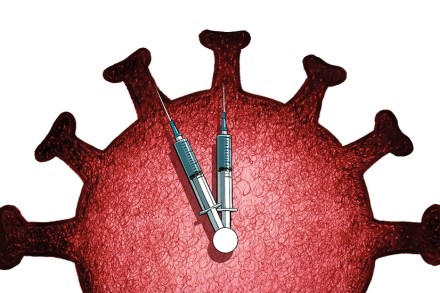
The Biden administration is desperate for some fresh ideas as they attempt to convince more Americans to take the COVID-19 vaccine. Between White House press secretary Jen Psaki, Dr Anthony Fauci and Dr Rochelle Walensky, we are constantly hearing about the White House’s latest creative ways to encourage people to get vaccinated. The administration seems eager to push the notion that all of the vaccine holdouts are Trump supporters. Unfortunately for them, recent studies suggest otherwise.
vaccine impasse

Should we be mixing AstraZeneca and Pfizer shots?

To date, the Covid vaccination programme in Britain has involved two doses of one of three vaccines – AstraZeneca, Pfizer or Moderna. But it has stuck rigidly to giving people two doses of the same vaccine. The NHS has not allowed patients to mix vaccines except in a few strict scenarios, such as allowing a second dose of Pfizer when someone developed a blood clot from a first dose of AstraZeneca. But could we actually improve vaccine efficacy by mixing doses? An Oxford study suggests that we could. The study recruited 830 volunteers who were given one vaccine shot. Some – on a blind, randomised basis – were, four weeks later, given a second shot of the same vaccine and others were given a different vaccine for their second shot.

Should the NHS mix Pfizer and AstraZeneca Covid jabs?

Should the NHS be mixing vaccines for better effect, or at least offering people who have had one dose of the AstraZeneca vaccine the choice of having the Pfizer vaccine for their second shot?  The question arises because that is exactly the regime which has been followed in Germany since the risk of clotting from the AstraZeneca vaccine became evident. When the German authorities made the decision to administer the Pfizer vaccine in place of a second shot of AstraZeneca there was not much evidence as to whether this would be an effective strategy.  But a study from a group of hospitals in Berlin suggests that a shot of AstraZeneca followed by Pfizer is at least as good as two shots of Pfizer and may even be slightly better at producing immunity.

The pandemic’s transatlantic divide in executive salaries

‘Consider a temporary cut in executive salaries’ was the Confederation of British Industry’s advice to members at the start of the pandemic. Back then I was gripped by fears of a backlash against capitalism: top pay cuts would indeed be wise, I wrote, not least because ‘sacrifice now is sensible insurance’. Looking at last week’s election results, I needn’t have been concerned about a second coming of socialism. But I’m one of many advocates for responsible capitalism who have long worried about growing disparities between executive and average pay — the key multiple having risen from 50 to 120 over the past two decades — that rarely reflect underlying performance.

waive

To waive or not to waive

From our US edition

Biden’s new-found support for a temporary waiver of COVID vaccine patents raises another fascinating set of questions. World Health Organization chief Tedros Adhanom Ghebreyesus makes the case for a waiver in terms of overwhelming priorities and the inequitable distribution of doses to date — 80 percent to the richest countries. Economic pragmatists add that the faster the whole world is vaccinated, the sooner global trade, including demand for exports from the rich West, will also recover.

The EU will regret suing AstraZeneca

Well, that will teach them to go around manufacturing a vaccine against a global virus at cost price, and at record speed. The European Union has today said it is planning to take legal action against the pharmaceuticals conglomerate AstraZeneca for failing to deliver enough doses of the Oxford shot on time.  No doubt European Commission president Ursula von der Leyen and her team are planning to be exonerated. They will finally be able to demonstrate that the whole vaccine debacle, for which the Commission has taken so much flak, and which has already caused thousands of unnecessary deaths across continent, was all the fault of the Anglo-Swedish company. No doubt the untrustworthy British will also be implicated.

How much of a threat is the South African variant?

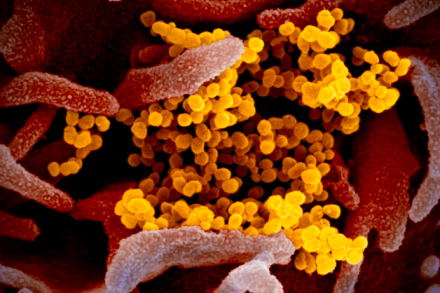
For residents of six London boroughs, as well as those in Smethwick in the West Midlands, the partial relaxation of lockdown rules this week hasn’t quite gone according to plan. They’ve had a day out in the sun, alright, but not necessarily sitting enjoying food and drinks in a pub garden – more likely they have been standing in a long queue to get ‘surge tested’ for the South African variant of SARS-CoV-2, the virus which causes Covid-19. So how much of a threat is the South African variant? In spite of anecdotal claims from South Africa that the new variant was affecting younger people, there is no evidence that it causes more severe illness.

Vaccine hesitancy is more dangerous than rare side effects

‘If you sail a massive liner across the Atlantic, you are going to have to make at least one course correction.’ This was the analogy used by professor Jonathan Van-Tam, the UK’s deputy chief medical officer, when explaining why the UK has opted to change its approach to vaccinating healthy 18 to 29-year-olds. For this group, officials argue, there is no point in taking any risk whatsoever, no matter how negligible, and that instead they should be offered the Pfizer-BioNTech or Moderna vaccines instead of Oxford-AstraZeneca. What we need now is urgent action to re-vitalise vaccine confidence On the one hand, from a clinical perspective, this seems very reasonable — why take any risks if there is a better choice available?

The dilemma of vaccination

We have a government which is basically libertarian in its instincts, despite its current affection for telling us what we can and can’t do on a daily basis. This seems like a paradox or a non-sequitur, but it isn’t really, because in a sense it is a coalition government between libertarian politicians and a big-statist regulatory medical clergy. It is an interesting political marriage, a marriage of expediency. And it will soon become very strained. The government is about to run into big problems over its rollout of the Oxford-AstraZeneca vaccine, which many scientists believe could have a causal link to the prevalence of blood clots in a very small minority of the people who take it. The European Medicines Agency is about to announce the official finding into all this.

My best Duke of Edinburgh salute for my oncologist

In the waiting room I thought about the Duke of Edinburgh. In particular, I pictured him saluting the cenotaph on Remembrance Sunday. In 1915 Colonel Maud’huy told his assembled French soldiery: ‘Many men salute correctly, very rare are those who salute beautifully… One could say that the salute is the hallmark of education.’ Maud’hay was an aristocrat-dandy. He would say that. Yet a simple practised movement can be powerfully expressive and every year the Duke of Edinburgh’s respectful, comradely martial salute was a thing of beauty. I looked forward to it. And every year, as he stepped backwards and saluted Lutyens’s sublime pylon, the execution was so reliably superior to the others’ that I laughed.

Is the writing on the wall for the AstraZeneca vaccine?

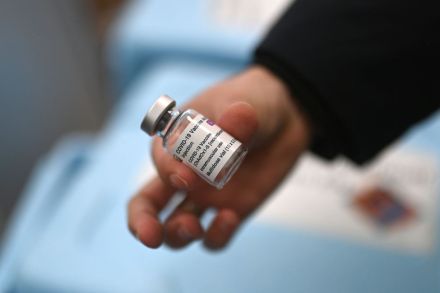
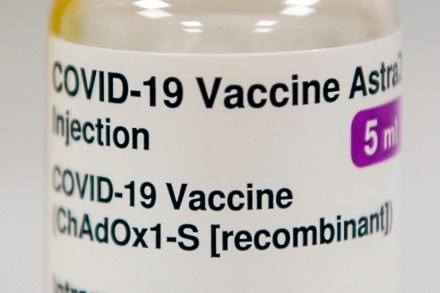
It was the great British scientific triumph: an example of how big pharma can work altruistically for the good of the world, by making a vaccine available at cost price. But is the writing now on the wall for the AstraZeneca vaccine? This afternoon the European Medicines Agency (EMA) ruled that blood clots can be a 'very rare side effect' of the Oxford-AstraZeneca vaccine. It has encouraged health professionals to communicate that 'people receiving the vaccine to remain aware of the possibility of very rare cases of blood clots combined with low levels of blood platelets occurring within two weeks of vaccination.' There may be an age factor as well: 'So far' it reports, 'most of the cases reported have occurred in women under 60 years of age within two weeks of vaccination.

Could the Sputnik vaccine end Russia’s rift with the West?

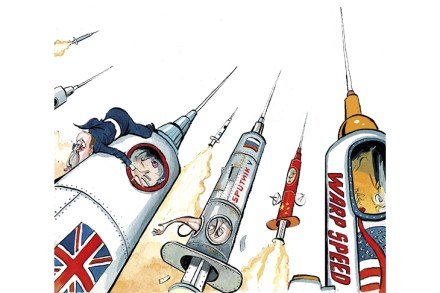
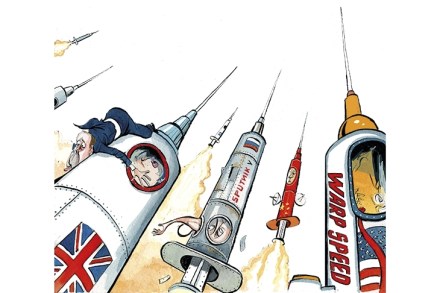
Accounts differ. But it would appear that during a wide-ranging conference call earlier this week, the leaders of France and Germany broached the possibility of – wait for it – buying some of Russia’s pandemic pride and joy: its Sputnik V vaccine. If a deal is struck this would be a huge boost to Russia at home and abroad, and by extension to President Putin, who has spent months trying to dispel widespread Western suspicions about the Russian vaccine, from its Soviet-era name to the breakneck speed of its development. Any deal would also represent quite a turnaround for France and Germany, whose leaders have spearheaded a Continental European reluctance to accept what many regard as ‘foreign’ vaccines in general and the Russian vaccine in particular.

Is AstraZeneca’s Covid jab effective against the South African variant?

The AstraZeneca vaccine has been under attack ever since the results of its phase three trials were announced in December. When the results of US trials were released this week showing 79 per cent efficacy against symptomatic disease and 100 per cent protection from serious cases of Covid 19 – and failing to show up any serious side-effects – it seemed to help bolster its reputation.  Yet some of that was undone by subsequent accusations by the US Data and Safety Monitoring Board that AstraZeneca may have included out of date data in its trial results. The company has been asked to come back and present new calculations, using data gathered from its study up until March, rather than data up until February.

Now FBPE try to cancel Lionel Barber

It has not been a great nine weeks for the European Union. Readers both inside and outside the supranational bloc will have been horrified at the dithering, disinformation and mixed messages of the commission and its national leaders, now considering an export ban to stop vaccine orders to the UK being honoured. The French position on the Oxford jab for instance has gone from banning it, to allowing it for just those under the age of 65, to allowing it for all, to banning it and now allowing it only for those over 55. Polling now shows 61 per cent of people in that country think the AstraZeneca vaccine is unsafe.  It all seems to have been rather too much for some of Britain's most prominent remainers.

Oxford vaccine gets a boost from US study

The hesitancy of many European countries to use the AstraZeneca vaccine (between bouts of complaining the company hasn’t delivered enough doses) has been widely reported. Less discussed is the delay in US authorities approving the vaccine for use there. But with the reporting of results from a US trial, that should now be a formality. The trial, run by Rochester and Columbia universities, involved 32,449 volunteers in the US, Peru and Chile. Two thirds were given the actual vaccine and the rest a saline placebo. In all, 141 people developed a symptomatic Covid illness. Those who were given the vaccine, however, were found to have their risk of developing symptomatic infection cut by 79 per cent. Their risk of developing serious illness was reduced by 100 per cent.

France u-turn jab: AZ you were

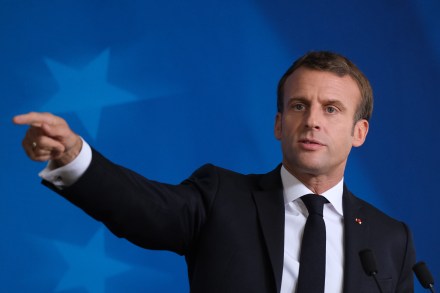
It has been difficult to keep up with all the the twists and turns of Europe's vaccine procurement programme these past nine weeks though Mr S has tried his best. Few countries have vacillated on the Oxford/AstraZeneca vaccine more than France, where last month nearly 1 in 4 said they would not be getting the vaccine. In a country where vaccine hesitancy is rampant, you might have hoped that political and medical leaders would have offered a strong lead to the public but apparently not. At the beginning of March, French medical authorities finally recommended the jab to over 65s, two months after president Emmanuel Macron called the AstraZeneca jab 'quasi-ineffective' for this age group.

Has Britain fallen victim to the Asian vaccine war?

The success story of Britain's vaccine rollout has hit its first major obstacle: five million doses of the AstraZeneca vaccine will be held up for a month. But how many of us knew it was India, not manufacturing plants in the UK or Europe, that was supplying a considerable amount of our vaccine needs? And does the delay show that Britain is now caught in the middle of an emerging vaccine war in Asia? The delayed jabs are being manufactured in the Indian city of Pune (pronounced Poona).

My thrilling rendezvous with the sausage lady

One day last week we did a wine run up to Manosque in the foothills of the Alps, leaving early in the morning. Catriona drove, big Vernon squeezed into the back seat and made a nest for himself among a fortnight’s recycling rubbish. Along the road up to Manosque the almond trees were in blossom, and in the gardens yellow forsythia and mimosa. But last year’s dead leaves still clung about the naked branches of the forest. Manosque it was because we’re massive fans of a local red called La Blaque. But on the way we passed a Louis Latour wine outlet. Catriona likes their Viré-Clessé white so we stopped for a tasting.

Europe’s reckless caution over AstraZeneca

The first smear campaign against AstraZeneca, when Emmanuel Macron falsely claimed at the start of the year that the jab was ‘quasi--ineffective’ in over-65s, did serious damage to public confidence in the Oxford vaccine across Europe. The latest concerted action by the leaders of Germany, France, Italy, Spain and the Netherlands may have destroyed it altogether. The decision temporarily to ban Astra-Zeneca originated in the German health ministry, which was spooked by reports of cerebral venous sinus thrombosis, and was blindly followed by other European leaders. This is a scandal whose roots are political, not medical, and it will have terrible consequences.

The EU’s jab snatching ruse is legally absurd

For some months now, increasingly disturbing statements on the law or legal threats have emanated from the EU. Some of these focus on AstraZeneca and if you were a drug company who had committed so early on and so successfully to helping develop and distribute a vaccine for the current pandemic (at cost price), you might reasonably feel hard done by. But that is not for me. What is for me is the latest, oddest statement, that the EU may seize AstraZeneca's manufacturing plants and their produce and possibly their intellectual property rights (the recipe). Can they? The EU has form for making statements on the law which are wrong. A summary of the issue is this: the UK and other countries moved very quickly to order batches of vaccines from lots of manufacturers.