Dr Chris Papadopoulos

Dr Chris Papadopoulos is the principal lecturer in public health at the University of Bedfordshire.

Vaccine hesitancy is more dangerous than rare side effects

From our UK edition

‘If you sail a massive liner across the Atlantic, you are going to have to make at least one course correction.’ This was the analogy used by professor Jonathan Van-Tam, the UK’s deputy chief medical officer, when explaining why the UK has opted to change its approach to vaccinating healthy 18 to 29-year-olds. For this group, officials argue, there is no point in taking any risk whatsoever, no matter how negligible, and that instead they should be offered the Pfizer-BioNTech or Moderna vaccines instead of Oxford-AstraZeneca. What we need now is urgent action to re-vitalise vaccine confidence On the one hand, from a clinical perspective, this seems very reasonable — why take any risks if there is a better choice available?

Schools should stay shut

From our UK edition

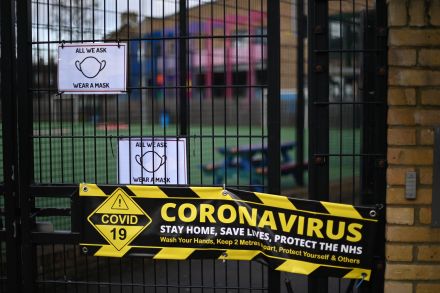
­­During the battle against Covid-19, the government’s priority has been to ensure that schools remain open. Their rationale has been that closing schools would threaten children’s life chances. Covid’s risk to children, ministers argued, is relatively low while the cost of stunted learning is severe. But the new variant has changed that calculation. Prior to this mutation, children accounted for only a small percentage of Covid-19 infections and therefore keeping schools open was a reasonably safe course of action. Now case rates are rapidly increasing to previously unseen heights, leaving the NHS creaking at its seams.

The case against the new Christmas Covid rules

From our UK edition

‘The first duty of the government is to keep citizens safe.’ These are the government’s own words. Yet, despite this almost sacred pledge, the four administrations of the UK have agreed to gamble on relaxing restrictions over Christmas, potentially rewarding Covid-19 with the biggest present of them all. With any gamble, there are stakes, risks and prizes. The stakes in this case are people’s lives — they could not, therefore, be any higher. As for prizes, there are several that officials seem to be eyeing up. First is the prize of perceived compassion: that citizens see a commitment to balance, moderation, and kindness after the pain of a very difficult year. This seems a noble intention.

Chess vs football: the vital distinction in lockdown strategy

From our UK edition

Nearly a month ago, I called for an urgent 24-day full national lockdown, arguing that the restrictions were unlikely to make a significant difference in reducing transmission. If we had acted strongly and decisively then, and implemented a circuit-breaker lockdown — as we now know that the government's scientific advisory group Sage also wanted — we would be in a much stronger position today. Many readers considered it a controversial and unwise strategy. The government agreed, declining Sage's advice and instead announcing the eventual rollout of a three-tier system covering areas of ‘medium’, ‘high’ and ‘very high’ risk, each with their own restrictions.

The case for full lockdown

From our UK edition

The government now knows that the country is losing the battle against Covid-19. Boris Johnson has announced a series of new restrictions on our daily lives which, he suggests, could last up to six months. After the first national lockdown, the government made clear that it was putting its faith in people to act responsibly, as well as its emerging track and trace system and enhanced testing capacity. Stopping the daily briefings was a particularly loud message, louder than any of the others that the government has since tried to communicate: that we were past it.   Indeed, the government should have been fully cognisant to the fact that people do not always act responsibly and are not immune to the effects of mixed messages or information burnout.