Astrazeneca

America: approve AstraZeneca

From our US edition

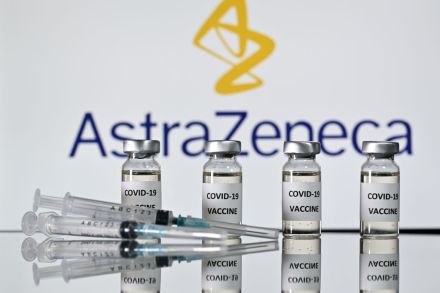
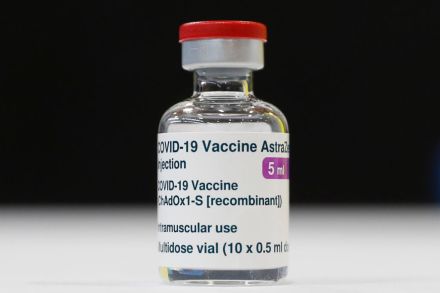
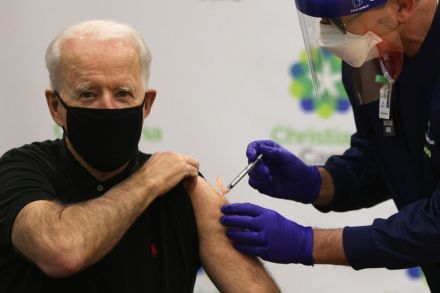
What follows the global pandemic? The global vaccine freakout. European politicians have their knickers in a twist about the Oxford-AstraZeneca shot. The source of the panic was reports from Denmark and Norway that some people who received the British-made vaccine developed blood clots — though there is no evidence yet that the shot is at fault. Over a dozen European nations, including France, Germany, Ireland and Spain have temporarily suspended their use of Oxford-AstraZeneca, in what seems to be a team effort to mistake correlation for causation. Sometimes the world cries out for American global leadership. The US is currently sitting on a stockpile of around 30 million doses of the AstraZeneca vaccine. AstraZeneca has yet to apply for FDA approval for their shot.
astrazeneca covid

My €25 Covid jab surprise

Around the time that poor M. Macron was casting televised aspersions on the AstraZeneca jab, I was offered one by Mme Michaud, our hardworking French village GP. Concerned about her bosoms, Catriona had visited for a routine appointment and while there had asked what the chances were of getting a Covid jab. By a stroke of good luck, Mme Michaud said she had a batch of the AstraZeneca vaccine arriving in a fortnight and would her friend like one as well? Consequently my name was pencilled on her list, but with a question mark against it. My busy oncologist at Marseille replied to my email within two minutes.

UK summons EU officials over ‘false’ vaccine claims

Foreign Secretary Dominic Raab has blasted claims by a senior Eurocrat that the UK is hampering the bloc's vaccine rollout, calling the questionable assertions 'completely false'. Charles Michel, president of the European Council, initially argued that Britain had imposed an 'outright ban on the export of vaccines or vaccine components' leaving the country in an EU blog on Tuesday. (Michel then subtly soften his claim after commentators pointed out there was no such 'outright ban', instead he said there were 'different ways of imposing bans or restrictions on vaccines'.) But London was having none of it.

Can we boost immunity with the vaccines we have now?

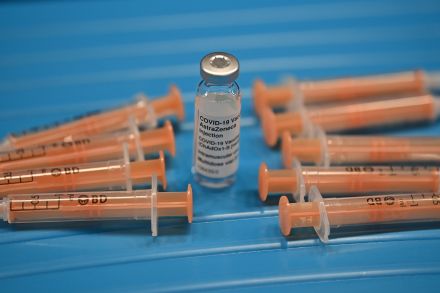
What to make of the news this morning that Oxford University is to ask for volunteers to take part in a trial to ‘mix and match’ the Pfizer and AstraZeneca vaccines? Researchers will ask for 820 volunteers, all over 50 years old, who will be given two shots of a vaccine, two weeks apart. Some will receive AstraZeneca followed by Pfizer, some the other way around and some — the control group — will be given two doses of the same vaccine. Britain has set itself apart from the EU, not just in the speed and extent of its vaccine procurement programme but also for its willingness to experiment.

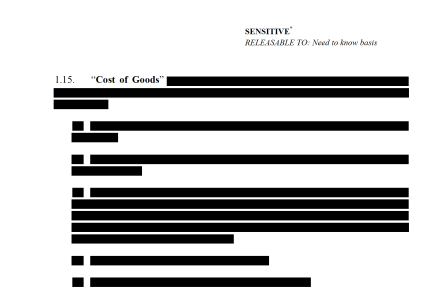
EU accidentally un-redacts AstraZeneca vaccine contract

Oh dear, can the EU do anything right at the moment? This morning, the bloc escalated its battle with the pharmaceutical company AstraZeneca by publishing its vaccine purchase contract with the company online. The EU was hoping the move would bolster its demands for AstraZeneca to hand over vaccine doses meant for the UK, to make up for shortages at the firm’s European factories. As you would expect with such a sensitive document, large portions were redacted when the contract was published by the Commission.

Can the EU win a case against AstraZeneca? I’m not convinced

The contract between AstraZeneca and the EU has now been published. It confirms my view, expressed on Coffee House, that the EU does not – despite its claims – have any form of ‘strong case’ or way to jump a queue to speed up its vaccine rollout. Both contracts (the one, published previously, which I used as an example in my last post, and today's) are what the EU calls advance purchase agreements, or APAs. The latest contract has slightly different wording in some places. But the differences are not substantial. This, then, appears to be bad news for the EU if it is serious about taking action against AstraZeneca. The words ‘Reasonable best efforts’ remains in the contract and is the cornerstone of the obligation AstraZeneca is under. Clause 5.

Germany has just undermined the EU’s vaccine argument

Germany’s vaccine committee has advised the Oxford-AstraZeneca vaccine only be given to under-65s. The announcement marks a major twist in a week of muddled vaccine reports. On Tuesday, the German newspaper Handelsblatt suggested that German officials believed the Oxford vaccine was only 8 per cent effective for the over-65 groups (no evidence has been produced to support the 8 per cent claim). It has been heavily and extensively rebuffed by both AstraZeneca and the German government. Yet the German reporter who broke the story doubled down on the claims, raising the stakes as to whether he was making precarious reporting worse, or whether the European Medicines Agency may indeed conclude that the vaccine's efficacy is too low.

The EU goes to war over the vaccine

German politics is backing Brussels in the ongoing dispute between the EU and AstraZeneca over Covid vaccine shipments. The European Union alleges that the pharma firm, which is producing the Oxford-developed vaccine, is planning to supply the UK faster and while failing to fulfil its contract with Brussels. A meeting on Wednesday between officials and representatives from the Cambridge-based company was described as 'constructive' but no solution was found. Meanwhile, Martin Schulz, the former president of the European Parliament and prominent German Social Democrat, called for hard action against AstraZeneca. ‘This company is heavily dominated by the Brits and has apparently clear priorities as to which countries it supplies,’ he said.

Is the EU to blame for AstraZeneca’s vaccine shortage?

The important difference between AstraZeneca's relationship with the UK and its relationship with the EU – and the reason it has fallen behind schedule on around 50m vaccine doses promised to the bloc – is that the UK agreed its deal with AstraZeneca a full three months before the EU did. This gave AstraZeneca an extra three months to sort out manufacturing and supply problems relating to the UK contract (there were plenty of problems). Here is the important timeline. In May AstraZeneca reached an agreement with Oxford and the UK government to make and supply the vaccine. In fact, Oxford had already started work on the supply chain.

The vaccine goalposts have shifted

Matt Hancock provided a vaccine update on Monday, explaining that the chances of a drug being ready by early next year are ‘looking up’. With trials pending in the UK, USA and Brazil, the Oxford-AstraZeneca vaccine could be approved this year, although the Health Secretary he conceded it would more likely come in spring 2021. He added that doses are already being manufactured so that it will be ready to roll-out the moment it does receive approval.  We’ve heard this all before.