Art

Mike Newell’s Great Expectations will leave you with great questions

You cannot have failed to learn that a new film adaptation of Great Expectations has been released today. Publicity for the film is ubiquitous: posters of Ralph Fiennes as Magwitch and Helena Bonham Carter as Miss Havisham adorn the billboards of train stations and the hoardings that overlook thoroughfares. The stars have been interviewed on television and the radio. Even the press has found time to divert its manic attention from Sir Brian Leveson’s clever, clever musings to review the film. The coverage asks the question, do we need another adaptation of Dickens’ well-studied classic? There are plenty of views but few of them bother to consider the novelty of

My life as a connoisseur

‘Passion for freedom‘ is now holding its fourth exhibition at the Unit 24 Gallery just behind Tate Modern. The show is a visible and occasionally dazzling manifestation of an often submerged movement in western liberalism that regards the liberal-left mainstream with something close to disgust. They – we – find the indulgence of radical Islam as a betrayal of the best of the liberal tradition. We are equally repelled by multi-cultural orthodoxy, which puts the interest of a ‘community’ before the interests of the individual, particularly when the individual is a woman. The magnificent Maryam Namazie, One Law for All’s Spokesperson, and a woman you will rarely hear on the

Review – Hawthorn and Child, by Keith Ridgeway

‘The body is a multitude of ways of coming apart’ writes Keith Ridgeway in his most recent novel Hawthorn & Child. He describes these ways. It can be beaten, broken or burnt. It can fall down stairs or in to deep water. The excoriation of adult skin differs to that of a child’s. Ridgeway begins with not a character but a body, and as the bodies amass – sometimes sexualised as well as pulverised – the novel itself begins to come apart, and everything in it. Hawthorn and Child are detectives in North London, tasked with finding a crime boss named Mishazzo and solving the shooting with which the novel

Thornton Wilder’s theatrics in The Cabala

I was on a date once in Atlanta, Georgia. We decided on the theatre and there was only one show playing, The Skin of Our Teeth by Thornton Wilder. After a night time drive under the arms of blue mossed oaks we made it to Emory University and took our seats and the curtain rose on a Victorian living room. Cautiously, with a canine playfulness, from out behind a sofa, tromped a dinosaur. I kept thinking of this moment as I read Wilder’s first novel, The Cabala.  Originally published in 1926 before he became a renowned playwright, Wilder attempted the same tricks here. He interjects Keats, Virgil, and even incarnate

Plein-air pleasures and the great indoors

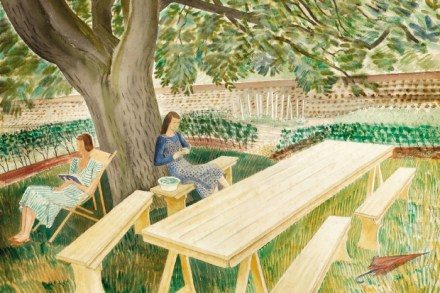
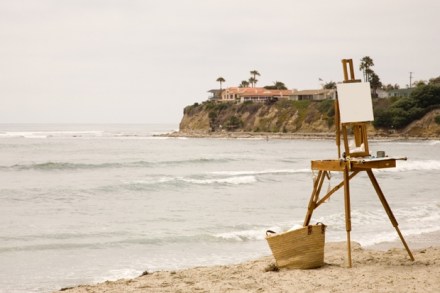
Some say it’s the walk there that does it. The promenade down a rambling city path and through a crowd of coffee-swigging commuters that fuels the inspiration that can only be spat out when one is positioned at a desk before a blank library wall. In the fourteenth century in Italy the poet Petrarch rekindled classical ideas about the merits of a space not so dissimilar to this in character. Best to make one’s desk in a room adjoining the bedroom, he said. That way, the writer need not leave his cell at all. In ancient Rome, even more so, nature was often considered a distraction. Both writers and artists

Jimmy Savile Is Innocent…

Now then, now then. How is this for the most inappropriate publicity stunt going? The Bread and Butter gallery in Islington is opening an exhibition tomorrow provocatively called ‘Jimmy Savile Is Innocent‘. Artists are invited to bring works on the subject to the opening tomorrow night: ‘In an age when the dead can’t defend themselves Jimmy Savile has been found guilty. Lets remember that Jimmy is innocent and can only be found guilty by a court of law, perhaps its time for a posthumous trial?’ Trial by artistes. Is that better or worse than trial by media?

The shock value of John Wilmot, earl of Rochester

‘The Maidenhead’ Have you not in a chimney seen A sullen faggot wet and green, How coyly it receives the heat, And at both ends does fume and sweat? So fares it with the harmless maid When first upon her back she’s laid; But the well-experienced dame, Cracks and rejoices in the flame. Rochester is a favourite of A-level students because he writes about sex and uses rude words. That in itself would not make him an accomplished poet. Sex is not an obscure subject and there are lots of words which rhyme with ‘prick’. But there are good reasons to read Rochester. One is that he had a knack

Outliving Ozymandias

In 1842, a wealthy heiress called Sarah Losh built a church in Wreay (rhymes with ‘near’, apparently), close to Carlisle. Coupling carvings of caterpillars with turtle gargoyles and a spattering of pinecones, she was, stylistically, half a century before her time. As a female architect and builder, she was still more precocious. The Pinecone by Jenny Uglow is the true, largely forgotten story of one of nineteenth-century England’s most forward-looking architects and – paradox standing – antiquarians. Sarah and her sister Katharine inherited land from their parents when their brother transpired to be ‘slow’. Sarah, the more ambitious of the sisters, tried her hand at various pursuits, always inspired by

Richard Millet and the nihilism of multiculturalism

It’s the last day of banned book week but perhaps we should spare a thought for banned editors. An editor at Éditions Gallimard, who worked on Jonathan Littell’s The Kindly Ones, recently published three essays (with another house). The first, an account of his amorous adventures in Amsterdam, and the second, ‘Ghostly Language’, are, according to the author, to be kept in mind when tackling the final essay ‘Antiracism as the Literary Terror’ and the appendage, his pièce de resistance, ‘The Literary Eulogy of Anders Breivik’. That, in sum, is why Richard Millet is – for all the wrong reasons – one of the most famous essayists in France right

Robert Hughes – The novelty of the shock

The real shock of the new came in 1991. It was sobering, and it was reverent, which aren’t exactly the first words one would associate with The Shock of the New art critic Robert Hughes. No wonder it went largely unacknowledged when he passed away last month. While Hughes’ seminal art history series continues to re-run on BBC4, it’s not without irony that one recalls that in ’91, 11 years after it originally aired, Hughes panned the whole concept of the art documentary. Admittedly, he’d always been slightly sceptical. He opened the first edition of his book (originally a mere spin-off of the series; ultimately, as Hughes himself said, something

Robert Hughes RIP

It has been a bad week for men of letters, with the loss of Gore Vidal a few days ago and Robert Hughes today. Gore was famous for his feuds, but Hughes, a Spectator contributor, had a softer side, unless your art was phony: ‘The greater the artist, the greater the doubt. Perfect confidence is given to the less talented as a consolation prize.’ And the man once dubbed the ‘greatest art critic in the world’ was certainly sure of himself. Bret Easton Ellis recalls: ‘The only time I came in contact with Robert Hughes was in 1991 when he threatened to leave Random House if they published American Psycho.’

Interview: Nick Makoha’s shame

“My shame was my father wasn’t there,” says Nick Makoha, the London poet who represented Uganda at the recent Poetry Parnassus. This frank vulnerability is at the core of his first collection of poetry and his new theatre performance, ‘My Father and other Superheroes.’ Uganda is a source of tension for Makoha as both the place of his birth but also a place he fled, a place from which he feels distant. “Most people are from somewhere else,” he says. “So the story of the exile isn’t the minority, we’re the majority. Look at T.S. Eliot, by all rights and purposes he belongs to America. He liked French poets, Italian

The arts of voyeurism

Metamorphosis, a temporary exhibition at the National Gallery, London, showcases a range of contemporary artistic responses to Renaissance painter Titian’s Diana and Actaeon and Diana and Callisto metamorphosis paintings, inspired by Ovid. Daisy Dunn looks at the new poetry inspired by the collaboration.   When the hapless youth Actaeon peeled back a curtain dangling in a forest glade, he might just as well have been uncovering a religious icon as playing voyeur to a bevy of naked beauties. This, at least, is the way Titian saw it when he decided to paint the luscious velvetine hanging before the unwitting voyeur in his Ovid inspired canvas, Diana and Actaeon. Titian knew

Raphael’s paintbrush

One of the puns that circulated the cultured elite of Italy during the Renaissance compared the potency of an artist’s paintbrush, his pennello, with his penis, il pene. Raphael, who by all accounts liked his women, perhaps embodied that duality best of all. The artist’s fascination with female kind, Antonio Forcellino suggests in his brilliant and lyrical biography of the artist, helped shape his genius. Not long before Raphael died, aged just 37, of a malady popularly believed to have stemmed from excessive sexual activity, he painted La Fornarina — a young, brown-eyed beauty (perhaps his last lover), semi-nude but for a diaphanous veil draped beneath her décolletage. Around this

Out of the deep

It is a pretty toothy jaw of hell that Philip II of Spain, the Doge of Venice, and the Pope kneel before in prayer in a famous El Greco painting of the late 1570s. Philip and the other rulers of the so-called Holy League might just observe within hell’s mouth the skeletons of those they deemed Infidels — the very Turks, perhaps, their men had recently defeated off the Gulf of Corinth in 1571.  For a struggle so bloody, the Battle of Lepanto that inspired El Greco’s painting makes a relatively cameo appearance in David Abulafia’s masterful human history of the Mediterranean Sea. Even now in paperback, The Great Sea is

An enigma wrapped in a conundrum

What to make of Banksy? Artist or vandal? Tate Modern holds no Banksys and, other than a redundant phone box that he folded in half and pretended to have reconfigured with a pickaxe, Banksy has never destroyed anything. So I ask my 15-year-old son what he knows of him: ‘He’s the guy who did the policeman with the Tesco bag, who does really cool graffiti, not lame stuff, and no one knows who he is.’ Actually, we do know who he is. His identity was discovered some years ago by the Daily Mail, an organ neither beloved nor believed by those who follow Banksy. But because the public loves a

The picture of health

It must have been hard to settle on a title for this book; but then this is not the book that Richard Cork originally had in mind.  In his introduction to The Healing Presence of Art he describes how he was approached to write on the contemporary role of art in hospitals, but in beginning the research for this he became aware, as he puts it, ‘of the rich, complex and largely overlooked tradition’ to which modern art and medicine are the heirs.   It is this vast hinterland that forms the theme of Cork’s book. It is neither ‘art in hospitals’, nor ‘art and medicine’ nor ‘art as therapy’

Bookends: Disarming but disingenuous

At first glance, Be the Worst You Can Be (Booth-Clibborn Editions, £9.99) by Charles Saatchi (pictured above with his wife, Nigella Lawson) seems a rather distinguished book, with its gilt pages bound in what feels like genuine Gnomitex, and this impression persists until one begins to read it. The title page explains the format — ‘Charles Saatchi answers questions from journalists and readers’ — and the first page sets the tone: ‘If you had a bumper- sticker on your car,’ asks a journalist or reader, ‘what would it be?’ And our modern Maecenas replies: ‘Jesus loves you. But I’m his favourite.’ (Boom boom!) So it’s not a distinguished book. It’s

Where dreams take shape

The question of what artists actually get up to in their studios has always intrigued the rest of us — that mysterious alchemical process of transforming base materials into gold, or at least into something marketable in the present volatile art world. Today’s studio might as likely be a laptop as laboratory, factory, hangar or garden shed, but is nevertheless an apt prism through which to explore the notion of creativity, and this boldly ambitious volume does just that, interviewing 120 British artists in a freewheeling way about their practice and process, inspiration and ideas. Sanctuary pays tribute to Private View, that inimitable portrait by John Russell, Bryan Robertson and

A fine and private painter

Prunella Clough was a modest and self-effacing artist who nevertheless produced some of the most consistently original and innovative British art of the second half of the 20th century. She was by no means reclusive, enjoying an extensive social and teaching life, but she deliberately kept a low profile, being famously guarded with biographical details. So much so, that a couple of young artists I knew in the mid-1980s were convinced that Clough was already dead, though she continued to paint and exhibit sporadically until her death in 1999. How refreshing this is in an age of seemingly unbounded artistic egos, when relentless self-obsession has to make up for lack