Art history

How ever did they find time to paint?

Those with long enough memories may remember Desmond Morris as the presenter of the hit ITV children’s programme of Zoo Time in the late 1950s and early 1960s. Or perhaps as the author of the 1968 bestseller The Naked Ape, in which he argued that, beneath our sophisticated veneer, humans are nothing more than primates. Now aged 90, he has written an uproariously funny book on the ostensibly unlikely subject of the Surrealists. I say ‘ostensibly’ because, before becoming a successful zoologist, Morris was actually a painter and even had a joint exhibition in London with Joan Miró. In The Lives of the Surrealists he takes on the role of a latter-day Vasari, penning mini-biographies of 32 artists who were associated with Surrealism.
August Auguste

From our UK edition

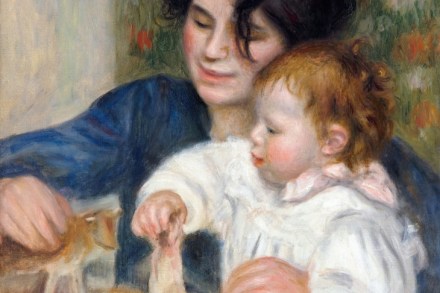
In 1959 the formidable interviewer John Freeman took the Face to Face crew to the 81-year-old Augustus John’s studio. The beetling brow, piercing eye and a succession of roll-ups stuck to his lower lip offer almost a caricature of the undimmed rascality of the old devil. Like all the films in that remarkable series, it offers a glimpse into a world that we thought television was invented too late to record. But how much more extraordinary it is to watch, in a three-minute film made in 1915, another elderly artist — the 74-year-old Pierre-Auguste Renoir, crippled with arthritis, working at his easel.

A dazzling vision

From our UK edition

There are a number of reports by his contemporaries of Thomas Gainsborough at work. They make you realise what a very strange painter he was. There was an element of theatricality in his working practice — the public would expect to be astonished when they glimpsed it — but, even so, it is difficult to imagine any artist producing anything using Gainsborough’s methods. He painted in semi-darkness, and an observer reported that sitters for portraits found that ‘neither they nor their pictures were scarcely discernible’. The canvas, if large, was hung loosely, ‘secured by small cords’. James Hamilton describes it as ‘rigged perhaps like a small yacht, the canvas bellying with every move’.

A husband to die for

From our UK edition

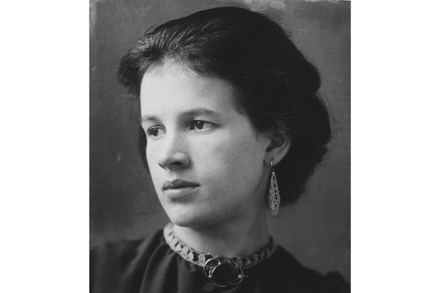
What will we do when there are no longer caches of letters to piece together and decipher; only vague memories of myriad emails? We will be like butterfly hunters flailing around with our nets, hoping to catch some rare specimen with glittering wings among the detritus of daily exchanges. The letters of Ida Nettleship, first wife of the arch-bohemian Augustus John, are a case in point: gathered together here from diverse sources by her granddaughter Rebecca John and expertly introduced by John’s biographer Michael Holroyd, they constitute a rare epistolary treasure trove.

The wondrous cross

From our UK edition

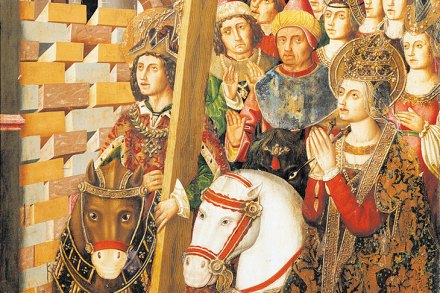
How did the cross, from being such a loathsome taboo that it could scarcely be mentioned, change into an image thought suitable viewing for all ages in public art galleries? There is no doubt about its early despicable reputation. A hundred years before the birth of Jesus, Cicero declared that ‘the very word cross should be far removed not only from the person of a Roman citizen but from his thoughts’. It was the cross that gave rise to the word excruciating. It makes me feel rather queasy to envisage the slow death by suffocation of the crucified man, left without the strength to draw breath, so I was glad that Robin M. Jensen trotted fairly briskly through the forensic evidence, which includes a first-century heel bone with a nail through it.

Whited sepulchre

From our UK edition

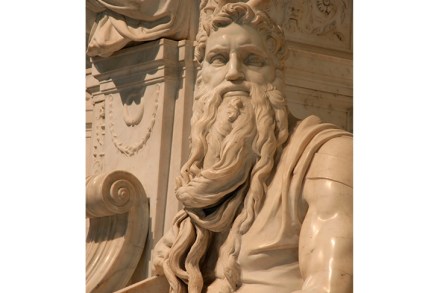
‘How often’, wrote Sigmund Freud in 1914, ‘have I mounted the steep steps from the unlovely Corso Cavour to the lonely piazza where the church stands, and have essayed to support the angry scorn of the heroic glance.’ The gaze that the founder of psychoanalysis struggled to withstand belonged to Michelangelo’s Moses, centrepiece of the tomb of Julius II in the basilica of San Pietro in Vincoli. Michelangelo’s Moses has indeed a look of formidable authority. The prophet possesses, in addition, the physique of a body-builder, a beard that cascades like Niagara Falls and a pair of knees for which the best adjective is also ‘heroic’.

Special K | 20 October 2016

From our UK edition

Our collective attention spans may not be as short as is widely cited, but they are pretty short. Take the case of the art historian Kenneth Clark. If anyone remembers anything about him, it is as the presenter of Civilisation, a TV series of the 1960s that rocketed him to stardom, and the author of the accompanying book, which sold over a million copies. He died in 1983 when he was a mythical figure, and any attempt to show his human dimensions was anathema, as I discovered to my cost. My own biography of Clark was published a year later. Nowadays, one can hardly get anyone to take him seriously. One reviewer dismissed Civilisation as a period piece, the narrator ‘a patrician’ in a tweed suit. Another spoke of ‘a figure of derision’.

Seeing red | 18 August 2016

From our UK edition

Early on in his excellent and protean biography of a colour, Spike Bucklow quotes Goethe, writing in 1809: Every rope in the English Navy has a red thread running through it, which cannot be extracted without unravelling the whole, so that even the smallest length of rope can be recognised as belonging to the crown. Bucklow’s book follows a red thread through human history, whose twin strands are material extraction — the animal, vegetable and mineral lives of red — and the extraction of meanings from redness itself. All colour is cultural. We have our private definitions — the unshareable conviction as to what is and is not red — but it is societies that ‘make’ colours and their associations.

The artist as lover

From our UK edition

Roland Penrose (1900–84) was a Surrealist painter and object-maker, a collector and art world grandee, a writer and organiser of exhibitions, co-founder of the Institute of Contemporary Arts (ICA) and biographer of Picasso. He amply illustrates Goethe’s dictum that we are rich at the price of our contradictions. Born a wealthy Quaker, Penrose rebelled and became an artist. He was deeply involved with the revolutionary practice of Surrealism but was also an establishment figure: a substantial landowner who accepted a knighthood for services to the arts. His private life was equally divided. His first marriage, to the poet Valentine Boue, was never consummated. His second and more famous wife was the photographer Lee Miller.

Finders keepers

From our UK edition

Isis’s blowing up of the Roman theatre at Palmyra should concentrate our minds: our world heritage is vulnerable. Not that we should need any such reminder after the depredations of the Taleban in Afghanistan, or Isis’s earlier rampage through the museum in Mosul and its attacks on sites at Hatra and Nimrud. A former director at the Institute of Ideas and a visiting fellow at the LSE, Tiffany Jenkins applies her considerable experience of cultural policy to construct an excellent survey that rehearses the issues. Who is responsible for the great examples of our shared heritage? Where should they be located: where they originated; where they have ended up; or where they can best be looked after, seen and understood?

A 50-year infatuation

From our UK edition

The subject of the least characteristic essay in this engrossing collection of meditations on painters, painters’ lives, painting and reactions to painting is René Magritte — whose best work David Sylvester rather rashly claimed induces ‘the sort of awe felt in the presence of an eclipse’. Julian Barnes discusses what he calls the artist’s doctrine (doctrine?) of ‘elective affinities’, which proposes the antipodes of Lautréamont’s ‘chance encounter on a dissecting table of a sewing machine and an umbrella’. Thus in the painting of that name a birdcage is filled not with a random safety razor or knuckleduster but with a giant egg.

A narcissistic bore — portrait of the artist today

From our UK edition

Two ambitious volumes of interviews with artists have just been published. They are similar, but different. The first is by Richard Cork, a veteran with a Cambridge education who enjoyed a distinguished stint as art critic at the Times. He is nicely old school: chatty and avuncular. The second is by Hans Ulrich Obrist of London’s Serpentine Gallery, ageing Swiss boy wonder of the art fair circuit with a head like a pink dome-nut. I have heard Obrist speak and could not detect any meaning in what he said, although he certainly said a lot. In classic Q&A template, Cork and Obrist tell us what it is to be an artist today. Artists once served, in turn, the religions of God, of beauty, of sex and political or social subversion.

Toujours la politesse

From our UK edition

Robert Cumming’s opening sentence is: ‘Kenneth Clark and Bernard Berenson first met in the summer of 1925.’ One is then transported to terraces of cypress and statuary, sunshine and high art, Edith Wharton and Paul of Yugoslavia cooing over a balustrade. Clark was 22 and had just finished at Oxford; he was ‘doing’ Italy with Charles Bell, Keeper of Fine Art at the Ashmolean. Lunch at I Tatti, Berenson’s citadel of aesthetic endeavour near Florence, was arranged. By the end of it, Clark had been taken on as Berenson’s assistant for the revision of the master’s classic The Drawings of the Florentine Painters.

It’s not easy for a middle-aged woman to get inside the head of a 12-year-old innkeeper’s son in 1914

From our UK edition

Esther Freud wrote dazzlingly in the first person through the eyes of a five-year-old child in her first novel, Hideous Kinky (1992). What made that book so captivating was the young narrator’s sweet, naïve total acceptance of the chaotically nomadic existence her hippy mother brought her to in Morocco. The first-person voice was enchantingly concise, always noticing colours, as little girls do (‘the red and green town’), and unquestioningly stating the facts: ‘Bea and I waited at the Polio school while Mum looked for somewhere else to live.’ Freud’s latest novel, Mr Mac and Me, is also written in the first person through the eyes of a child: a 12-year-old boy in 1914 called Thomas Maggs, the only surviving son in a large and poor innkeeping family near Southwold.

This beautiful new history of Kew Gardens needs a bit of weeding

From our UK edition

Edward Bawden’s Kew Gardens is a beautiful book. Lovers of early 20th-century British art will find it hard to stop gazing at the painted board cover under the dustjacket. It is so sheenily brilliant that you want to frame it and hang it on the wall at once. Every page, including the endpaper plans of Kew, is visually perfect, and the book is an agreeable size. Peyton Skipwith, formerly of the Fine Art Society, and Brian Webb, the designer, have collaborated on beautiful books before; their track record is impeccable. Published by the V&A, their latest work is an utterly desirable object. Having had the privilege of being on a tour of Paul Nash’s paintings at the Dulwich Art Gallery in the company of Mr Skipwith, I am aware that his knowledge on this period is vast.

The Artist Formerly Known As Whistler

From our UK edition

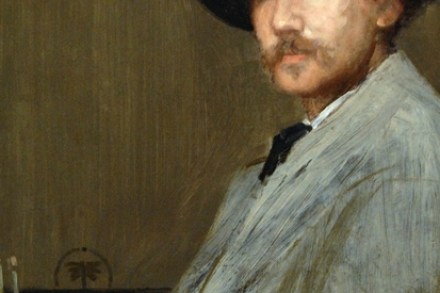
When James Whistler was two years old, he was asked why he’d disappeared from company and hidden under a table. ‘I’s drawrin,’ he replied. He started as he meant to go on. Daniel E. Sutherland’s well-appointed new biography of the American-born painter — whom Henry James described as a ‘queer little Londonised Southerner’ — keeps the attention there, making its central emphasis Whistler’s ferocious single-mindedness in the making of his art. The striking thing is how much the other aspects of him — Whistler the rebel, Whistler the public combatant, Whistler the philanderer, the dandy, the show-off, the semi-delinquent father, the wit and conversationalist — fed into that rather than distracting from it.

Do Manet’s asparagus remind you of your struggling long-term relationship?

From our UK edition

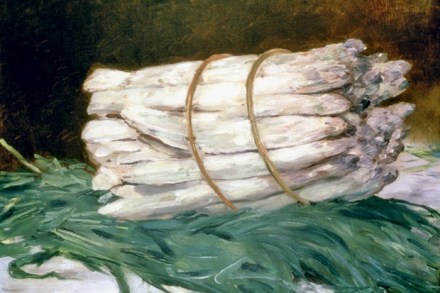
In calling their book Art as Therapy Alain de Botton and John Armstrong have taken the direct route. They’re not waiting for us to interpret their motive: their title tells us everything. Art, the theory goes, can help us improve our psychological state in a way that’s progressive and cumulative. It can assist our relationships, our careers, our money concerns. Art is a tool which ‘compensates us for certain inborn weaknesses, in this case of the mind rather than the body’. It is a ‘therapeutic medium’, and it should be treated as such. This means that galleries, instead of arranging works by period or style, should place art in emotive groups, based around how they can reform and enrich our own lives.

How honest was Bernard Berenson?

From our UK edition

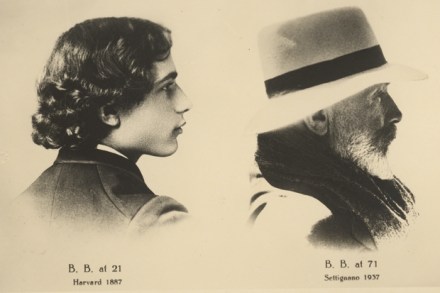
When the great Jewish-American art expert Bernard Berenson died in 1959, he had acquired the status of a sort of sage. He was the relic of a prewar culture that had vanished. He was an embodiment of the idea of connoisseurship that had at once given birth to a great boom in art collecting and yet that was, by the end of his life, being superseded. When Berenson embarked on the career that would see him widely accepted as the world’s foremost authority on Old Masters, the painters of the Italian Renaissance were barely regarded in the US. He died — at 94 — in the age of Andy Warhol. The very span of his life gives his story resonance.

A book on Art Deco that’s a work of art in itself — but where’s the Savoy, Claridge’s and the Oxo Tower? 

From our UK edition

Over the past 45 years, there have been two distinct and divergent approaches to Art Deco. One of them — which was mine when I wrote the first little book on the subject in 1968 — was to treat the subject as a sociological, as well as artistic, phenomenon. As I wrote then, it was ‘the last of the total styles’, affecting almost everything, from letter-boxes and powder compacts to luxury liners and hotels. With that approach, one shows the dross as well as the gold, and asks such questions as ‘Why did the style become so universal?’ ‘How far did it succeed (with mass production) in coming to terms with the machine age’?

When Francis Davison made me judge — and burn — his art

From our UK edition

In 1983, Damien Hirst saw an exhibition at the Hayward Gallery of the collages of Francis Davison which ‘blew him away’. He spent the next two years trying to emulate them, in vain. As he discovered, although Davison’s works might look casually thrown together, they are in fact immaculately crafted orchestrations of colour, shape and tone.  In the light of this experience, Hirst’s subsequent output can be regarded as his dispiriting revenge on all genuine artistic creation.