Art history

Observing nature observed: the art of Caspar David Friedrich

From our UK edition

Imagine wandering through Germany. You might picture blustery Baltic seascapes, seen from island retreats such as Rügen. Or you might be hiking in the central Harz mountains, peering down at clouds that drift into green pastures and blend into brownish rock. Perhaps you’re standing at the country’s eastern edge, gazing at moonlight that gleams through gaps in the forests and ravines of sandstone highlands. What we sketch in our minds probably follows the contours of the canvases of Caspar David Friedrich, Germany’s Romantic artist-in-chief. And these stock images have been reproduced in many a tourist guide. They’re now on display again, in full colour and new frames – literally and figuratively – to mark 250 years since Friedrich came into the world.

Portrait of the artist and mother

From our UK edition

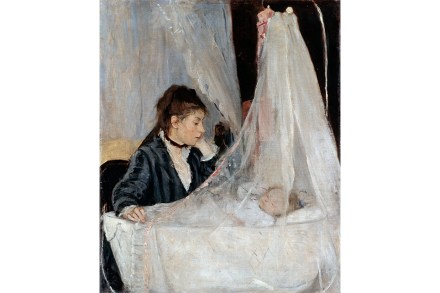
On reaching the end of Hettie Judah’s Acts of Creation, I felt somewhat overwhelmed. At 272 pages, the book isn’t particularly large, but the time span it covers, from prehistoric goddess figures to Laure Prouvost’s 2021 cyborg-octopus installation ‘MOOTHERR’, is enormous. The trajectories, practices and obsessions of the artists discussed range far and wide. Written to coincide with a touring exhibition of the same name, this ambitious book is more of a survey – a highly illustrated, annotated and well-researched one – than a traditional narrative. Judah’s energetic text displays the hunger of someone after a fast who can’t decide where to start at the buffet.

Jam-packed with treasures: the eccentric Sir John Soane’s Museum

From our UK edition

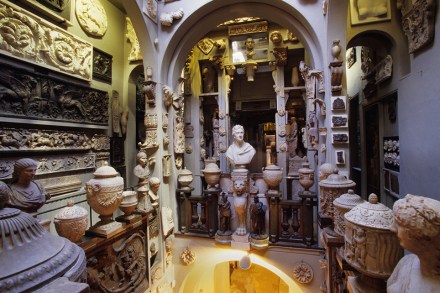
Sir John Soane’s Museum is one of London’s most eccentric buildings, containing a riot of classical fragments, paintings, architectural models and plaster casts jammed in to overflowing narrow galleries packed into a Georgian town house in Lincoln’s Inn Fields. Soane viewed it as a reflection of his busy intellect, ‘studies for my own mind’, he said, and Bruce Boucher’s new book reveals how the architect, famous for designing the Bank of England, put together the remarkable collection that visitors can still see today. The author was director of the Soane Museum from 2016 to last year, and his privileged access to its archives ensures we get an insider’s view of the quirky institution and its more than 40,000 eclectic objects.

‘There are an awful lot of my paintings I don’t like,’ admitted Francis Bacon

From our UK edition

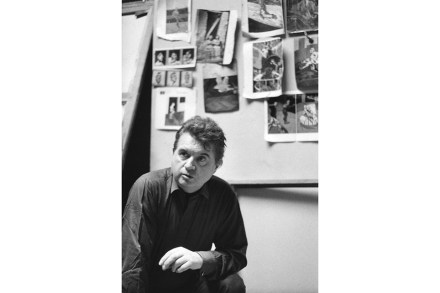
In 1959, Edvard Munch’s ‘The Scream’ was hanging above the bed where Francis Bacon nursed a fractured skull after falling downstairs drunk at his framer Alfred Hecht’s house on the King’s Road. It was there to be re-framed – a circumstantial detail Mark Stevens and Annalyn Swan report neutrally, en passant, in their 2021 biography Francis Bacon: Revelations. An inadvertent cry, nay a scream, for attention? Or a frame-up? It was a decade after Bacon painted his first screaming pope, a palimpsest obviously based on Velázquez but equally in hock to Munch. Francis Bacon: A Self-Portrait in Words is an annotated compilation by Michael Peppiatt of statements, letters, studio notes and selected interviews.

The life of the revolutionary Albrecht Dürer

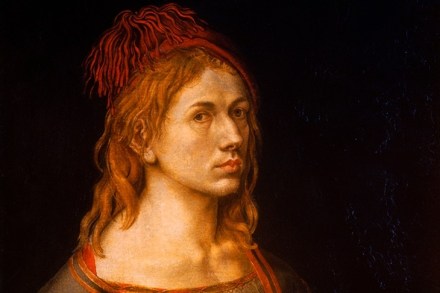
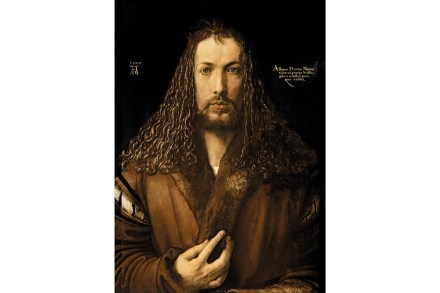
Great books make genres jump. It happened with W.G. Sebald’s The Rings of Saturn, which looked like a travelogue, claimed to be a novel and felt like neither. Albert and the Whale by Philip Hoare, which recalls and converses with Sebald, is such a work. An antic and original creation, it is not exactly a biography of the revolutionary Renaissance printmaker, painter and theorist of geometry and perspective. For the fuller story of Albrecht Dürer, turn to Erwin Panofsky’s mighty monograph, as Hoare does frequently. Instead, Hoare has made a book as much for Dürer as it is about him. Dürer’s life and art are thrillingly encountered.

Dürer

The golden age of Dutch art never ceases to amaze

From our UK edition

This year’s Vermeer exhibition at the Rijksmuseum in Amsterdam and the Frans Hals retrospective at London’s National Gallery are testaments to the enduring appeal of the Dutch artists of the Golden Age. When the 80-year war between Spain and the Dutch Republic ended in 1648, it left the Dutch strong in military and economic terms. They founded colonies across the world. The affluence and stability provided the perfect medium for creativity. Painting flourished, and buying art was no longer the domain of the wealthiest. Benjamin Moser’s first book since winning the Pulitzer for Sontag explores this burgeoning world.

Albrecht Dürer’s genius for self-promotion

From our UK edition

Albrecht Dürer, one of the most narcissistic artists that ever lived (and it’s a crowded field), would have loved this book. It lays out methodically, with academic brilliance, the marketplace, techno-aware basis of the ‘Dürer Renaissance’ and the artist’s rise to immortal fame. With a glorious accumulation of detail, assiduous research and – as she acknowledges before her exciting journey begins – the benefit of ‘magnificent institutional support’, Ulinka Rublack, a history professor at Cambridge University, delivers a deluxe book, with chapter and verse to support her grand subtitle: ‘Art and Society at the Dawn of a Global World’.

The shock of the new in feminist art

From our UK edition

Lauren Elkin begins her book about bodily art with a charming ode to the punctuation mark that she in American English calls a ‘slash’ and we in British English call a ‘stroke’. She likes the way it expresses ‘division yet relation’. Brings disparate things together. Makes space for ambiguity. Blends and blurs. And/or. She writes: The slash is the first person tipped over: the first person joining me to the person beside me, or me to you. Across the slash we can find each other. Across the slash I think we can do some work. That work begins in Art Monsters with a lively and vibrant account of feminist art that articulates the everyday experience of having a body.

Should we judge a work by the character of its creator?

From our UK edition

‘Most of my heroes are monsters, unfortunately,’ Joni Mitchell once said, ‘and they are men.’ The singer-songwriter was able to detach the maker from the made. Should we do the same? Is it ethical? Even possible? These are the questions Claire Dederer deftly considers in Monsters, which puzzles through the problem of what we ought to do about great art by bad men. Ideally, nothing. Early on in her quest, Dederer longs for someone to invent an online calculator: The user would enter the name of an artist, whereupon the calculator would assess the heinousness of the crime versus the greatness of the art and spit out a verdict: you could or could not consume the work of this artist. Alas, said calculator has yet to be programmed, so it’s down to her to do the maths.

The university fighting back against the diversocrats

The latest news in the Hamline University saga is that a large majority of the faculty — seventy-one of ninety-two members — have called on university president Fayneese Miller to resign. Miller had played the principal part in the dismissal of art history instructor Erika López Prater, after Prater had shown two images of the Prophet Mohammed in her online art history class. One image was a slide of a fourteenth-century painting by a Muslim artist; the other was Muslim painting from the sixteenth century in which the Prophet is veiled. Condemnation of the Hamline administration for dismissing Prater has been nearly universal in American higher education.

Why Tate Modern seems more like a playground than an art gallery

From our UK edition

This book covers the period 1878-2000, offering thought provoking commentary on some 120 years of experiments in being modern, and begins with the famous court case after John Ruskin accused James Whistler of ‘flinging a pot of paint in the public’s face’. But Michael Bird does not limit his perspective to a single artist or cause per chapter. Part of the deep appeal of his writing is the range of reference across literature and art, bringing in key historical events where appropriate. He does a superb job of connecting and deftly summoning context, always seeking to illuminate the larger picture. And he stitches apt quotation through the text, returning to certain sources again and again for added effect, Henry James and Walter Sickert being just two.

Women artists have been ignored for far too long

From our UK edition

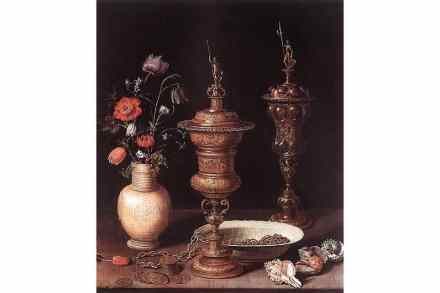
At first glance, Clara Peeters’s ‘Still Life with a Vase of Flowers, Goblets and Shells’ (1612) appears to be just that. Carefully arranged on a wooden tabletop, the collected objects are in conversation, the nubby curves of the shells echoing the ribbed neck of the stone vase, their dusky and rosy hues matching the open and squeezed shut buds. But look closer at the gleaming gilt goblet on the right and you’ll notice that the Flemish artist has smuggled tiny self-portraits into the polished roundels – a clever bid to avoid the misattribution of her painting to a man, perhaps, and a form of self-assertion in the male-dominated art world.

Alive with innovation: British art between the world wars

From our UK edition

When I mentioned the subject of this book to someone reasonably well-informed about 20th-century British art, the response was: ‘Isn’t that all portrait and still-life paintings?’ Well, perhaps if you’re looking exclusively at the contents of the Royal Academy Summer Exhibitions – and even there landscape was another popular choice. But actually the period was alive with innovation – with abstraction and surrealism infiltrating and balancing out a new kind of realism. Art was a melting pot of competing attitudes, drawing equally on native traditions and stimulating foreign influences, principally Cézanne and Picasso. In her enjoyable new book Frances Spalding identifies ‘a recurrent tension...

The effortless magnetism of Marcel Duchamp

From our UK edition

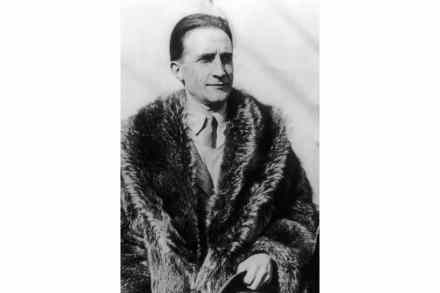
One could compile a fat anthology of tributes to Marcel Duchamp’s charm – especially what one friend called the artist’s ‘physical fineness’ – but it would be hard to top Georgia O’Keeffe’s memory of their first meeting: Duchamp was there and there was conversation. I was drinking tea. When I finished he rose from his chair, took my teacup and put it down at the side with a grace that I had never seen in anyone before and have seldom seen since. A tempest stirred by a teacup!

Restless visionary: Man Ray was always ahead of his time

From our UK edition

In the summer of 1940, after almost 20 years in Paris, Man Ray fled the Nazis for the country of his birth. Disliking New York, where he’d spent his youth, he made for the West Coast. He hoped to get as far as Tahiti or Hawaii. But his trip came to an end when, braced by the space, lifted by the lack of skyscrapers (‘made me feel taller’) and swept off his feet by a dancing girl (the latest in a long line of hoofers for whom he’d have the hots), he settled in Los Angeles. Though he would live there for more than decade, he never really liked the place. Nonetheless, he was far more productive in America than in Europe.

A keepsake – and to-do list – of Europe’s greatest cathedrals

From our UK edition

In his new book on Europe’s cathedrals, Simon Jenkins begins with the claim that the greatest among them are our most important European works of art. Greater than the paintings of El Greco or Berthe Morisot? More momentous than the buildings of Mies van der Rohe or Norman Foster? More important than the organ music of J.S. Bach or the Duruflé Requiem? Still, I see his point.

This radical Nativity is also one of the great whodunnits of art history

From our UK edition

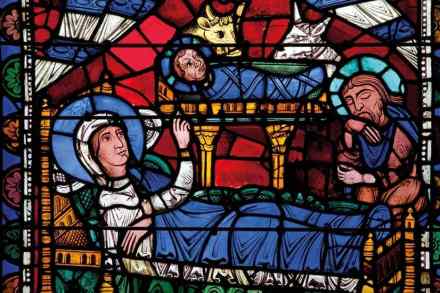
On 25 October 1510 Isabella d’Este, the Marchioness of Mantua, wrote a letter to her agent in Venice inquiring after a certain highly collectable item. ‘We believe that in the effects and the estate of Zorzo da Castelfranco, the painter, there exists a painting of a night scene, very beautiful and unusual.’ She thus set off one of the great whodunnits of art history: a mystery hidden inside an enigma that caused a furious 20th-century quarrel between one of the greatest connoisseurs of Renaissance art and the most powerful dealer of the age — and which has never been definitively solved.

The life of René Magritte was even more surprising than his art

From our UK edition

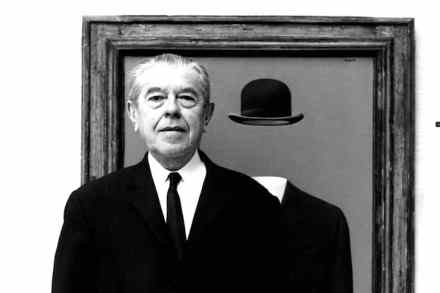
We live at a time in which we could (until recently) travel without difficulty and take for granted access to cultural treasures. It’s easy to forget that this wasn’t always the case, and minds were shaped by what possibilities were available. The Belgian painter René Magritte is a good example of huge talent pushed through a very narrow opening. His art has now become an exemplar of the striking image that commerce can feature. Advertising regularly uses his paradoxical visual combinations of faces replaced by apples, of skies in the shape of doves, of roses filling rooms and, supremely, the conundrum of the pipe demurely labelled ‘Ceci n’est pas une pipe’.

Bright, beautiful and deceptively simple: the art of the linocut

From our UK edition

In the 1920s the linocut broke out of the schoolroom and on to gallery walls. Here was a democratic new art form, perfect for the times with its lowly materials — a piece of old linoleum flooring for the block, while the best tools, according to the artist Claude Flight, were an old umbrella spoke for cutting and a toothbrush to rub the back of the paper. The finished prints, Flight hoped, would be cheap enough for working-class pockets. Above all, the bright, dynamic images themselves, often depicting scenes of contemporary life — busy streets, the London Underground, skating, the first motor races — captured the mood of the age.

Why should art have ever been considered a male preserve?

I’m a lady, I kept thinking, reading these two books. More: I’m a lady art historian. Oughtn’t I to like books by other lady art historians about lady artists and ladies in art? Why don’t I? Why so out of sync with the sisterhood? Start with the positive. Jennifer Higgie’s The Mirror and the Palette follows an interesting, original line: ‘If she had access to a mirror, a palette, an easel and paint, a woman could endlessly reflect on her face and, by extension, her place in the world.’ Higgie, editor-at-large at frieze magazine and the host of the (excellent) art history podcast Bow Down, considers the lives and ambitions of a series of women artists in the light of the self-portraits they painted.

art women