American foreign policy

How far can bravado take the US?

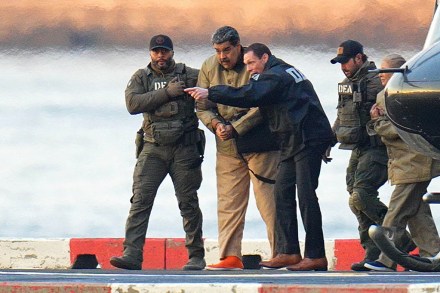
Operation Absolute Resolve, Donald Trump’s rendition of Nicolás Maduro in Venezuela, was a brilliantly executed coup. The audacious raid did not undermine international law, as many European and Democratic politicians have said. But it did expose the weakness and pomposity of the world’s multilateral bodies. Maduro traded oil for loans with China while helping Moscow avoid sanctions. He permitted the terrorist group Hezbollah and Iran to operate and build drones within his jurisdiction. He rigged elections and had opposition activists shot in the street. He allowed and enabled weapons, fentanyl and illegal migrants to flood towards America’s southern border. Yet it wasn’t the International Criminal Court that arrested Maduro to bring him to justice in a New York court.

global sheriff
marco rubio

Could the Donroe Doctrine turn Marco Rubio into the president-in-waiting?

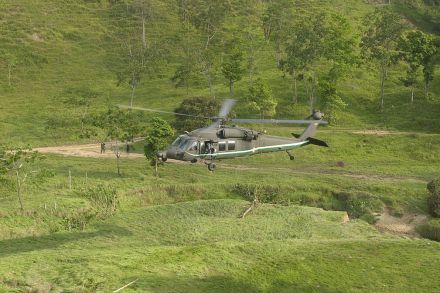
It required an incredible amount of sophistication to achieve the desired result in Caracas: a dictator detained and transported alive. The mission had been planned and mapped out for months, worked and reworked at the behest of the Commander-in-Chief. No American casualties would be tolerated. Special Forces had been circling and at the ready for weeks. The helicopters were easy targets, so a vital part of the mission was to eliminate Nicolás Maduro’s ground- to-air response beforehand and claim total air superiority.

The Maduro raid was a triumph of American innovation

In the early hours of Saturday, January 3, Caracas went dark. Power failed across much of the city as strikes and cyber-attacks disabled critical systems. What followed was not a conventional invasion, but one of the most audacious special forces operations in modern history. Within hours, Nicolás Maduro and his wife, Cilia Flores, had been seized from the heart of Venezuela’s largest military complex. No tanks rolled through the streets. No territory was occupied. The operation succeeded not through brute force alone, but because of something far more decisive: overwhelming American dominance of intelligence, networks, surveillance and infrastructure.

maduro american

America’s new war on drugs will be tough to win

On New Year’s Eve a few years ago, I was in Medellín, Colombia, the city that gave its name to one of the world’s most notorious drugs cartels. Our taxi driver offered us some cocaine to fuel the party we were heading to: $10 for a gram; $15 for the “luxury” product. Our group decided to splash out and get a gram of the really good stuff. I’d tried coke a couple of times in London. It was like snorting drain cleaner. Whoosh… I found that half a line of Medellín’s best was enough to keep you going until sunrise. But the next day it was difficult to be within six feet of another human being, the coke having burned up all the dopamine in my brain. Coke is evil. I imagine a lot of other people were feeling the same in Medellín that New Year.

‘Regime influence’: Trump’s foreign-policy third way

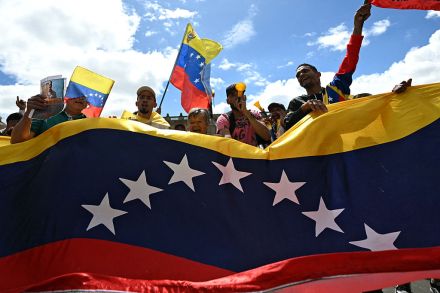
At 2 a.m. on Saturday, President Trump gave a New Year’s kinetic expression to his recently published National Security Strategy and what it means in the American hemisphere. If we take President Trump at his blustering word – which those in the administration’s Maduro-adjacent crosshairs should – this is just the first, big, shock-and-awe move by the United States in a resetting of the rules-based order that has governed our hemisphere. This time on America First terms. In Europe, those who take Trump seriously and see the long-term upside in his policies, call him “Daddy.” Last weekend Trump showed the “Papi” side of this national security strategy in our hemisphere. The Venezuelan people woke up praising the Papi of Venezuelan freedom.

donald trump nation influence

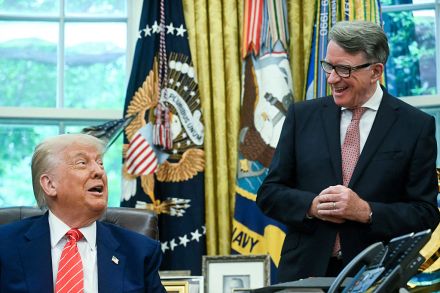
Peter Mandelson: Trump’s lessons for Europe

Donald Trump’s dramatic intervention in Venezuela has achieved much more than to bring a brutal, corrupt dictator and drug trafficker to justice in an American court of law, something which no amount of human rights declarations, international law or indictments in the international criminal court were able to achieve. It took President Trump deciding it was in America’s interests to helicopter Nicolás Maduro to face justice, and this is the awful truth that Europe’s political leaders are coming to terms with: Trump has the means and the will and they don’t. Europe’s growing geopolitical impotence in the world is becoming the issue now, and histrionics about Greenland is confirming this brutal reality. The future of Greenland is being misunderstood.

mandelson

Can the ‘Donroe doctrine’ really change Venezuela?

During the early hours of Saturday January 3, an official statement from the White House, signed by President Trump, confirmed that the US had captured both President Nicolás Maduro and his wife, Cilia Flores, and taken them out of Venezuela. At 2 a.m. sharp, thunderous sounds echoed through the capital city, part of what Trump called today “an assault not seen since World War Two… one of the most stunning displays of military might and competence in American history.” It was certainly an attack unlike anything ever seen in Venezuela. Within two hours, all of Caracas looked like a massive fireball, communications were down and areas were without power.

donroe doctrine

Why Trump’s Muslim Brotherhood crackdown is long overdue

Donald Trump has begun the process of banning the Muslim Brotherhood. The President asked his officials last week to investigate whether certain chapters of the group should be classed as foreign terrorist organizations, which would result in economic and travel sanctions. Some are portraying this as a reckless lurch into Islamophobia. In fact, it is overdue by at least a decade. The Muslim Brotherhood is not a benign religious association. It is a disciplined ideological movement with a century-long record of exploiting political systems. Its explicit objective is to work towards the establishment of a global caliphate – only by gradualist means, rather than the reckless confrontation and brutality favored by its distant offshoot, ISIS.

muslim brotherhood

It feels as if Michael McFaul’s audience has long since left

Since the end of the Cold War, politicians and commentators have been searching for a new paradigm through which to understand international relations. Notwithstanding Francis Fukuyama’s oft-misunderstood The End of History, we have tried various patterns to classify the world order, of which George W. Bush’s “Axis of Evil,” first used in 2002, was among the more enduring. In Autocrats vs. Democrats: China, Russia, America, and the New Global Disorder, Michael McFaul acknowledges the widespread if nebulous consensus that the challenge presented by Russia and China is a kind of second Cold War – historian Niall Ferguson has labeled America’s relations with China “Cold War II.

Michael McFaul

Are J.D. Vance and Marco Rubio heading for a clash?

Thanksgiving weekend ends on Sunday, and still there’s no peace in Ukraine. Donald Trump’s latest attempt to end the war – his 28-point plan – began to fall apart from the moment it mysteriously leaked to various international news outfits last week. As that story landed, Reuters broke some other news: Keith Kellogg, Trump’s special envoy to Ukraine, would stand down in January. Kellogg, who represents the more ardently pro-Ukrainian faction of the administration, had clashed repeatedly with Trump’s peace envoy Steve Witkoff, who has been engaging in friendly dialogue with Moscow for most of the year. His departure seemed linked to the fact that Dan Driscoll, the Secretary of the US Army and an ally of J.D.

Rubio Vance

Fact-checking the Venezuela war hawks 

As the US Navy remains primed for action in the Southern Caribbean, Venezuelan dictator Nicolás Maduro prepares for what could be an American attempt to remove him. And as President Trump alternates between calling Maduro on the phone and authorizing air strikes, a bevy of misinformation is being peddled by public figures with an agenda. There are so many claims and counter-claims on the air waves right now that it’s difficult to separate fact from fiction. A sizable chunk of this disinformation is of course being sold by Maduro himself, a man who has learned from his predecessor and mentor, the late Hugo Chávez, that it’s easier to blame the United States for all of your problems than own up to your own catastrophic policy errors.

Trump bromances MbS as Epstein Files loom

The contrast could hardly have been starker. As Donald Trump palled around with Mohammed bin Salman in the newly gilded Oval Office, Congress was voting on a transparency act that would further expose Jeffrey Epstein’s grave misdeeds. Trump, who had worked overtime to try and quash the vote, was in his element with the Saudi crown prince. Transparency? Not a bit of it. Trump proclaimed that the crown prince “knew nothing” about the death of Jamal Khashoggi who was, after all, “extremely controversial,” the term that he often deploys to describe anyone he dislikes or finds nettlesome.  The hero, or, to put it more precisely, heroine, of the day was Marjorie Taylor Greene. Greene is a profile in courage.

mbs epstein files
five eyes

Why Trump is freezing out Five Eyes allies

The most powerful intelligence alliance in the world is breaking up. In January, Donald Trump restricted intelligence-sharing on Russia and Ukraine, cutting allies out of negotiations and freezing certain channels entirely. Then in March came the so-called “Ukraine intel blackout,” an unprecedented freeze that shut Britain and Australia out of updates on Russian troop movements. And last month, the Dutch said they were scaling back intelligence-sharing with America over fears of “politicization.” Trump tends to treat intelligence as leverage, a tool to reward countries that fall in line with Washington and punish those that don’t. In his hands, intelligence and secrets have become bargaining chips.

Is South Korea bracing for a third Trump-Kim summit?

Donald Trump’s meeting with President Xi was the standout moment of this month’s Asia-Pacific leaders’ summit in South Korea. Yet almost as much attention focused on the rumors that Trump’s gaze had turned once again to North Korea. Addressing suggestions he would meet Kim, the President told reporters, "I’d be open 100 percent. I get along very well with Kim Jong-un." A meeting never materialized, but speculation – and tension – has only grown since.  Days after Trump’s departure, Defense Secretary Pete Hegseth arrived as part of his own tour of Asia. In Seoul, he became the first defence secretary in nearly eight years to visit Panmunjeom, the border village within the Joint Security Area (JSA) of the Demilitarized Zone (DMZ).

Trump is being misled on Venezuela

President Trump is being misled into a regime-change war close to home. Few Americans nowadays find much to celebrate in the Iraq War or the intervention that overthrew Libya’s Muammar Gaddafi. Regimes were successfully changed both times, but what came after the dictators’ downfall was civil war, regional instability and mass-migration flows that exported many of those nations’ troubles to their neighbors. Now the Trump administration wants to do to Venezuela’s despot, Nicolás Maduro, what George W. Bush did to Saddam Hussein and Barack Obama did to Gaddafi. That will predictably do to the Americas – including the US – what the War on Terror did to the Middle East, North Africa and Europe. Why would Donald Trump make such a mistake?

venezuela
erik prince

The return of Erik Prince

Erik Prince, the American mercenary, wants to sell you a phone. His Unplugged phone is aimed at stopping big tech and big government spying on you. It’s available in the United States, and shortly in the United Kingdom too. He tells me: “It’s been troubling for me to see the crackdown on free expression in the UK.” But the phone is a sideline. His main business remains sending private armies to some of the world’s most dangerous places. The Biden years were lean ones, or at least quiet ones; now that Donald Trump’s back, so is Prince. Most people know Prince as the founder of Blackwater, the world’s most notorious private military company. In 2014, four of Prince’s soldiers got long prison sentences in the US for opening fire on Iraqi civilians, killing 14.

Will Trump meet ‘Little Rocket Man?’

As President Trump sets off on his East Asian tour, all eyes will be on the bilateral summits that the US president will hold. After all, Trump has made no secret of his preference for tête-à-têtes over multilateralism. With a meeting with Xi Jinping scheduled in South Korea, on the sidelines of the Asia-Pacific Economic Cooperation (APEC) summit, the question of whether Trump will meet Little Rocket Man is unsurprisingly pervading, not least given how few details have been revealed as to Trump’s agenda. Although such a meeting, whether at the Demilitarized Zone or otherwise, seems unlikely at a time when US-North Korea relations are poor, nothing can be ruled out. Nevertheless, whilst the first Trump administration taught the world to expect the unexpected, Trump 2.

Kim Jong Un

Inside Trump’s war on the cartels

To deal with big problems, the second presidency of Donald Trump adopts a three-step approach. First, the declaration of authority: in this case, the designation announced in February of multiple Mexican and South American cartels as international terror organizations, opening up new avenues for legal, intelligence and potential military responses. Next, eye-popping kinetic action: this came with SOUTHCOM’s deployment in August of eight warships to the Caribbean and Pacific Oceans, including three Aegis guided-missile destroyers parked off the coast of Venezuela along with a landing dock, amphibious assault ships and a fast-attack nuclear submarine.

cartels

The Trump-Zelensky meetings offered a show of Western unity

Did President Trump make any progress toward ending the war in Ukraine after successive meetings with Vladimir Putin, Volodymyr Zelensky and key NATO partners?  The short answer is “yes – but it’s very slight, and there are still formidable obstacles, which could block a final deal.” The biggest obstacles are Ukraine agreeing to cede sovereign territory and Russia agreeing to the presence of a combined European-American military force within Ukraine, meant to prevent another Russian attack.  The joint military force is the most important proposal to emerge from Monday’s meeting. We already knew Ukraine would have to cede territory – or “swap it” as Trump delicately puts it.

western alliance nato ukraine

Has Putin turned Trump into a Russia hawk?

No, President Trump wasn’t referring to Russian president Vladimir Putin when he talked at a White House luncheon today about a “stupid guy” and a “knucklehead.” But he did make it clear that his long-standing bromance with the Kremlin’s big cheese has turned out to be unrequited, much to his distress.   Trump lamented that Putin’s talk about peace was so much rodomontade, amounting to more than a “nice phone call” followed by a bunch of missiles lobbed at Kyiv and other Ukrainian cities. It was Melania, he said, who had noted to him the inconsistency between Putin’s words and deeds. Perhaps Melania, more than anyone else, injected some iron into Trump’s previously anemic posture towards Moscow.

nato putin russia hawk