American foreign policy

How Trump inadvertently boosted Europe’s defense industry

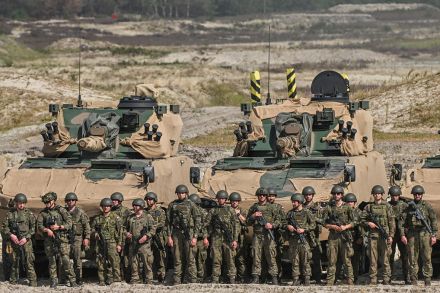
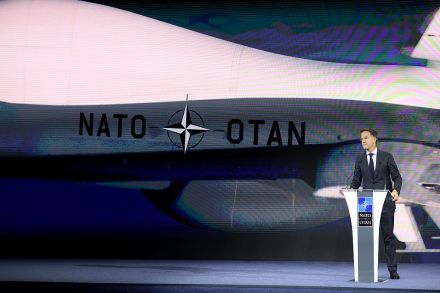
With all the Hollywood drama and heart-pounding music of a Mission: Impossible trailer, NATO screened a short promotional film at its Ankara summit to showcase the military hardware it plans to buy to hit Donald Trump's defense spending target. One of the aircraft featured in the mini-movie was even an A400M – the heavy-lift plane that Tom Cruise clung to the side of in the fifth installment of his action film franchise. When the lights came back up, NATO’s Secretary General, Mark Rutte, shook hands, slapped backs and made clear that NATO had not only chosen to accept Trump’s mission to boost spending, it was now delivering.

Mark Rutte NATO

Trump reveals the limits of American power

Donald Trump’s quest for regime change in Iran has backfired horribly. The President misunderstood the resilience of the 47-year-old Islamic Republic of Iran, the strategic calculations of one-time ally Israel and the physical and political geography of the Strait of Hormuz. Vice President J.D. Vance appears now to be positioned as the public face of failure. The decision to launch the assault on Iran was underpinned by Israeli confidence that Iran’s leadership could be toppled and that the United States’ overwhelming firepower would produce shock and awe. It came in the immediate aftermath of plans to acquire Greenland, incorporate Canada, assert dominance over the Panama Canal and topple the then Venezuelan government. Cuba is no doubt next on Trump's list.

iran

The Iran war is Trump’s Suez crisis

Clarissa Eden famously declared that "in the past few weeks I have really felt as if the Suez Canal was flowing through my drawing-room." Does Melania Trump feel the same about the Strait of Hormuz? Or perhaps Donald will be reminded of the strait every time he hits one over the water at Bedminster. He ought to be. The Iran war will define his presidency. It is his legacy – just not in the way he imagined. In 1956, a British prime minister discovered that we were no longer a great power. It was an end to illusions. We liked to think we had the best navy in the world, but that was irrelevant to whether we could keep a canal in Egypt.

suez

Is Trump’s quest for peace doomed?

J.D. Vance jokingly compared himself to Richard Nixon yesterday. "Young senator, vice president, writes some bestselling books, is hated by the media... kinda sounds like J.D. Vance," he said at the Richard Nixon Library and Museum in Yorba Linda, California. "I’ve always liked Richard Nixon." At the same time, 8,000 miles away, in the Strait of Hormuz, Iranian forces struck another ship, further undermining what critics have called "the Vance deal" – the "Memorandum of Understanding" between Tehran and Washington. And that suggests, at a foreign-policy level, the Nixon-Vance parallel is more apt than the 50th Vice President realizes. Of course, Nixon was Commander-in-Chief and Vance is not. And the Vietnam War is very different to America’s current fight with Iran.

donald trump

Will peace be the perfect gift for the President?

Donald Trump’s 80th birthday is this weekend, and what better present for a struggling octogenarian Commander-in-Chief than a peace deal with Iran, signed if not quite yet sealed and delivered. There is, I’m told, some late scrambling over "semantics" in the so-called "memorandum of understanding" between America and Iran, and lingering issues over the language concerning the "nuclear dust" – i.e., Iran’s enriched uranium. But the rest is all but agreed. J.D. Vance could fly to Europe to sign a deal tomorrow – or if not it will be Trump as he attends the G7 in Evian near the Swiss Alps on Monday. Trump really wanted to stage a peace photo-op with Iran’s new Supreme Leader Mojtaba Khamenei but had to be told that would not be possible.

donald trump peace

Sixteen times that Trump nearly ended the Iran war

Today marks a hundred days since America and Israel began launching strikes on Iran on February 28. The very next day, Donald Trump told the Atlantic that Iran’s leaders "want to talk," saying they should have made a deal sooner and that "they played too cute." Three days after Trump said this, Iran announced that the Strait of Hormuz was closed. Since then, we have been told dozens of times that we are on the brink of a lasting deal between Iran and America, often in the President’s statements on Truth Social. At the end of last month, Axios reported that US and Iranian negotiators had reached an agreement on a 60-day memorandum which would reopen the Strait, which simply needed Trump’s sign off.

iran trump

Are Trump and Netanyahu heading for a showdown?

Depending on which day it is, the ongoing peace talks between the United States and Iran are either a few days away from being finalized or close to hitting another roadblock. The status of the negotiations fluctuates about as much as Donald Trump’s mood swings. For those on the outside looking in, the whole storyline can be discombobulating. It doesn’t help that US and Iran are still taking pop-shots at each other. Early on Thursday morning, Tehran attacked a US base in response to a fresh round of US strikes on an Iranian base in Bandar Abbas.  Fortunately, the shooting is not killing the diplomacy – at least not yet. There does appear to be a general framework on the table.

netanyahu

Is Trump giving peace a chance?

Washington’s war hawks are molting down over President Trump’s outreach to Iran. Senator Ted Cruz says that he is “concerned.” Senator Roger Wicker fears a “disaster.” Former Secretary of State Mike Pompeo deemed a preliminary agreement with Iran “not remotely America First.” Trump and his advisors are having none of it. Responding to Pompeo, White House communications director Steve Cheung observed that “he should shut his stupid mouth and leave the real work to the professionals.” Trump, who angered Senate Republicans earlier this week by proposing a $1.8 billion slush fund for January 6 victims and by endorsing Ken Paxton for the Senate, appears to be largely indifferent to demands for a new assault.

peace

Trump’s NATO troop reduction isn’t Europe’s biggest problem

Before Donald Trump returned to the White House last year, there were many commentators who sought to sanitize the President. Take him seriously but not literally, they said. Some hinted that his cruder and wilder hyperbole was not the ignorant, boorish reflex it seemed but a shrewd and daring negotiating tactic in Trump’s beloved "art of the deal." It has been reported that the United States is planning to announce a reduction in the number of troops it will make available to NATO in Europe. America is planning to shrink its commitment to the NATO Force model, under which troops "carry out the alliance’s operations, missions and other activities during peacetime.

nato

Trump needs peace in Iran

Donald Trump was for the Iran war before he was against it. His latest post on social media about the conflict indicated that he is once more calling off a sweeping military action, this time at the behest of his Gulf allies who are apparently quaking at the thought of a renewed conflict.

WASHINGTON, DC - MAY 12: U.S. President Donald Trump speaks to the press as he departs the White House on May 12, 2026 in Washington, DC. Trump is traveling to China where he is scheduled to meet with Chinese President Xi Jinping for expected talks on the Iran conflict, trade imbalances, regional security, and economic cooperation between the two countries. (Photo by Kevin Dietsch/Getty Images)

Did the Trump/Xi summit achieve anything?

Air Force One is in the air as I write, whizzing from Beijing back to Washington – and Donald Trump leaves China with many questions unanswered. There were warm words on both sides and plenty of friendly symbolism in the President’s big summit with Xi Jinping. But the fundamental great power tensions remain – over trade, technology, and war and peace in the Middle East and Taiwan. Washington and Beijing agree that Iran should never have a nuclear weapon – though it remains unclear the extent to which China will help reopen the Strait of Hormuz. Its closure hurts the Chinese economy, of course, but China has significant energy reserves and Xi knows that the pain spreads around the world to his advantage.

trump xi
rubio

Why I’m Never Rubio

The Atlantic magazine recently announced the People’s Choice for the 2028 Republican presidential nomination. “Trump Voters Like Marco Rubio More and More (And J.D. Vance Less and Less)” the headline proclaimed, a ruling that deserves respect considering that this is the magazine that has spent the past decade ferociously denouncing Trump as a “racist,” “fascist kleptocrat,” “warped,” “corrupted,” an “authoritarian,” a “demagogue,” a “xenophobe” and a “liar.” The piece was written by Sarah Longwell, whose career as a Republican consists almost entirely of loathing Trump, calling him an “incomprehensible lunatic,” “an insane madman,” “corrupt” and an “authoritarian.

Is the Iran ceasefire crumbling?

Is the fragile Iran war ceasefire over? It would appear so, with American and Iranian forces exchanging fire in the Strait of Hormuz. The renewed clashes follow President Trump’s launch of "Project Freedom," which aims to use the US military to escort stranded ships out of the critical waterway. Trump said American forces had hit seven Iranian small boats, with the US military claiming to have intercepted cruise missiles and drones launched by Tehran. Trump earlier warned that Iranian forces would be "blown off the face of the Earth" if they targeted US ships in the strait or the Persian Gulf. Tehran says it fired "warning shots" at US warships, and said it would attack any foreign force that tried to enter the strait.

iran ceasefire

Venezuela has become another American puppet state

Venezuela’s deposed president, Nicolás Maduro, never enjoyed the charisma or genuine popularity of his predecessor, "El Comandante" Hugo Chávez. So all the murals, billboards and installations dotted around Caracas urging the release of the 63-year-old statesman – along with his wife Cilia Flores – from American captivity, don’t exactly feel like a grassroots effort. "Bring them home!" reads one mural, evoking the Israeli hostages kidnapped by Hamas. Meanwhile, a stopwatch installed in Caracas’s Bolivar Square counts how long it has been since the presidential couple were abducted by the US army in early January.

venezuela

The contempt Trump feels for his NATO allies is mutual

The war in Iran has revealed plenty about America’s ability to inflict damage on its enemies, Tehran’s capacity to resist pressure and Washington’s broader tendency to get itself stuck in the Middle East – a region several US presidents planned to extricate from. The conflict has been paused since April 7 due to a ceasefire that Trump extended earlier in the week. But it is nonetheless revealing a gradual systemic shift in the so-called international order that has been bubbling beneath the surface for years. The movable object is none other than the transatlantic alliance which, through NATO, has bound the United States and most of Europe into a single security construct.

NATO

Why Iran doesn’t want peace

Perhaps we should be used to be this by now. Yet again, there have been a flurry of promises to rapidly achieve peace in Iran. Yet again, the American administration has threatened to destroy the nation’s infrastructure. J.D. Vance is again flying to Pakistan for more talks. And yet the conflict shows no sign of ending. We don’t know whether the Iranians will actually turn up. A foreign ministry spokesman said yesterday that Iran will not be joining the talks. The speaker of the parliament Mohammad Bagher Ghalibaf has also made clear that the regime won’t negotiate under threat of civilizational destruction. Why would they resist peace talks? There is both a diplomatic and domestic answer.

iran peace

Trump’s costly armchair geography

In the 19th century, the geographer and explorer David Livingstone was scathing of what he described as "easy-chair geographers" – authors and mapmakers who produced maps and treatises about the non-European world without ever leaving their learned society or personal office. Donald Trump is a latter-day armchair geographer. Or judging by photographs repeatedly released by the White House, a president comfortable convening meetings in the Oval Office with large maps displayed by his desk. But whether it is a case of acquiring Greenland or blockading the Strait of Hormuz, maps can be poor substitutes for in-field knowledge and understanding.

armchair geographer

Who’s actually winning the wars in the Middle East?

If you read the New York Times or watch the foreign policy establishment’s “best and brightest,” you will be told, with imperious certainty, that America is losing the war in Iran and was stupid to begin it. The conspiratorial wing on both the right and left add that it is all the Jews’ fault, although they usually remember to mutter they mean “Israel” instead of all Jews, a gossamer cloak over what they really mean. If, on the other hand, you watch Fox News or read blogs by conservatives or military analysts, you will be told with equal certainty that America and its ally, Israel, are actually winning – and winning decisively.  So, who is right? The answer, of course, is Carl von Clausewitz. What that old Prussian says goes to the heart of the issue.

middle east

The Pentagon’s holy war with Rome

America is having its Golden Age, Iran is about to get blasted into the Stone Age... and Elbridge Colby wants to go back to the Late Middle Ages? According to a Free Press report by Mattia Ferraresi, the Under Secretary of War for Policy summoned Cardinal Christophe Pierre, the Vatican’s then-ambassador to the US, to a meeting in which the Avignon Papacy was invoked. (For those of you who didn’t go to Catholic school: in the 1300s the king of France had Pope Boniface VIII captured and beaten after the pope excommunicated him; a few years later the papacy moved to Avignon amid continued threats from the French crown and instability in Rome.

pope leo catholic rome pentagon
NATO

What Trump gets wrong about NATO

The idea that the United States has been swindled by its NATO allies is not new. Robert Gates, in his valedictory address as secretary of defense in June 2011, warned bluntly that future American leaders might not consider the return on defense investment in Europe worthwhile. He spoke of a "two-tiered alliance… Between those willing and able to pay the price and bear the burdens of alliance commitments, and those who enjoy the benefits of NATO membership… but don’t want to share the risks and the costs." Gates was no populist. He was a career intelligence officer and establishment Republican, and his warning carried real weight precisely because it came from inside the institutional consensus rather than against it.