American foreign policy

Has Putin turned Trump into a Russia hawk?

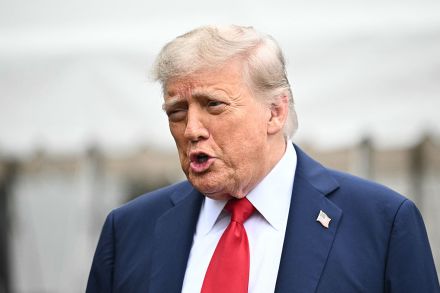
No, President Trump wasn’t referring to Russian president Vladimir Putin when he talked at a White House luncheon today about a “stupid guy” and a “knucklehead.” But he did make it clear that his long-standing bromance with the Kremlin’s big cheese has turned out to be unrequited, much to his distress.   Trump lamented that Putin’s talk about peace was so much rodomontade, amounting to more than a “nice phone call” followed by a bunch of missiles lobbed at Kyiv and other Ukrainian cities. It was Melania, he said, who had noted to him the inconsistency between Putin’s words and deeds. Perhaps Melania, more than anyone else, injected some iron into Trump’s previously anemic posture towards Moscow.

nato putin russia hawk

Is Trump ready to fight a forever war?

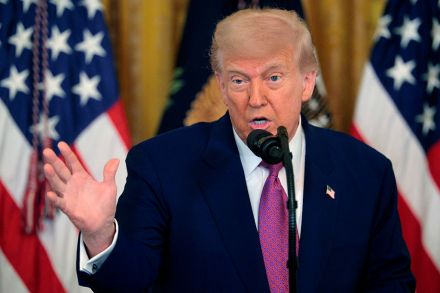
So much for the contention that President Donald Trump always chickens out. Trump has done what George W. Bush, Barack Obama and Joe Biden contemplated but never executed: bombing Iran's main nuclear sites with a combination of bunker busters and Tomahawk cruise missiles.  In his brief White House address on Saturday night, Trump exuded confidence, stating that the Iranian nuclear program had been "obliterated." But he made it clear that he is prepared to up the ante, pledging that if Iran doesn't agree to a peace deal, then the bombing campaign will be expanded. Trump said that the US “will go to those other targets with precision, speed and skill." America is now at war with Iran. Already Trump's MAGA followers are (largely) hailing his audacious decision.

Trump: America First, c’est moi

“When I use a word,” Humpty Dumpty told Alice scornfully, “it means just what I choose it to mean – neither more nor less. The question is which is to be master – that’s all.” This is an important angle to understanding that America First is whatever Donald Trump says it is, at the time that he says it. His declaration that he is the master of the term, and defines it according to what he sees as America’s interest on a moveable basis, is in no way inconsistent with the foreign policy of his first term or his second: he makes decisions, sometimes snap decisions, based on what he sees as choices standing to benefit the country.

america first

Trump has been outmaneuvered by Netanyahu

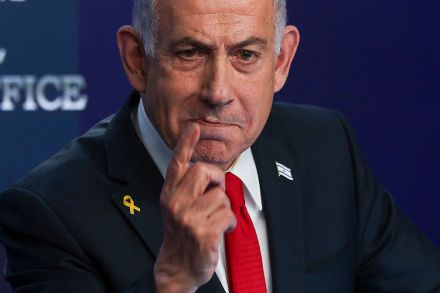
The surprising thing isn’t that Israeli Prime Minister Benjamin Netanyahu attacked Iran. It’s that the current bombing campaign didn’t occur sooner. Netanyahu has been inveighing against the Iran threat for decades. The prospect that Trump might be prepared to cut a nuclear deal with the Iranian mullahs finally forced his hand. Trump, who based much of his MAGA movement around opposition to endless wars in the Middle East, has been outmaneuvered by Bibi. Intent on a Nobel Peace Prize, Trump proclaimed that he would secure an end to the Ukraine war within 24 hours. Then he focused his attentions on Iran. But his impulse to avoid war, any war, in the Middle East has been foiled.

Netanyahu

Trump’s birthday surprise – war with Iran?

The Trump presidency is giving us all a type of news-related diabetes. So much sensational information is spewing out of our screens all the time. There are so many stories, so much richness and history and irony, and so much silliness and seriousness entwined. We are dangerously overfed and now the lines of reality are blurring and people feel mad and sick. The Trump-Musk saga goes on, as Elon telephones Donald and shows his contrition on X. Trump sends in troops to control anti-ICE protests. Trump attends Les Miserables at his increasingly camp Kennedy Center.

A fireside chat with Usha Vance

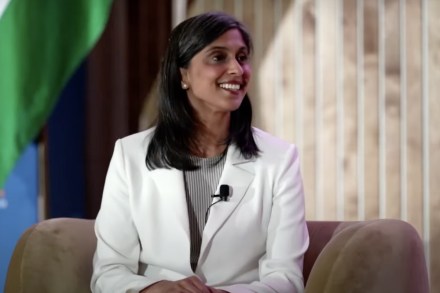
Washington, DC Usha Vance is on a mission. This year's low reading scores have shocked the White House into action – so they have placed the Yale-educated Second Lady at the helm of the reading recovery ship. But as well as addressing faltering childhood literacy, Vance has a host of other tasks to complete for the Trump administration. Vance described her role in Trump 2.0 at the annual US-India Strategic Partnership Forum hosted at the Waldorf Astoria in DC Tuesday. It includes reading challenges, the Special Olympics and US-India relations – fueled by her children's interactions with the country's Prime Minister Narendra Modi. The conference followed the launch of the "Second Lady Summer Reading Challenge.

usha vance
Iran

Will Iran take the nuclear win?

To enrich or not enrich? This seems to have been the question dividing Iranian and American negotiators, and there are swelling choruses in Tehran and Washington who hold strong views on the matter. In a report leaked to Axios, it appears that during the last round of talks, the US gave Iran a proposal that would allow limited low-level uranium enrichment for a specified period. The proposal suggested that Iran would be forbidden from building new enrichment facilities and must dismantle “critical infrastructure for conversion and processing of uranium,” adding that research and development on centrifuges would also have to stop. Sanctions relief will only come once Iran is demonstrably adhering to the terms of the deal and has clearly paused its underground enrichment activities.

war

America no longer knows how to fight a war

When educated Americans think about war, they’re apt to think of it in ideological terms. Wars are fought between dictatorships and democracies and the goal is to establish one form of government or the other in the defeated opponent’s territory. That’s certainly been the way American policymakers have thought about the wars of this century and it was the framework during the Cold War as well, when the conflict was said to be, fundamentally, a clash of ideologies. The French Revolution is probably the source of this concept, as the wars it set off were indeed largely about regime change, if not that alone.

Why Washington should make Latin America a priority

As American eyes remain fixed on the Middle East — understandably so — China has been rolling out the red carpet for Latin America, and we have barely noticed. While Xi Jinping welcomes Colombia, one of Washington’s historically reliable allies, into the controversial Belt and Road Initiative, he’s also introducing visa-free entry for South America’s largest economies and greeting regional leaders in Beijing with billion-dollar credit lines and lavish, all-expenses-paid political junkets. Washington, meanwhile, was… busy. If this sounds familiar, it’s because it is. The US has been snoozing through Latin America’s strategic realignment for years, occasionally waking up to mutter something about narcos or illegal migration, then hitting the snooze button.

washington

Why Trump met Syria’s interim president

Few career arcs in modern history can be as remarkable as that of Ahmed Hussein al-Sharaa – or Abu Mohammed al-Jolani, to give him the nom de guerre under which he fought American troops in Iraq back when he was a firebrand member of al-Qaeda. Twenty years ago al-Sharaa was languishing in a US military prison in Baghdad, held on suspicion of terrorism. Today, as Syria’s new interim President, he shook hands with Donald Trump posing for photo-calls alongside the de-facto ruler of Saudi Arabia Mohammad bin Salman. Trump was evidently impressed by al-Sharaa, who has swapped the turban and dusty fatigues that he habitually wore before taking Damascus by storm last winter for a plain blue suit and purple tie. “He’s a young attractive guy.

al-sharaa

Trump has no appetite for a second-term war

Now more than ever, Donald Trump appears to be channeling his inner Lord Palmerston. It was the 19th-century prime minister, after all, who went down in the history books for his declaration that England had no permanent enemies or allies. Generations of statesmen have recited that gelid precept, but Trump is one of the few who actually seems prepared to act upon it. Speaking in Riyadh, he implored Iran – the longtime bugbear of Washington hawks, including Trump’s defenestrated national security advisor Mike Waltz – to strike out upon a new course, vowing that there are no “permanent enemies” for America.

saudi arabia trump war

J.D. Vance makes nice with Munich

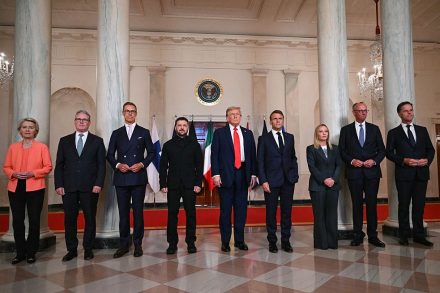
It was an emollient J.D. Vance who showed up at the Munich Leaders Meeting in Washington, DC. Gone was the Vance who dissed the Europeans in Munich on February 15 by complaining that they were practicing censorship of political views and who met with a representative of the far-right Alternative für Deutschland party. Gone was the Cerberus who barked at Ukrainian President Volodymyr Zelensky on the Oval Office on February 24 that he had exhibited a dismaying lack of gratitude toward America for its assistance to his beleaguered nation. Gone was the Ohio senator who declared in July 2024 that he didn’t give a fig about Ukraine’s fate and was more interested in pursuing an Asia First policy.

jd vance
biden russia

Biden has learned nothing from his foreign-policy experience

Historically, ex-presidents spend their golden years on the speaking circuit, writing their memoirs or planning for the inauguration of their presidential libraries. What they don’t do is lash out at their successors when they disagree with a policy or decision. Joe Biden, however, has no intention of keeping quiet. A little more than three months after vacating the White House, Biden is unencumbered from conventional decorum and feels free to speak his mind. Last month, he gave his first post-presidency speech in Chicago, where he blasted the Trump administration for taking a sharp hatchet to the federal workforce, including the Social Security Administration.

The real battle for Europe

Donald Trump hates Europe – that suspicion had grown so widespread by mid-April that J.D. Vance was moved to declare in an interview: “I love Europe.” Even its people, he claims. Of course, Americans have taken sides in European rivalries from the outset: Thomas Jefferson was a France man after the French Revolution, while John Adams preferred England. FDR preferred Pétain, while Eisenhower preferred de Gaulle. But hate Europe outright? The idea is absurd. Though our ancestors are not 100 percent European, our country is. You can imagine President Trump calling for a Wienerschnitzel and a tub of mayonnaise more easily than you can imagine him calling for a bowl of hủ tiều nam vang and a bottle of nưởc mắm.

Europe

A mammoth 100 days of Trump’s America First foreign policy

One hundred days into the second Donald Trump presidency, his presence in the Oval Office represents the largest sea change in US foreign relations since the end of the Cold War.  Within the space of fewer than four months, Trump has forced Ukraine to deal with reality, by delivering hard truths about what ending the war will require. He has deployed J.D. Vance to shock the international system, with tough messages to our allies in Europe and Asia. Trump’s declaration of a litany of cartels as foreign terror organizations has kicked off a redirection of our relationship with Mexico, Panama and the Western hemisphere. His close relationship with Israel, a clear break with Joe Biden’s approach, has shifted expectations for the Middle East.

foreign
hadron

Trump is a Large Hadron Collider

By conventional measures President Trump’s first 100 days back in office have not been a success. He hasn’t (at time of writing) restored peace for Europe’s frontier with Russia or tamed inflation in America’s supermarkets. Instead, he’s given the stock market a shock the likes of which it hasn’t felt in decades and blown up some apartment buildings in Yemen. Elon Musk’s Department of Government Efficiency has taken apart entire federal agencies, but the very small-government conservatives and libertarians who might be expected to be enthusiastic about this are instead signaling that they were pretty comfortable with the way Washington was – or at least that they don’t want those ways changed unless they’re done by the most proper possible playbook.

globalization

Who cares about globalization?

Donald Trump’s “Liberation Day” was the culmination of a 30-year insurgency against the global economic system. It was the most fiscally significant event since lockdown. By the fiat of the President, tens of trillions of dollars were on the move; stock markets trembled; and the US-China relationship – the material basis of globalization – seemed at risk of permanently freezing over.  Yet just under a week later, tariffs were to be displaced in the news cycle by the case of a deported "Maryland man," Kilmar Abrego Garcia, and his possible gang affiliations. Only one of these events would prompt five Democratic lawmakers to drop everything for an urgent trip abroad.

The Democratic war machine

To understand what’s wrong with the American left and the Democratic party – two different but entwined things, to be sure – look to Vladimir Ilyich Lenin. Look also to the work of the historian Sean McMeekin, including his latest book, To Overthrow the World: The Rise and Fall and Rise of Communism. Earlier this spring I emceed an event in McMeekin’s honor, as he received the award for “Conservative Book of the Year” from the Intercollegiate Studies Institute. It gave me the opportunity to chat with him about Lenin’s doctrine of “revolutionary defeatism” and much else, including the fairy tale the West tells itself about how communism ended.

Democratic
nightmaring

Play Putin at his own game by ‘nightmaring’ his world order

There’s a delicious Russian verb that derives from the criminal underworld: “koshmarit,” literally “to nightmare someone.” It usually denotes how authorities give criminals, or anyone they dislike, so much relentless hassle from so many different angles they bend them to their will. Vladimir Putin, always keen to bring mafia language into politics, was the first Russian statesman to make use of it in public – he once instructed his authorities to stop “nightmaring” the business community. I keep returning to that word when I think of how Putin’s own foreign policy could be restrained to make real the Reaganite slogan that helped Donald Trump win the election: “peace through strength.

puntland

Will Trump take a punt on Puntland?

As a man who views the world as one big real-estate portfolio, Donald Trump sees the potential in northern Somalia’s Puntland region. Lousy government, maybe, and definitely more than a few bad guys around. But Puntland has great winter sun and tremendous beaches, folks. It could be just the place to resettle Palestinians from the Gaza Strip. Jordan and Egypt have all but refused to rehouse Gaza’s population and according to Israeli diplomats, Puntland has made the shortlist of new Palestinian homelands. The Trump sales pitch is that this will allow Gazans to create “far safer and more beautiful communities” than their homeland could ever offer. The Strip meanwhile, will be rebuilt into a Dubai-on-the-Med.