9/11

Dick Cheney dies at 84

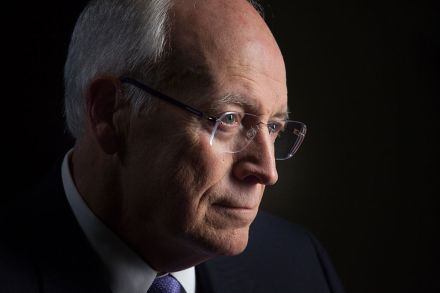
Former vice president Dick Cheney died last night aged 84. He arrived in Washington as a congressman for Wyoming, then became secretary for defense under George H.W. Bush and served for eight years as George W. Bush’s vice president. He was considered by many to have pulled the strings behind the Bush administration. What is perhaps his most lasting legacy is the “Cheney Doctrine,” which influenced America’s decision to engage in wars in the Middle East. He campaigned for a military response to the 9/11 terrorist attacks, which drove his conviction that any country, organization or individual that posed a threat to the US, or that might in the future, needed to be taken out.

Unpacking Tucker Carlson’s 9/11 documentary

What if the country responsible for almost 3,000 deaths on September 11, 2001, was not Afghanistan, and certainly not Iraq, but Saudi Arabia? Did the US invade the wrong country? A lawsuit in Manhattan makes this case. The legal action, by 9/11 survivors and victims’ families, has unearthed new evidence that puts the blame for the attacks squarely on the -Saudis. The families believe the government of Saudi Arabia plotted the attack from the start – and afterwards, the US government let them get away with it. The CIA kept information from the FBI, Carlson says, because ‘the CIA was grooming the hijackers as sources’ At the same time, a new Tucker Carlson documentary, The 9/11 Files, makes a different accusation against Saudi Arabia.

9/11

Where is America’s 9/11 spirit?

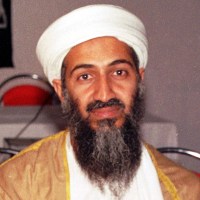
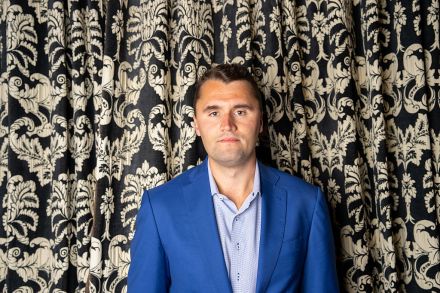
Stark was the contrast between the selfless heroism and unity of purpose on and in the aftermath of September 11, 2001, and the nation’s reaction to the events of September 10, 2025. In abundantly obvious respects, the two days differed. Conservative activist Charlie Kirk, his wife, their two children, and the rest of his loved ones were the only immediate victims of his assassination on September 10. In contrast, Osama bin Laden’s hell-bound errand boys murdered nearly 3,000 Americans, saddled thousands more with diseases that later claimed their lives, and altered New York City’s skyline forever on September 11. America went to war afterwards.

Charlie Kirk

When will we learn the truth about Saudi involvement in 9/11?

Will Saudi Arabia ever be held to account for the 9/11 terror attacks? For decades, the Kingdom has successfully parried lawsuits in the United States accusing it of providing logistical and financial support to a network of Islamic extremists who launched a global terror campaign, culminating in the September 11 attacks on the Pentagon and the World Trade Center. Those attacks occurred 24 years ago and since then survivors and victims of the 9/11 hijackings have had to counter not only vigorous Saudi denials mounted by their well-funded American legal team but also repeated attempts by the US government to thwart the lawsuits. But there are signs the pendulum has begun to swing the other way. On August 28, US District Judge George B.

9/11 saudi
Flight 93

Flight 93 heroes deserve the Presidential Medal of Freedom

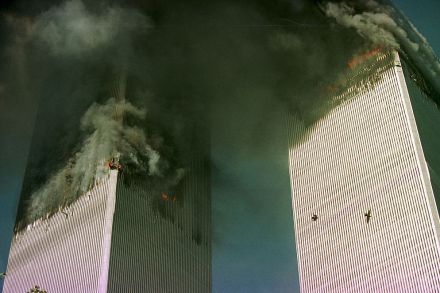
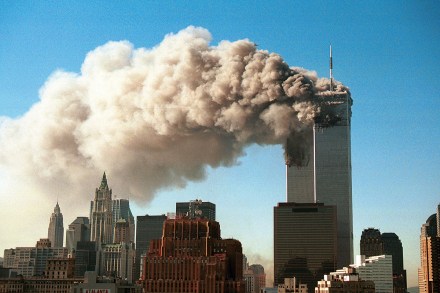
Twenty-four years ago, Muslim terrorists murdered nearly 3,000 innocent civilians – the vast majority of them Americans – by hijacking three passenger aircraft and ramming them the World Trade Center in New York and the Pentagon in suburban Washington, DC. But a fourth, United Airlines Flight 93, failed to reach its target thanks to the bravery of the passengers and flight attendants, who sacrificed themselves to save who-knows-how many. Twenty-four years later, those heroes have yet to receive their country's highest civilian award. The Presidential Medal of Freedom, instituted by President John F.

terror

The never-ending War on Terror

Twenty-two years ago today, the United States experienced its worst terrorist attack in history. It was a life-changing moment for tens of thousands of Americans, particularly those in the New York metropolitan area who saw two of the city’s most iconic buildings reduced to smoldering heaps of rubble and ash. The Pentagon, a stoic building across the Potomac River from our capital, saw one of its sides destroyed. About 166 miles to the northwest, another hijacked plane went down in rural Shanksville, Pennsylvania. By the time that horrible day was over, nearly 3,000 people had lost their lives. The country’s entire being was shaken to the core. Americans, particularly those in New York and Washington, DC, felt more vulnerable than they had in years. For President George W.

‘Maybe I have the healing I need’: speaking to Father Paul Wierichs

It used to be you had to get in close to hear Father Paul Wierichs speak. For two years the former FBI chaplain couldn’t talk above a whisper. Now he is a little louder, but very hoarse; though he still struggles to swallow you can at least hear his voice. Bell’s Palsy keeps him from moving the left side of his face, and he has a difficult time seeing out of that eye. His scalp is bandaged where the doctors removed a growth. There’s cancer in his prostate, too. He’s still held onto a good amount of hair for his age and his troubles — but he expects to lose it to surgeries by the end of the month. “I wore my collar on 9/11,” Father Paul recalled on a frozen January morning in Queens. “I had to throw them out, because they were covered in dust.

Wierichs

Growing up with 9/11

Every writer from the New York area who lived through 9/11 has to write about it, right? Not long after the terrorist attacks — I was about eight years old, keep in mind — I came up with a game, which my mother indulged. I called it “Pilot.” I would approach my mother, and I might or might not have a little puzzle piece or something hidden in or under my clothes. My mother would then pat me down, trying to find it. If she found it, I would be “arrested.” If I hadn’t hidden it, I’d walk into the next room — “boarding the flight” — with no incident. But if I had hidden it and slipped it past security, I’d “board the flight” and then knock over a “skyscraper” I’d built out of wooden blocks. Yes, at age eight, I was pretending to be Osama bin Laden.

One year later, Biden is right to have left Afghanistan

A year ago today, the Taliban captured the northern Afghan city of Kunduz, dealing the US-supported Afghan government an embarrassing blow and setting in motion a blitz across the country that would eventually send Afghan President Ashraf Ghani and his closest aides into exile. A week later, Taliban fighters entered Kabul virtually unopposed. American forces would leave the country two weeks later, cutting the cord on a two-decade war that cost the US over $2 trillion and tens of thousands of casualties. "We succeeded in what we set out to do in Afghanistan over a decade ago,” President Biden said from the White House last August 31. "Then we stayed for another decade. It was time to end this war.” Much has changed since the troops left.

Is this the end of Alex Jones?

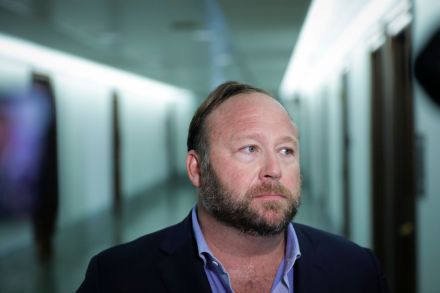
Alex Jones looks unwell. He lost his bodybuilding figure decades ago but for years he was a veritable tank of a man. Now he looks swollen and exhausted — one piece of bad news away from his heart giving up. I say that with no relish. Jones is an extraordinary American character. America is like an enormous carnival and, for better or for worse, it is rich in charismatic mountebanks. You don’t have to like them but they are as American as pecan pie. Jones is an undeniably astonishing performer. His thunderous speech is often imitated, never equaled — a perversely captivating force of nature. His ability to switch tones in an instant — from cussing out the globalists to apologizing like an old Southern gentleman — is used with pinpoint comic timing.

The DMV shows that COVID restrictions will never go away

Two weeks to flatten the curve became 18 months of mandates with no end in sight. Government seized new powers from the people to regulate their lives. Rules that make no sense dominate us, experiments in compliance not science. How do COVID restrictions end? They likely never will. I learned all that at the Department of Motor Vehicles . My reeducation started when I was told to prove as an American citizen in an American state that I am 'resident' here, not simply being an American in America. I'm a good sport and wanted to comply, just like I try to keep up with the latest rules and Purell my terrestrial hands 600 times a day against an airborne virus. Threats aren't inherently political, right? And you just can't be too careful.

Joe Biden cheapened 9/11

With the 20th anniversary of 9/11 having come and gone, many have turned to reflection. Some meditate on the solidarity and sense of national purpose that act of terror engendered; others view it as a dramatic opening to our miserable 21st century. What comes to my mind are the images of our hasty retreat from Afghanistan over the last month. As is often the case, my best thinking has already been articulated by the late Charles Krauthammer. In the introduction of his best-selling collection of essays Things That Matter, Krauthammer explains his evolution from psychiatrist to public intellectual.

9/11

9/11 and the war on terror kiddie table

The thing about childhood is that eventually you're supposed to grow up. It's with this in mind that we turn to Sen. Lindsey Graham, who when he ran for president in 2016 polled so low that he was relegated to the so-called 'kiddie table' GOP primary debate. It had to chafe. Graham back then was a loud Trump critic, yet there was Trump eating off the fine china while Graham moodily stirred his wagon wheel mac and cheese around his Toy Story bowl. At one point, the ultra-hawkish Graham did try to get the grown-ups' attention. If you're tired of fighting wars, he declared on Fox News, 'don't vote for me!' Republicans stopped eating for a moment, then took him at his word. I thought of that today, perhaps because it's almost the 20th anniversary of 9/11 and I needed some levity.

lindsey graham earn

After Afghanistan

The 20th anniversary of 9/11 will come in a matter of days. It will be marked by the victory of the Taliban in Kabul and the humiliation of America. The war in Afghanistan was one of the largest-ever undertakings of any major country, in any era. Adjusted for inflation, the Apollo Moon landing program cost the United States close to $300 billion. The Manhattan Project cost $30 billion. The Interstate Highway System, about $500 billion. Those three mammoth projects are dwarfed by the cost of 20 years fighting in Afghanistan, which will well exceed a trillion dollars when all is said and done. The amount spent on Afghan nation-building surpassed the cost of the Marshall Plan in 2014 and kept rising inexorably for seven years more.

9/11

The long march to disaster

In the weeks after the 9/11 attacks, Americans came together in a spirit of grief, resolve and shared national pride. It didn’t last long, but this potent energy animated the US military’s mission and a new generation of recruits who signed up to ‘do their part’ in the wake of the tragedy. Twenty years later, it is not the same military. As an institution, its impunity, hubris and access to unprecedented financial spoils have led to corruption and mediocrity at the top. The exploitation of all-volunteer forces to fight protracted wars of choice without proper care and attention to their consequences has left veterans jaded and skeptical of the value of their service in a system that continues to fail them.

afghanistan iraq military

How America squandered its moral authority in Iraq

Day by day, you could almost see America’s moral authority draining away in Iraq. The weapons of mass destruction that the US had invaded the country to find didn’t exist. And it sometimes seemed as if a monstrous trick had been played on American troops: they were promised a welcome with ‘flowers and sweets’; they got roadside bombs and suicide attacks. In 2004, a year after the invasion, a 19-year-old Marine — outside the US for the first time in his life — looked up at a minaret sounding the call to prayer and asked me: ‘What are they saying? “Kill Americans?

iraq
war

The last war for democracy

Twenty years after 9/11, the War on Terror has come full circle. Everyone expected the Taliban to surge back to power as soon as American forces left Afghanistan. Instead, the surge began while America’s embassy in Kabul was still open, inviting unwelcome flashbacks to Saigon in 1975 and Tehran in 1979. There are piquant memories of 1989, too — not of the Berlin Wall’s fall or a young Francis Fukuyama’s publishing ‘The End of History?’ in the National Interest, but memories of an Afghan insurgency’s triumph over a superpower. That triumph would inspire and ultimately contribute in the most concrete ways to a decade of terrorism, culminating in the 9/11 attacks.

From 9/11 to 1/6

The season is almost upon us of lachrymose memorials to the victims of 9/11. As a nation we choke each year as the anniversary approaches. We can talk about the heroic firefighters and cops, those first-responders who that day sometimes made their last response. We can recount the lists of the dead and the daring of some survivors. A great many Americans remember in vivid detail how the horrors of that day intersected their own lives. What we don’t have is a strong sense of what 9/11 meant and still means to the nation. Even in this age of declining historical literacy, we have a ready sense of the defining importance of more remote occurrences: Plymouth Rock, Valley Forge, Gettysburg, D-Day. These days, we should add 1619, Wounded Knee and the Tulsa race massacre of 1921.

january 6

Give peace a chance

The American war in Afghanistan is over. In the predawn hours of July 2, US troops slunk away from Bagram Air Base, without even informing the local Afghan commander. It was a sorry end to a sad and futile war. For 20 years Bagram was the Gibraltar of American power in Afghanistan, the single largest Nato base in the country, housing 10,000 troops, thousands more support personnel and a Pizza Hut. Now Bagram, and the adjacent prison holding 5,000 Taliban fighters, are in the hands of the Afghan military, which soon showed its mettle by letting an army of looters plunder the base.

Donald Rumsfeld succeeded at everything — so why did he fail in the end?

What kind of man was Donald Rumsfeld? A successful one, by almost every measure. Ivy League scholar-athlete, captain of Princeton’s football and wrestling teams. Successful candidate for office, easily reelected to Congress twice before he left to join the Richard Nixon administration. There he proved a success at navigating both the federal bureaucracy and the internal politics of the scandal-consumed administration. He survived Nixon’s resignation and soon became Gerald Ford’s chief of staff — and after that, the youngest man ever to serve as secretary of defense, taking charge of a newly-minted all-volunteer force whose morale and discipline were in shambles after Vietnam.

donald rumsfeld