Addison Del Mastro

Addison Del Mastro writes daily at his Substack, The Deleted Scenes.

The last roadside ice cream stands in America

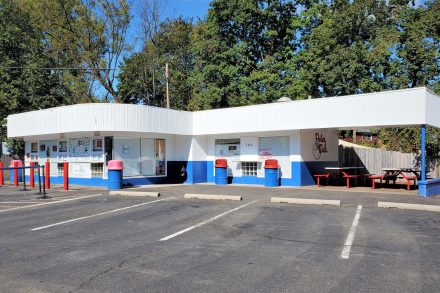
When I’m out on small New Jersey roads — sometimes Virginia roads, but I don’t see them there as often — I always take an extra second to look at ice cream stands. You know the place: a basic, boxy building with a little awning, an ornamented, angular front, one or two counters to order, and more often than not no inside seating or even a customer entrance. The staff are usually high-schoolers, maybe retirees. The prices, like everything, have crept up, but they’re still wallet-friendly. They’re refreshingly un-trendy, too. Nobody manhandles your ice cream on a frozen rock. I love these places. I have many fond memories of my parents pulling off the road for ice cream, sitting at a simple table on gravel under an awning and enjoying a treat. Simplicity. Contentment.
Two cheers for grocery store shopping during inflation

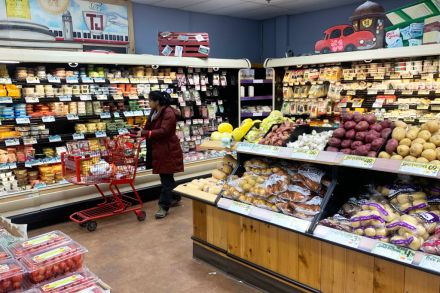
The other day I attempted to have sushi rolls for dinner. I ended my night disappointed, and excited to go shopping for overpriced groceries. Back in college, in central Jersey, I used to go to a Japanese restaurant in town, order the triple spicy roll combo, claim a student discount, and walk out with a perfect dinner for about $13. The filling was just pure fish, and enough spicy mayo to complement it. No crunchy flakes, no cucumber, no cost-cutting measures. Sure, it was a lot of rice despite feeling healthy, but I told myself the hours of studying would burn it off. So the other night, with my wife at the office and out for a work dinner, I was on my own for dinner and went searching for my old college favorite.

trader joe’s petitions

Growing up with 9/11

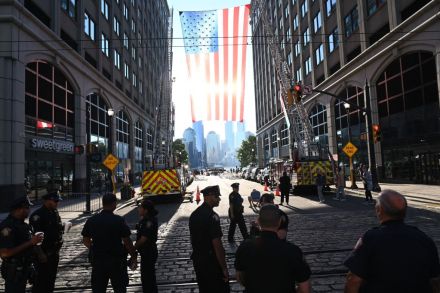
Every writer from the New York area who lived through 9/11 has to write about it, right? Not long after the terrorist attacks — I was about eight years old, keep in mind — I came up with a game, which my mother indulged. I called it “Pilot.” I would approach my mother, and I might or might not have a little puzzle piece or something hidden in or under my clothes. My mother would then pat me down, trying to find it. If she found it, I would be “arrested.” If I hadn’t hidden it, I’d walk into the next room — “boarding the flight” — with no incident. But if I had hidden it and slipped it past security, I’d “board the flight” and then knock over a “skyscraper” I’d built out of wooden blocks. Yes, at age eight, I was pretending to be Osama bin Laden.

A driver’s license, if you can keep it

I remember still the foreboding language and tone when I was learning to drive in New Jersey over a decade ago. First, you needed to earn your permit. Never forget that driving is a privilege, not a right (which only works if driving is an option, not effectively a requirement, though drivers ed isn’t in charge of land use). After your permit, you start with your probationary license. And in a twist that somehow passes civil liberties muster, you’re not even allowed to appeal a ticket issued to you during your probationary period. You feel a bit under suspicion until you finally get that license. Yet for all that, it’s still, basically, a lot of bureaucracy and paper-pushing.

Whatever happened to the good old American trolley?

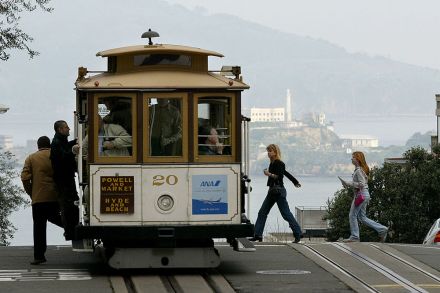
A few weeks ago, my wife and I took a day trip to Maryland, where we visited the National Capital Trolley Museum. It’s an unassuming building with an ornamented facade — a little like a Main Street building in a rural small town — and the gift shop, exhibits and ticket prices are all modest. There’s an interactive electricity exhibit for kids (and adults like me), where you can power a tiny trolley in a diorama of an old streetcar-suburb scene. One of the windows in a house even lights up. It’s simple and fun, a small, lean museum run by a dedicated group of people. An older man who worked there explained the old DC trolley map to me, recalling all the different lines he used to ride as a kid. That’s something you can’t get from a book.

The beauty of becoming an adult

One day during a recent visit to my parents in Hunterdon County, New Jersey, my best friend and I met up and went on a daytrip. We drove around Edison’s Oak Tree Road corridor to the east, a heavily Indian neighborhood in a suburban sprawl setting. It’s a really interesting place, but the highlight of the day was probably going over to my friend’s house later that evening. We grew up together — we were fellow homeschoolers in our church group — and I know his house as well as the one I grew up in. I’ve written before about how thankful I am to have grown up in one house, in one place, as my friend did. But I guess we kind of grew up in two houses, because we knew each others’ so well. Both of them are thick with memories.

NIMBYs to the left of me, YIMBYs to the left

First disclosure: I do not appear in this book. I say that only because — second disclosure — I consider myself a YIMBY, and I am familiar, at least online, with many of the characters and figures quoted or interviewed. However, I learned a lot about this loose movement and found it fascinating to read a book on a phenomenon that I would have trouble viewing with a detached, scholarly distance. Yes to the City, by the cultural sociologist and urban policy scholar Max Holleran, must have been a difficult book to write, not least because YIMBY (“Yes in my backyard”) is as much a rallying cry or a slogan as it is a movement, let alone an organization. The YIMBY nemesis, NIMBY (“Not in my backyard”), is equally amorphous.

yimby

In defense of Northern Virginia

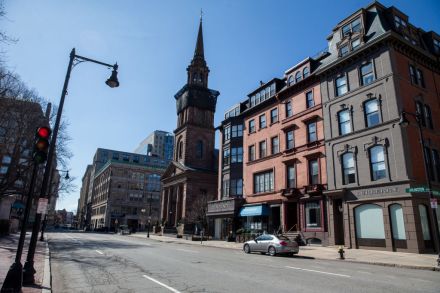
Last month, Spectator World contributor Casey Chalk wrote an article for the Abbeville Institute about the suburbanization of Northern Virginia, and specifically about real estate developer John T. “Til” Hazel Jr., whose projects in the 1970s and '80s considerably defined Virginia’s portion of the DC suburbs. “Tysons Corner, Fair Lakes, Franklin Farm, Burke Centre, and Fairfax Station, if you’ve heard of them, all owe their current existence as prominent residential or commercial zones to Hazel,” writes Chalk. He goes on to argue, as many do of Northern Virginia, that for all its diversity and proximity to a major city, the region lacks a core or center, as well as the sense of neighborliness and community that once thrived in the area’s smaller-town agricultural days.

Against the ‘concept restaurant’

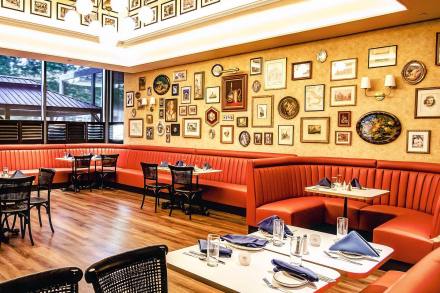
My wife and I live in Northern Virginia, in Fairfax County. Whenever we go out to eat, we almost always go somewhere in the suburbs. Fairfax, along with neighboring Montgomery County in Maryland, is home to a wealth of restaurants serving cuisines from all over the world. Just last January, Bon Appétit wrote that “to travel DC’s Beltway is to sample the flavors of the world,” and the New York Times declared that “America’s next great restaurants are in the suburbs.” You could argue that the suburban food scene in the DC metro area surpasses that of the city itself. Nonetheless, DC is widely seen as a “foodie city,” and its restaurants generally get more coverage and hype than their suburban counterparts.

The sad demise of Amish family-style restaurants

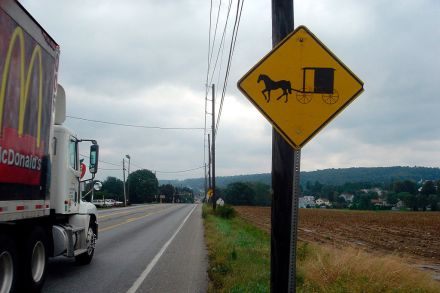
Every time I visit Pennsylvania Amish Country, it feels a little less like Amish Country. My parents were aghast when, in the mid-2000s, they visited for the first time since the 1980s (and for the first time with me) and found a massive outlet center along the main commercial drag. When my wife and I visited in 2017 — my first time since that childhood family trip — I was dismayed to see that the field in front of the Amish Farm and House had become a Target and its attendant parking lot. (I was only a little less dismayed when the landmark Congress Inn, with its out-of-place capitol-dome sign, met the wrecking ball.

Conservatives should embrace urbanism

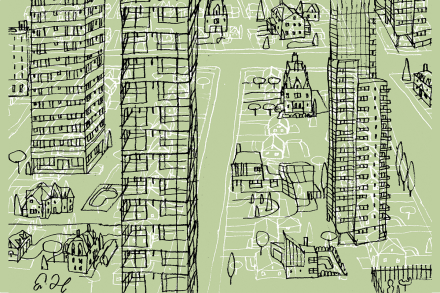
I consider myself an urbanist — despite the fact I lean to the right. Or perhaps, in my case, because of it. But what exactly is “urbanism”? It’s a new term that carries a lot of different meanings. It might indicate acclaim for the big, blue, coastal cities, the sort that conservatives dislike. It might denote a wonky focus on things like zoning, setbacks, street widths and other aspects of urban design or engineering. It might also bring to mind moralizing, busybody progressivism. My take on it is more informal and less partisan: an awareness of the built environment as an independent variable in human behavior, and a desire that our built environments be conducive to commerce and community at a human scale. I think that’s conservative.

urbanism

The Christmas carol canon that could have been

Ah, Christmastime, the season for pheasant dinners, fancy ties, the land of Toyland from which you can never return, the time of year when everyone falls in love, when snowmen fly away to Snowland to become Eskimos, and when kids run around crying “dickory dock!” Right? All of these are bits and pieces from old Christmas songs that have mostly been forgotten, whose imagery and language failed to take hold in the general imagination. It’s quite fascinating how such a small number of songs, from a very narrow moment in American life, have contributed so heavily to defining the mood and feel of our secular Christmases.

Maybe Hawaii should be independent

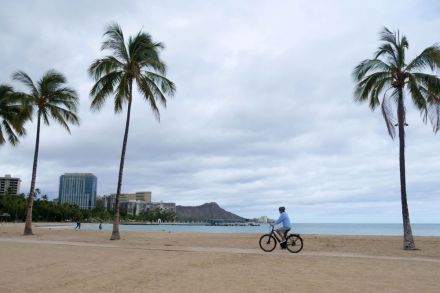
When you’re a writer, there’s no such thing as a vacation — there’s just visiting a new place with the potential to gather more material. Lucky for me, my most recent destination happened to be Hawaii. It’s a fascinating place, and if you didn’t already know it was a US state, it would be easy to mistake it for a distinct English-speaking country, albeit one with obvious and deep American influences. Oahu, the most urbanized island and home of the capital city of Honolulu, is shaped by an idiosyncratic mix of native Hawaiian, East Asian and midcentury American culture. Hawaii resembles a Pacific Island nation at least as much as it does the American mainland.

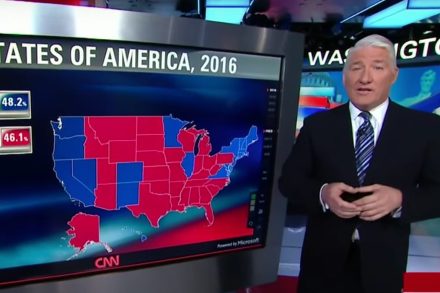
The patriotism of CNN’s ‘magic wall’

It’s becoming spooky season, by which I mean not Halloween but elections — at least in Virginia and New Jersey, which have gubernatorial races. They are, incidentally, two of the three states I’ve lived in (I’m in Virginia now; the other one was Maryland). National elections have ceased to be fun for some time now, and I’m not sure my own state’s gubernatorial race is going to be much better. I’m supposed to choose between a washed-up former governor and a businessman-turned-political-neophyte who enthusiastically hawks his endorsement by the businessman-turned-political-neophyte who last occupied the White House.

magic wall