9/11

Written on the body

From our UK edition

Sue Armstrong’s programme on Radio 4 All in the Womb (produced by Ruth Evans) should be required listening for anyone dealing directly with the refugee crisis, with those who have fled from intense fear and terrible violence in their home countries. Armstrong has been investigating recent developments in our understanding of the impact of severe trauma, how it affects not just the mind but also the body, creating physical changes that also need to be addressed. Those who lived through the Holocaust, for example, who were in prison camps or were forced to hide in dark, cramped, inhuman conditions, perpetually afraid that at any moment they might be discovered, have been found to have low levels of cortisol.

Letting terror win

From our UK edition

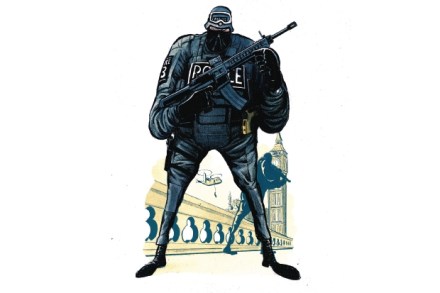
There is nothing a government in a remotely free country can do to stop a suicide bomber in a crowded space. As a weapon, he has the precision of a drone missile. The only preventive task open to the police and security service is to penetrate and destroy a terrorist cell in advance. This means assiduous intelligence. It has clearly held the key to disarming some 50 ‘terror plots’ known to the police over the past decade. Every lesson in counter-terrorism warns against overreaction. But David Cameron seems oblivious to this truth. He appears to have no faith in the police to protect British citizens from terrorism.

Lessons in the surreal

From our UK edition

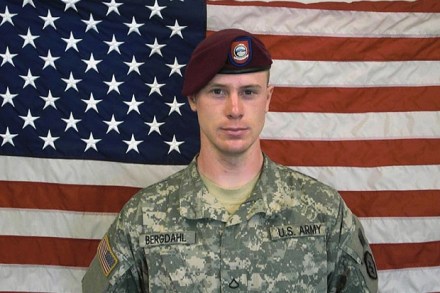
The new season of the Serial podcast (produced by the same team who make This American Life) was launched last month, releasing one episode a week as the investigative reporter Sarah Koenig looks this time into the strange story of Bowe Bergdahl. He’s the US army soldier who walked out on his platoon in 2009 while stationed on a remote outpost in Afghanistan, close to the Pakistani border. Unsurprisingly, he was captured by the Taliban and held captive for five years before being released, in a prisoner exchange with those held in Guantanamo Bay.

What I got right

From our UK edition

All wings of the Labour party which support the notion of Labour as a party aspiring to govern — rather than as a fringe protest movement — agree on the tragedy of the Labour party’s current position. But even within that governing tendency, there is disagreement about the last Labour government; what it stood for and what it should be proud of. The moral dimension of Labour tradition has always been very strong, encapsulated in the phrase that the Labour party owed more to Methodism than to Marx.

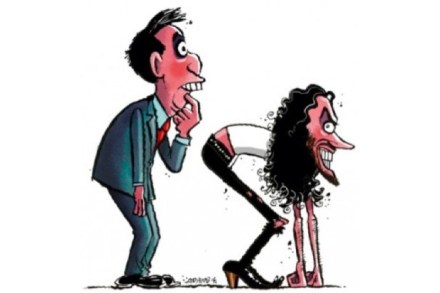
Why would Ed Miliband even want to woo Russell Brand?

From our UK edition

The Sun reports this morning that Ed Miliband recently made a late-night visit to Russell Brand's £2 million home. Details on what was discussed remain unknown, although Labour has now confirmed that rather than Miliband's own François Hollande moment, or a pre-emptive mansion tax inspection, it was in fact an interview. A friend of mine lives opposite Russell Brand and snapped this picture of Ed Milliband leaving his house...urm pic.twitter.com/kHGVWFbpVZ — Elisa Misu Solaris (@ElisaMisu) April 27, 2015 However, if Miliband is to appear in an episode of Brand's online show The Trews, it's unclear what the Labour leader hopes to gain from it. Is this really an endorsement any serious potential Prime Minister would want?

Falling down

From our UK edition

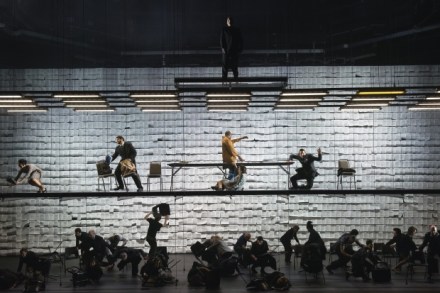
This week, some 200 years since Goya’s ‘The Disasters of War’, almost 80 years after Picasso’s ‘Guernica’, and over 50 since Malcolm Browne won a Pulitzer for his photograph of a self-immolating Buddhist monk, the British media found itself questioning whether art should, or even could, ever represent the horrors of recent history. It was a conversation that picked minutely over the ethical responsibilities of an opera based on the events of 9/11 — was it too soon? how would the families feel? would it exploit tragedy for drama? — but one whose ceaseless moral whys and wherefores prevented it ever arriving at the only real artistic question: how?

The fox that killed my chickens depressed me more than 250,000 tsunami deaths

From our UK edition

It is hard to know how a tragedy is going to move a person who is not directly affected by it. Over a death or misfortune in the family, or among one’s friends, one is sure to feel pain and grief. But what of those other ghastly events involving people, maybe hundreds or thousands of them, with whom one has no connection? They provoke shock, disgust and horror, but not necessarily great personal sadness. Could it be true that I was more depressed when a fox killed all my chickens than I was when the Indian Ocean tsunami of 2004 swept over a quarter of a million people to their deaths? I have an ugly, shameful feeling that I might have been. Perhaps I am uniquely unimaginative and lacking in empathy, but I fear not.

‘Torture is torture’ ignores the complex nature of intelligence gathering

From our UK edition

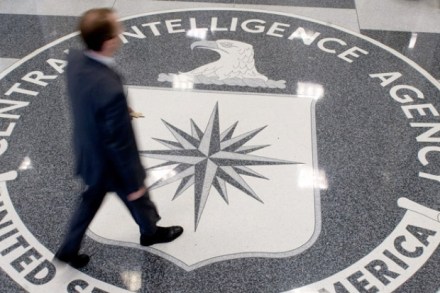
On Thursday I was on the BBC’s ‘This Week’ to talk about the CIA and torture. It is, for many reasons, perhaps the most gruesome subject possible. And not just because of the hideous allegations involved, but also because it is one of those subjects which people wantonly lose their reason over. Like a small number of other subjects in our society at the moment, it is one which people try wilfully to simplify, usually in order to show the world what a moral person they are and, by contrast, what immoral people their opponents are. I will use this post to set out some of my own views and certain objections to what seems to be the status quo debate on all this. Didn’t this week’s report showed the CIA to be torturing on an industrial scale?

Farewell to Afghanistan (for now)

From our UK edition

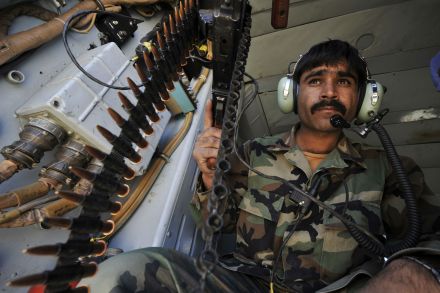
Britain has ended combat operations in Afghanistan. The war did topple the Taleban, but it hasn’t got rid of them. It has improved some things in Afghanistan – better roads, better education, better newspapers – but the country is still corrupt, bankrupt and dangerous. When Britain and America decided to go into Afghanistan in 2001, The Spectator ran an editorial entitled Why We Must Win. This is not a war against Islam, but against terrorists who espouse a virulent strain of that religion, a fundamentalism that most moderate Arabs themselves regard as a menace. This is not even a war against Afghanistan, but an attempt to topple a vile regime. The Taleban deserve to be expelled simply by virtue of their inhuman behaviour towards women and dissenters.

Russell Brand: Newsnight’s tragic solution to its plummeting ratings

From our UK edition

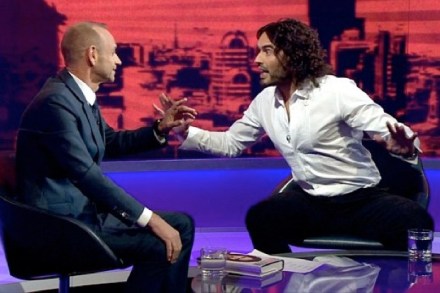
The issue is not that Russell Brand seems to believe that 9/11 was some sort of joint effort between George W Bush and the bin Laden family – that’s sort of a given, no? The man is a drug-addled idiot with the geopolitical knowledge and awareness of a tub of 'I Can’t Believe It’s Not Butter'. The issue is, given these facts, what he’s doing on Newsnight, again. The BBC, defending the decision to interview the fool, said that he is representative of the 'anti-politics' movement with which Westminster is trying to engage. No. He’s. Not. But even so, what utter cant – he’s on there because he’s famous and Newsnight, with its plummeting ratings, is these days in thrall to celebrity.

Hooray for Homeland – Carrie’s back blasting America’s enemies to pieces with drones

From our UK edition

One of the more welcome and surprising things about television at the moment is that Homeland (Channel 4, Sunday) is good again. As I’m not the only person to have pointed out, the first series was great. After that, though, the show suffered badly from the diminishing returns which so often afflict a deserved American hit that’s obliged for financial reasons to just keep on going — usually by serving up increasingly minor variations on a theme. (Exhibit A: Lost; exhibit B: most of mid-period 24.) Fortunately now that Damian Lewis’s Brody is dead, Homeland no longer has to think up any more ways to make us wonder which side he’s on. Instead, to the obvious relief of all concerned, it can start again with a different story.

Henry Kissinger interview: ‘I don’t see the wisdom there once was’

From our UK edition

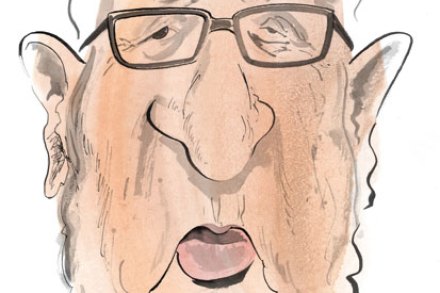
Henry Kissinger doesn’t believe in retirement. At 91, having had a heart-valve operation three months ago, he is nonetheless publishing a book entitled World Order. As I happened to be interviewing him about it on 11 September, I asked him about his memories of 13 years ago. ‘I was in Frankfurt addressing a business group,’ he recalled in that voice of his that sounds like gravel has found its way into your car’s exhaust pipe. ‘A member of the audience had just asked a question when someone came on to the stage to say that he had an important announcement to make. I said that that may be, but I wanted to answer the question first, which I did, before the man said that New York had been attacked. It was about 2 p.m.

Joan Rivers (1933 – 2014) was the best

From our UK edition

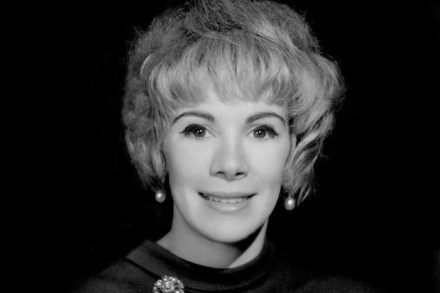
Joan Rivers has died from complications resulting from throat surgery. She was 81. For many, she was the best. The funniest, sharpest, most mischievous comic we will ever know. And though she'd hate us for saying it, she was also a true feminist pioneer. Well before it had been settled whether women should be doing stand-up at all, she was not only doing it but shaping it - and subtly shaping society too. Her early routines, like the following 1967 set from the Ed Sullivan show about how crappy the female experience could be, were laying the ground for political feminism: But her radicalism was restless. And when the political tides turned, so did she.

Syria is the first real war of cyber-jihad

From our UK edition

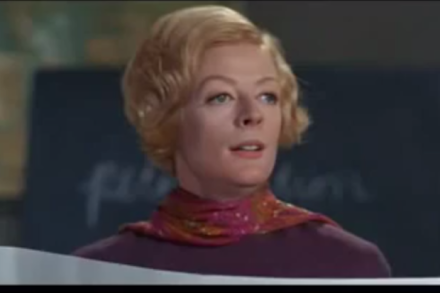
Some 400 Brits have been to Syria to fight, an estimated 20 have been killed – yet the draw is growing stronger. Last year, the number of arrests relating to Brits joining the jihadi-dominated Syrian was one a fortnight. So far this year, it’s been one every two days. The police’s appeal yesterday for Muslim women to inform on their men who are considering signing up was a sign of desperation – but they're not sure what else to do. This is the era of cyber-jihad where social media is a massive recruiting sergeant for jihadis, and I look at this in my Telegraph column today. The idea of indoctrinating young people so they go to fight in a foreign war is not new. It happened during the Spanish civil war – as depicted in The Prime of Miss Jean Brodie.

Christopher Hitchens and The Spectator: writing full of curiosity, indignation and analytical rigour

From our UK edition

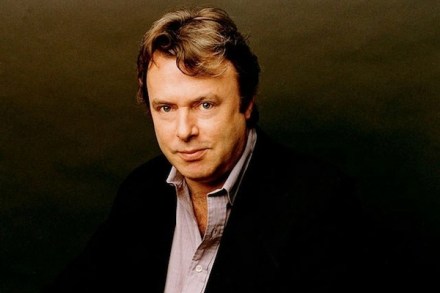
After Christopher Hitchens died in December 2011, Douglas Murray wrote in the Spectator that he’d had 'a talent for making us, his readers, want to be better people. He used his abilities not to close down questions and ideas, but to open them up. In the process he made you, the reader, aware that you needed to do more, engage more, think more and know more. Writers often feel a need to impress their readers. Christopher made his readers want to impress the writer.' To nearly everything he wrote, Hitchens brought curiosity, indignation and analytical rigour and a vast frame of reference. It’s been a great pleasure looking through the recently digitised Spectator archive for Hitchens highlights.

Cameron dines with Obama… and Clooney

From our UK edition

https://www.youtube.com/watch?v=mX6mT0kpoyQ The Camerons weren’t the Obamas' only big-name guests at the State Dinner last night. They were joined by a host of stars including Warren Buffett, Richard Branson and George Clooney, who’s just returned from war-torn Sudan. In their speeches (above), the two leaders had very warm words for each other. Of Cameron, Obama said: ‘In good times and in bad, he’s just the kind of partner that you want at your side. I trust him. He says what he does and he does what he says.’ And the PM returned the compliments: ‘There are three things about Barack that really stand out for me: strength, moral authority and wisdom.

Newt: Another 9/11 Would Have Concentrated Minds

From our UK edition

There are many, many, many reasons why Newt Gingrich will not be the 45th President of the United States (assuming, as I do not and actually think pretty unlikely, he wins the GOP nomination) but among them is his habit of saying stuff like this: That's from 2008. Here's my transcription of what he says in this clip: Why have we not been hit since 9/11? Good question. My first answer is I honestly don't know. I would have expected another attack, and I particularly thought, I was very, very worried and I talked to the administration when we had the sniper attacks because the sniper attacks were psychologically so frightening to the average person because of their randomness that I was amazed the bad guys didn't figure out how to send 10 or 12 sniper teams.

The randomness of al-Qaeda’s evil

From our UK edition

After all the nerves and security in New York, Washington and London, the only attempted terror plot on the anniversary of 9/11 appears to have been foiled outside an arts centre in Gothenburg. The Swedish press says that the four people arrested on Saturday night are believed to belong to a cell linked to al-Qaeda. There are no more details yet, but it's a reminder that the al-Qaeda threat has not gone away. Its Arabian Peninsular division is still active, responsible for the underpants bomber and the bomb bound for Detroit, intercepted in London. This is also a reminder of how chillingly random its attacks are.

From the archives: “New York’s loss is also the world’s”

From our UK edition

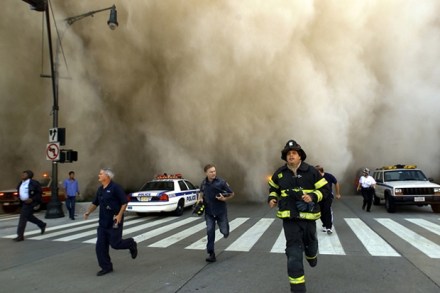
Today marks the tenth anniversary of the terrorist attacks on 11 September 2001. Here is the article Matthew Bishop wrote for The Spectator in response: Spirit of the Blitz, Matthew Bishop, 15 September 2001 New York People walk a lot in Manhattan. Its streets are always crowded. But never before like this. An hour after the attack on the World Trade Center, thousands of New Yorkers - refugees in business attire - trudged north as downtown evacuated. Many were covered from head to toe in white ash. Most walked in silence, contemplating the fact that somebody they know is probably dead, and that in the next 24 hours they will find out who. Others desperately tried to contact loved ones.

In New York, the whole world remembers

From our UK edition

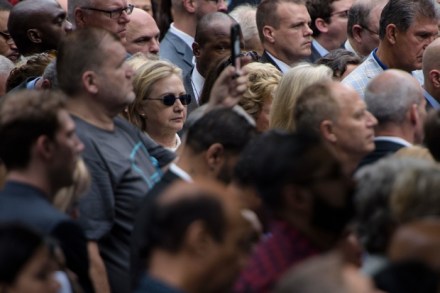
New York There's an eerie mood in New York right now, as the city prepares to commemorate the tenth anniversary of the September 11 attacks. Al-Qaeda, or what's left of it, likes anniversaries. The police have been on overdrive ever since a "credible" tip-off about an attempted truck bomb. Officers are everywhere. Armed guards patrol landmarks and cars from bridges and tunnels are being pulled over and checked. All this reinforces the sense of something alien to New Yorkers (and almost all Americans) until ten years ago: the threat of attack. A common threat has solicited a rather wonderful common response. Shop windows have displays of commemoration; companies take adverts in local newspapers. Exhibits and events have sprung up all over the city.