9/11

The long march to disaster

In the weeks after the 9/11 attacks, Americans came together in a spirit of grief, resolve and shared national pride. It didn’t last long, but this potent energy animated the US military’s mission and a new generation of recruits who signed up to ‘do their part’ in the wake of the tragedy. Twenty years later, it is not the same military. As an institution, its impunity, hubris and access to unprecedented financial spoils have led to corruption and mediocrity at the top. The exploitation of all-volunteer forces to fight protracted wars of choice without proper care and attention to their consequences has left veterans jaded and skeptical of the value of their service in a system that continues to fail them.

afghanistan iraq military

How America squandered its moral authority in Iraq

Day by day, you could almost see America’s moral authority draining away in Iraq. The weapons of mass destruction that the US had invaded the country to find didn’t exist. And it sometimes seemed as if a monstrous trick had been played on American troops: they were promised a welcome with ‘flowers and sweets’; they got roadside bombs and suicide attacks. In 2004, a year after the invasion, a 19-year-old Marine — outside the US for the first time in his life — looked up at a minaret sounding the call to prayer and asked me: ‘What are they saying? “Kill Americans?

iraq
war

The last war for democracy

Twenty years after 9/11, the War on Terror has come full circle. Everyone expected the Taliban to surge back to power as soon as American forces left Afghanistan. Instead, the surge began while America’s embassy in Kabul was still open, inviting unwelcome flashbacks to Saigon in 1975 and Tehran in 1979. There are piquant memories of 1989, too — not of the Berlin Wall’s fall or a young Francis Fukuyama’s publishing ‘The End of History?’ in the National Interest, but memories of an Afghan insurgency’s triumph over a superpower. That triumph would inspire and ultimately contribute in the most concrete ways to a decade of terrorism, culminating in the 9/11 attacks.

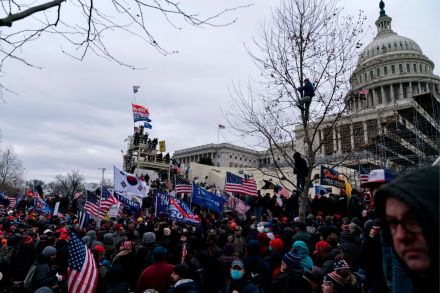
From 9/11 to 1/6

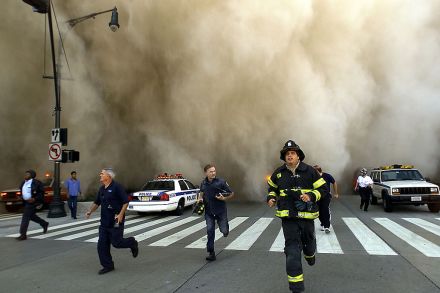
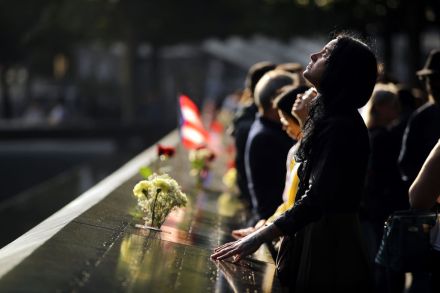
The season is almost upon us of lachrymose memorials to the victims of 9/11. As a nation we choke each year as the anniversary approaches. We can talk about the heroic firefighters and cops, those first-responders who that day sometimes made their last response. We can recount the lists of the dead and the daring of some survivors. A great many Americans remember in vivid detail how the horrors of that day intersected their own lives. What we don’t have is a strong sense of what 9/11 meant and still means to the nation. Even in this age of declining historical literacy, we have a ready sense of the defining importance of more remote occurrences: Plymouth Rock, Valley Forge, Gettysburg, D-Day. These days, we should add 1619, Wounded Knee and the Tulsa race massacre of 1921.

january 6

Give peace a chance

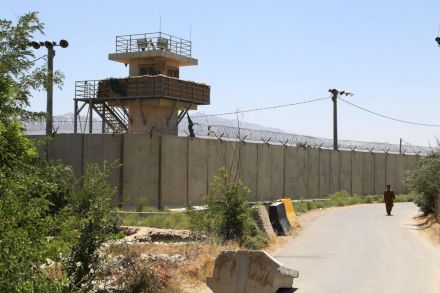
The American war in Afghanistan is over. In the predawn hours of July 2, US troops slunk away from Bagram Air Base, without even informing the local Afghan commander. It was a sorry end to a sad and futile war. For 20 years Bagram was the Gibraltar of American power in Afghanistan, the single largest Nato base in the country, housing 10,000 troops, thousands more support personnel and a Pizza Hut. Now Bagram, and the adjacent prison holding 5,000 Taliban fighters, are in the hands of the Afghan military, which soon showed its mettle by letting an army of looters plunder the base.

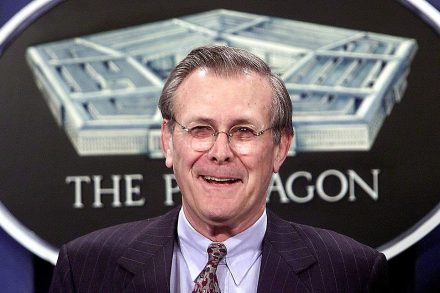
Donald Rumsfeld succeeded at everything — so why did he fail in the end?

What kind of man was Donald Rumsfeld? A successful one, by almost every measure. Ivy League scholar-athlete, captain of Princeton’s football and wrestling teams. Successful candidate for office, easily reelected to Congress twice before he left to join the Richard Nixon administration. There he proved a success at navigating both the federal bureaucracy and the internal politics of the scandal-consumed administration. He survived Nixon’s resignation and soon became Gerald Ford’s chief of staff — and after that, the youngest man ever to serve as secretary of defense, taking charge of a newly-minted all-volunteer force whose morale and discipline were in shambles after Vietnam.

donald rumsfeld

Confessions of an accidental foreign correspondent

From our UK edition

Perhaps you remember footage of the wave. It was mostly from traffic cameras, mute but darkly mesmerising. Millions of gallons of Pacific seawater upended by a 9.0 earthquake and hurled irresistibly inland. A few days later I saw what that meant, turning a corner in my hire-car to find the road blocked by a trawler that had been washed ashore. This week, Japan has commemorated the tenth anniversary of the tsunami which killed 15,000 of its people. A seismic tragedy which begat a man-made disaster. Inundated by water, part of the Fukushima nuclear reactor blew up, producing the worst radioactive leak since Chernobyl. It wasn’t long before scores of foreign journalists flew into Tokyo, with a brief to get to the worst affected areas.

Michael Anton and the stakes of 2020

Michael Anton was working in his small home office, almost four years ago to the day, when his wife came in and told him the news. Rush Limbaugh was reading it, on the air, right now. ‘It’ was his essay, a now notorious essay, a soon to be life changing essay, called ‘The Flight 93 Election’. Anton had published it, pseudonymously, with the Claremont Review of Books a few days before. Like any writer, he wanted people to read his work, but, like every writer, he wasn’t too surprised when he wasn’t read. ‘Flight 93’ was posted on Labor Day, a Monday, and did a little traffic. Tuesday: the same. Wednesday? Well, Rush Limbaugh read the whole thing out, all 4,257 words, for three hours, to 13 million people.

michael anton

On the ground in Manhattan after 9/11

I joke, during this current lockdown, that I am glad I no longer take hallucinogens or mind alterers, but I’m serious. I don’t want to have to think too much about how the globe can pull itself back from this current economic pause, or what I would do if anyone I loved was dying and I couldn’t reach them, because of the new rules. A Taoist monk friend called it a ‘sacred pause’, and in so many ways she is right. Even though I know she was referring to more than wild nature having a rest, I wager it is noticeably nicer to be a bee or a fish right now, with a little more room to maneuver.

9/11 lockdown

End of empire

The end of World War Two inaugurated the era of American dominion, with the United States politically, economically and militarily the most powerful nation on the planet. Yet throughout the subsequent period of American global ascendency, the American people endured a seemingly endless sequence of domestic crises, upheavals and disasters. Primacy abroad did not insulate them, convinced of their unique place in human history, from the trials and tribulations routinely befalling other, more ‘ordinary’ nations. Yet neither did trials at home undermine the deep-seated belief that history had summoned the United States — and no one else — to lead the world.

empire

Still, the Global War on Terrorism goes on

I can think of only a single positive thing to say about World War One: it ended. Yet in addition to precluding any further waste of lives, the Armistice of November 1918 and the ensuing Paris Peace Conference did something else. It allowed historians and other writers to begin taking stock of this ghastly episode, which had caused death and destruction on an unprecedented scale. Making sense of the so-called Great War exceeded the limits of human capacity. Yet however imperfectly, at least it might be understood. Why had the war happened? Why had it lasted so long? What had motivated the belligerents? What did this horrendous cataclysm signify, both politically and morally? Finally, how could the recurrence of such a debacle be averted?

global war on terror

After the virus, the tedium

A few days ago, the French novelist Michel Houellebecq rubbished the idea that the world would change after the pandemic. He wrote: ‘We will not wake up after the lockdown in a new world. It will be the same, just a bit worse.’ The virus, according to him, was ‘normal’, even ‘banal’. As always with Houellebecq, his brand of pessimistic candor made a change from the rolling stream of predictions issued by pundits and academics, who’ve glimpsed in this virus the dawn of everything from renewed hope for a Green New Deal, to the onset of neo-feudalism.Still, it is worth thinking about what a ‘bit’ worse means.

tedium

9/11 and the false sense of American security

Eighteen years ago, I was only a child. My first indication that something bad had happened on September 11, 2001 was that a birthday party my whole class had been slated to attend was canceled. Instead of heading to a celebration, I waited with the rest of my classmates for our parents to come and take us home. Except my mother didn’t take me home. We went straight to the supermarket. I remember watching, mouth agape, as my mother piled what seemed like hundreds of boxes of spaghetti, cases of water, and canned goods into the wagon. None of us knew what would come next, and she wanted to be prepared. That commitment to preparation came from fear. A fear that was rational and justified, and which grew out of a realistic sense that the sands had shifted. We were at war.

9/11

All things lead to 9/11

In the immediate aftermath of 9/11 many writers spoke of feeling immobilised. The scale of the attacks and the world’s shared experience of the media event seemed to demand a response; but simultaneously writers such as Ian McEwan, Martin Amis and Jay McInerney described a sense that the tools at their disposal were inadequate — that the reality of what had taken place exceeded fictional representation. These three all recovered from their shock reasonably quickly, contributing to the flood of 9/11 fiction that poured into bookshops during the 2000s. In recent years this torrent of novels and stories has slowed, but as Christopher Priest’s eerily powerful An American Story demonstrates, it most certainly has not stopped.

american story

A whiff of paranoia

In the immediate aftermath of 9/11 many writers spoke of feeling immobilised. The scale of the attacks and the world’s shared experience of the media event seemed to demand a response; but simultaneously writers such as Ian McEwan, Martin Amis and Jay McInerney described a sense that the tools at their disposal were inadequate — that the reality of what had taken place exceeded fictional representation. These three all recovered from their shock reasonably quickly, contributing to the flood of 9/11 fiction that poured into bookshops during the 2000s. In recent years this torrent of novels and stories has slowed, but as Christopher Priest’s eerily powerful An American Story demonstrates, it most certainly has not stopped.

A countercultural upheaval

From our UK edition

‘New York stories in a way are always real estate stories,’ says the journalist Alan Light in Lizzy Goodman’s bustling oral history of the city’s music scene at the dawn of the century. The same goes for all music scenes. Talent clusters and thrives only where there are cheap places to live, hang out, play shows and, crucially, fail. New York in 2001 was such a location. The Lower East Side was still affordably sketchy and Brooklyn far from hip. When Dave Sitek from TV on the Radio moved to Williamsburg and invited his Manhattan friends to visit, ‘It was like I was asking them to go to China on a single--engine prop plane.’ Now Williamsburg, like Manhattan, belongs to the well-heeled.

Not all Muslims are despairing at a Donald Trump presidency

From our UK edition

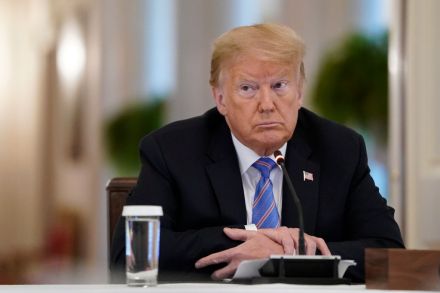
The immediate aftermath of Donald Trump's surprise election victory brought a slew of comparisons with 9/11. In New York, my liberal friends waking up on 11/9 said they experienced the same range of emotions. You will have seen the stories of commuters weeping on the subway, colleges offering counselling to students and a general sentiment that life would never be the same again. Therapists reported an overwhelming sense of grief among their clients as they tried to process their world turned upside down. Robert de Niro chipped in, telling the Hollywood Reporter: 'I feel like I did after 9/11.

Question time | 8 December 2016

From our UK edition

If you were to see one film about American whistle-blower Edward Snowden — there is no law saying you have to, but if you were — then the film you want is probably Laura Poitras’s 2014 documentary Citizenfour rather than this biopic from Oliver Stone. It’s being sold as a ‘pulse-pounding thriller’ but oh, if only it were. Instead, it’s psychologically thin, tiresomely hagiographic and doesn’t answer any of the questions you’d like it to answer. Certainly, my pulse failed to oblige and if yours doesn’t behave similarly, I’d be most surprised.

Hillary Clinton’s health crisis was a victory for conspiracy theorists – on 9/11, of all days

From our UK edition

'Can we just stop talking about Hillary Clinton's health now?', snapped Chris Cillizza of the Washington Post on September 6. The whole discussion was 'totally ridiculous', a smear campaign by conspiracy theorists, and to believe otherwise you had to assume that her doctor was lying. Five days later, and even Cillizza thinks it's permissible to talk about Clinton's health, having now published a piece with the headline 'Hillary Clinton’s health just became a real issue in the presidential campaign'. Because yesterday – September 11, of all days – the conspiracy theorists got something right.

Memories, dreams, reflections

From our UK edition

Heart of a Dog is a film by Laurie Anderson and it’s a meditative, free-associating rumination on life, loss, love and dogs, with particular reference to her and her late husband’s (Lou Reed, who died in 2013) beloved rat terrier, Lolabelle (who died the same year). It follows no linear logic. It’s a visual collage, a cine-poem, a dreamy documentary essay that was screened in London earlier this week to owners and their dogs — to rave reviews. ‘It’s great!’ said a golden retriever, but as he said the same of ‘a ball’ and also ‘a pizza crust’, he may not be the most reliable of critics. (This is why you never see golden retrievers on Film 2016 or writing for Sight & Sound.