Life

My wild house parties with Rose Wylie

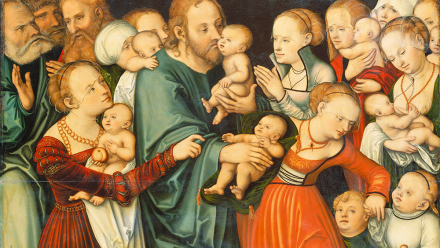
Dante’s Beach, Ravenna I rang up my old best friend, Luke-John, for a chat a few days ago and to ask him about his mum, Rose Wylie. She is 91 and has just become the first ever female painter to be given a solo show at the Royal Academy. When I was in my late teens and early twenties, her house in the village of Newnham, near Faversham, became a safe haven for me, and I used to stay there a lot. Rose and her husband Roy, who was also an artist and died in 2014, were just so dead cool. Neither was well-known, and they had little money, but they were seriously intellectual, seriously stylish and seriously good-looking. He had been to Goldsmiths and then been a student of David Bomberg’s at the Borough Polytechnic, and was doing a PhD on him at the Royal College of Art.

The life of Karl Zinsmeister

It’s strange interviewing a friend who is dying, but Karl Zinsmeister is at peace. I met Karl in Washington, DC, in the spring of 1981, when we two Upstate New York hicks were new to the staff of Senator Pat Moynihan. The first thing I learned about him was that he and his girlfriend (and later wife) Ann, while on some do-gooder mission in Africa, had wandered into Tanzania and been held on suspicion of being spies. (They weren’t.) Karl threw himself into both intellectual and manual labor with fierce enthusiasm, doggedness, even hard-headedness. Over the past 45 years he has edited magazines, renovated ruined tenements, been embedded in Iraq, raised three kids, lived with Ann on a houseboat, served as White House chief of domestic policy and produced more than 20 books.

karl zinsmeister

Missing Cowboy, our great farm manager

Life in the country is unforgiving. Animals die, labor is unceasing and nature fights back at every turn. We say losing a beloved horse or a loyal farm dog is like losing a member of the family. But while the pain is real, it’s certainly not the same as losing a dear friend. Our long-time farm hand died late last year. He was not an old man by any means and he had the vigor of a younger man still. By the grace of God, he passed away peacefully at home in the small cottage just down the road from the farm. I’ll call him Cowboy, because in truth, that’s what we called him most of the time. He didn’t like his real name. And he certainly lived up to the moniker. Cowboy could solve any issue, big or small.

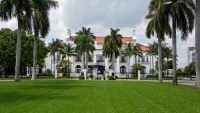
The sorry plight of Palm Beach’s iguanas

The old saying, “It’s an ill wind that blows nobody good,” has received strong reinforcement during the recent unprecedented cold spell in the Palm Beaches. The rest of the world almost certainly thinks we lead a sybaritic life down here with the perennial sunshine taking the edge off the normal hardships that everyone else has to contend with. But one unusual side effect of the recent cold spell (and though it wasn’t cold by, say, Canadian standards, it was the coldest spell we’ve had here in 27 years) was the carnage it wrought on the iguana population. We have a love/hate relationship with iguanas here. When they first arrived in the early 1980s they were regarded as cute, but a decade later the mood changed.

America’s future looks vulgar

The latest Super Bowl offers the most recent opportunity to reflect on the terminal state of our national culture, held together chiefly by a distractive and unhealthy mania for commercial sports and perfectly exemplified by the infantile yet aggressively transgressive nihilism of a brainless showoff calling himself Bad Bunny and dressed all in white, suggestive perhaps of an anti-Easter Bunny. Why, one wonders, has no political theorist from Hobbes forward posited the ideal human community as one which would combine political democracy with cultural and intellectual aristocracy – as, indeed, America at the time of her founding and for several generations thereafter did? Such an arrangement might satisfy critics of democratic society on the anti-egalitarian right, such as T.S.

Roaches: the spirit animal of New York City

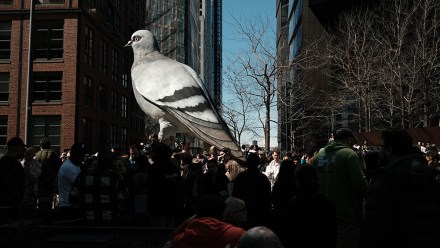
Over the past few years, I’ve written regularly for this magazine about my devotion to New York City. I love the cultish exercise classes that test your psychological mettle and the cryptic linguistic idiosyncrasies of the people you meet here. I love the know-it-all doormen – the actual kings of Gotham – and that any day, a celebrity might move in next door. I love that this is home to the world’s most audacious rats and, yes, I love Staten Island – proof that my affection extends beyond accepted social norms. Only here would someone say ‘I named a roach after you’ and consider it a heartfelt gesture of affection When a recent email landed in my inbox, though, it ignited a whole new appreciation for this brazen metropolis.

roaches

Americans will believe in anything

The US has not known social and domestic peace since the start of the present decade, and it is unlikely that it will know it again for the foreseeable future. This is because it has ceased to be a country at all, assuming that nationhood implies fundamental unity, which America no longer has. When novelist John Dos Passos wrote in the late 1930s, “All right, we are two countries,” the boundary he had in mind was economic, separating the rich from the poor. Today the obvious divide is political, between left and right. But what seems obvious is not always true, as in this case.

America’s immigration officers are among the most welcoming (except ICE)

A frisson of fear tends to run through non-Americans when they face immigration in the United States. For years, young Brits have been warned prior to their first trip: “When you meet the immigration officer, don’t make jokes!” To boys cultivated to be insouciant in Britain’s posher schools, this usually means approaching the booth nervously repeating, “Don’t say bomb, don’t say bomb” – hopefully under their breath. However, I’d say the officers guarding America’s borders are among the most welcoming, and sometimes even funny, I’ve met – I’m excluding ICE, who sound awful. It’s often a surprise given I’m usually arriving from a country firmly on America’s State Sponsors of Terrorism list: Cuba.

How many private jets are registered at Palm Beach International Airport?

Does every billionaire have a private jet? Are they standard toys for these very special people? Intrigued by this uniquely modern possibility, I inquired of Palm Beach International Airport (PBIA) how many private jets are registered here. The answer: 172. Some of them are no doubt owned by corporations, but that number compares well with the 67 billionaires thought to have homes in the area – perhaps some have two; that wouldn’t be unthinkable. But, of course, owning your own Gulfstream involves more than just turning up at a private airfield with no worries as to how much your bags weigh. Maybe some very rich folk don’t want the hassle of employing year-round pilots (at least two) or the bother of constant maintenance needed to keep these toys in the air.

An Englishwoman in New York

For this trip, I’ve had to divulge my social-media handles, blood group, shoe size etc, and have therefore assumed the brace position for being "processed" into the US, not least because I was once, under Joe Biden, incarcerated in a side room at JFK for having an apple in my hand luggage. The border protection officers show not the slightest interest in my sarky tweet about neocon Liz Truss Though, I might add, it was even worse under Bill Clinton. My baby boy was placed in a detention center on arrival at Dulles when we relocated to Washington, .C. Oliver, aged six months, was traveling separately from us with a British nanny who’d over-stayed on a visa a decade before, and we didn’t know where he was for 24 hours.

new york

The pros and cons of losing my hearing

Ah, the indignities of age. Over the past year I’ve suffered significant hearing loss. “Huh?” has become my favorite word and I’ve developed a strange new respect for the loonies who hear voices. Aspiring to stoicism, I informed Lucine, my wife, “When I hit 60 I figured that I was entering a stage in which the physical setbacks, some quite unexpected, would mount. So I told myself that I could either whine about it or I could accept all this with grace and good humor.” Lucine didn’t miss a beat. “Then why have you chosen to whine?” Thanks, dear! I mean no disrespect to the late Freddie Mercury when I say ‘We Will Rock You’ sounds better muffled I confess to the occasional maudlin moment.

The chaotic thrill of a horse auction

The story of Harry deLeyer and his horse Snowman reads like a Disney classic. DeLeyer was a Dutch immigrant farmer who bought Snowman at auction with his last $80 in the 1950s . Snowman was an unpedigreed plowhorse, already old by competitive riding standards, and likely headed for the glue factory when deLeyer saw promise in his strength and spirit. They went on to become one of the most successful pairings in the history of showriding, taking home the Triple Crown of national titles in 1958. The horse world has changed a lot since then. Both training and breeding are highly scientific across all pursuits, from showriding to racing.

The subway deserves some respect

A few weeks before the end of the year, I was invited to a house party at which I had the misfortune of becoming embroiled in a conversation with a man I’ll call Joe, because his name was Joe and I don’t feel inclined to offer him the dignity of a pseudonym. There’s a theory I’ve corroborated since moving to New York in 2020. Every conversation at a party in this city eventually gravitates toward one of five subjects: traffic, the weather, real estate, sex or the mayor. The ultra-rich are among the subway’s most devoted riders Joe told me he works in finance (which he pronounced “fin-ants”) and it seemed he wasn’t bothered about the weather. He wasn’t a tax-optimizing Connecticut commuter, so had no unsolicited opinions to share about traffic.

Facelifts are to Palm Beach as politics is to DC

Gossip galore in Palm Beach as the turbulent year of 2025 stumbled to its close. Top of the heap is the tale of the popular maître d’ of Bice, a swanky restaurant (the original opened years ago opposite Teatro alla Scalla in Milan), who has been arrested by ICE, allegedly for driving a car with darkened windows (regarded as a suspicious practice). He was also – again, allegedly – forced to eat off the floor at “Alligator Alcatraz,” an immigration detention facility in Ochopee, Florida. This was, apparently, judged as a condign punishment for a maître d’, ICE showing a bleak sense of humor. The maître d’, of Mexican origin, has been in the US for 20 years and has a work permit. As one local said: “He is part of our lives, not just our nights out.” Vigils have been held.

facelift

The trouble with muzzled liberals

Liberalism has always considered itself a noble creed, as liberals have conceived themselves its knights in shining armor. Perhaps – once upon a time – it was so. But that was in the 18th and 19th centuries, and we are now living in an era when liberals have many fears: climate change, fascism, malefactors of great wealth (as Theodore Roosevelt called them), nativists, white men, Republicans, Donald Trump. Indeed, they are frightened of so many things that I have written a book ennumerating them – a book that so far remains unpublished, perhaps because the liberal publishers fear its argument, too. Still, having observed them for so many years, I am convinced that what liberals fear above all else is one another.

Spending the last penny

I once knew a man so cheap he would call my dad to report that he’d found a nickel on the pavement of the local racetrack’s parking lot. I don’t know if Jim would have stooped to conquer a penny as well – I wouldn’t put it past him – but I like to think he’d join me in lamenting the demise of the American cent, our humblest coin, burked by order of President Donald Trump at the urging of Elon Musk, neither of whom will ever be mistaken for a small-is-beautiful fan. The last Lincoln cent headed for general circulation was struck at the Philadelphia Mint in November last year, ending a 232-year run for my favorite coin.

How to eat in Cuba

My apartment in Havana is on a rooftop overlooking the sea, which sounds grand and penthousey, but it’s not – it’s the former caretaker’s hut. It also sits above my parents-in-law’s place, which offers challenges, but does mean that most days I wander down for lunch. When I first moved in, I didn’t speak Spanish and so would enjoy these meals in ignorant bliss, smiling winningly as I guzzled down pork, rice and beans. I tried not to ask my now-wife to translate because I didn’t want to interrupt what I imagined were hugely erudite discussions; she’s a literary professor and her parents are both philosophers. Slowly, though, I began to understand, Spanish revealing itself like a song on the wind.

The no-fly zone over Mar-a-Lago annoys locals

Whether President Trump really has solved six, seven or even eight wars, one conflict he can’t do anything about, for now at least, is the one in his hometown, Palm Beach, where he is partly responsible for tempers that are beginning to fray. This is all down not so much to Trump himself but to the Secret Service. Following their embarrassing failure to stop the assassination attempt in Butler, Pennsylvania, in July 2024, when Thomas Matthew Crooks managed to nick the President’s right ear with a bullet, the Secret Service has doubled down on security and established a one-nautical-mile flight-free exclusion zone around Mar-a-Lago, Trump’s mansion to the south of Palm Beach.

mar-a-lago
balfour

Do politics matter at all?

It is likely that the ordinary man, not being an ideologue, would agree as he grows older with Arthur Balfour’s famous epigram: “In politics nothing matters very much, and few things matter at all.” This is only partly to do with sub specie aeterni, etc. For the rest, there is the simple recognition that politicians always make politics (and the questions and policies with which they concern themselves) out to be much more substantial and consequential than they actually are.

herd

A herd is like a high school

When you own a horse farm, the same question canters repeatedly through your mind: should I buy another horse? Rationally, you know the answer is no, but you inevitably wind up doing it anyway. Because in the grand scheme of things, it’s just one more head in the herd. The day-to-day of farm management doesn’t change much between 15 horses and 16. It takes some time to acclimate a new arrival, of course. A herd is like a high school: popular kids run the show, and the new blood always faces some bullying. But once he finds his place in the hierarchy, the routine proceeds as usual. And consistency is key with horses. The herd mostly gets to roam freely through about 40 acres of pasture.