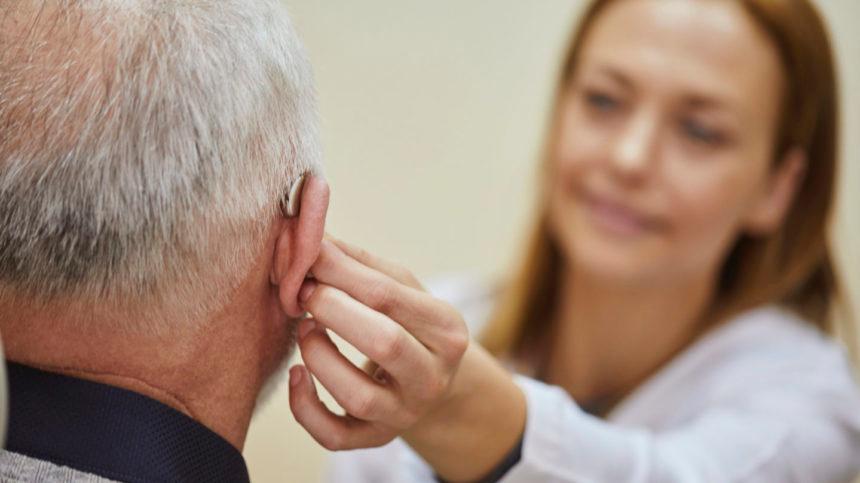

Ah, the indignities of age. Over the past year I’ve suffered significant hearing loss. “Huh?” has become my favorite word and I’ve developed a strange new respect for the loonies who hear voices.
Aspiring to stoicism, I informed Lucine, my wife, “When I hit 60 I figured that I was entering a stage in which the physical setbacks, some quite unexpected, would mount. So I told myself that I could either whine about it or I could accept all this with grace and good humor.” Lucine didn’t miss a beat. “Then why have you chosen to whine?” Thanks, dear!
I mean no disrespect to the late Freddie Mercury when I say ‘We Will Rock You’ sounds better muffled
I confess to the occasional maudlin moment. In The Thanksgiving Visitor, Truman Capote quoted his beloved Aunt Sook, who fears the dimming of her sight: “I think these eyes are giving out. At my age, a body starts to look around very closely. So you’ll remember how cobwebs really looked.” Sook-like, I would sometimes focus on a loved one’s voice, trying to implant it in whatever part of the brain retains the evidence of senses past.
But life is filled with incongruities, and I am just as likely to grouse, like the Grinch, “Noise! Noise! Noise!” whene’er the aural assault commences in public places.
In recent years it has become almost impossible for me to enjoy organized sports due to the ceaseless thump of amplified sound effects and snatches of pop songs. The assumption seems to be that spectators – we, too, serve who only sit and watch – are incapable of enduring the 15 or so seconds between plays without sonic stimulation. Converse with a seatmate? Gaze or gawk or just take it all in? Think? Impossible.

Rather to my embarrassment, my condition has required me to wear earplugs to, for instance, the occasional Rochester Americans minor-league hockey game. I mean no disrespect to the late Freddie Mercury when I say that “We Will Rock You” sounds better when muffled. (Incredibly, to me at least, one also hears chunks of “Blitzkrieg Bop.” When I saw the Ramones in 1979 I sure never thought their glorious 90-second headbanging tunes would someday be filler music at sporting events. Though I suspect Johnny Ramone would be pleased.)
We are told that there is always a silver lining – Mary Todd Lincoln might have guffawed at Our American Cousin, and the irradiated mushrooms around Chernobyl may be quite tasty – and being hard of hearing limits one’s exposure to the anti-human ghastliness of computerized or AI “voices.”
I’m constitutionally incapable of listening to books on tape – the mind wanders – but I am told that, with grim ineluctability, AI voices are replacing those of our living, breathing brothers and sisters who make money as voice actors. Cheapskate publishers are selling out the human race by refusing to hire actors to narrate their books or newspaper and magazine articles. AI’s mispronunciations, misplaced emphases and creepy inflections add to the chilling artificiality of the whole thing.
It’s like when the niece tells Kevin McCarthy in Invasion of the Body Snatchers that the pod-people version of her Uncle Ira isn’t Uncle Ira. “There’s something missing,” she says. “Always when he talked to me there was a special look in his eye. That look’s gone. The words, the gestures, everything else is the same – but not the feeling.”
This is the dystopian future the soul-killing AI corporations have planned for us – aided and abetted by a Trump administration that aims to clearcut federalist obstacles to a nationalized, one-size-fits-all AI regime.
One of the precious and few memorable moments in the televised presidential and vice-presidential “debates” of our age came in 1992, courtesy of independent candidate Ross Perot’s running mate, James Stockdale, a philosopher and Medal of Honor recipient who had spent seven years as the senior naval officer among American prisoners of war in Vietnam. Among the lasting effects of the torture inflicted upon Admiral Stockdale during his imprisonment was ear damage that necessitated the use of hearing aids. During the debate, Stockdale responded to one question from the moderator with an apologetic, “I didn’t have my hearing aid turned up. Tell me again.” He was roasted by the media as a doddering fool.
Stockdale had made a simple mistake, turning the control down rather than up, but really, if you had to share a stage with his two opponents – the inane Republican Dan Quayle and the pompous-ass Democrat Al Gore – wouldn’t you do whatever you could to shut out the noise?
At least vice presidents Quayle and Gore were, by most accounts, human. Synthetic AI voices are far more objectionable. But instead of making ourselves deaf, maybe we can strike those damned things dumb?
This article was originally published in The Spectator’s February 2, 2026 World edition.




Comments