Whether President Trump really has solved six, seven or even eight wars, one conflict he can’t do anything about, for now at least, is the one in his hometown, Palm Beach, where he is partly responsible for tempers that are beginning to fray.
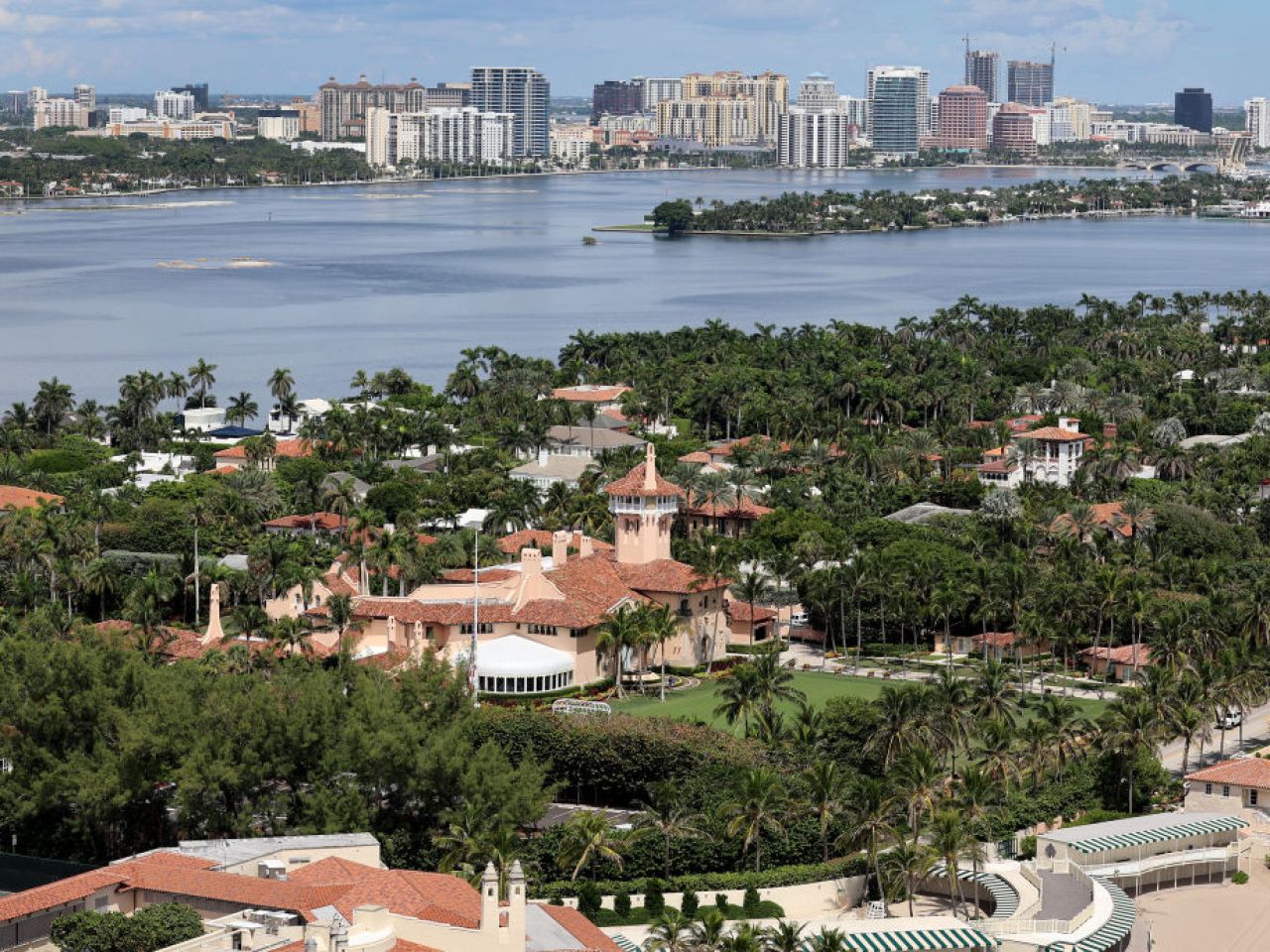
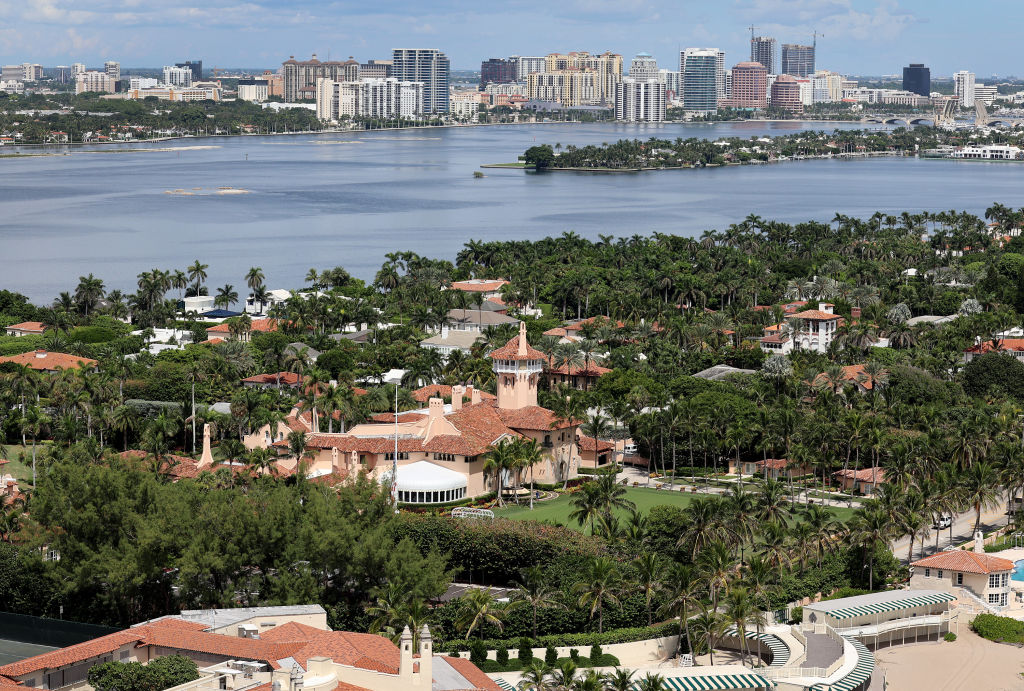
This is all down not so much to Trump himself but to the Secret Service. Following their embarrassing failure to stop the assassination attempt in Butler, Pennsylvania, in July 2024, when Thomas Matthew Crooks managed to nick the President’s right ear with a bullet, the Secret Service has doubled down on security and established a one-nautical-mile flight-free exclusion zone around Mar-a-Lago, Trump’s mansion to the south of Palm Beach.
This doesn’t matter much for flights from Palm Beach International Airport (PBIA) that are flying south, to the Caribbean or South America: south of Mar-a-Lago is a narrow sliver of land, half a mile wide, with precious few houses. But for flights headed north – to Washington, DC, New York, Canada or Europe – the new flight path takes them directly over the town of Palm Beach itself, home to 10,000 well-heeled Republicans, including between 40 and 67 billionaires (depending on who’s counting), many of them richer even than the President.
And such is the proximity of PBIA to Palm Beach proper that airplanes are still climbing when they reach the town, straining to lift their loads, shaking the ground with their noisy growling and vibrations and – the latest horror – leaking dirty exhaust oils onto the swanky poolside furniture of expensively serviced homes. At peak times, aircraft take off every two minutes.
While residents are, up to a point, ready to make allowances for the fact that Trump is President, they do not see why, as the Secret Service insists, the no-flight zone continues to be enforced even when he isn’t there.

Town meetings have been held to address the issue, congressmen have been grumbled to and airport personnel have been quizzed as to other possibilities. Complaints have been issued by the town mayor to the Federal Aviation Authority and the Secret Service, in particular specifying the effects of vibrations on the town’s historic constructions. But so far: zilch. The Secret Service remains unmoved. Could it have anything to do with the fact that a large contingent of SS personnel so much enjoy their taxpayer-funded time at Palm Beach’s swanky hotels? So far, good manners have prevailed. But now that those oil slicks have started landing…
This unfortunate example of bureaucratic overreach has been matched by another: the release of the full list of the removal of around 700 – yes, 700 – books from local schools. The explanation for the existence of this list arose from various parental concerns, mainly at the height of worries over too much “wokeness” in schools. But, now that the actual list of titles has been revealed, the range of banned books can be seen to have gone much wider. The list includes books by such esteemed authors as Alice Sebold (The Lovely Bones), George Orwell (Nineteen Eighty-Four), Stephen King, Jodi Picoult (Handle with Care), Maya Angelou (I Know Why the Caged Bird Sings) and Bret Easton Ellis (American Psycho). Local children are clearly being failed here – denied access to some classics.
While these works are being sidelined, Palm Beach, which is never not interested in itself, has enthusiastically embraced the Apple TV series Palm Royale which, according to one account, is a “campy dreamworld” of Palm Beach life all the way back in 1969, when the world was young. The cast includes Kristen Wiig as Maxine, who “storms Palm Beach,” seeking to gatecrash “America’s most treacherous table,” plus Carol Burnett, Ricky Martin and Josh Lucas. The second season is now streaming.
The Colony Hotel, already a very pink Palm Beach institution, is offering guests what it calls an “immersive,” “visually irresistible” and “outrageous” Palm Royale experience, beginning with a Stay Royale package “for diehard fans of the show.” This features three nights in the Magnolia Penthouse, with butler; a wardrobe with 1960s outfits and hair and makeup of the same period; and a vintage convertible to “cruise” Palm Beach, while the rest of the hotel transforms itself into the “luxe social club” that Maxine is so desperate to join.
This will be achieved by a distinctive coral and turquoise floral pattern on such hotel features as patio umbrellas around the pool, lounge chairs with “retro-scattered details,” whatever they are, “and pillows.” A special Palm Royale menu will include the “signature grasshopper cocktail” so beloved of the stars in the show and dotted around the hotel will be pink rotary telephones of the kind popular in the 1960s. Full marks to the Colony Hotel, at least for its opportunism, if not its coral and turquoise taste.
Real estate, as this column is well aware, is the Palm Beach religion, and the latest good news is that a recent survey of property prices shows that West Palm Beach has experienced the greatest growth over the past decade of any city in America. Property prices in WPB rose by 187.3 percent over the past ten years, with an average price now of $4,039,354, beating Nashville, Tennessee, into second place (171 percent), with Phoenix third and Las Vegas fourth.
Less welcome, at least to my mind, even alarming, is another recent survey, this time of local restaurateurs and chefs, predicting what the coming fashions in dining and in food will be next year. Apparently, the new fashion will be for “communal tables” combined with the Japanese practice of omakase. As I understand it, this mix means that you will sit at a largish table with people you don’t know and share the food. More even than that, omakase means, roughly, “Leave it up to you” – i.e. the chef.
So the new fashion in dining, if I have got this right, is that, to be in the swim, we will sit with people we don’t know and share with these strangers food that we didn’t order (and therefore may not like). It’s one of those well-meaning socialistic ideas, helping to move us all toward a tolerant utopia where our better nature is given full rein. Include me out.
This article was originally published in The Spectator’s December 22, 2025 World edition.




Comments