Theatre

As gripping as an Agatha Christie thriller: Shooting Hedda Gabler, at the Rose Theatre, reviewed

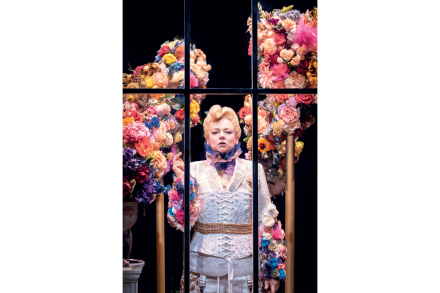
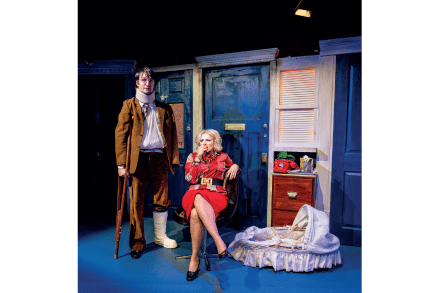
The unlovely Rose Theatre in Kingston is a modest three-storey eyesore. The concrete foyer looks like an exercise area on a North Sea oil platform, and the auditorium itself is a whitewashed rotunda that resembles the chapel in a newly built prison. Yet this cheerless, functional space is perfect for a mischievous new satire, Shooting Hedda Gabler, about recent developments in the acting trade. The central character, Hedda (Antonia Thomas), is a washed-up American starlet who wants to gain artistic credibility by taking the lead in a pretentious film version of Hedda directed by Henrik, a tyrannical Norwegian auteur. ‘There is no script,’ he announces on the opening day. But he’s lying.

Godot with gags: It’s Headed Straight Towards Us, at Park200, reviewed

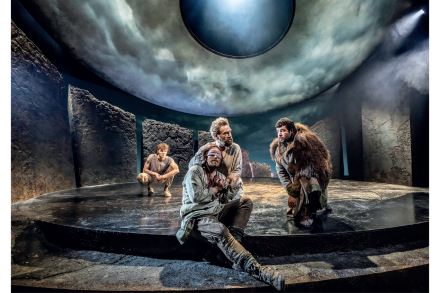
It sounds like a barking-mad student sketch but the final product is marinated in wisdom and maturity. It’s Headed Straight Towards Us is a mellow riot of a play. The setting is a rocky glacier in Iceland during the filming of a corny sci-fi movie. Hugh (Sam West) is a cerebral thesp who specialises in playing butlers and high-status toffs. On set, he meets his best friend from drama school, Gary (Rufus Hound), whose career has declined to the point where he’ll accept any role going. Tragic Gary used to be a star who earned a fortune as a cockney villain in the 1980s but he succumbed to alcoholism and ill discipline, and he now has little in common with Hugh who lives in London with a couple of pet dogs and a solicitous male lover.

Cheesy skit: A Mirror, at the Almeida Theatre, reviewed

The playwright Sam Holcroft likes to toy with dramatic conventions and to tease her audiences by withholding key information about the characters. This tinkering seems to scare the critics into praising her scripts even though they feel like clumsily written thrillers or botched sci-fi yarns where the rules keep changing. Her technique appeals to high-minded theatres such as the Almeida because it enables A-level drama students to fill their notebooks with impenetrable guff about ‘metatextuality’ and ‘poly-ironic approaches to narrative’. It could be Noises Off by an author who wants to be Brecht or Pirandello Holcroft’s new satire, A Mirror, opens with a bogus wedding that gets disrupted when a gang of cops march on stage and cancel the ceremony. A strange start.

Watch three irascible women screaming at each other: Anthropology, at Hampstead Theatre, reviewed

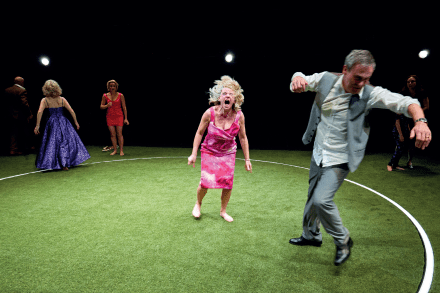
Anthropology is a drama about artificial intelligence that starts as an ultra-gloomy soap opera. A suicidal lesbian, Merril, speaks on the phone to her kid sister, Angie, and they discuss Merril’s beautiful ex-girlfriend. After ten minutes, we learn that Angie’s voice belongs to a robot, Digital Angie, created by Merril to replicate the real Angie who vanished a year earlier in unexplained circumstances. Then another surprise. Digital Angie becomes self-aware and turns into a detective who offers to help Merril investigate Angie’s disappearance and to find out if she’s still alive. Angie then turns into a third character who tries to interfere with Merril’s social life.

Lacks any air of mystery, foreboding or darkness: Macbeth, at the Globe, reviewed

Macbeth at the Globe wants to put us at our ease and make us feel comfortable with the play’s arcane world of ghouls, hallucinations and murderous prophecies. Abigail Graham’s up-to-the-minute production offers a few nods to history, like the eagle masks worn by the three witches, but for some reason they speak in dense cockney accents and wear biohazard suits. And they’re all men. The Scottish soldiery favour black body armour like SAS recruits or Metropolitan Police officers. And King Duncan, benefitting from equality legislation, has been transformed into an alpha female: ‘Queen Duncan’, as everyone calls her. She strides on to the battlefield in the opening scene sporting a beautiful cream trouser suit and a salon-perfect ash-blonde hairdo.

Like an episode of Play School: Dr Semmelweis, at the Harold Pinter Theatre, reviewed

Bleach and germs are the central themes of Dr Semmelweis, written by Mark Rylance and Stephen Brown. The opening scene, set in the 1860s, presents the harmless old doctor as a charming oddball who adores playing chess with his happy, clever wife. This is code: Semmelweis is an intellectual and a feminist whom it’s safe to like. We flip back to 1837 and meet Semmelweis as a student at a Viennese maternity hospital where the male doctors kill three times as many patients as the female nurses. How come? Well, the males sport filthy aprons spattered with their victims’ blood while the nurses wear freshly laundered habits. So the high mortality rate is caused by germs. And germs can be treated with bleach.

Two very long hours: The Effect, at the Lyttelton Theatre, reviewed

Lucy Prebble belongs to the posse of scribblers responsible for the HBO hit, Succession. Perhaps in honour of this distinction, her 2012 play, The Effect, has been revived at the National by master-director Jamie Lloyd. The show is a sitcom set in Britain’s most dysfunctional drug-testing facility where two sexy young volunteers, Tristan and Connie, are fed an experimental love potion that may help medics to find a cure for narcissists suffering from depression. Running the experiment are two weird boffins, Professor Brainstorm and Nurse Snooty, who once enjoyed a fling at a conference and whose lust is not entirely extinct. But Nurse Snooty is playing hard to get. ‘Sometimes,’ she tells the Professor, ‘I feel I’m dead but my body hasn’t caught up yet.

Bizarre and outdated: Word-Play at the Royal Court reviewed            

The Royal Court’s new topical satire, Word-Play, opens with a gaffe-prone Tory prime minister giving a TV interview in which he commends Enoch Powell’s ‘Rivers of Blood’ speech. The Downing Street press team suffer a meltdown as they struggle to draft an apology or a retraction. Opposition parties try to profit from the blunder and the PM’s words spread across the globe and earn him praise from various authoritarian governments, led by China. This opening scene makes sense only if the British prime minister is a white male named Boris but the author, Rabiah Hussain, hasn’t troubled to update her script in the light of recent developments. The result is a topical play that feels like ancient history.

Finally an entertaining play at the Royal Court: Cuckoo reviewed

The boss of the Royal Court, Vicky Featherstone, will soon step down and she’s using her final spell in charge to try an unusual experiment. Can she entertain the punters and make them feel happy rather than forcing them to confront various forms of gloom, misery and despair? The answer is yes. Featherstone can tickle our funny bone if she wishes. Why haven’t trans activists denounced this show and demanded the performer’s cancellation? Cuckoo, by Michael Wynne, is a hilarious kitchen-sink comedy set in Merseyside with an all-female cast. Some critics have likened it to a Carla Lane sitcom and the domestic set-up owes an obvious debt to the Royle Family by Caroline Aherne.

Forgettable stuff: The Crown Jewels, at the Garrick, reviewed

In the 1990s, the BBC had a popular flat-share comedy, Men Behaving Badly, about a pair of giggling bachelors who were scolded and dominated by their mummy-substitute girl-friends. The author, Simon Nye, has written a historical crime caper about the theft of the crown jewels in 1671, as Charles II prepared to celebrate his tenth year on the throne. The psychological co-ordinates of the play are poorly handled. The thief, Colonel Blood, is an irritating Irish crosspatch who wants to drive the hated English from his homeland. Charles (played by Al Murray) is more attractive, a fun-loving gadabout who enjoys sex, jokes and science and who can’t bear Puritans. So the audience sides with the King and hopes that Blood’s vindictive scheme will fail.

Kwame Kwei-Armah’s embarrassing update of Love Thy Neighbour: Beneatha’s Place, at the Young Vic, reviewed

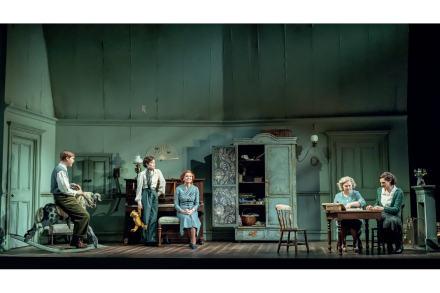
Beneatha’s Place, set in the 1950s, follows a black couple who encounter racial prejudice when they move to a predominately white suburb. The location is Nigeria but it might as well be the USA because most of the characters, both black and white, are American. (The Young Vic has strong links with America, and a transfer to Broadway may be under discussion.) The script by Kwame Kwei-Armah is inspired by the British sitcom Love Thy Neighbour, which aired five decades ago. This misunderstood show was pretty progressive for the 1970s, and it examined the conflict between two thick white bigots living next door to an intelligent and sophisticated couple from the Caribbean.

A naked pamphleteering exercise: Idiots Assemble: Spitting Image The Musical, at Phoenix Theatre, reviewed

Nothing demonstrates the inanity of profanity like an undercooked comedy. The famous Spitting Image puppets have returned in a political musical that’s more cuddly than cutting. Writers Matt Forde and Al Murray add a lot of swearing to their punchlines without understanding why. The temptation to use the F-bomb is a warning sign from the writer’s internal editor: ‘Delete and try again.’ To enliven bad writing with curse words is to mistake the symptom for the cure. And the show chooses feeble or irrelevant targets. Rishi Sunak appears as a soppy head prefect who plots with Boris to depose King Charles and take over the monarchy.

A play that explains why England’s football team are so lousy: Dear England, at the Olivier Theatre, reviewed

James Graham’s entertaining new play looks at the England manager’s job. Everyone knows that coaching the national side is just a hobby. The boss picks the squad for a handful of fixtures each year and gives a pep talk at half-time followed by a post-match press conference. He’s spared the bother of speculating in the transfer market and he’s never troubled by verbal monsterings from foreign owners or irascible chairmen. And no salary ought to be paid because the incumbent is assured large earnings as a public speaker. Instead of practising football the team fill up notepads with giddy jottings about their feelings Graham’s play opens in 2016 with the appointment of Gareth Southgate, a dreamy weirdo from Sussex. Southgate was one of the best players Germany ever had.

An unreliable history: When Winston Went to War with the Wireless, at the Donmar, reviewed

When Winston Went to War with the Wireless is the clumsy and misleading title of a new play about John Reith’s stewardship of the BBC during the 1926 general strike. Churchill, chancellor at the time, has a minor role as an irascible plodder who makes jokes without a punchline. His role is intended to foreshadow Boris’s career and the characters keep mentioning the gold standard and its damaging effects on Britain’s economy. Gold standard is code for Brexit, of course. It’s unclear what purpose is served by casting Haydn Gwynne as Stanley Baldwin The real subject, John Reith, is played by Stephen Campbell Moore who runs the BBC like a YouTube channel. It’s a solo effort, apparently.

Like attending a joyous religious service: We Will Rock You, at the Coliseum, reviewed

One of the earliest jukebox musicals has returned to the West End. When the show opened in 2002 the author, Ben Elton, plugged his production on TV chat shows with a wisecracking slogan: ‘We Will Rock You isn’t just a title… it’s a promise.’ The easy-listening storyline draws inspiration from the Old Testament and from Mad Max. We’re in a dystopian future world ruled by faceless corporations that sell mass-produced garbage to zombified youngsters addicted to their mobile phones. A tribe of exiles, the Bohemians, roam the underworld in search of the relics of a vanished culture known as ‘rock’n’roll’. The Bohemians meet a visionary outcast, Galileo, who recites song lyrics that the Bohemians recognise as vestiges of the ‘sacred texts’ that they worship.

Hamlet fans will love this: Re-Member Me, at Hampstead Theatre, reviewed

A puzzle at Hampstead Theatre. Literally, a brain teaser. Its new production, Re-member Me, is a one-man show written and performed by Dickie Beau, whose name is a punning allusion to a bow tie. The oddly spelled word, ‘re-member’ refers to the process of reassembling the separated limbs of a dramatic character during the rehearsal process. The poster for the production centres on Mr Beau dressed in 1980s sports gear and wearing a T-shirt blazoned with the logo of ‘Wittenberg University’, written in German. Enfolding his skull is a rainbow headband. These details tell us that the play examines the character of Hamlet with a particular focus on the travails of gay actors performing the role during the 1980s Aids epidemic.

Much better than the film: Mrs Doubtfire, at Shaftesbury Theatre, reviewed

Mrs Doubtfire is a social comedy about divorce. We meet Miranda, a talentless, bitter mother, who tires of her caring but imperfect husband, Daniel, and kicks him out of the house on some footling pretext. When Miranda later discovers that Daniel’s loyalty to their children is an asset of inestimable value she invites him back. And he accepts her offer without a murmur of recrimination. The story is based on the cruel imbalances in family law that entitle a vengeful, heartless woman like Miranda to destroy the emotional wellbeing of her children and her husband, and to call her vandalism justice. In this story Daniel is a voiceover artist who impersonates an eccentric Scottish nanny, Mrs Doubtfire, and persuades Miranda to hire him as their kids’ carer. A neat set-up.

Ugly and humdrum: Brokeback Mountain, at @sohoplace, reviewed

Brokeback Mountain, a play with music, opens in a scruffy bedroom where a snowy-haired tramp finds a lumberjack’s shirt and places it over his nose. Then he inhales. Who is this elderly vagrant? And why is he absorbing the scent of an abandoned garment? Two hours later, at the play’s close, we finally learn that the old man, Ennis, is sniffing a shirt that once belonged to Jack Twist who became his lover while they worked as shepherds in Wyoming. Yes, shepherds. The ‘gay cowboy’ label is a misnomer because the lads are ranching sheep, and their affair belongs to the half-forgotten days of homosexual persecution. The precise year, 1963, is signalled to us with a clunky line from Jack about JFK’s decision to escalate America’s involvement in Vietnam.

Sad, blinkered and incoherent: Arcola’s The Misandrist reviewed

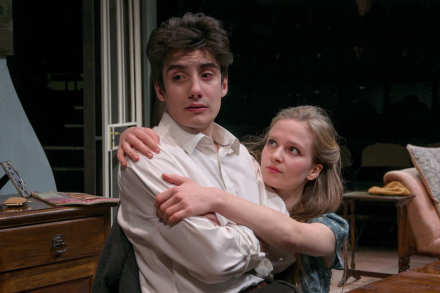
A new play, The Misandrist, looks at modern dating habits. Rachel is a smart, self-confident woman whose partner is a timid desperado named Nick. Both accept that Rachel must make all the important decisions in their lives and she orders Nick to submit to ‘pegging’. After some perfunctory resistance, Nick obeys. ‘Lube me up,’ he cries and she plunges a pink truncheon deep into his digestive tract. Afterwards he claims that the experience was so uplifting that even his ancestors enjoyed a taste of bliss from beyond the grave. Lisa Carroll’s ironic and frivolous comedy is fun to watch. The characters are enjoyable and the lightweight, throwaway acting meets the script’s requirements.

Riveting and sumptuous: The Motive and the Cue, at the Lyttelton Theatre, reviewed

The Motive and the Cue breaches the inviolable sanctity of the rehearsal room. The play, set in New York in 1964, follows John Gielgud’s efforts to direct the world’s biggest film star, Richard Burton, in Shakespeare’s most demanding play, Hamlet. A member of Gielgud’s company, Richard L. Sterne, recorded the process and his notes form the basis of Sam Mendes’s riveting production. The show is a must for anyone who works in the theatre or wants to. Directors, in particular, will relish the glimpse it offers into Gielgud’s approach to a uniquely demanding text and to a wayward superstar who was free to accept or to challenge the notes given during rehearsals.