Theatre

Upstart Crow without the jokes: RSC’s Hamnet, at the Swan Theatre, reviewed

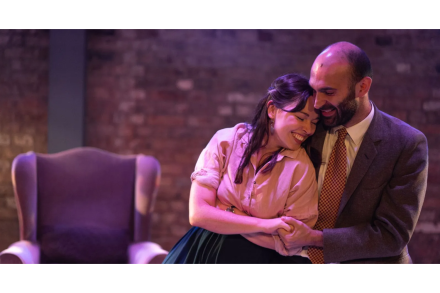
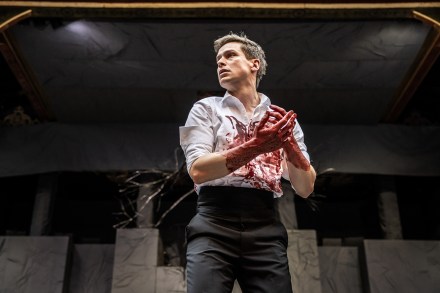
The Swan Theatre has reopened after an overhaul and praise god: they’ve replaced the seats. The Swan is a likeable theatre; the only space in the Royal Shakespeare Company’s portfolio that still conveys a real sense of history, though until 2020 that came at the price of acute posterior discomfort. No more: and we can get on with enjoying the inaugural production, an adaptation by Lolita Chakrabarti of Maggie O’Farrell’s Shakespeare novel Hamnet. It’s a nice fit, and after the RSC’s success with Wolf Hall you can see the logic. It’s Shakespearean without too much of that difficult Shakespeare, plus you get the built-in audience that comes with an award-winning novel.

So good it would have made Ibsen envious: Dixon and Daughters, at the Dorfman Theatre, reviewed

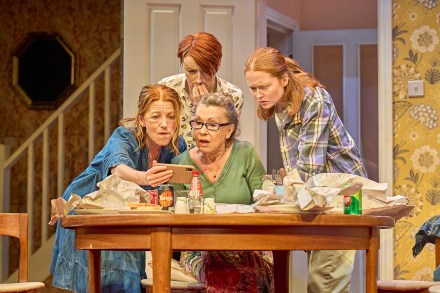
Deborah Bruce's new play Dixon and Daughters is a family drama that opens on a note of sour mistrust. We’re in a working-class home in Yorkshire where a vituperative old crosspatch, Mary, has just returned from prison. Rather than accepting her daughters’ friendly welcome she treats them all with open hostility. Had Ibsen been in attendance, he would have blushed with envy  Her first malevolent act is to try to evict Julie, even though her boyfriend has subjected her to horrific and repeated violence. And Mary is highly suspicious of the absent Briana who has changed her name and is threatening to return home, by force if necessary. What was Briana’s crime? And why is Mary so hostile to Julie who clearly needs her love and support?

Famine zones are more fun than this play: Dancing at Lughnasa, at the Olivier Theatre, reviewed

Snowflakes, an excellent title, rehashes The Dumb Waiter by Harold Pinter. A guest in a hotel room is visited by two intruders posing as staff. The intruders are hired assassins who accuse the guest of committing a half-explained hate crime on social media. His punishment, execution, will be livestreamed as a warning to other hate criminals. Brian Friel’s shrieking bumpkins are exactly what the Arts Council wants us to see It’s a thrilling start but the show lacks tension and the accused’s back story isn’t explained fully. And once the sentence has been carried out, the story becomes predictable. The core idea – freelance killers dispensing justice on behalf of tech giants – would make a great TV series. It needs a lot of development.

A puzzling spectacle: The Secret Life of Bees, at the Almeida Theatre, reviewed

The Secret Life of Bees is a fairy-tale set in the Deep South in 1964. Lily, a bullied white girl, befriends a plucky black maid, Rosaleen, and they escape together from Lily’s tyrannical dad. After various adventures they take sanctuary at a honey farm run by a commune of astonishingly successful African-American businesswomen. This story clearly wants to expose the cruelty of whites and the oppression of blacks but the details suggest the opposite. This is a tale of black self-confidence and white failure. Spineless Lily could never have fled her abusive dad without the intelligent and combative Rosaleen to spur her on. And the all-female honey corporation is a fantasy of African-American empowerment.

An epic bore: A Little Life, at the Harold Pinter Theatre, reviewed

A Little Life, based on Hanya Yanagihara’s novel, is set in a New York apartment shared by four mega-successful yuppies: an architect, a fine artist, a film star and a Wall Street attorney, Jude, played by James Norton. A friendly doctor tags along occasionally and an older lawyer, in his sixties, joins the gang after legally adopting Jude. None of the men has a partner or a family, and they never discuss things like sport, cars, investments, movies or girls. Instead they hug a lot and cook pastries for each other in a kitchenette on stage. The play feels like a joke-free episode of Friends with an all-male cast. And the script might have been written by a teenage girl.

Deeply unsatisfying: Berlusconi – A New Musical, at Southwark Playhouse Elephant, reviewed

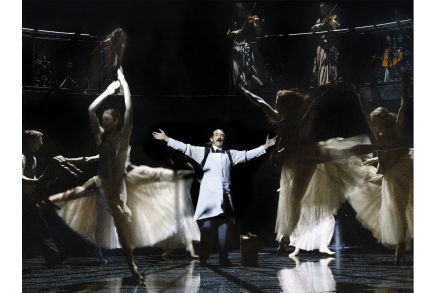
Berlusconi: A New Musical, an excellent title, has opened at a new venue in south London, Southwark Playhouse Elephant. The show begins with the former Italian prime minister preening triumphantly on a white marble set that resembles the Capitol in Rome where Caesar was murdered by rivals who’d grown sick of his power lust. Berlusconi introduces us to his nemesis, a state prosecutor called Ilda Boccassini, who pursues him for years through the courts. With typical coarseness he dismisses her as a ‘haggard old sow’. And yet the pair perform a strange romantic dance that culminates in a bizarre Berlusconi chat-up line: ‘If you weren’t so frigid we’d end up in bed.’ Misogyny is his defining characteristic. Gallantry and charm are alien to him.

Flawless: Accidental Death of an Anarchist, at the Lyric Hammersmith, reviewed

Accidental Death of an Anarchist has been performed all over the world with varying degrees of success. Written by Dario Fo and his wife Franca Rame, the script was inspired by an actual case of police brutality in 1969 when a train driver with anarchist leanings was found dead beneath the open window of a fourth-floor interrogation room. Official reports described the fatality as ‘accidental’. The plot structure is borrowed from Gogol’s The Government Inspector. A senior civil servant arrives in an isolated town and exposes the corrupt and self-serving ways of the townsfolk. After he departs, the civil servant is exposed as an imposter. Here, the authority figure is a mercurial exhibitionist, the Maniac, whom we first meet during a police interview.

Drab by comparison to the film: Bonnie & Clyde, at the Garrick Theatre, reviewed

The murderous odyssey of Bonnie and Clyde is a tricky subject for a musical because the characters are such loathsome wasters and their grisly ambition is to fleece poor people at gunpoint during the Great Depression. They’re famous for stealing from banks but they changed tack once they realised that grocery stores and funeral parlours were easier to rob. The little guy was their real target. In this revived musical, written in 2009, the principal figures have no redeeming qualities at all. Bonnie is a beautiful brain-dead popsicle who dreams of becoming a poet or a movie star. Nowadays she’d be ranting on TikTok from the front seat of an SUV. Clyde is an amoral thug who shoots dead anyone who comes between him and his greed.

A ripping production with plenty of laughs: Guys and Dolls, at the Bridge Theatre, reviewed

Further than the Furthest Thing is an allegorical play set on a remote island populated by English-speakers from all over the world. Dialect experts will have a ball unscrambling the set-up. First we meet Auntie Mill, a white Scotswoman whose husband, Uncle Bill, is a black fisherman with a West Country accent. Their nephew, Francis, is a mixed-race teenager whose verbal mannerisms seem to originate from North Yorkshire. And he has a pregnant girlfriend, Rebecca, who looks east Asian but talks like a Dubliner. This crazy muddle may be a deliberate assault on the entire cult of colour-blind casting. Or it could be a thoughtless embrace of chaos. Either way, it’s baffling to watch. Theatre is all about resemblances and the closer the resemblance, the more successful the play.

Cumbersome muddle: Women, Beware the Devil, at the Almeida Theatre, reviewed

Rupert Goold’s new show, Women, Beware the Devil, has great costumes, sumptuous sets and an intriguing chessboard stage like a Vermeer painting. Impressive to look at but that’s where the good news ends. Dramatist Lulu Raczka should have thought twice before writing a script about witchcraft, which was bound to invite comparisons with The Crucible, one of the greatest plays in the theatrical canon. Raczka is no Arthur Miller. She seems to take a dim view of human beings and her writing feels like a vehicle for her vengeful sense of revulsion. Her female characters are mostly skittish, cackling ninnies and her males are lusty, arrogant, predatory monsters. No figure in this play is remotely likeable and no one has a dramatic goal that makes any sense.

Approaches perfection: Medea, @sohoplace, reviewed

Winner’s Curse is a hybrid drama by Dan Patterson and Daniel Taub which opens as a lecture by a fictional diplomat, Hugo Leitski (a dinner-jacketed Clive Anderson). Leitski offers to teach us the subtle art of negotiation. An expert diplomat, he explains, must convince each side that they’re the winners in the negotiation and that their opponents have lost. In his youth he helped to broker peace between two Slavic nations, Karvistan and Moldonia, and the action switches from Leitksi’s lecture room to a seedy hotel, the Black Lagoon Lodge, where the peace deal was agreed.

How has it escaped being cancelled? The Lehman Trilogy, at the Gillian Lynne Theatre, reviewed

Standing at the Sky’s Edge is an ode to a monstrous carbuncle. The atrocity in question is a concrete gulag, Park Hill, built by Sheffield council in the 1960s as a punishment for hard-up locals who couldn’t afford to buy a house. The show is a propaganda effort on behalf of bossy, big-state, high-tax Labour authorities so the smiling residents of the brutalist eyesore keep telling us how much they love their multistorey dungeon. ‘You can see the whole city from up here,’ say the characters, as if no Sheffield resident had ever mounted any of the bluffs or heights that surround the area. The script is honest enough to admit that Park Hill’s secondary purpose is to reduce the city’s population by encouraging depressives to jump from its upper levels.

A sex farce reminiscent of Alan Clark’s diaries: Phaedra, at the Lyttelton Theatre, reviewed

Simon Stone claims that his new comedy, Phaedra, draws on the work of Euripides, Seneca and Racine. In fact, the porn-mag narrative resembles a passage in Alan Clark’s diaries where the priapic scribbler seduces a mother and daughter in rapid succession. That’s what happens to Sofiane, a homeless Moroccan lecher, aged 41, who has the looks of George Best and the sexy drawl of a Riviera gigolo. He befriends Helen, a senior Labour MP, who shares her picture-perfect London home with her two brattish children and her high-flying husband Hugo, who speaks 15 languages. Helen appears to be starved of sex and male attention, which seems rather improbable for a Westminster insider.

Forgettable romcom with an irritating title: Lemons Lemons Lemons Lemons, at the Harold Pinter Theatre, reviewed

A romcom with an irritating title, Lemons Lemons Lemons Lemons Lemons, has opened at the HP Theatre starring Jenna Coleman and Aidan Turner. Telly addicts will recognise their names. They play two London yuppies, Oliver and Bernadette, who are struggling to communicate properly. Out of nowhere, the state imposes a gruesome new ‘Hush Law’ that forbids citizens from uttering more than 140 words a day. It lasts just 85 minutes and you’ll have forgotten you saw it by the time you get home All kinds of questions arise. Why was the Big Hush introduced? Whose interest does it serve? How is it policed? By overstepping your quota of natter, are you committing a civil or a criminal offence? Why can’t you rely on texts, emails, sign language, Morse Code or semaphore?

These drag queens haven’t a clue how banal their problems are: Sound of the Underground, at the Royal Court, reviewed

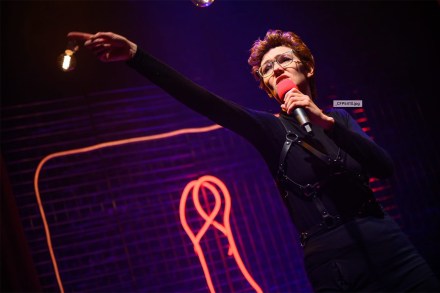
Sound of the Underground is a drag show involving a handful of cross-dressers who spend the opening 15 minutes telling us who they are. Then, rather ominously, they announce: ‘We’ve written a play.’ But they haven’t really. The scene shifts to a kitchen where the drag queens meet to discuss their pay and conditions, and the show turns into an advertisement for their woes. Drag is facing a crisis, we hear, caused by its sudden popularity. Drag queens are in demand from TV bosses and corporate executives but the artistes feel dismayed and traduced by this surfeit of opportunity. They loathe RuPaul, a cross-dresser favoured by the BBC, and they blame him for betraying the true spirit of drag, whatever that may be. One of them calls RuPaul ‘exclusionary’.

Pure, heavenly escapism: The Unfriend, at the Criterion Theatre, reviewed

The Unfriend is a smart new family comedy which opens on the sunlit deck of a cruise ship. Peter and Debbie, a boring middle-class couple, are introduced to a clingy American tourist, Elsa, who worms her way into their affections. Before they know it, they’ve agreed to let her visit them at home after the cruise. A few weeks later, she shows up unannounced. By now the pair have learned from Google that Elsa is suspected of murdering her husband and several other members of her family. But they’re far too nice, and too English, to tell her to get lost. The crafty Elsa forms an alliance with their angry teenage kids, Rosie and Alex, and uses them to shield her from Peter and Debbie’s suspicions. It’s an amusing set-up and the script just about makes it credible all the way through.

Comes close to perfection: Watch on the Rhine, at the Donmar Warehouse, reviewed

Watch on the Rhine is the curiously misleading title chosen by Lillian Hellman for a wartime family drama that became a film starring Bette Davis. The location is not Europe but America and the show opens with Fanny Farrelly, a member of the New England gentry, arriving in her sumptuous drawing room for breakfast. The character of Fanny is an instant classic. A crashing snob, a bundle of nerves, a lethally bitchy matriarch, she dominates her household by cultivating favourites and crushing enemies with her venomous tongue. And yet her servants treat her with tolerance and affection. To them she seems a tricky but essentially decent oddball who needs careful handling. When they complain about her behaviour, she graciously accepts their chastisement and apologises for overstepping the mark.

Clever and witty state-of-the-nation play: Kerry Jackson, at the Dorfman Theatre, reviewed

The National’s new comedy by April De Angelis is a clever and amusing attempt to deliver that most elusive artefact, the state-of-the-nation play. It’s easy to pan this production because the plot lacks surprises and the script is overly indebted to Abigail’s Party. The two lead characters are formulaic creations who reflect political polarities: left vs right, Remain against Leave. Kerry Jackson is a stroppy Essex blonde who loves Thatcher, despises foreigners and supports Brexit. She takes a shine to an overeducated wine snob, Stephen, who rides a bike and lectures in philosophy. Kerry’s new bistro in Walthamstow needs customers and she begs Stephen to post a favourable review in the local free sheet. In return she agrees to hire his mopey daughter as a waitress.

Eccentric triviality aimed at 1970s feminists: Orlando, at the Garrick Theatre, reviewed

Orlando opens with a pack of Virginia Woolfs on stage. All wear the same costume of horn-rimmed spectacles, long tweed skirts and woolly cardigans, and they comply with current diversity targets. There’s a white Woolf, a black Woolf, a mixed-race Woolf, an East Asian Woolf, and a male Woolf with a deep voice who seems to have wandered in from Little Red Riding Hood. The pack of Woolfs chat away about how to tell the story of an English aristocrat, Orlando, who was a teenager in the 1590s. He enters the stage dressed like a girl. (Confusion over sexual identity is the show’s big idea.) After an opaque interview with Elizabeth I, Orlando moves to the Jacobean era, then to Charles II’s court, then to an embassy in Constantinople and so on.

A short history of applause – and booing

A dank Tuesday evening in a West End theatre. The auditorium is barely two thirds full. The play is nothing special – certainly not spectacular. Your neighbour is struggling to stay awake. The reception, however, is tumultuous. The audience is on its feet, squealing, whistling and whooping as though someone has just found the cure for cancer. The house lights come up and the rumpus stops as suddenly as it started. Everyone makes for the nearest exit. This irritatingly mechanical ritual is a phenomenon – imported, I guess, from Broadway – that has recently become ubiquitous in London, never mind the quality of what’s on stage.