Theatre

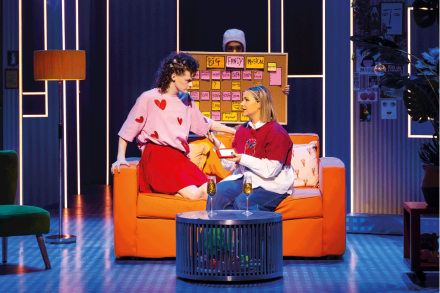
‘Punishingly dull – but the crowd loved it’: Next to Normal, at Wyndham’s Theatre, reviewed

The Constituent is a larky show about violence against female politicians. A strange subject for a comedy. Anna Maxwell Martin plays a vapid but well-meaning MP, Monica, who receives unwelcome attention from a sinister dropout, named Alec (played by James Corden). Alec’s backstory is quite a puzzle. He used to work as an MI6 spymaster in Afghanistan, where he persuaded senior Taliban commanders to operate as double agents. While off-duty he seduced an NHS ward sister who happened to be nursing soldiers on the battlefield in Kandahar. If you want a celebration of spineless masculinity, look no further That, at least, is the story he gives Monica. Alec says he married the nurse but they split up after having kids. Then he started job-hunting.

Riveting and exhilarating: Miss Julie, at Park90, reviewed

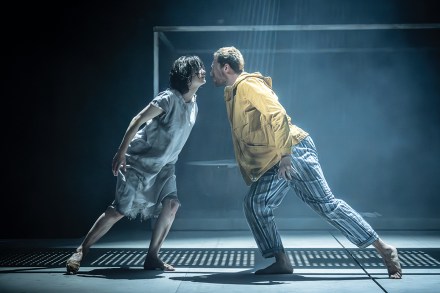
Some Demon by Laura Waldren is a gem of a play that examines the techniques of manipulation and bullying practised by shrinks on anorexics. The setting is an NHS referral unit where Sam, an 18-year-old philosophy student, arrives with a minor eating disorder. Like every patient, Sam is told that her personality is immersed in a civil war and that two implacable forces – the ‘diseased self’ and the ‘whole self’ – are fighting for control of her destiny. It’s a brilliantly simple trick that any bully can learn in a few minutes. If the patient says something unwelcome, the shrink ascribes the statement to the ‘diseased self’ and adds: ‘I don’t negotiate with the disease.

Hard to get to grips with: Marie Curie: The Musical reviewed

Marie Curie: The Musical is a history lesson combined with a chemistry seminar and it’s aimed at indignant feminists who want to agonise afresh over the wrongs of yesteryear. We meet the young Marie, wearing her signature widow’s frock, as she speeds towards Paris on a train from Poland. The essential materials of this musical are hard to get to grips with; the characters stiff, the tunes so-so This opening scene is positively trembling with significant detail. Her fellow passenger, Sarah, is an impoverished Pole who has rejected the advances of a wealthy swineherd and decided to take a job at a Parisian glassworks. Her plan is to save all her wages and buy land in Poland which she will farm herself while sinking the profits into a theatre that specialises in cabaret. Wow.

Eddie Izzard’s one-man Hamlet deserves top marks

Every Hamlet is a failure. It always feels that way because playgoers tend to compare what they’re seeing with a superior version that exists only in their heads. And since disappointment is inevitable, it’s worth celebrating the successful novelties in Eddie Izzard’s solo version. He makes some valuable breakthroughs, especially in the comedic sections. Izzard makes some valuable breakthroughs. His Gravedigger is funny. Actually funny. That’s rare His Gravedigger is funny. Actually funny. That’s pretty rare. He plays Rosencrantz and Guildenstern as sock-puppets whose robotic yapping he imitates with his hands. Brilliant stuff. Well worth copying. His Osric is a greasy, cocktail-party flatterer with a faint Mexican accent. Osric, the Hispanic immigrant. That works too.

Amazingly sloppy: Romeo & Juliet, at Duke of York’s Theatre, reviewed

Romeo & Juliet is Shakespeare with power cuts. The lighting in Jamie Lloyd’s cheerless production keeps shutting down, perhaps deliberately. The show stars Tom Holland (also known as Spider-Man) whose home in Verona resembles a sound studio that’s just been burgled. There’s nothing in it apart from a few microphones on metal stands. He and his mates, all dressed in hoodies and black jeans, deliver their lines without feeling or energy as if recording the text for an audiobook. Some of them appear to misunderstand the verse. Shakespeare’s most thrilling romance has been turned into a sexless bore When not muttering their lines they stare accusingly into the middle distance, like catwalk models. Then a power cut strikes.

Headed for the canon: Withnail and I, at the Birmingham Rep, reviewed

After nearly 40 years, Withnail has arrived on stage. Sean Foley directs Bruce Robinson’s adaptation, which starts with a live rock-band thumping out a few 1960s hits. The musicians take cameo roles as maids and coppers. The show needs a larger cast especially for the tea-room scene – ‘We want the finest wines available to humanity’ – which calls for a big crowd of crumbling old crocks. Never mind. The production would have thrilled diehard fans. As for newcomers, they would probably have been better to start with the film. This production of Withnail would have thrilled diehard fans – newcomers less so Robert Sheehan delivers a glitzy, karaoke version of Withnail which is all surface and very little inner torment.

Fawlty Towers – The Play is the best museum piece you’ll ever see

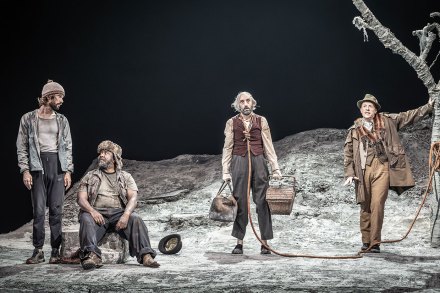
Fawlty Towers at the Apollo may be the best museum piece you’ll ever see. A full-length play has been carved out of three episodes: ‘The Hotel Inspectors’, ‘The Germans’, and ‘Communication Problems’ in which the deaf guest, Mrs Richards, made a nuisance of herself by refusing to switch on her hearing aid in case the batteries ran out. For anyone who saw the sitcom in the 1970s, this is a pleasantly weird show. It’s like returning to a seaside funfair after half a century and finding all the rides unchanged and the staff more or less as you remember them. If Beckett had written family comedies he might have created something as amusing as this Paul Nicholas makes an even better Major than the Major. And his rich, fruity voice is an unexpected treat.

Minority Report is superficial pap – why on earth stage it?

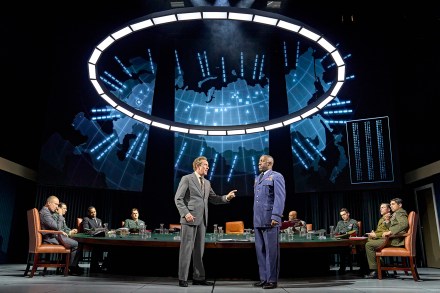
Minority Report is a plodding bit of sci-fi based on a Steven Spielberg movie made more than two decades ago. The setting is London, 2050, and every citizen has been implanted with an undetectably tiny neuroscanner which informs the cops about crimes before they’ve been committed. However, as the first scene reveals, the undetectably tiny neuroscanner can be removed from the flesh with a corkscrew. The character who gouges out her tag is a computer geek, Julia, who invented the surveillance method in the first place. She stands accused of planning a murder and she goes on the run to clear her name. The actors appear to be trapped inside a tangerine lunchbox Sound familiar?

An exquisitely funny sitcom that should be on the BBC

Agathe by Angela J. Davis follows the early phases of the Rwanda genocide 30 years ago. The subject, Agathe Uwilingiyimana, became prime minister on 18 July 1993 but her tenure ended abruptly when she was assassinated by a rioting mob which surrounded the UN compound where she was sheltering on 7 April 1994. She saved her children, according to some accounts, by sacrificing her own life. This is a rough-and-ready play that tells the story impressionistically through monologues, rap lyrics, news broadcasts and reconstructed scenes at the UN headquarters. It doesn’t pretend to offer a full historical account but it generates a horrible mood of impending doom.

Cheesy remake of Our Mutual Friend: London Tide, at the Lyttelton Theatre, reviewed

Our Mutual Friend has been turned into a musical with a new title, London Tide, which sounds duller and more forgettable than the original. Why change the name? To confuse fans of Dickens, presumably, and to keep the theatre half-empty while heaps of tickets are sold at a discount. At the end of Act One, an actor explains the entire plot. This might have been delivered earlier The plot is a cheesy Victorian whodunnit involving three main characters and multiple locations so it’s hard to follow the action as it flits from this lowly hovel to that seedy tavern. The chief personalities are a pretentious lawyer, a psychotic teacher and a shifty lodger who won’t reveal his name.

Player Kings proves that Shakespeare can be funny

Play-goers, beware. Director Robert Icke is back in town, and that means a turgid four-hour revival of a heavyweight classic with every actor screaming, bawling, weeping, howling and generally overdoing it. But here’s a surprise. Player Kings, Icke’s new version of Henry IV, Parts 1 and 2, is a dazzling piece of entertainment and the only exaggerated performance comes from Sir Ian McKellen who plays Falstaff, quite rightly, as a noisy, swaggering dissembler. Those who imagine ‘Shakespearean comedy’ to be an oxymoron will be pleasantly surprised Small details deliver large dividends. The tavern scenes are set in an east London hipster bar with chipped wooden tables and exposed brickwork. Richard Coyle’s Henry IV has been costumed to resemble the chain-smoking George VI.

Why has the National engaged in this tedious act of defamation of the Brontës?

The Divine Mrs S is a backstage satire set in the year 1800, when flouncy costumes and elaborate English prose were common cultural ornaments. On press night the venue was full of resting actors and theatrical hangers-on who adored the show’s in-jokes and rehearsal-room wisecracks. Titus Andronicus is ‘an experimental play about a pie’, says an actor. Another thesp demonstrates how to enliven a dreary line by pretending that one’s character is in love. This tedious act of defamation belongs in the bin. Or the Radio 4 early-evening comedy slot The production looks immensely stylish and the company are clearly having a ball, but the ordinary punter may find it tiresome. A few minutes of pastiche is amusing but this lasts well over two hours and it takes nothing seriously.

Exhilarating: MJ the Musical reviewed

If you’ve heard good reports about MJ the Musical, believe them all and multiply everything by a hundred. As a music-and-dance spectacular, the show is as exhilarating as any Jackson produced while he was alive. The sets, the costumes, the choreography and the live band deliver an amazing collective punch. When he removes his black trilby he looks like Rishi Sunak at a karaoke bar The script, by Lynn Nottage, takes us into Jackson’s twisted personal history. He was one of ten children raised in a four-room shack in Gary, Indiana, by weirdo parents. His mother was a Jehovah’s Witness who refused to celebrate birthdays or Christmas.

If you hate the Irish, you’ll adore this play

Faith Healer is a classic Oirish wrist-slasher about three sponging half-wits caught in a downward spiral of penury, booze, squalor, sexual repression, bad healthcare, murderous violence and non-stop drizzle. The mood of grinding despair never lets up for a second as the healer, Frank Hardy, along with his moaning wife and their Cockney sidekick, motors around the British Isles trying to cadge pennies from cripples in exchange for bogus cures. Every cliché in the rich thesaurus of Celtic misery is brought together in this rancid melodrama about mob justice.

An engrossing new two-hander about Benjamin Britten

Ben and Imo are composer Benjamin Britten and his musical assistant, Imogen Holst. But those cosy pet names tell us where we stand – or at least, where we think we do. The illusion of being inside an artistic clique is at the heart of Mark Ravenhill’s new two-hander, which began life as a BBC radio drama and which he has now opened out into a two-act play about the pair. Alan Bennett did a Britten play a few years back but Ravenhill is sharper, and as directed by Erica Whyman, Ben and Imo just about supports its own length. His Benjamin Britten is bravura – neck stretching forward, then springing back, like a tortoise Which is more than can be said for its subject, Britten’s 1953 coronation opera Gloriana.

Dazzling: Harry Clarke, at the Ambassadors Theatre, reviewed

Sheridan Smith’s new show is more a mystery than a musical. Opening Night is based on a 1977 film by John Cassavetes that failed to attract a major US distributor. After opening briefly in LA, it vanished without trace. It’s a backstage drama about a tattooed drunk, Myrtle, who accepts the lead role in a new play which she starts to dislike. Realising her error, she tries to improve the script at the rehearsals and during preview performances ahead of the opening on Broadway. In real life, an actor who sabotaged a show like this would be fired and replaced. But never mind. This is make-believe. Myrtle’s attempts to vandalise the script are opposed by the producer, the director and the writer, and they each moan to her in private about her behaviour.

As dry as a ghost’s burp: Donmar Warehouse’s The Human Body reviewed

Set in 1948, The Human Body is about four heroic women fighting to create the NHS despite opposition from right-wing extremists led by the ‘snob’ and ‘warmonger’ Winston Churchill. One of these heroic women is a Labour councillor, another is a physician on a bike, the third works at Westminster for a socialist MP and the fourth is a hard-working mother married to a violent drunk. What’s odd about Lucy Kirkwood’s new play is that these four women co-exist within a single figure: Dr Elcock (Keeley Hawes).

Sinister panto about the formation of the NHS: Nye, at the Olivier Theatre, reviewed

A Judy Garland rendition, dancing nurses, a star lead: no spectacle is spared in Tim Price’s new play Nye, which tells the story of Aneurin (Nye) Bevan, the architect of the National Health Service. The drama opens with Bevan being cared for on an NHS ward, slipping in and out of consciousness, on the brink of death. For the nearly three hours that follow, his sickness and his morphine drip plunge him into his ‘deepest memories’, portrayed as a ‘Welsh fantasia’ that tells the story of his life and his creation. Welsh heavyweight Michael Sheen takes on one of the most notable Welsh politicians in modern British history.

This play about Hitchcock isn’t worth leaving the house for

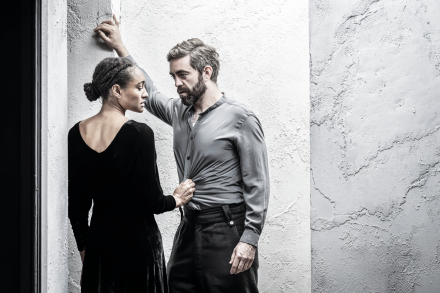
Double Feature is a new play by John Logan, whose credits include Skyfall. The subject is movie-making, and the action is set in 1964 in a Hollywood cottage where Alfred Hitchcock is preparing Tippi Hedren for a nude scene in Marnie. The great director, who made a star of the unknown Hedren by casting her in The Birds, has all the power here. He positively quivers to get her into bed and yet he hesitates because he’s three times her age and nine times her girth. Nobody, not even a director of Kent’s powers, can make a gourmet feast out of two half-eaten pizzas Their interactions have a gruesome master-slave vibe and it’s hard to know whose side to take. The control-freak director who appears physically revolting despite his natty suit?

Devastating: Almeida Theatre’s King Lear reviewed

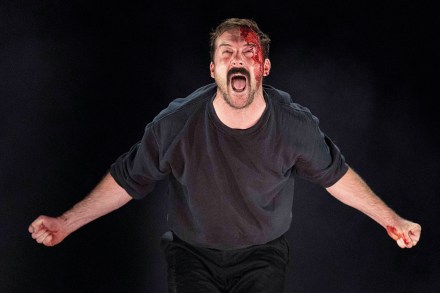
Yaël Farber’s production of King Lear at the Almeida Theatre is imbued with an undercurrent of tension that feels as if it’s constantly on the edge of exploding into violence. It’s not her first crack at Shakespeare – in 2001 she adapted Julius Caesar, and she directed Hamlet at the Gate in Dublin in 2018 and Macbeth at the Almeida in 2021 – but I’d be willing to bet it’s her most virulent. Danny Sapani’s Lear flies into a terrifying rage, scattering microphones across the stage The opening scene – a swanky press conference that could have been lifted straight from an episode of Succession – neatly sets the tone of the snippy relationships.