Music

There’s something about Mary

Music likes to tell the same story over and over again. This is part of its tradition but even individual composers can be drawn back to the same models in attempts to reclothe and reinterpret musical forms and structures and settings of classic texts. This is especially the case with the Crucifixion narrative. Bach is revered for his two Passions — St Matthew and St John — but there have been other ways for composers to relate this story in sound. The Seven Last Words from the Cross is a now defunct liturgical form which attracted the attention of Lassus, Schütz, Haydn, Gounod and César Franck.


Breaking up is hard to do

’Will you be dancing?’ the man in front asks his friend before the lights go down. ‘Most likely,’ she says. Two songs in and it’s looking less and less likely. The world’s best-known Icelander is fronting a 27-piece chamber orchestra in a strings-only performance of songs from her last album (not her most toe-tapping collection). It feels like hard work. Lyrically, Vulnicura (Greek for ‘cure for wounds’) is a blow-by-blow account of her split with long-term partner Matthew Barney. Musically, anything resembling a good tune is hard to find. Each verse of ‘Black Lake’, the album’s mournful centrepiece, ends in a wavering monotone that fades to silence.

Bach to basics

The churning, rheumatic mechanism of a harpsichord — notes needling your ears like drops of acid rain — doesn’t necessarily play well to an audience whose sensibilities have been moulded around the picture-perfect delicacies of the classical piano. J.S. Bach’s freakishly popular Goldberg Variations remains best known through the recording made by the oddball Canadian pianist Glenn Gould in 1955, a record that would bleed unexpectedly into mainstream consciousness. For a whole generation, the sound of the Goldbergs became interchangeable with Gould’s quicksilver fingers — and a collective amnesia grew around the fact that Bach had actually conceived his most famous keyboard work for the harpsichord.

This charmless man

I was looking forward to going to Malcolm Williamson’s opera English Eccentrics set to a text by Edith Sitwell at the Peacock Theatre this week partly because my only experience of meeting the composer was so bizarre, not to say traumatic, that I haven’t been able to face listening to any of his copious output since. Not that there have been many opportunities, since he seems to be neglected in concert, on the radio and to a large degree on CD.

All the way to Memphis

The bad news for old rock’n’rollers is that there’s not much time left to stay at Heartbreak Hotel — these days located not at the end of Lonely Street, but on Elvis Presley Boulevard, Memphis. In October it will close, to be replaced by the demurely named Guest House at Graceland: in reality a swanky new hotel with nearly twice as many rooms as the Dorchester. But this is only the latest addition to Elvis’s former pad since the operating rights were bought by the Authentic Brands Group in 2013.

1976 and all that

Forty years ago, I spent 14 hours in a large field near the A1 in Hertfordshire. I had just taken my O-levels, liked Be-Bop Deluxe, Genesis and Rachmaninov, and often danced my head off to The Who’s ‘Won’t Get Fooled Again’. I was confused about girls and worried that I’d chosen one wrong A-level (Ancient History). In the nation at large, Harold Wilson had resigned as prime minister in March. Under James Callaghan, Britain would wobble further into a strife that marked the late 1970s like a purulent eczema. Pop music would start, rather violently, to reflect it. In the polity these were not confident times. Friends had persuaded me to go and see The Rolling Stones, headlining at that year’s Knebworth Festival, a rock jamboree that had begun in 1974.

Hang the DJs

Electronic Dance Music is dying. You may not have noticed. It may not affect you directly. But it’s a really big thing and, unless your teenage children have already told you, then you heard it here first. In fact, your teenage children are probably still in denial about it, so go and tell them. Get them back for scratching the car or vaping in the kitchen or whatever pitiful infractions pass for rebellion these days. Tell them: sorry, but electronic dance music is dying. Your rave is going to its grave. Ibiza now exerts the same cultural pull as any other barren 220 square-mile island, including the Isle of Man. The DJ has been hung, not by Morrissey as some of us hoped, but by his own corporate greed.

Where should this music be?

This must rank as the most heartbreaking example of premature chicken-counting in musical history. ‘Gotter has made a marvellous free adaptation of Shakespeare’s The Tempest,’ wrote poet Gottfried Bürger to the translator A.W. Schlegel on 31 October 1791. ‘Mozart is composing the piece.’ Three days later, brimming with misplaced confidence, the dramatist Friedrich Wilhelm Gotter confirmed that ‘the edifice is all ready to receive Mozart’s heavenly choruses’. By 5 December 1791, Mozart was dead. Most probably, he never saw Gotter’s Tempest adaptation, although the musicologist Alfred Einstein stirred the pot of Mozartian myth by presuming that the master had set to work on it during his dying days.

I can’t get no Satiesfaction

After peaking at around the tenth instalment, birthday celebrations get progressively less interesting, for their subjects at least. I remember the lunch we held for my great-aunt Winnie’s 100th birthday. It was a jolly affair and she received the toast with a fine speech of thanks. When the cheering subsided, she delivered the speech again, verbatim. Classical music nowadays seems largely to be propped up by birthday celebrations for people who couldn’t care less, mostly because they’re dead. For some decades, the planning of concert seasons has come down to whether the number of years since a composer died or was born has a zero on the end of it.

War on want

Radiohead have been at the top of the musical tree for so long now that it’s easy to forget what an irreducibly strange band they are. Last Thursday, during the first of their three hugely anticipated gigs at the Roundhouse, they uncharacteristically played three popular favourites on the run — in their defence, it was the encore — causing someone in the audience to call out for another one. ‘No,’ replied Thom Yorke with a smile, ‘this is all getting too much fun.

Unsung hero | 12 May 2016

One of the greatest choral symphonies of the 20th century, entitled Das Siegeslied (Psalm of Victory), has been heard only three times since it was composed in 1933. The last performance took place in Bratislava in 1997. The text is a German translation of words from Psalm 68: ‘...as wax melteth before the fire, so let the wicked perish at the presence of God’. One critic has described Das Siegeslied as ‘a shattering, armour-plated juggernaut of a symphony’, whose huge orchestra marches in a frenzy across ‘voice parts conceived wholly in terms of the harsh consonants and barking vowels of German’. Yet there is also captivating beauty: the lapping of harps and muted horns; a serene interlude for a capella choir.

Last words | 5 May 2016

This, my 479th, is to be my last contribution as a regular columnist to The Spectator. I have written here for 33 years and 4 months, a way of life really, and one I have greatly enjoyed. I thank Auberon Waugh in absentia for suggesting me to Alexander Chancellor in the first place; and Charles Moore for keeping me on in the early years, once we were up and running. I also thank three quite exceptional arts editors: Gina Lewis, Jenny Naipaul and the doyenne of these pages, Liz Anderson. Things have moved on from my habitual think pieces, outraged rants, ad hominem demolition of palpable idiots written in the back of aeroplanes.

Sex offender

I saw Prince play once. I was bored rigid but couldn’t mention this to the girls I’d gone with: as far as they were concerned, watching the purple sex dwarf (he was 5ft 2in) masturbating with and fellating his guitar and generally getting off on his sublime pixieness was like experiencing the second coming. Me, I could have done with a few more tunes. I like ‘When Doves Cry’ a lot: the keyboard hook, the demonic guitar, the naggingly catchy tune, the otherworldly vocals that make him sound like some kind of lascivious reptile from Venus. Whenever I hear it, though, I’m reminded of my fundamental problem with Prince: he was a really great pop star who wouldn’t do pop.

Modernist cul-de-sac

The intransigence of Maxwell Davies, Boulez and Stockhausen is coming home to roost. Here were three composers, famous if not exactly popular, who called many shots by the time they died yet whose works were little loved in their lifetimes by the concert-going public and stand little chance of performance now they are dead. How was such imbalance possible? The intransigence had a lot to do with it. People thrill to a bold stance, and they don’t come much bolder than Boulez and Stockhausen in the Sixties. To be fair, Max was a very British version of this attitude. When Boulez died, the French press focused on a national hero whose main achievement, it seemed, had been to impress generations of foreigners while building monuments in Paris, as a true Frenchman should.

Organic chemistry

My old Oxford college, Mansfield, isn’t a famous establishment, though its current principal, ‘Baroness Helena Kennedy’, as she incorrectly styles herself, has raised its profile by lefty networking. (Owen Jones, no less, has lectured there.) The building is pretty, however, and its nonconformist chapel splendid, so long as you avert your eyes from the gruesome stained-glass Reformed divines. The organ was played by Albert Schweitzer and makes a mighty racket. This I know because in the 1980s the chapel was unlocked, which allowed me to creep in after a night on the sauce. I’d pull out all the stops, cackling like Vincent Price in The Abominable Dr Phibes. No pedals, though.

Sound and fury | 28 January 2016

No one is consulted. No one is held to account. No one has the authority to turn it off. How is it that muzak has slipped through every legal control? The blame, I’d say, lies with those who are frightened of silence — with those who spend more money in shops that buzz to a friendly background hum, and laugh too loudly when all around are mute. To moderate their visceral fear of the quiet they cling to cheaply produced, intellectually demeaning and superficially comforting sub-music. Muzak comes in various forms — piped, performed live, and through other people’s headphones, when you can’t actually hear pitched sounds, only a desiccated, insistent beat. Live it can be most memorable. Everyone must have their least favourite story.

Age concern | 21 January 2016

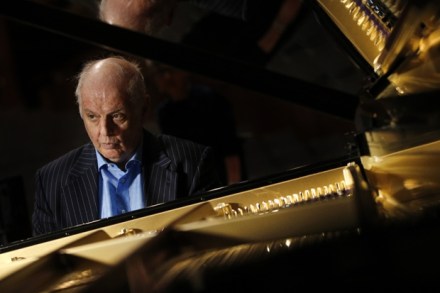
Daniel Barenboim back at the Festival Hall! Cue The Grand March of the Musical Luvvies Across Hungerford Bridge, a bustling overture by Karl Jenkins in which a trombone farts out the epigrams of Simon Callow and the violas mimic the gentle swing of David Mellor’s shoulder-length bob — modelled, I’m told, on Anna Ford’s barnet c.1982. Jolly fine it looked, too, on Sunday night. Barenboim doesn’t have much hair these days, but baldness suits him. Sixty years after his RFH debut, as a 13-year-old playing Mozart under Joseph Krips, he has the same baby-pink skin as Winston Churchill in old age. He also shares Churchill’s belief in his own indestructibility.

Starman

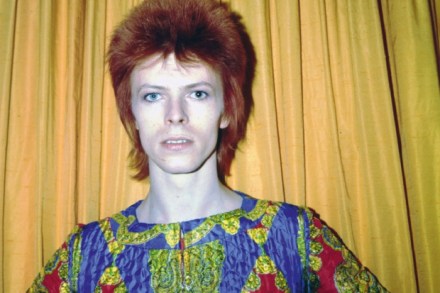
The DJ and sage Mark Radcliffe once said that he didn’t think he could ever like anyone who didn’t love David Bowie’s song ‘Heroes’, and while that might be going a bit far, I can see what he means. As it happens, ‘Heroes’ is still my favourite Bowie song, and Low and Heroes are still my favourite albums, slightly more than 38 years after they were first released. No one told us when we were teenagers that our barely formed music tastes would stay with us for the rest of our lives, but if we didn’t even suspect it then, we know it for certain now. If you do have to die, though, you might as well do it as Bowie has just done, without anyone outside your intimate circle having an inkling and thus with dignity and integrity intact.

Boulez est mort

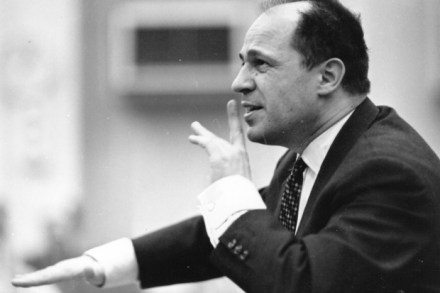
Pierre Boulez, who died last week at the age of 90, would have been the last person, one hopes, to want a unanimous chorus of praise to surge from the media, to an extent that has not been seen at the death of any other classical musician — certainly not at Stravinsky’s, to mention one far greater figure. His fellow musicians have been among the most fulsome: ‘He taught us how to listen, he gave us new ears,’ said Sir Simon Rattle, and on the many specially devised programmes others have made similar claims, if less succinctly. They really ought to know better. That kind of remark shows the same ignorance of and contempt for history as Boulez himself delighted in.

Murder, he wrote

The allure of Carlo Gesualdo, eighth Count of Conza and third Prince of Venosa, has been felt by music-lovers from the humblest madrigal singer to the likes of Stravinsky, Boulez and Werner Herzog. Now, just three years after celebrating the 400th anniversary of his death in 1613, his birth in 1566 gives us a second chance to remind ourselves of that heady mix of murder and chromaticism that so famously characterises his life and work. For most classical composers the music is the way into the biography. Beethoven’s deafness becomes interesting once one has got to know the Missa Solemnis. Enquiry into the circumstances that surrounded Mozart’s death begins with hearing the Requiem.