Music

Musical maestros and football managers have more in common than you think

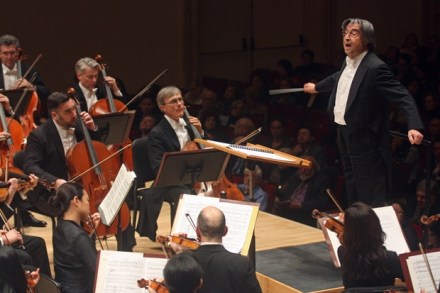
You don’t have to be a follower of Liverpool Football Club, or football at all, to spot the difference. Two months ago the Reds were running about headless as a newly wrung chook; today they are putting the fear of perdition into the best teams in the land. Or take Leicester City. Last season they were locked in an epic, desperate small-town struggle for Premiership survival. Today, they are top of the League. What changed? Both teams have the same players as before, same strip, roughly the same formation. The only new face is the manager’s. Change the boss and — presto — the mood picks up, tempi get faster, goals are scored, confidence rises and everyone charges around with a smile on their chops.

Bored by Brahms

Brahms’s Clarinet Quintet begins, writes his biographer Jan Swafford, with ‘a gentle, dying-away roulade that raises a veil of autumnal melancholy over the whole piece: the evanescent sweet-sadness of autumn, beautiful in its dying’. This being late autumn, I listened to the quintet on Sunday to see if its ‘distillation of Brahmsian yearning’ still made an overwhelming impression on me. It did. I swear these are the most miserable 35 minutes in classical music. One critic refers admiringly to the display of ‘every super-refined shade of silver-grey regret’. But that’s the problem.

Fantasy on ice

In this exciting new era of Spectator cruises I have been put in mind of a dream event long in the planning: to hear Allegri’s Miserere on ice, specifically on the ice of Antarctica. A number of things came together to put this on my bucket list, from the thought of dressing up like penguins (as usual) while we sing to penguins, to reading in the press that the Tallis Scholars ‘have performed on every continent on the planet except Antarctica’. I want to fill a boat with like-minded enthusiasts and adventurers, and set off from South America via the Falklands to the Antarctic Peninsula, hoping to make a landing and a concert at Paradise Bay.

Maximum Bob

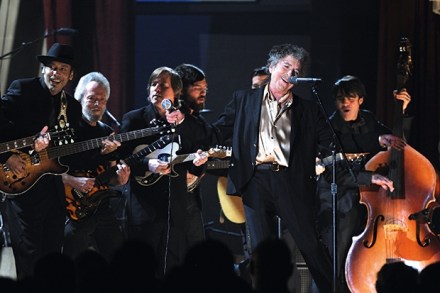
We were like four hapless contestants on University Challenge. None of us knew the answer. But just like they do on the telly, I leaned learnedly across towards my 28-year-old son, who in turn looked despairingly towards one of my stepsons, before my other stepson made his contribution with a shrug of the shoulders. So, it was up to me as captain of the team to take a guess as the first few bars wafted through the Royal Albert Hall. ‘“Tangled Up in Blue”?’ I proffered with as much enthusiasm as Jeremy Corbyn at a white-tie dinner. But, fingers on the buzzer, there were far bigger questions to be answered.

Why I’m glad my piano teacher spent more time chatting than teaching

At the entrance to Marylebone railway station is an old piano that anyone can play. Unfortunately, whoever had this sweet idea can’t be bothered to fix the broken notes. Even so, about once a fortnight, on my way back from visiting my mother in Gerrards Cross, I put down my shopping bag and bash out Chopin’s Waltz in C-sharp minor. As I do, I invariably think about Mrs Irene Oates, the first proper eccentric I met. She was my only piano teacher and I’m grateful to her. On the other hand I’m not very good, even by amateur standards, and she’s partly to blame. When I was 11, my mother told me that she’d spoken on the telephone to a lady who was going to teach my sister and me the piano.

Deadlier than the male | 17 September 2015

Last week a 17-year-old girl forced the Edexcel exam board to change its A-level music syllabus to include the work of women composers. Jessy McCabe, a sixth former at Twyford Church of England High School in London, started a petition after studying gender inequality. Good for her, you might think. But is it good for A-level students? A delicate question lies at the heart of the subject of female composers, and it’s not ‘Why are they so criminally underrepresented in the classical canon?’ It’s ‘How good is their music compared with that of male composers?’ Ms McCabe told the press that ‘I’d quite like to learn about the music of Clara Schumann.’ OK, let’s start there.

Going for a song | 10 September 2015

This column does like a bargain. Indeed, it not only esteems and relishes a bargain, it has also worked long and hard to prove Milton Friedman wrong. Sometimes there really is such a thing as a free lunch. And for those of us still wedded to the notion of owning music on some kind of solid, tangible medium (vinyl, CD, dusty box of cassettes at back of cupboard), these are great, cheapskate-friendly years in which to be alive. Almost every song ever recorded can be bought for a song. And still we mothwallets can claim the moral high ground, because we’re not actually stealing it, unlike everyone under 40. As Fagin once sang, ‘In this life, one thing counts. In the bank, large amounts.

Bad conduct

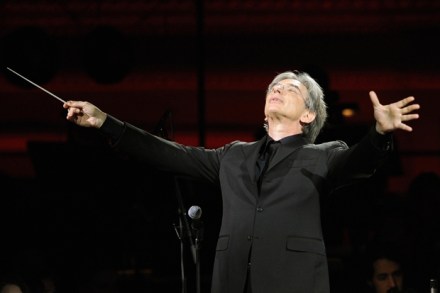
To be honest, my friendship with Michael Tilson Thomas hasn’t gone quite as I had hoped. It started in February 1990, when he chose a Tallis Scholars track for one of his desert island discs. This was a movement from a mass by Josquin des Prez, that he said (apparently impromptu) was music which ‘completely comforts me and brings me into a state of tranquillity’. I thought I might have found a new messiah. For many years now I have had the hope of meeting an orchestral conductor who is prepared to take on the challenges of performing a major work from the unaccompanied choral repertoire. Of course there have always been those who have included choral society-type singing in their symphony programmes.

The greatest pianist you’ve never heard of

William Kapell was an American concert pianist with the looks of a male model and the fingers of a wizard. He played the concertos of Rachmaninov at dashing speed but with delicate precision. He was snapped up by RCA in 1944 at the age of 22 and the world’s leading conductors queued up to accompany him. In October 1953 he toured Australia. On his last night there he visited Jascha Spivakovsky, a pianist who had escaped the Russian pogroms as a child, settled in Berlin and then fled to Melbourne after Richard Strauss warned him that he was on a Nazi hit-list. He spent the war helping fellow émigrés escape. That was one reason he never signed a recording contract. Also, Australia didn’t have a classical label.

Cuban comet

By chance, my first night in Havana in 1987 was the night the clubs went dark to mark the death of Enrique Jorrin, the inventor of the cha-cha-cha, whose rhythmic brainstorm had gone global. My grandparents used to dance cha-cha-cha at Latin nights at the Grand Hotel in Leicester in the 1950s. Rubén Gonzalez, Jorrin’s pianist, thought that his death spelled ‘the end of the old music’ and went into retirement, his piano destroyed by termites in the tropical humidity. Another contemporary who didn’t quite make his mark was Ibrahim Ferrer — he’d been in a moderately successful band Los Bucucos. Ibrahim retired at about the same time, for similar reasons to Rubén — the work had dried up.

Music to write books by

I have been writing a book this summer, in the usual mad tearing hurry. (Much as I admire those who take four or five years to write one, I have to ask, how do you eat? This isn’t by any means a sensible way of making a living.) Intense workload, though, means music, and lots of it. Many writers simply cannot work with tunes blaring out of nearby speakers; I cannot work without them. Music masks my tinnitus and distracts the part of my brain that would otherwise be trying to distract me from my work. You know, the Facebook part. The videos-of-cats part. The Marks & Spencers chocolate-covered shortbread part.

Orchestral infallibility

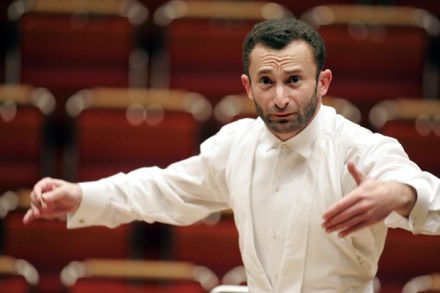
Watching the Berlin Philharmonic going into conclave to choose a successor to Simon Rattle — after countless hours of secret discussion they have chosen Kirill Petrenko — reminds one of little less than the election of a pope. In both cases the expectation is the same: the organisations are so iconic that they must continue into the future without a hitch and without question. Whatever sort of job they are doing, or have done, they have become too much a part of normal life to be abolished. Why is it that symphony orchestras of any standing are expected to survive indefinitely, where smaller musical organisations, though they may be just as established, are not? What are the long-term prospects for the Monteverdi Choir after John Eliot Gardiner retires?

Wish list

Compilation schompilation. Having been in music for as long as I have you would think I had a good idea how record companies work. I’ve made two compilations before. But it’s a whole new big thing now in the music world. Ministry of Sound have offices of people whose full-time jobs are about clearing tracks and licencing them for compilations. These are usually for dance music albums, very expertly mixed by specialist DJs. Mine was to be a bit different, spanning 50 years of music. We’d agreed on a three CD release. Ministry said just give us a wish list of around 100 or 150 tracks, and we’ll check on what can clear. They expected many tracks would be refused — permission declined. But actually a surprising number were yeses.

He wuz robbed!

Lucas Debargue, a 24-year-old French pianist, came fourth in the finale of the Tchaikovsky competition in Moscow on 30 June, yet he’s the only competitor anyone is talking about. Why? The main reason is that they’re riveted by his backstory. Have you noticed how we all say ‘backstory’ these days, instead of boring old ‘background’? It’s defined as ‘the things that have happened to someone before you first see or read about that person in a film or story’. Neal Gabler wrote a book called Life: The Movie, about our entertainment-obsessed society’s urge to stretch and squash everything from terrorist attacks to an argument at the checkout into an imaginary plot.

Première league

This year the Proms are to stage 21 world premières and 11 European, UK or London premières. It is good to see the corporation continuing its mission to encourage new music, though some think they overdo it. I heard one of our leading keyboard players say that when he was asked to première a piece recently, he replied that he would rather dernière it. Clearly the BBC takes a more hopeful view. The most eye-catching new work in the series, leaving Whitacre out of it for now, will surely be the Fourth Symphony of our latest musical knight, Sir James MacMillan.

The beat goes on

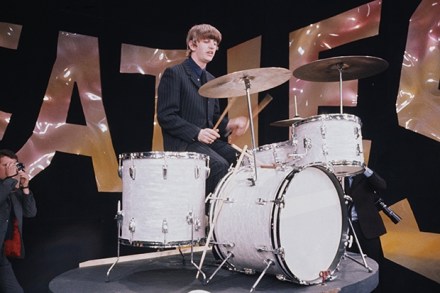
It’s rare that I see a piece about music that makes me want to cheer from the rafters and shake the perpetrator by the hand, but one such appeared in these pages last week on the subject of Ringo Starr, 75 this week. James Woodall, who may or may not be a Beatles tragic of the first water, argued that Ringo was a genius and that the Beatles were lucky to have him. True Beatles fans know this to be true and are enraged when anyone suggests otherwise. For years an urban myth had it that John Lennon, when asked if Ringo was the best drummer around, said that he wasn’t even the best drummer in the Beatles. But as Woodall reported, Lennon never said this. Jasper Carrott did, in 1983.

Glastonbury knight

I had meant to write a dispassionate account of this year’s Glastonbury, really I had. But I’m afraid my plans were ruined by a chance encounter on the final day with my old friend Michael Eavis — the distinctively bearded dairy farmer who founded it 45 years ago. Rather sweetly he has got it into his head — long story — that I once helped him save the festival. Gosh, I hope this is true because it would annoy so many people: suck on that, all you Guardian readers, you lefty stand-ups, you Greenpeace activists. Every time you go to Glasto from now on you must offer a silent prayer of thanks to the Prince of Darkness himself. ‘You coming to see The Who tonight?’ said Eavis. Usually, I like to leave early to avoid the traffic.

Maestro maker

When Margaret Thatcher imagined perfect power, she thought of the orchestral conductor. ‘She envied me,’ said Herbert von Karajan, ‘that people always did what I requested.’ Power, however, is a mirage that fades as you get close. What Mrs Thatcher saw were the trappings, never the essence. Great conductors might get the glory, but someone else pulled the strings. Behind every power there is a greater force. Behind every conductor, there was Ronald Wilford. It is hard to think of Wilford, who died last week, aged 87, without a sneaking admiration. A self-schooled Machiavellian, a Mandelson of music, he invented a chimera of ‘the great conductor’ and, as president of Columbia Artists (CAMI), sold it at unimaginable profit.

Forward thinking

The award of a knighthood to the composer James MacMillan will have ruined last weekend for lots of unsavoury people: the Guardian arts desk, which decided he’d lost his mojo as soon as he turned his back on the left; Kirsty Wark, whose squawking is mimicked in MacMillan’s Scotch Bestiary; the SNP, which he detests; and, most of all, the Nats’ religious front organisation, the Scottish Catholic Bishops’ Conference. OK, enough point-scoring. MacMillan has been honoured because he turns out glorious music. He’s also rare among living composers in having worked out an answer to the question raised when John Cage pushed sound to the point where nothing short of the soloist defecating on stage could shock audiences: ‘Where do we go from here?

The pretenders

Like a lot of essentially cautious people, I like my music to take some risks, play with fire and damn the consequences. In truth, of course, most musicians are every bit as conservative as the rest of us: they do whatever it is they do and if it sells, they keep on doing it until they drop. Three small cheers, then, for Mumford & Sons, who with their recently released third album took a completely unexpected swerve away from the phony banjo-intensive folk that had made their name and their fortune, into the stadium rock’n’roll they have obviously always wanted to play.