Music

Period drama

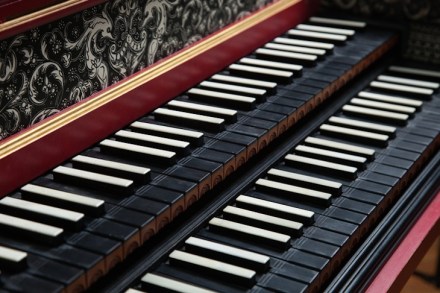
Harpsichordists are supposed to make love, not war: Sir Thomas Beecham famously compared the sound they make to ‘two skeletons copulating on a tin roof’. But now two masters of the instrument, the Iranian-American Mahan Esfahani and the German Andreas Staier, are locked in mortal combat. For connoisseurs of finely tuned insults, it’s riveting stuff. For their colleagues it’s a wretched business, because one of the two musicians is setting fire to his own reputation. Also, a third harpsichordist — a gifted young Frenchman, Jean Rondeau — has been cruelly dragged into the feud. It goes without saying in period instrument circles that Esfahani picked the fight.
Bingeing on Bach

Coined in 1944, ‘completism’ is a modern term for a modern-day obsession. What began as a phenomenon of possession — whether of comic books, records or stamps — has evolved in the age of Spotify, Netflix and cloud computing. No activity defines current cultural trends better than binge-watching, completism taken to its logical extreme: art turned extreme sport. It’s an attitude that has found a natural home in the concert hall and opera house (what is Wagner’s Ring Cycle, after all, if not the original box set?) where length has long been fetishised and endurance accepted. But just as new media has changed the way we make art, so new contexts have changed how we consume it.

Secrets and spies

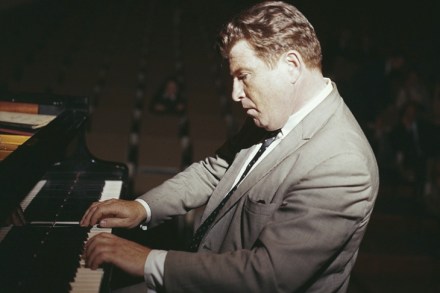
Spare a thought for Emil Gilels, still revered today by Russians as the foremost pianist of the Soviet era. The first to win a competition abroad (Brussels, 1938), Gilels was also first to be let out after Stalin died to reconnect cultural ties and earn hard dollars for the state coffers, of which he got back a few cents. Universally acclaimed, Gilels made countless recordings, among them an unsurpassed pair of Brahms concertos on Deutsche Grammophon and a transcendent set of Grieg’s Lyric Pieces, a performance so revelatory I use it to demonstrate the inexpressible difference between an interpreter of genius and all the rest. Gilels, abroad, played the role of Homo Sovieticus. At home, he was a haunted man.

Beyond comprehension

The London Philharmonic Orchestra’s ‘Belief and Beyond Belief’ season is drawing to a close, without making it in any degree clearer what it was supposed to be about. Many major works have been played, and the season will end with Eschenbach conducting Beethoven’s Ninth. But then any series of concerts with a pretentious name ends in that way; in fact, I have devised several imaginary series of that kind myself, and will gladly forward the details to any orchestra looking for a grandiose rubric. I would be grateful if whoever devised the name of this current season would tell me what ‘Beyond Belief’ means.

Mission impossible?

Just before Peter Donohoe played the last of Alexander Scriabin’s ten piano sonatas at the Guildhall’s Milton Court on Sunday, the autograph score of the piece was beamed on to the wall behind him. It was just a glimpse —- but enough to show us that Scriabin had the most beautiful musical calligraphy of any composer since Bach. On the face of it, that’s surprising. You would expect the Cantor of St Thomas’s to inscribe neatly — and indeed baroque musicians often play Bach straight from his own manuscripts, preening as they do so. But Scriabin is often regarded as a messy composer, in thrall to the mystical fads of pre-revolutionary Russia. So you might envisage a scrawl covered in ink blots and frenzied crossings-out.

Passion indeed

‘The dripping blood our only drink/ The bloody flesh our only food…/ Again, in spite of that, we call this Friday good.’ In spite of that. Anglo-Catholic convert T.S. Eliot knew a thing or two about Easter. The Passion story might end with resurrection and redemption, but it’s a celebration that we achieve in spite of agony, torture and abandonment, a tale whose root lies in the Latin ‘passio’, meaning suffering. Musical Passion settings are no different — or shouldn’t be. A performance of Bach’s St John or St Matthew Passion should disquiet, even distress, as much as it consoles.

The decade the music died

For much of the past half-century, London has been the world’s orchestral capital. Not always in quality, but numerically without rival. Five full symphony orchestras and twice as many pint-sized ones kept up a constant clamour for attention. Each month brought new recordings with premier artists. Every orchestra had its own ethos, history and thumbprint. The Philharmonia was moulded by Karajan and Klemperer, the London Philharmonic by Boult and Tennstedt, the Royal Philharmonic by Beecham, the BBC by Boulez and the London Symphony Orchestra by its high spirits. Tales abound of maestros departing with a punch on the nose and beer bottles rolling in rehearsal. All of which added greatly to the sum of human happiness. London musicians, always cheap, learned to be quick.

Rued awakening

It’s always promising when the orchestra won’t fit on the stage. For the UK première, some 97 years after it was written, of the Danish composer Rued Langgaard’s Sixth Symphony (The Heaven-Rending), the BBC Scottish Symphony Orchestra filled every available inch of platform space, with four additional trumpeters perched in the choir seats. Everything was set for what the conductor Thomas Dausgaard described, pre-concert, as a ‘cosmic struggle between good and evil’. And god knows, it certainly made a fantastic noise. In a venue as compact as Glasgow City Halls, the onslaught of two sets of timpani had an almost physical impact. You felt the air wobble.

All’s well that ends well | 23 March 2017

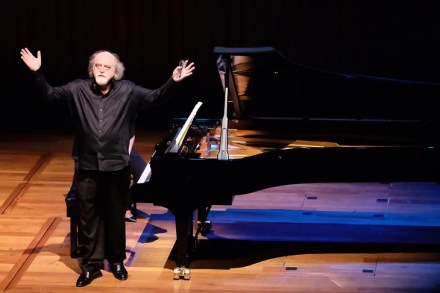
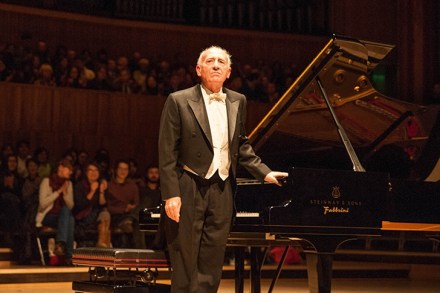
There’s a moment in the finale of Beethoven’s Appassionata sonata when the frenzied piano writing turns unexpectedly jolly. The late Antony Hopkins described it as a bit of an anticlimax, ‘a little too near to the traditional Gypsy Dance that appears so often in the less probable 19th-century opera’. I’m not sure whether I agree — but one thing I can tell you is that this is the perfect moment to tap the Uber icon on your phone if you want to be whisked away during the first burst of applause, before the pianist has had the chance to play an encore. That’s the effect Maurizio Pollini’s playing has on me.

Sound storms

Nothing pleased Iannis Xenakis more than a great big rattling storm. The sound of a thunderclap would have him running out of his home half naked to join the elements. If he was at sea, he’d sniff out any lightning and sail his yacht directly at it. The Greek composer was what we might call a hard bastard — a musical Ray Mears. As part of the Greek resistance during the war — battling first the Nazis then the British — Xenakis lost an eye to shrapnel. His compositions betray the same traits: those of the adrenalin junkie, the adventurer, the kamikaze. What would happen if I composed a piece solely made up of the swooping sounds we call glissandi, he asks in Mikka ‘S’ (1976). Apart from make the audience seasick?

Drake’s progress

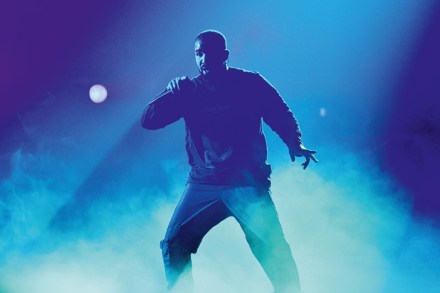
Those poor Canadian rappers. Hailing from a country with a functioning benefits system, sensible firearms restrictions and relatively harmonious race relations, it must be a job convincing people of their authenticity. Aubrey Drake Graham, however, has risen above this cruel accident of birth — in Toronto, to a white Jewish mother — to become not only one of the world’s most respected rappers, but its biggest pop star too. For a man with the world at his feet, Drake manages to find an impressive number of things to complain about in his lyrics, from fickle friends to the administrative headache of paying two mortgages. But if the approval of others is all he really needs, he certainly got it at a sold-out O2.

Age concern | 9 February 2017

Brahms didn’t always have a beard. The picture in the London Symphony Orchestra’s programme book showed him clean-shaven, and rightly. The beard didn’t reach its final imposing form until 1878, around the time Brahms started sketching his Second Piano Concerto. (‘Prepare your wife for the grisly spectacle,’ he wrote to his friend Bernhard Scholz, ‘for something so long suppressed cannot be beautiful.’) But this concert opened with the First Piano Concerto, premièred in January 1859 when the composer was still a few months short of his 26th birthday. Younger, in fact, than tonight’s conductor — the 26-year-old Alpesh Chauhan — and not much older than the soloist, Benjamin Grosvenor.

Bruckner by numbers

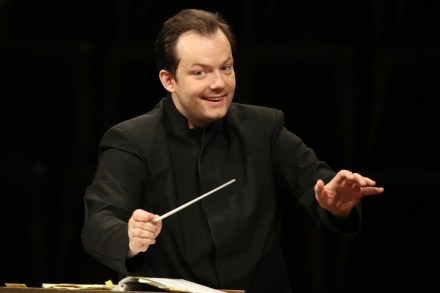
It used to be said that Bruckner composed the same symphony nine times, whereas, thanks to the comparative frequency of performances now, we know that his nine numbered symphonies are as different from one another as Beethoven’s nine. Nothing could make that clearer than the performances of the Fifth and the Ninth given by the Philharmonia Orchestra under Andris Nelsons, three days apart, at the Royal Festival Hall. The Fifth, as befits its stature and length, was given alone. It is Bruckner’s most demanding symphony both to listen to and to conduct. Nelsons is still, I think, at an early stage in his Brucknerian pilgrimage, and his account of the work was not a complete success, but then very few are.

The xx: I See You

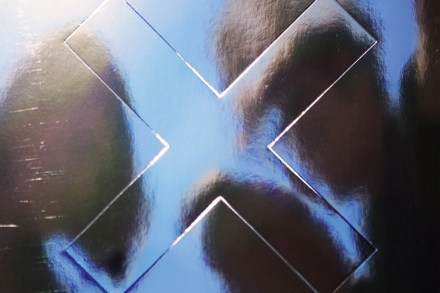
The xx is a trio of Londoners whose eponymous first album, released in 2009, has defined the way pop music sounds today. I remember knowing, when it came out, that I was listening to something both distinctive and familiar, which is usually an indicator of success. The schtick was to plunder various music canons which they were way too young to have heard first hand — Nineties house and rave, lachrymose mainstream Eighties synth-pop, angst-ridden shoegazing — strip it down and mix it all up with very clever beats, provided by the genuine talent of Jamie Smith. ‘Radically pleasant’ is what I thought at the time, a little sniffily, and also somewhat precious.

Safe and sound

This week the Southbank Centre began its ‘Belief and Beyond Belief’ festival — a series of concerts and talks claiming to explore the influence of religious inspiration on music. Last summer, after reading its miserably right-on publicity material, I wrote in this column that ‘Beyond Parody’ might be a better title. Jude Kelly, the Southbank’s artistic director, accused me of jumping to conclusions before the programme had been finalised. Well, now it has. In addition to concerts with no discernible connection to their composers’ faith, we’ll be treated to ‘How to be a Shaman’, ‘Mindfulness’, ‘What If God Was A Woman?’ and ‘Right to Die?’.

Apocalypse now | 29 December 2016

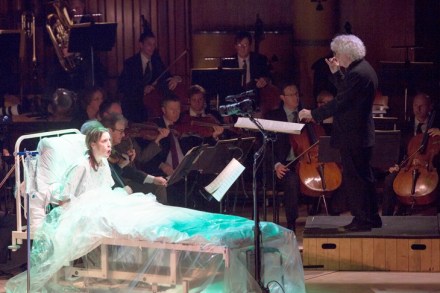
Gerald Barry loved playing organ for Protestants as they allowed him a lie in. Then they found out he wasn’t Protestant and sacked him. When he moved to a Catholic church, he was forced up at the crack of dawn, so he punished the congregation by not giving them the chance to breathe between verses. He has a similarly cruel approach to the singers in his latest opera Alice’s Adventures Under Ground, whose voices he puts through the wringer, compelling them to squawk or chunter — or recite the ‘Jabberwocky’ in German. Barry has to be one of the most enjoyably contrary composers alive, but he is also, I fear, a sociopath, and I’m not sure the two things are entirely unrelated.

Brahms’s benders

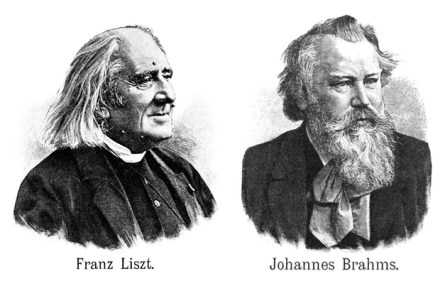
‘Brahms and Liszt’ is a lovely bit of rhyming slang, but it doesn’t have the ring of authenticity. Can you really imagine cockney barrow boys whistling tunes from the Tragic Overture and the Transcendental Études? Also, the Oxford English Dictionary reckons it only dates back to the 1930s. It always made me snigger, though, because it conjured up an implausible vision of pompous beardy Johannes and the social-climbing Abbé rolling around legless. Not so implausible, it turns out. The other day I was reading a review of a new life of Liszt by Oliver Hilmes that reveals ‘hair-raising episodes of drunkenness’ in his later years.

Audience with the King

Elvis Aron Presley departed this world on 16 August, 1977. Even if you delight in conspiracy theories and believe the film Elvis Found Alive was a documentary, he is currently unavailable for personal appearances. So his presence at the O2 Arena and five other UK cities in November was confined to giant screens. Actually present on the stage beneath was the Royal Philharmonic Concert Orchestra under conductor Robin Smith plus a rhythm section and three backing singers. It’s not the first time something like this has been done — former members of Presley’s band took a similar show around the world and it worked surprisingly well.

Magnetic north | 10 November 2016

Years ago, when I met a famous concert pianist, I was surprised when he greeted me in a northern accent. A soft one, mind you, but completely intact. I’d assumed that, by the time a conductor or soloist reached a certain level of fame, the northern vowels would have been erased by Received Pronunciation or some painful mid-Atlantic hybrid. I was such a little snob in those days, affecting a languid drawl that had my old schoolfriends in Reading rolling their eyes. But my social climbing had at least given me a good ear for other people’s doctored accents. London was crawling with northern choirmasters and music critics whose self-taught ‘posh’ accents were about as convincing as home-tinted hair (which, incidentally, some of them also sported).

Grave goods

There’s a folder in my computer’s external hard drive in which you’ll find 24 complete recordings of the Bach Cello Suites, 100 recordings of Beethoven’s Fifth Symphony, 97 of his Sixth, 107 of his Seventh, 65 of Bruckner’s Seventh, 26 of Debussy’s La Mer, 44 Fauré Requiems, 25 Mozart Requiems, 79 Mahler Sixths and 45 Rachmaninov Second Piano Concertos. That sounds as if I’ve moved beyond anorak collecting to compulsive hoarding; or maybe I have delusions of presenting Building a Library on Radio 3 (‘… but only Tennstedt, with his impulsive diminuendo, grasps that the second subject is tragically compromised by the shift to C sharp minor’). Actually, I didn’t really collect them. Someone else did.