Music

Beauty and the beast

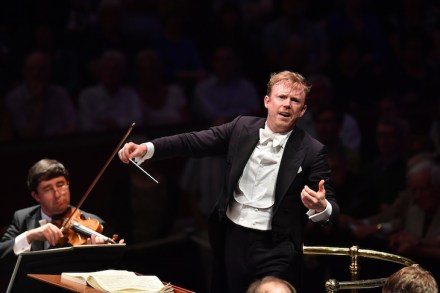
I was going to start with a little moan. About the shouty marketing, the digital diarrhoea, the sycophantic drivel, which, like a bad smell, hovered over Simon Rattle’s ten-day coronation. But then came the most amazing Rite of Spring I’ve ever heard and to moan suddenly seemed criminal. No masterpiece is harder to pull off than the Rite. So often it deflates midway and never regains its shape. Rattle made his name with the piece when he was at the City of Birmingham Symphony Orchestra, taming the brute, slowing it down, prising open its interior, allowing us to inspect its fangs, look straight down its snappy gob. Here, the beast was unleashed. Rabid brass, uncontrollable winds, strings scything through the rabble behind.

Director’s cut | 21 September 2017

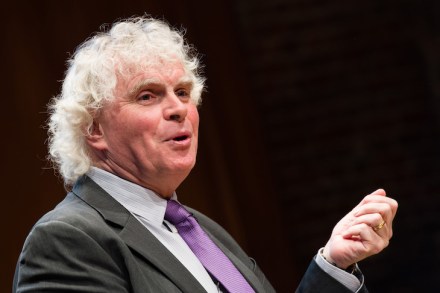
Much fuss has been made of the title given to Sir Simon Rattle on arrival at the London Symphony Orchestra. Unlike his LSO predecessors — Valery Gergiev, Colin Davis, Michael Tilson Thomas, Claudio Abbado, André Previn — all of whom were engaged as principal conductor, Rattle has been named music director, a position that bears serious administrative responsibilities. As Rattle put it recently in one of a dozen media interviews: ‘Valery wasn’t interested, nor Claudio. Colin loved them to bits, but he made it very clear that he did not want anything to do with the running or the auditions or the personnel… I will be much more involved with the day to day.’ But will he?

The sound of no hands clapping

‘We’re going to live for ever!’ declares Robert Powell as Gustav Mahler at the end of Ken Russell’s 1974 biopic. We’ve just had the big reveal (Russell said it ‘out-Hollywoods Hollywood’) in which Mahler admits to his young wife Alma that she inspired the lyrical theme in the first movement of his Sixth Symphony. It’s a tale for which the only source is Alma herself, but hey, over the course of the movie we’ve already had exploding garden sheds, interpretative dance and Cosima Wagner in fetish gear. Russell cues the music, and few film-makers have understood better how to cut to a composer’s emotional core. As the credits roll, the first movement of Mahler’s Sixth blazes triumphantly to its close, glockenspiel jangling.

Northern rock

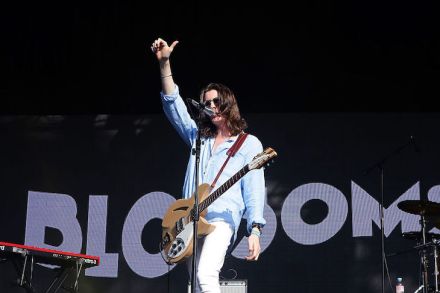
A fortnight ago, the debut album by a young British guitar band entered the chart at No. 6. You might have expected to see this pored over with some interest by the press, for whom the search for the New Arctic Monkeys, the New Oasis and the New Smiths has long been a matter of urgency. Instead, you will scour the daily newspaper arts pages in vain for mentions of the Sherlocks, and you won’t fare much better looking at the specialist music magazines. According to the self-anointed tastemakers of British pop, they might as well not exist.

Bowled over by Bruckner

The two Proms concerts given on consecutive evenings by the Royal Concertgebouw Orchestra were well planned: a short opening work, and after the interval a long and demanding symphony. Moreover, the big symphonies were by Bruckner and Mahler, to the latter of whom this orchestra has been devoted almost since its foundation. Willem Mengelberg, the orchestra’s chief for 50 years, was the only conductor, Mahler said, that he could trust with his works, and the orchestra has been headed by a succession of distinguished Mahlerians ever since.Bruckner, meanwhile, entered the orchestra’s repertoire in a major way in the 1950s, and has been there ever since.

Twin peaks | 24 August 2017

Schoenberg began Gurrelieder in 1900, but he didn’t hear it until 1913. By then, he’d moved on, and he ostentatiously refused to acknowledge the applause for what (as it turned out) would be the greatest public triumph of his career. Radical artist snubs ignorant masses: it’s a gesture that could stand for much of classical music’s post-1913 history. Even today, you won’t get far into a discussion with contemporary music buffs before someone declares that concertgoers need to be ‘educated’. Which always reminds me of a friend’s account of the night at Reading when Guns N’ Roses decided to play new material instead of the hits that the audience felt they’d paid to hear.

Mistaken identity | 24 August 2017

This year’s Lucerne Festival is given its identity by having as its theme ‘Identity’. Since the word doesn’t mean anything, that isn’t a lot of help. But does a festival have to have a theme? Surely a glut of fine performances of great, or at least interesting, music is enough? Michael Haefliger, the icy artistic director, clearly doesn’t agree, and offers two accounts of identity, one in the general festival booklet, where the emphasis is on refugees and national identity, the other in the programmes for the individual concerts, where he is more metaphysical, and concludes with the hope that by listening to the chosen music we will ‘rediscover ourselves entirely’. The results could be catastrophic.

Wilson’s sparkle and snap

Back in the period-instrument wars of the 1980s and ’90s, when the forces of historically informed performance smashed out of their baroque beachhead and started to annex romantic repertoire, the insurgents split into two factions. Roger Norrington and the London Classical Players were the shock troops: their Berlioz Symphonie Fantastique, with its filthy, rasping ophicleide, exploded like a tactical nuke. John Eliot Gardiner and his Orchestre Révolutionnaire et Romantique went in later as peacekeepers, altogether smoother and more reassuring. Norrington’s discs started arguments; Gardiner’s won awards. As an A-level music student drunk on the hot-blooded idealism of Berlioz’s Memoirs, I was certain which one the composer would have preferred.

Time to end authenticity

They say the first step towards recovery is admitting that you have a problem. So I’m staging an intervention and asking the BBC Proms to admit what they’ve known for some time: they have a big problem when it comes to early music. How to perform it, where to perform it, even who should perform it — these are all questions that, year after year, remain unsatisfactorily, inconsistently or superficially answered, and there’s little in this year’s programming to suggest that 2017 will be any different. Up until now the festival’s conversation about early music has been dominated by the red-herring question of venue.

Who is Kirill Petrenko?

Two summers ago, the BBC were offered a Proms visit by the Bavarian State Orchestra with its music director, Kirill Petrenko. The conversation went something like this. BBC: ‘Petrenko, isn’t he the chap that conducts Liverpool?’ Munich: ‘No, that’s Vasily Petrenko. This one is Kirill.’ BBC: ‘Well, we don’t really know about him over here. He won’t sell at the Proms.’ Barely was the snub delivered than Kirill Petrenko was elected music director of the Berlin Philharmonic, the most coveted orchestra on earth, and the music biz had a good laugh at the BBC’s dumb insularity. But let’s not be too beastly to the BBC: its ignorance was universally shared.

Losing our religion

Sir James MacMillan’s European Requiem, performed at the Proms on Sunday, isn’t about Brexit. The composer had to make this clear in a Radio 3 interview just before the broadcast, because the BBC was just itching to cast the work — a melancholy score, despite its thunderous drumbeats — as a lament for us leaving the EU. That would have been neat, given that the second half of the concert consisted of Beethoven’s Ninth, whose ‘Ode to Joy’ has been clumsily appropriated by Brussels. Incidentally, some Remainers in the audience chattered through the symphony’s first three movements, impatient for their Big Tune.

A genuine oddity

The most compelling pop singers in music right now — at least in the branch where pop singers still play guitars — were on stage last week. The 1975, fronted by Matty Healy, finished the tour in support of their second album, a US and UK number one, with a headline show at the Latitude festival, the chosen spot for recreational drug-taking by kids who have just finished their GCSEs. Ezra Furman played his most prestigious London show yet, appearing at the Barbican as part of the 20th anniversary celebrations of his label, Bella Union. Healy and Furman are very different — the one a genuine popstar, the other off in the margins — but also defined by their similarities.

Hadyn recreated

‘Rarely, rarely, comest thou, Spirit of Delight!’ wrote Elgar, quoting Shelley, at the top of his Second Symphony. He should have listened to more Haydn. Sir Simon Rattle certainly has. Rattle becomes music director of the London Symphony Orchestra in September, and for the last concert before their union becomes official, he’d trawled through Haydn’s immense back-catalogue to assemble an unbroken 55-minute sequence of orchestral movements from Haydn’s symphonies, oratorios and half-forgotten operas.

Back to the future | 29 June 2017

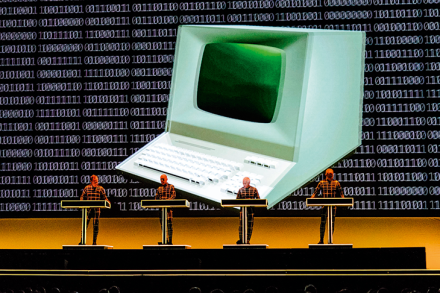
As Kraftwerk took their 3D show around Britain last week, a document from 2013 surfaced online, purporting to be their requirements for car transportation while on tour, necessitated by ‘rather bad driving experiences in the recent past in various parts of the world’. Kraftwerk, it said, should only be driven by ‘suave gear changers (if car is not automatic)’ and ‘suave breakers’. Both radio and aircon should be turned off, and on no account should the driver talk to the band. It had the effect of making the Düsseldorf quartet — long since down to one original member, Ralf Hütter — look like grumpy old men who would rather be at home tinkering with their racing bikes.

His Master’s Feet

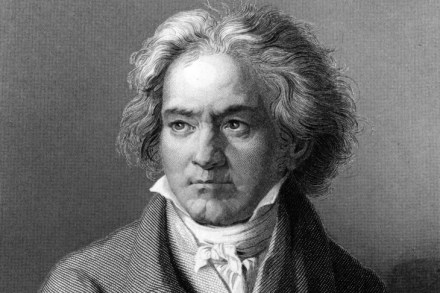
Gerald Barry once licked Beethoven’s carpet. At least, that’s what he told me, and I’m as sure as any interviewer of Gerald Barry can be that he wasn’t pulling my leg. While showing him round a museum, a guide pointed out said floor-covering. Whereupon — Barry being Barry — he was overcome by an urge for tangible, physical contact with a relic that had, after all, once been trodden by the Master. ‘So, once everyone was out the room, I got down and had a quick lick.

Detroit spinner

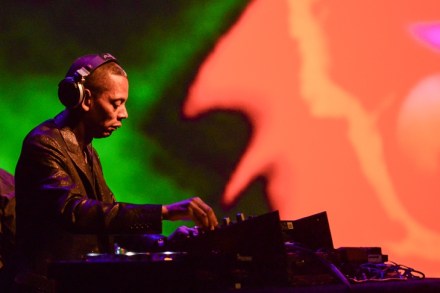
When techno first appeared amid the urban wasteland of mid-1980s Detroit, its futuristic sound palette was inspired by the whirring and clanking of the Motor City’s defunct assembly lines. Early techno was darker and more hypnotic than its close cousin house, but you could still dance to it. There was still soul in the machine. The music brought people together on dance floors in abandoned warehouses, offering hope amid decline. By the end of the decade, thanks to the crossover hits ‘Good Life’ and ‘Big Fun’, techno had taken root in the UK. Europe and the world would follow. Jeff Mills belongs to the second wave of Detroit techno: the guys who took themselves too seriously and forgot that it was meant to be fun.

Glamming it up

Late on the Friday afternoon of The Great Escape — the annual three-day event for which the London music industry decamps to Brighton to spend three days drinking and trying to get into tiny venues to see new bands — two very young men stood outside a pub, making quite the impression. One, with bleached blond hair, yellow tinted sunglasses and livid red lipstick, wearing a black string vest, clutched a bottle of Mexican lager. The other, made up with huge rouge smears on his cheeks and heavy eyeshadow, wore a beret, a green faux-military tunic, and — naturally — an Elizabethan-styled ruff. You knew they were in a band; you could tell from their armbands, which bore the legend HMLTD.

White-knuckle ride

Playing in an orchestra that disintegrates mid-concert is not an experience you forget. One moment everything’s motoring along nicely. Suddenly a harmony doesn’t quite fit, the soloist enters on the wrong beat: it doesn’t matter, because before you can work out what to do next the confusion spreads, the conductor signals frantically and with a pit-of-the-stomach lurch the floor drops out of the music and you’re all sat there facing the audience amid the one sound that no one present has paid to hear: mortified silence. The Aurora Orchestra has worked out a way to monetise that sensation. Well, maybe that’s putting it a bit cynically.

The rise of toytown pop

Pop’s counterfactuals tend to be built on questioning mortality: what if Jimi Hendrix had lived? Or Buddy Holly? Rarely does geopolitics enter into the speculation. Nevertheless, there’s a case for arguing that the landscape of British pop would have been markedly different had Harold Wilson acceded to the wishes of President Lyndon Johnson and sent British forces to Vietnam. That’s worth contemplating now, ahead of the latest reissue — deluxe and expanded and remastered, as these things always are — of Sgt. Pepper’s Lonely Hearts Club Band, released last week for the 50th anniversary of the original album.

Around the horn

The concert began with a flourish and a honk. Well, of course it did. Telemann wrote his last Ouverture-Suite in F major for the Landgrave of Darmstadt. The Landgrave loved hunting, and in the 18th century hunting meant horns. And horns mean honks. If you’ve ever played the horn — applied 12 feet of coiled metal tube to your face and tried, through a combination of lip muscles and willpower, to make the damn thing sing — you’ll know that no amount of hoping, praying or practice can prevent the occasional squawk. The two excellent players in Florilegium’s concert at St John’s Smith Square, moreover, were using 18th century-style horns — without the valves and additional plumbing that render the modern beast just about controllable.