More from life

The turf | 28 February 2019

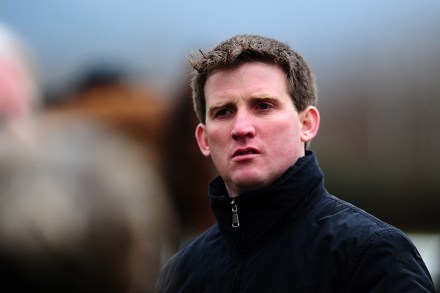
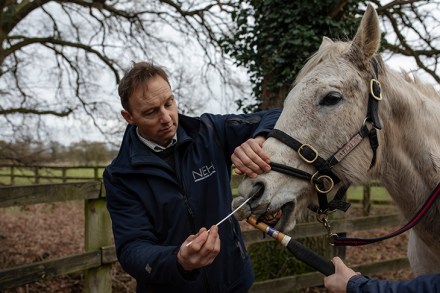
Owner Phil Simmonds from Rochdale was 17 when he first went racing, joining a friend’s stag party at Haydock Park. For years he dreamed of owning a racehorse and finally took the plunge. He bought a bumper horse called Burns Cross and placed it with Neil Mulholland, whose response appealed to him when he wrote to three trainers. A software developer, he doesn’t pretend, like some owners do, to know everything about the sport, acknowledging: ‘I love racing but I realise you can’t solve it with a computer programme.’ Last year Phil was driving to Chester races when Neil phoned. It was the kind of call every trainer hates having to make and which every owner dreads receiving.
The turf | 14 February 2019

The pre-war Fabians Sidney and Beatrice Webb apparently had a pre-marriage agreement. It wasn’t like today’s Hollywood prenups, designed to protect the assets of high earners when lascivious eyes roll on elsewhere. They simply agreed that Sidney would make the big decisions and Beatrice the small ones. Beatrice, however, had it sorted: she was to pronounce which was a big decision and which a small one. Lately the British Horseracing Authority (BHA) has been getting a lot of small decisions wrong. First it issued a ruling that in future all racehorses should be shod on their hind feet as well as their forefeet.

The turf | 31 January 2019

Last Saturday morning, Mo Gawdat, former chief business officer at Google, was on the radio explaining his algorithm for happiness, apparently a publishing sensation. Happiness, it seems, is equal to or greater than the events of your life minus your expectations of how life should be. That was a tricky proposition for the 20,000 of us on the way to Cheltenham Festival’s trials day likely to have a few bets and facing a fiendishly difficult racecard. Trials day is the final opportunity for trainers to test out their best prospects for a desperately prized win at the Festival in March. Could this one stay an extra four furlongs? Can that one cope with Cheltenham’s idiosyncratic undulations?

The turf | 17 January 2019

‘Deer-stalking would be a very fine sport,’ W.S. Gilbert once observed, ‘if the deer had guns too.’ We who love jump racing have to acknowledge that there are plenty of folk out there who feel that horses, too, are helpless victims with no alternative but to hurl themselves at obstacles to profit heartless owners, trainers and riders. Trying to change the minds of such critics is probably akin to urging Jacob Rees-Mogg to stand a round for the EU’s Jean-Claude Juncker, but I just wish that some of racing’s critics could have been in the winners’ enclosure at Kempton last Saturday.

Tuning up to Linz

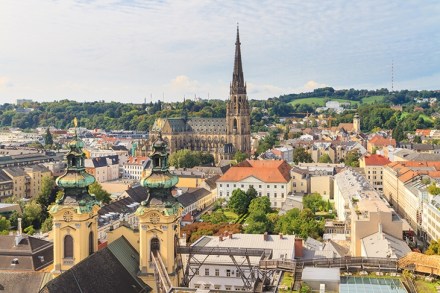
You never know who you might meet on a river cruise. It was my 89-year-old father-in-law, Noel, who first recognised a tall, professorial man only a few years younger than him remonstrating with an uninterested official at Munich airport about a pre-paid taxi to Passau, where we were due to board our ship. ‘That’s Humphrey Burton,’ said Noel. ‘We worked together at the Beeb, though he was far more important than me.’ Noel is forever modest but you could argue that Burton was the Melvyn Bragg of his day — a description I later put to him but one from which he recoiled not exactly in horror, but certainly in mild disgust.

The capital of nowhere

‘Welcome to the free territory of Trieste,’ reads the sign in the shop window. ‘US and UK come back!’ For me, this is the sort of thing that makes Trieste such a beguiling place. Sixty-four years since those British and American troops departed and handed this disputed seaport back to Italy, it still feels like a no-man’s-land, stranded between the Slav and Latin worlds. Jan Morris, the queen of travel writers, called Trieste the capital of nowhere, and I needed to read only the first few pages of her bewitching book Trieste and the Meaning of Nowhere to know I’d love it here. ‘The last breath of civilisation expires on this coast where barbarism starts,’ wrote Chateaubriand, in 1806.

The turf | 3 January 2019

I don’t know who coined the old racing saying ‘The only person who remembers who came second is the guy who came second’ but he was wrong. What draws us aficionados to racetracks on blazing summer afternoons when we would be better off in a swimming pool, or on soggy winter days when sensible folk are curled up in front of the fire watching a DVD, is the prospect of a memorable race, an eyeball-to-eyeball clash of skills and determination between two finely honed athletes with the final outcome in doubt until the very last moment. Racing in 2018 gave us plenty to celebrate. Needing only one winner at Royal Ascot to pass Sir Henry Cecil’s record of 76 winners there, Sir Michael Stoute produced four.

The rock of ages past

How lazy, snobbish and wrong it is to mock Gibraltar for the lager and fish and chips clichés. Yes, you can get lager and fish and chips there; nothing wrong with  that. The pint of lager I had in a pub in Gibraltar Main Street was excellent. And the funny thing is that, unlike consciously ‘British’ pubs in Rome or New York, there was no ersatz feel to it. It was exactly like a pub in Britain, down to the two middle-aged office workers in shirtsleeves, exchanging dull office chat, breaking off occasionally for low-level, awkward flirting with the barmaid, who was in her twenties. That’s what’s so gripping about Gibraltar: you move, in an instant, from carbon-copy Britain to a completely parallel, foreign universe.

The turf | 13 December 2018

The Scudamores are one of the bedrock families of jump racing. After being shot down and spending two years as a PoW, Geoffrey Scudamore trained racehorses in Herefordshire, including a Cheltenham Festival winner ridden by son Michael. Michael, one of the great horsemen of his day, won the 1957 Gold Cup on Linwell and the 1959 Grand National on Oxo. But in November 1966 a horse slipped up: a punctured lung, a broken jaw and cheekbone, a cracked skull and an eye injury forced him, too, to turn to training. Michael’s son Peter was initially nervous of approaching the wired-up Martian-like figure who emerged from hospital.

The turf | 6 December 2018

It may yet turn out that the most significant development in racing this year was the sale of some 250 dairy cows. Back in 1995 Colin Tizzard, a dairy farmer on the edge of the Blackmore Vale, started training point-to-pointers for his son Joe to ride. Joe Tizzard, one-time stable jockey to Paul Nicholls, went on to become a leading rider. Colin steadily progressed from being a farmer who trained to becoming a trainer who farmed, though often with a stockman’s shrewdness, preferring to take a third prize of £14,000 in a Graded race rather than the headline glory of victory in a £6,000 handicap. Now, with Joe and his sister Kim as his assistants, he handled Cue Card, the public’s favourite jumper of recent years, to win a King George.

The turf | 22 November 2018

Trainer Dan Skelton and his jockey brother Harry have 100 winners on the board already but for most of us the jumping season proper has only just begun. It wasn’t long, though, before I was reminded of one essential difference between the Flat and jumping codes: the sheer fun element of the winter game. In the Agetur novices’ hurdle at Newbury, the 40-year-old owner-rider David Maxwell looked like being beaten to the line on his French import Ecu De La Noverie when he was headed as the post loomed by the 13–8 favourite Mister Fisher, ridden by the teenage wunderkind James Bowen. Instead the determined amateur conjured one last thrust from his mount and regained the lead to win by a short head at 33–1.

The turf | 8 November 2018

Fairy tales can happen. On Sunday the filly God Given won Italy’s only Group One race of the season, the Premio Lydia Tesio, providing Newmarket trainer Luca Cumani with his 50th Group One winner. Just days before he had moved many of his staff to tears by announcing that on 1 December he will retire and sell the Bedford House Stables where he has operated for 43 years, sending out two Derby winners in Kahyasi (1988) and High Rise (1998) and winning a host of big races around the world. Only Sir Mark Prescott and Sir Michael Stoute have run Newmarket yards for longer and there has been no doubting the genuineness of the tributes paid by the whole racing community to the elegant and highly astute English-domiciled Italian. Sometimes his style has seemed more English than the English.

The turf | 25 October 2018

Watching whip-thin jockey George Baker, just short of six feet, greeting his mounts used to make me think of the weight-reducing regime described by the 1920s rider Jack Leach. The elegant Leach always dined well. Next day he would go jogging in three sets of underwear, four sweaters and a rubber suit before taking a Turkish bath. He took off extra weight so that at the track he could have a sandwich and a glass of champagne. ‘This made me feel like a new man, and if I had a few ounces to spare the new man got a glass too.’ Not quite how modern riders do it in these breath-testing days. George Baker suffered a growth spurt and in a matter of months moved from riding comfortably at 8st 1lb to ‘having to waste my arse off to do 8st 9lb’.

A beach ball

‘Watamu is my favourite place in the world,’ my friend declared when I told her where I was going for a long weekend. For her, Watamu means Christmas. Like many visitors to Hemingways and other hotels alowhang the Watamu coast, her family are loyal repeat customers, returning year after year to this little village on the Kenyan coast around 75 miles north of Mombasa. The coast has had its ups and downs. It became a popular holiday destination in the late 1960s and for several decades earned a decent income from visitors. In the 1990s and the 2000s, tourism had more of a struggle. Politics, terrorism and some well-publicised murders all played their part in putting people off.

Bright spot in the Baltic

In the historic heart of Riga, Latvia’s lively capital, stands a monument which sums up this country’s stormy past. The Freedom Monument was built in 1935 to commemorate the war of independence in which patriotic Latvians fought off the Germans and the Russians to finally establish Latvia as a sovereign state. That first bout of independence lasted barely 20 years. In 1940 the Soviets marched in, then in 1941 the Nazis marched in and kicked them out, and in 1944 the Soviets marched back in again and stayed until 1991. Yet despite being earmarked for demolition, the Freedom Monument survived. In the 1980s it became the focus for protests against Soviet persecution of Latvian dissidents.

A tomb with a view

Death is not the end but the beginning of a long, hard climb. At least that’s what the Bara people believe. No sooner have your bones been scraped clean than you’re off, into the Isalo Massif. Fortified with rum, your relatives will shin up the cliffs to find the perfect niche, at heights of up to 4,000ft. The greater you were, the higher they’ll climb. Occasionally they’ll fall, and there will be more rum, more climbing and more coffins. But eventually, you’ll be properly dead, enjoying eternity from the top of the world. For outsiders, it’s a tricky business, getting to Isalo. For a start, Madagascar is stupendously big and empty. It has a road network no greater than Jamaica’s and yet it’s 53 times the size.

The turf | 11 October 2018

Racing is full of risk-takers, not least those who fork out hefty sums to buy yearlings or unraced two-year-olds. Back at the Keene-land Sales in 1983 Sheikh Mohammed paid a record $10.2 million for Snaafi Dancer, a colt by the great Northern Dancer. Snaafi Dancer alas proved so slow that he never made it to the racecourse. Retired to stud, he had fertility problems and only ever sired four foals. In 2006 a frantic bidding war at Fasig-Tipton between two great racing empires — Sheikh Mohammed’s John Ferguson bidding against Coolmore’s John Magnier — saw Coolmore pay a new world record price of $16 million for The Green Monkey.

The turf | 27 September 2018

Mill Reef, who won the Derby, the Prix de l’Arc de Triomphe, the Eclipse and the King George by far enough for jockey Geoff Lewis to declare ‘daylight was second’, was one of my first equine heroes. One image has always stuck in my mind. Trainer Ian Balding sent Mill Reef and a companion out on a watered gallop at Lamorlaye for a final pipe-opener before the Arc. Afterwards the trainer walked over the ground and noted that on the firmer patches, while the companion’s hoof prints were clearly visible, there was no trace of where Mill Reef had run. On the softer patches, the other horse had cut in deep and turned over the turf; Mill Reef’s feet had barely left a mark. ‘It was,’ he said, ‘as if a ghost had galloped by.

The turf | 13 September 2018

An American trainer was once asked to name the greatest quality of the legendary jockey Willie Shoemaker. He replied: ‘The way he meets me in the Winner’s Circle.’ British racehorse owners would probably give the same answer about the Middleham-based trainer Mark Johnston. When Poet’s Society passed the post first in the Clipper Logistics Handicap during York’s Ebor Festival last month, Johnston became the winningmost trainer in British racing history, passing Richard Hannon Snr’s total of 4,193. The athlete Jesse Owens once declared: ‘In the end it’s extra effort that separates a winner from second place. But winning takes a lot more than that, too. It starts with complete command of the fundamentals.