More from Arts

Feat of clay

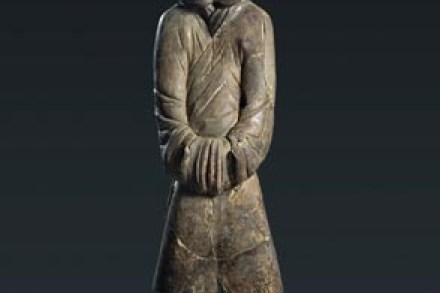
The First Emperor: China’s Terracotta Army, British Museum, Sponsored by Morgan Stanley Here’s a show to pull in the public. More than 100,000 advance tickets already sold (Michelangelo’s drawings, though popular, sold only a fifth of that before it opened), and so much media coverage you scarcely need my review. Except, of course, that most of what passes for reporting is ill-informed and simply parrots the party line of press release and salesmanship. In other words, it’s just another form of advertising, which is why the art institutions of our country are desperate to get it — the life-support system of free publicity apparently necessary to the economic survival of museums.
Revelatory Richie

Theatre: Lone Star & Pvt. Wars, King’s Head; We The People, Globe; All About My Mother, Old Vic The King’s Head has a deserved hit on its hands with a James McLure double bill about soldiers haunted by Vietnam. Emasculation is the linking theme and the scripts dance nimbly between the opposing poles of pathos and high comedy. James Jagger (handsome boy, highly watchable, famous dad) has a very promising line in wry comedy. But the real revelation here, to me at least, is Shane Richie, whom I last saw hosting game shows on telly. I thought that’s all he did. But what an actor. His two performances are expertly differentiated from one other. First, he’s Roy, a strutting peacock of a veteran whose life implodes when he learns that his wife has seduced his brother.

Not great western

3:10 to Yuma has everything you might want from a western apart from anything original or interesting, and as for Russell Crowe, he’s actually pretty crap. Obviously, I can’t say what the director, James Mangold (Walk the Line), who apparently fought hard to make this project, was thinking of. What shopping to get in on his way home? Do we need milk? Cat food? But the result is both dull and deeply unnecessary; a stinker.

Musical youth

British Youth Opera celebrates its 21st birthday season with its annual two productions at the Peacock Theatre: this year one is reasonably successful and one a triumph. The moderate success is The Magic Flute, in Jeremy Sams’s sharp translation. Flute is a work which students and young singers go for whenever possible (this is the fourth production BYO has mounted), yet it is extremely taxing, in several ways. At least three of the roles are almost impossible for anyone to sing very well, and the reams of spoken dialogue, in whichever language the opera is being performed in, seem to present a challenge few singers can rise to. The differences of tone, incessant and insistent, between the most lofty seriousness and matey comedy, present a test for a producer which is rarely passed.

Play school

Catch ’em young makes sense if you’re selling a product, an organisation or a belief system. Catch ’em young makes sense if you’re selling a product, an organisation or a belief system. And the BBC has never lagged behind the commercial broadcasters and their advertisers in this regard. From its inception children’s programming was seen as crucial to its output. Dutifully at five o’clock, just in time for family tea, Children’s Hour began on the Home Service, with a medley of dramas, quiz shows, news bulletins designed to entrance five- to 15-year-olds. (Does anyone else remember the inimitable voice of Derek McCulloch as Larry the Lamb, or the gravelly tones of the avuncular David Davis?

Raising Reith

Watching television as a critic is an artificial way of watching television. For the most part we see DVDs supplied by the television companies. We start and finish when we like. If the phone rings, we don’t groan and bark ‘yes?’ — we can press pause and settle down for a leisurely chat about our double-glazing needs. If we miss part of a programme, we can catch it again. We are a little like those restaurant reviewers who write: ‘Dinner for two, with a glass of champagne and a bottle of Volnay, came to a very reasonable £165,’ because they aren’t paying. We are privileged. In the same way we rarely stumble across a programme merely because we’ve casually flicked on the box, live, on air.

The Wagner effect

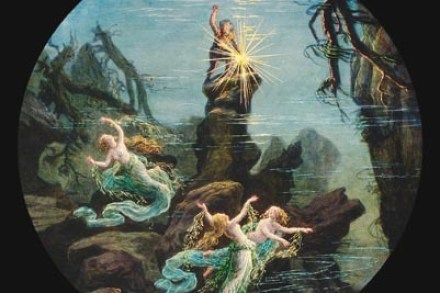
Henrietta Bredin has put together a series of events to celebrate the Royal Opera House’s Ring cycle It is with considerable trepidation that I venture to write about Richard Wagner in these pages, considering that in doing so I am following a trail well blazed by Bernard Levin — a passionate and lushly articulate devotee — and that no fewer than three highly eminent Wagner scholars are current contributors: Michael Tanner, Patrick Carnegy and Robin Holloway. However, I shall take my courage in both hands as I am in the final throes of a project I was asked to take on by the Royal Opera House just over a year ago, devising a festival of events to celebrate its performances of the Ring cycle this October. It has been something of a dream brief.

Beguiling mix

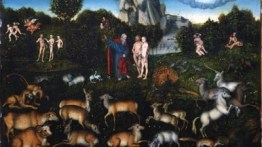
Exhibitions: Temptation in Eden: Lucas Cranach’s ‘Adam and Eve’; Work, Rest & Play Amazingly, the Courtauld can claim to have mounted the first exhibition in England devoted to Lucas Cranach the Elder (c.1472–1553). He’s not an artist we know at all well here, though one or two images will be familiar from reproduction, probably elegant, elongated and slightly heraldic full-length portraits, or glimmering erotic nudes. There’s something very individual and instantly recognisable about his images, an aura of self-containment which is based on a decorative unity which looks back to Gothic art. This is balanced by the new naturalism of the German Renaissance.

Fighting Finn

Where does Sibelius stand today? Twenty years ago, the answer would have been not very high. Today, 50 years after his death, I think it would be ‘on the up’ again, especially as we now know not just the symphonies and tone-poems but also the wonderful songs in performances by Karita Mattila, Soile Isokoski, Anne Sofie von Otter and Jorma Hynninen. In Britain during the first half of the 20th century Sibelius was regarded as the symphonic heir to Beethoven. There was no mention of Mahler and Bruckner in those days, except in very restricted circles. It almost seemed as if Sibelius was an honorary Englishman. The composer had first visited England late in 1905 to conduct in Liverpool.

Past perfect | 8 September 2007

I see Squeeze have reformed and are touring again. In fact, there don’t seem to be many bands who haven’t reformed and aren’t touring again. Out there on the road: that’s where the cash is. There seems to be a particular process here. 1. Band splits up in a spirit of mutual enmity and recrimination. 2. Principals embark on solo careers of varying success. 3. World forgets about band. 4. Principals, interviewed in rock press, express undying hatred for each other. 5. Accountant has quiet word in ear. 6. Fifty-date world tour is announced. It’s strange to think that, 20 years or so ago, bands toured to promote the record. Now they make a record to promote the tour. Is anyone really interested in a new Rolling Stones album?

Misinterpreting Strauss

For its final operatic offering, this year’s Edinburgh Festival presented what it billed as ‘World première of a new production’ of Richard Strauss’s last opera Capriccio. I suppose every new production is a ‘world première’ but they don’t need to say so. Anyway, this turned out to be a dismal affair, part infuriating and part just inadequate, the only redeeming feature being the conducting of Markus Stenz and the playing of the Gürzenich Orchestra Cologne. As soon as anyone mentions this inspired product of Strauss’s old age they seem to need to carry on at length about its relation to the time and place in which it was written, Germany in the first two years of the second world war.

Tale of two cities

Eternal though they may seem, the Proms and the Edinburgh Festival are susceptible to change. Roger Wright will take over the former next year and Jonathan Mills has just assumed responsibility for the latter. New appointments do not necessarily mean that anything more up-to-date will happen, nor that the change will be for the better — the Bath Festival seems to have been all but destroyed by a recent and tactless overdose of innovation; but the signs from the two capitals are encouraging. The Edinburgh Festival has traditionally been hostile to what is still called ‘early music’, the received wisdom being that the people of Scotland would not come to hear it.

Losing heart

There has been such a lot of fuss and hype around this adaptation of the Ian McEwan novel — as if this is all anybody has ever been waiting for — that I did wonder if I had anything new or useful to say. But then I realised: 1) it’s never stopped me before and 2) it’s never stopped me before and 3) it’s never stopped me before. So, in short, if it’s never stopped me before, why stop now? Shall we proceed, now we’ve decided we are not stopping? Good. What I am saying, I think, is that you will probably have a sense of Atonement already, considering it’s already been hailed as ‘an English Patient for the noughties’ and a ‘masterpiece’ and has been tipped for more awards than possibly even exist. And?

Lights under bushels

Here’s a question for all of you who can claim to be (or would wish to be) English. When was the last time you sold yourself short, modestly claiming, ‘Oh, it’s nothing really. I just botched it together in a rush’? Or, ‘I’m sure I know nothing about politics,’ when in reality you’re an avid reader of Fraser Nelson’s column? Or to a climate-change fanatic, ‘What was that? I didn’t understand what you said,’ when you’ve got a degree in environmental science? In recent years, we’ve been told such self-deprecation is bad for us and we need to go into therapy to retune our responses. But no longer. Or so Andrew Marr argues in Unmasking the English, his four-part series on Radio Four (Mondays).

General grumble

Sorry, I’m in Sardinia at the moment and I couldn’t find any preview tapes that really grabbed me before I went away so if you don’t mind I thought I’d just have a general grumble about the state of TV. First, Weekend Nazis (BBC1, Monday), whose undercover team made the truly cataclysmic discovery that one or two members of Second Battle Group — a British second world war re-enactment outfit which specialises in portraying German Waffen SS soldiers — may have neo-Nazi sympathies. Well, knock me down with a feather. Perhaps next week this same crack team will manage to infiltrate the Vatican and emerge with the shock horror revelation that the Pope (and quite possibly several of his aides) are Catholic. I mean, really.

All that jazz

I’m just back from Edinburgh, my 20th successive year at the festival for the Daily Telegraph, which makes me feel very old indeed. How times have changed. When I started going, the paper put us up in the luxurious Sheraton Grand and no questions were asked about the size of your bar bill, which in my case was invariably eye-wateringly large. I also remember becoming bored of eating smoked salmon and Aberdeen Angus steak every day and often feeling desperately lonely in my huge, superbly appointed but utterly soulless room. But for at least a decade now Telegraph hacks have been lodged in communal flats, like students, with some of us not pulling our weight on the washing-up and putting-out-the-rubbish fronts.

Mutual loathing

Dublin. Terrific to write about, terrible to experience. This was the verdict of Patrick Kavanagh, poet, alcoholic and failure, born in 1904 and now brought back to life in Russell Kennedy’s enjoyable show at the Old Red Lion. Kavanagh’s assessment of Dublin would be better applied to himself. He cuts a shambolic, repellent figure in his knackered spectacles, squelching shoes and moths’ nest jumper, as he shuffles about the city’s pubs cadging drinks, lusting after female students and cursing the reputations of greater talents than his own. A particular hatred was aimed at Brendan Behan who ardently requited Kavanagh’s feelings. With the perspective of 50-odd years it’s the similarities between the two writers that impress us more than the differences.

World class

Next time you’re bemoaning the TV licence fee, check out the BBC’s World Service. Next time you’re bemoaning the TV licence fee, check out the BBC’s World Service. A different quality appears to prevail in their making of radio documentaries — more time spent on research, less on presentation. No tricks, no smoochy music. Just experts sharing with us their enthusiasm and knowledge. Trouble is, you need an advanced degree in electronics and time management to find the station and what’s on when. A lot of fuss was made a fortnight ago when Vladimir Putin put a stop to the FM transmission of the BBC World Service in Moscow, although it is still possible to tune in to the Russian Service on medium- or short-wave or to listen via the web.