Matthew Dancona

Amis at 60

From our UK edition

Martin Amis says that when a man turns 40 he stops saying "hi" and starts saying "bye". So, as a 41-year-old, I now stand unequivocally on the farewell side of the tracks, putting my affairs gradually in order before the eventual arrival of the Grim Reaper - who in an Amis novel would probably be called Keith or Tel and speak an obscure London argot. Amis himself is 60 today and I wonder how significant a milestone that is for the writer himself. For his father's generation, 60 was a moment freighted with messages - what Martin calls "the Information" in his novel of the same name - about work, longevity, sex, prospective senility and so forth.


Introducing Cappuccino Culture

From our UK edition

Just to introduce The Spectator's new team blog on arts and cultural affairs - Cappuccino Culture. Spectator writers will be posting all day, every day on what's new and what matters in the cultural landscape: from arthouse movies to X Factor, from modern poetry to the latest production of Hamlet, all the reviews and the rows. Above all, we want you, our readers, to join the debate by making your own comments on each post. So please head over to new.spectator.co.uk/culture, and let's embark on a cultural odyssey.

The spooks are squirming. But be careful what you wish for

From our UK edition

As the controversy over torture gathers pace, it is ‘open season’ on the intelligence agencies — investigated by the police and challenged by MPs. Scrutiny is fine, says Matthew d’Ancona — but beware of making life impossible for those responsible for our security ‘One question at any rate was answered. Never, for any reason on earth, could you wish for an increase of pain. Of pain you could wish only one thing: that it should stop. Nothing in the world was so bad as physical pain. In the face of pain there are no heroes, no heroes, he thought over and over as he writhed on the floor, clutching uselessly at his disabled left arm.

McBride and the omertà of Team Brown

From our UK edition

The Guardian’s interview with Damian McBride illustrates why "McPoison" was much more than an assassin for hire: he was a very clever man indeed, a Cambridge graduate as much as a lager-swilling lad (and since when were the two mutually exclusive?). Whether through calculation, instinct, sincerity or a blend of the three, this really is a flawless performance. It is, for a start, the opposite of Lee Harvey Oswald shouting "I’m a patsy". McBride declares himself unequivocally to be the “lone gunman”, dismissing the notion that the smear e-mails he sent to Derek Draper were part of a Number Ten conspiracy or even in tune with the prevailing culture of the Brownite inner circle.

A poetic evening

From our UK edition

From its founder Joseph Addison – a poet of some significance – to its present poetry editor, Hugo Williams, the Spectator has always had a rich association with the poetic art. Indeed, an editorial by J.D.Scott in 1954 was widely regarded as the founding text of the so-called “Movement” of that decade; Vita Sackville-West, Sassoon, Freya Stark, Larkin, Kingsley Amis and James Michie have all played their part in this glorious history. So it was in the spirit of renewing our finest traditions that we hosted a very special poetry event at 22 Old Queen Street this evening – a standing-room only sell-out - featuring Sir Andrew Motion, Clive James, Annie Freud and Olivia Cole.

Blur in the park

From our UK edition

Been meaning to post all day a hat-tip to our very own Alex James who - before he was a Spectator columnist and celebrated cheese-maker - used to play the bass in a rather successful little group called Blur. Last night, reunited and re-energised, they played their final UK gig in Hyde Park. And, whether or not you were around first time to enjoy these great songs, it really was rather special. From the opening chords of "She's So High", it was clear that the band which defined "Cool Britannia" do not intend to fade into obsolescence with that New Labour-infected moment, nor to go through the motions like a nostalgia act, reforming occasionally to ensure an annual pay day from their grown-up and now-professional fanbase. They still mean business, thank God.

The Spectator’s 50 Essential Films: Part Two

From our UK edition

Peter Hoskin and Matthew d’Ancona count down the final 25 of The Spectator’s 50 Essential Films 25. Barry Lyndon (Stanley Kubrick, 1975)Cinema sure does work in mysterious ways. Take Barry Lyndon, Stanley Kubrick’s account of an Irish lad (played by Ryan O’Neal) who rises — and then falls — in 18th-century society. It’s a satire which lacks the vigour of Dr Strangelove (1964); a study of human nature which lacks the honesty of Paths of Glory (1957); and an adventure which lacks the expansiveness of 2001: A Space Odyssey (1968). What’s more, it meanders well beyond the bounds of empathy, and feels indulgent every single step of the way.

The price of Mandelson’s support

From our UK edition

The cover piece in the new issue of the magazine is by my former opposite number at the New Statesman, John Kampfner, and is a defining addition to our knowledge of the crucial 48 hours in which Gordon Brown’s fate was decided earlier this month. As the polls for the local and European elections closed at 10pm on Thursday June 4, James Purnell announced that he was resigning from the Cabinet. David Miliband has since revealed in a Guardian interview that he considered quitting, too, but that he had “made my decision [not to] on Thursday” - and that Peter Mandelson was critical to that decision. "I'm not going to go into [our conversation],” Miliband said, “but we didn't sort of talk about the weather.

Debating selection

From our UK edition

It never fails. Assemble a group of highly intelligent people (the more, the merrier), invite them to debate the merits of selective schools, stand well back and enjoy the fireworks. So it was this beautiful summer’s evening at the Royal Geographical Society, as The Spectator hosted its inaugural debate, chaired by Andrew Neil  – the motion before the audience being the quite straightforward proposition that “grammar schools are best”. Before the panel of speakers began their gladiatorial combat, the votes stood at: 175 for the motion, 37 against, and 48 don’t knows. David Davis, the former Shadow Home Secretary, and long-time champion of grammar schools, kicked off proceedings with an impassioned defence of the selective system.

The Spectator’s 50 Essential Films: Part One

From our UK edition

Peter Hoskin and Matthew d’Ancona count down the first 25 of The Spectator’s 50 Essential Films The studio logo fades. The opening credits roll. And so we come to the main feature: The Spectator’s 50 Essential Films — a selection of the very best that cinema has to offer, and all in glorious Technicolor. This isn’t just a celebration of motion pictures — though it’s certainly that — but also a testament to The Spectator’s own passion for the medium. I’m certain that our offices on Old Queen Street contain a greater per capita proportion of film fans — crazed, honest-to-God, bleary-eyed film fans — than pretty much any other building in all London.

The Spectator’s 50 Essential Films

From our UK edition

Attention all film fans: tomorrow's issue of the magazine - print version only - launches a truly special celebration of the best films of all time, edited by our very own Online Editor, Pete Hoskin.    CoffeeHousers will have their chance to pitch in in due course - but if you want to join the debate, you'll need to get the souvenir magazine itself, complete with lavish illustrations. As you will find out after you have rushed out to the newsagent, Pete is much more than a kingpin of the Web 2.0 era: he is also an awesomely knowledgable cineaste, in the best traditions of the Spectator (whose past film critics include Graham Greene and Peter Ackroyd). Having humbly submitted a few of the entries myself I can attest: this man knows what he is talking about.

The new chief of MI6

From our UK edition

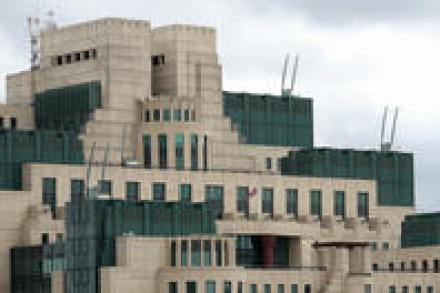
So MI6 is to have a new chief: Sir John Sawers, presently our man at the UN, is going back to the service he worked for in his early years, replacing the estimable Sir John Scarlett in November. Scarlett, who flickered on to the public stage much against his wishes during the Hutton Inquiry, was an SIS chief of the old school and the best school who understood that, whatever the threat – Soviet communism or al-Qaeda – and whatever the improvements in technology, there was nothing to beat recruiting and managing agents on the ground. He will depart with honour. His replacement was one of three shortlisted, one of whom, intriguingly, was an “external” candidate.

Following a dividing line to oblivion

From our UK edition

Following on from Fraser and Pete’s earlier posts: the spat in today’s Guardian between Ed Balls and Jackie Ashley is fascinating and relevant to George Osborne’s milestone article in The Times. Balls remains an unabashed proponent of what I would call ur-Brownism: emphasise “dividing lines” that distinguish Labour from Tories at every available opportunity, especially when they concern public spending. Brown has always believed that elections are won by the party that persuades the electorate that it is (a) economically competent and (b) less inclined to cut public spending. Hence the twin prongs of Gordon’s rhetoric over the years: “no return to Tory boom and bust” and “Labour investment versus Tory cuts”.

Tony, Gordon and Peter saved Labour: now they’ll destroy it

From our UK edition

Matthew d’Ancona says that, by sticking with Brown, Labour has opted for a mad collective delusion. The party is still in thrall to the trio who invented New Labour and cannot think beyond the Blair-Brown era — an incapacity for which it will pay a terrible price In Westminster this week, I have felt like the boy in the movie The Sixth Sense. You remember the character and his famous line. ‘I see dead people,’ he tells his therapist, Bruce Willis, ‘walking around like regular people. They don’t see each other. They only see what they want to see. They don’t know they’re dead.’ How often does the boy see these scary, deluded beings? ‘All the time. They’re everywhere.’ And they are, you know. Everywhere.

If you were a Labour MP…

From our UK edition

A thought experiment, albeit an unpalatable one: imagine you were a Labour MP (I know, I know, but indulge me) and the fate of the Prime Minister and thus, by implication, the nation lay in your hands tonight and tomorrow. What would you do? Your party has just suffered a historic defeat, taking a disastrous 15 per cent of the vote. The Government is enfeebled and without trajectory, propped up only by Labour cowardice and Peter Mandelson’s will-power. Your natural supporters have fled to the fascist Right, resulting in the election of two BNP MEPs. You face total obliteration in the general election, whenever it comes.

The symptoms of a sickly political system

From our UK edition

'The fascists are coming' read the coverline of the Spectator's May 30 issue. Fraser's brilliant cover piece, analysing the cunning and tactical mutability of the BNP, looks all too bleakly prescient this morning. It is axiomatic to democracy that we have to tolerate views we find objectionable. But, really, the election of two BNP MEPs last  night shows how sickly our political system is: like a virus preying on a badly weakened body with a shattered immune system. I hope Sky will post Adam Boulton's superb interview with Nick Griffin last night (before the BNP leader was elected).

Your coup update

From our UK edition

Just been on Newsnight - yes, a special Saturday edition - to take part in what amounted to a Lineker-style half time coup round up. Charlie Kennedy, who knows what it feels like to be on the receiving end of a successful leadership coup, made the astute point that it is authority, not arithmetic that really counts. Forget procedure: this is all about the power vacuum left at the centre - a PM who cannot  even dictate the identity of his Chancellor - and the Labour movement's will to do something about it. As I say in my Sunday Telegraph column - already online – the Cabinet has behaved with deplorable cowardice, what I would call 'behind-the-sofa government'.

The idea of a Sheerman-Miliband plot is rubbish

From our UK edition

The smears begin: Number Ten is briefing that Barry Sheerman’s calls for a secret ballot on the Labour leadership are part of an elaborate Miliband-ite plot – the “how-they-are-connected” reasoning being that the MP for Huddersfield and chairman of the Children, Schools and Families Select Committee, is also the father of one of David Miliband’s advisers, Madlin Sadler. The clear objective is to get Mr Sheerman, who has been an MP for 30 years, deselected. Rumour control: I remember Mr Sheerman from the days when I wrote about education and the idea that he would do something so significant and so alien to his loyalist instincts simply at his daughter’s bidding is politically illiterate.

Livingstone carries the standard for the Labour left

From our UK edition

That it should come to this: one can barely turn on the television without seeing Ken Livingstone vociferously defending Gordon Brown against what he describes, wrongly, as an “uber-Blairite plot.” Ken – of all people – says that this disunity really will not do, and that Labour has a duty to rally behind the Prime Minister and his high-spending, interventionist policies. The two men once nursed one of the great hatreds in British politics. In 1998, for example, Livingstone wrote that "Gordon is not up to his job… The end result… is that Britain is now heading towards a recession entirely of Gordon's making.

Is this the measure of Johnson?

From our UK edition

Susan Boyle leaves the Priory, Alan Johnson goes to the Home Office.  Or is it the other way round? The revolving doors continue to spin. I have long been mystified by Mr Johnson’s position as the Pearly Dauphin, the heir apparent to Gordon Brown. Nobody has been able to explain to me why he should be the next Prime Minister other than the undeniable fact that he has the Cockney charm of an early episode of Minder. Now I like Minder and the works of Guy Ritchie as much as the next man. But I do not see their relevance to the identity of the next occupant of Number Ten (which is no doubt Cockney rhyming slang for “fountain pen”, or something). Well, it now appears that all that mysterious speculation about Mr Johnson was pretty irrelevant.