More from Arts

Today’s Specials

It was summer 1981, and the towns and cities of Britain were alight. There had been riots in Brixton, south London, that April and on 10 July there were more — and not just in Brixton. Other parts of the city followed. And so did a long list of other places, from the unsurprising — Sheffield, Preston, Leicester — to the ones where the idea of a riot might have been expected to have disappeared with Captain Swing: Cirencester, Aldershot. ‘I was sitting in my flat watching the news, the riots happening all over the place,’ says Horace Panter, the bass player of the Specials. ‘And “Ghost Town” was No. 1.

The Glums in tights

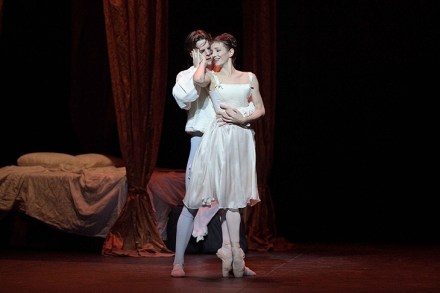
If you like the BBC’s Les Misérables, you’ll love English National Ballet’s Manon. Manon, in Kenneth MacMillan’s telling, is The Glums in tights. Alina Cojocaru dances Manon, an 18th-century courtesan in Paris, pimped by her brother Lescaut (Jeffrey Cirio). She falls for Des Grieux (Joseph Caley), young, handsome, penniless, love’s young dream, and is later ensnared by the older, richer, crueller Monsieur GM. Cojocaru is sublime. ‘That’s her!’ whispered my neighbour in the stalls as Manon fluttered through the crowd at the inn. With Des Grieux, Cojocaru is sweet and expressive, tender and teasing. As Monsieur’s mistress, in diamonds and furs, she dances with quiet power and cold command.

Chilling out

The Royal Ballet’s Les Patineurs is January as you would wish it. No slush, no new-year sales, no streaming chest colds. Winter, as imagined by Frederick Ashton, is an eternal ice rink lit by Chinese lanterns hung from icing-sugar branches. Ashton’s choreography is ingenious. His dancers really do seem to glide, the boards of the stage to freeze. You believe completely that they are on skates, not slippers. The men wear sheepskin jackets, the women bonnets and polka-dot tulle. Sleigh bells ring and fresh flakes fall. The ensemble slip, slide and dance a skating conga. Fumi Kaneko and William Bracewell are a Torvill-and-Dean dream in the pas de deux. Kaneko is light, flowing, sweetly flustered as her partner tips her upside-down.

Heuberger: Der Opernball

Grade: A– 1898: two Parisiennes and a housemaid secretly invite each other’s partners to the Paris Opera ball and… c’mon, you can guess the rest. It’s Christmas: you don’t want Götterdämmerung. You want luxury, you want tunes and you want irresponsible fun. Richard Heuberger’s waltz-operetta Der Opernball is basically a deluxe box of musical liqueur chocolates, and it’s never been easier to guzzle the lot. Heuberger was a moonlighting music critic (he famously remarked that Schoenberg’s Verklärte Nacht sounds ‘like someone smeared the score of Tristan while the ink was still wet’), and he was working to a tight deadline.

Winter wonderland | 13 December 2018

Not another Nutcracker, I thought on the way to the Opera House. Haven’t we had our fill of Sugar Plums? I took my seat, the Grinch of Covent Garden, wondering if we couldn’t have The Winter’s Tale for a change. The lights went down, the orchestra assembled and within six bars of Tchaikovsky’s irresistibly sparkling score I was sinking into my seat as into a bath of hot Glühwein and contentedly sighing: bring on the dancing snowflakes… Peter Wright’s production, with sets and costumes by Julia Trevelyan Oman, remains a midwinter night’s dream of Lebkuchen cosiness: snow-capped gables, Biedermeier comfort, goffered mob caps and Fezziwig frock coats, as pretty as an album of découpage. Anna Rose O’Sullivan is Clara.

What’s That Thing? Award for bad public art 2018

Not a bad year for the award. Honourable mentions must go to the landfill abstractions of Oxford’s new Westgate Centre, to the bees that have appeared in Manchester’s streets to promote the ‘unique buzz’ of the city and to Gillian Wearing, a once decent conceptual artist who has taken to sculpture like a cat to water with her statue of Millicent Fawcett. Nothing, however, brought more mush to our towns than the first world war commemorations. As Simon Jenkins wrote in these pages, ‘reaching for a grand sweeping gesture, something “profound”, is too tempting’ in commissions about war. ‘The search for wishy-washy universals soaks up all the energy and bromides usually result.

Some day their prince will come

The Royal Ballet is a company in search of a prince. It has no lack of dancing princesses. You could search the kingdom and find no lovelier dancers than Marianela Nunez, Lauren Cuthbertson, Francesca Hayward, Natalia Osipova, Akane Takada, Sarah Lamb, Laura Morera and Yasmine Naghdi. But a true prince is as rare as a golden egg. Since Sergei Polunin went so energetically awol in 2012, the Royal Ballet has lacked a male principal with all four virtues of the leading man: classic handsome looks, height, faultless technique and some gift as an actor. Polunin had it all. He was dishy, dashing and dangerous. He had a fifth quality, too: seductive, flaring charisma. The company was less without him, and he lost without them.

The 1975: A Brief Inquiry Into Online Relationships

Grade: C A derided year in pop music, 1975 — and yet a great one. The mainstream was horrible, but we had Neil Young’s Tonight’s The Night, Patti Smith’s Horses, Guy Clarke’s Old No. 1 and Television just beginning to break through. It is in the lacunae, before the next big wave, that we hear the most inventive music, which is why ’75 — with Queen and disco hogging the charts and the blind alleys of prog and metal as your only alternative — was so good. But I suppose you want to hear about the band, The 1975 — one of Britain’s biggest. Oh, Britain. The 1975 are a bunch of middle-class Mancs led by a gobby SJW junkie — hell, what’s not to like.

Mumford & Sons: Delta

Grade: D+ I promise you this isn’t simply class loathing. Yer toffs have contributed to British rock and pop and it hasn’t all been unspeakably vile. There were moments when Kevin Ayers held our interest, for example, and even Radiohead. And then there’s that man of the people, Joe Strummer. So let’s excuse Mumford & Sons their weighty class baggage and just concentrate on the music, which is irredeemably awful and makes Coldplay sound like the MC5. Someone has given them beats, cute little digital beats, to set beneath the faux folk which once irritated and now just bores one into a stupor. There is also that thing beloved by people who cannot write songs — atmospherics: ominous cymbals, metronomic piano, an overwash of organ and sonorous synths.

Tigers and tutus

La Bayadère opens with a sacred flame and ends with an earthquake. In between, Marius Petipa’s ballet of 1877 gives us an India of the imagination, an India that never was. It is a place of tigers and tutus, scimitars and slippers. Cultural appropriation, you say? But who could object when it’s all so Pondicherry pretty: a durbar dream of silk harem pants, beaded bracelets, sun-goddess gowns, swags of hibiscus, palanquins, hookah pipes, snakes, divans and dances of the seven tie-dyed veils. The temple backdrops are gorgeous and preposterous. I’m the king of the swingers, oh… Besides you can hardly culturally appropriate when the company of the Royal Ballet is the grandest of grand bazaars.

Yoko One: Warzone

Grade: A+ Ooh, you can have some fun with this when the unwanted guests swing by this Christmastide. These are the ‘greatest hits’ of a serially indulged caterwauling loon with the political disposition of a spoiled seven-year-old, redone to make them even worse than they were before. So, put on ‘Why’ as you hand around the cocktails and the seasonal canapés. Trumpeting elephants, angry crows, an ominous synth and Yoko howling ‘Why? Whhhhhhhhhhhhy? Wok Wah Wheeeeeeeee! Ag ag agag ag! Whhhhhhy?’ Like a particularly angry and talentless Diamanda Galas. But don’t let a smile give the game away as this unendurable, pretentious garbage resounds around the room. Instead, flip to ‘It’s Gonna Rain’.

Face time | 15 November 2018

You can, perhaps, glimpse Lorenzo Lotto himself in the National Gallery’s marvellous exhibition, Lorenzo Lotto: Portraits. At the base of an altarpiece from 1541 a gaggle of paupers stretch their arms up in hopes of receiving the charity being handed out by Dominican friars above. One of these, a bearded, red-robed man, is supposed to be a self-portrait. If that is the case, it was a characteristic place to put himself. Lotto (1480/1–1556/7) was an intensely pious man and, in later life, poverty-stricken. But the most unusual point about this picture is that for the rest of the crowd of indigents he made studies from life of genuine poor people (and noted the modelling fee he paid them in his book of accounts).

The good, the bad and the ugly | 15 November 2018

Every era has its western. For 30 years, from The Big Trail through to The Searchers, John Wayne reigned supreme across American cinema, a dispenser of justice forged on the battlefields of the Civil War. Then, from the 1960s, John Ford’s foundations were mixed with Italian influences to create the brutal anti-heroes of the spaghetti westerns. After that, the western began to feel old-fashioned, and started to be lampooned in films such as Blazing Saddles and Three Amigos for its reliance on archetype and cliché, before, at the close of the century, Cormac McCarthy reinvented it as something sparse, literary and realistic. And now, this era’s western takes that one step further.

Mike Leigh

So there I was in Soho Square on a cold and rainy morning, nibbling my complimentary almond croissant and eagerly looking forward to the advance preview of Mike Leigh’s new historical epic Peterloo. This People’s Uprising of 1819, and its brutal suppression by a wealthy, uncaring and out-of-touch metropolitan elite, took place precisely 200 years before we finally leave the EU next year. And thrilling if traumatic times they were too. ‘An old, mad, blind, despised and dying King… A people starved and stabbed in th’ untilled field…’ wrote Shelley in some of his most ferocious lines.

The true face of Islam

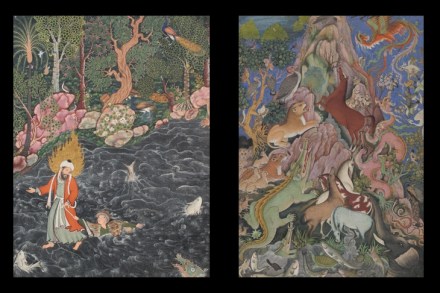
In Britain today, Islam in its original essence is not to be found in mosques or Muslim schools, but on the first floor of the British Museum. There, the Albukhary Islamic gallery, newly opened to the public, dazzles visitors and defies every certainty promoted by today’s hardline Muslim activists. This spectacular exhibition of objects from across continents and centuries shows us a history of continuity of civilisations, coexistence of communities. It offers a compelling corrective to current popular notions of Islam as an idea and a civilisation. Too often, we assume that Islam’s arrival on the world stage involved some violent break with the past that brought forth a new Muslim civilisation.

Stranger danger

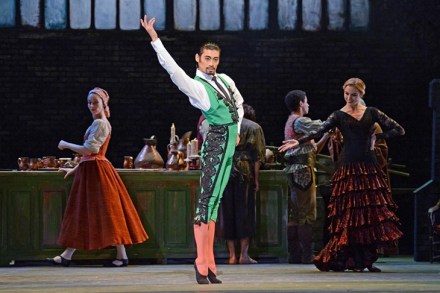
Like it or not, provincial ballet audiences love a story they can hum and any director planning to tour a swan-light, sugar plum-free menu has always done so at their peril. Tchaikovsky isn’t compulsory: a really well-known story, however undanceable, can usually do decent business (Northern Ballet’s extremely silly Three Musketeers is a reliable granny-magnet). But less familiar titles can be box-office poison — as English National Ballet is forever discovering. When the former Royal Ballet star Tamara Rojo took over in 2012, she immediately set about breaking down the vanilla tastes of ENB’s regional fanbase with a lavish new production of Le Corsaire.

Cypress Hill: Elephants on Acid

Grade: A+ Easily album title of the year, maybe album of the year. A true bravura offering from these supposedly tired old men. Cypress Hill are now in comfortable middle age, almost as old as me, ffs. But they were ever ludicrously inventive and idiosyncratic, right back to that first album in 1991, which wrote the template for many lesser and even more profane hip hop gods. This one is mired in psychedelia, as even Charles Moore might have guessed from the title. There are very knowing nods to, especially, early Jefferson Airplane — although the guitar sounds more like Barry Melton than Jorma Kaukonen — and Sly and the Dead and Moby Grape.

Christine and the Queens: Chris

Grade: B– Ooh goody — a parade to rain on! You wouldn’t believe the hyperbole expended by the rock critics on this middle-class French lass, real name Héloïse Letissier. Or maybe, being used to such mass gullibility, you would. ‘Bogglingly intelligent’ and ‘a thrillingly uncompromising artist, playing with ideas of gender, identity and individuality to pop-bright melodies’, for example. Her first album in English, Chaleur humaine, was similarly bestrewn with pop-hack ejaculate, to the extent that it resembled a plasterer’s radio. Why? Oh, check out the back story. Very gender fluid. Leftie. French. Channelling early 1980s electro pop and dance. And here she is with her hair cropped and calling herself Chris.

MacMillan’s #MeToo minefield

Kenneth MacMillan’s Mayerling is a #MeToo minefield. Crown Prince Rudolf of Austria-Hungary is a serial seducer, a man of many mistresses, a grabber of princesses. Were he alive and kissing today, he’d check himself into an Arizona rehab clinic. In 1889, it was laudanum and a loaded pistol. Rudolf ought to be tormented, driven by ennui and the oppression of the imperial court to darker and darker thrills. Ryoichi Hirano, who opens the Royal Ballet’s 2018/19 season as the Crown Prince, is not dark enough. It is his debut as Rudolf and his performance is studied and contained. Hirano is handsome, tall, Apollonian.

Ballet’s Antichrist

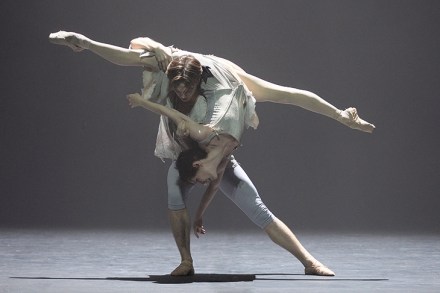
William Forsythe has been called a lot of things in his four decades as a dancemaker: wilful provocateur, ‘pretentious as hell’, even ballet’s Antichrist. But nothing, he claims, to warrant US government officials showing up, unannounced, at his door and threatening him with arrest. Had he been reported by an angry dance purist, perhaps? After all, this is the choreographer who has done more than any other to push the limits of what ballet can be, the great forward-thinker hailed for his athletic, sometimes bewildering, deconstructions of an art form that goes back centuries. It’s gained him an army of devoted (read obsessive) fans, but also some vocal detractors.