More from Arts

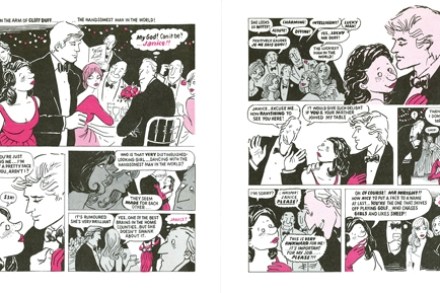
Gerald Scarfe meets Dr Seuss

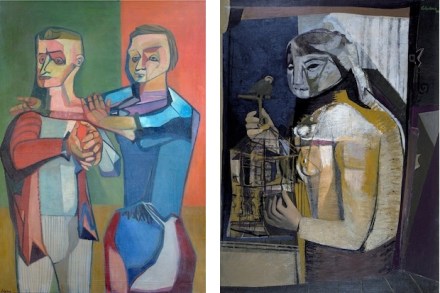
Holding the International Surrealist Exhibition in London in 1936 was a coup for the British avant-garde, putting newbie surrealists such as Paul Nash and Roland Penrose on an equal footing with founding members of the European movement. But André Breton, who opened the show, was unimpressed by Nash, Penrose and co. Instead, he singled out two complete unknowns, Grace Pailthorpe and Reuben Mednikoff, as ‘the best and most truly surrealist’ of the British contingent. Pailthorpe and Mednikoff came out of nowhere. He was the artist son of a Russian-Jewish tinplate maker from the East End; she was the daughter of a Sussex stockbroker and had served as a surgeon during the first world war before training as a psychoanalyst.

#MeToo Medusa

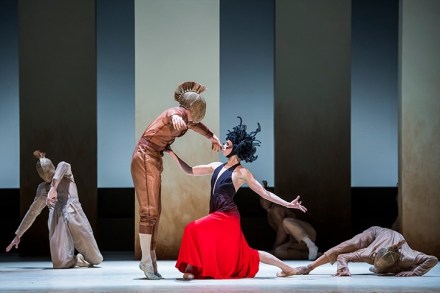
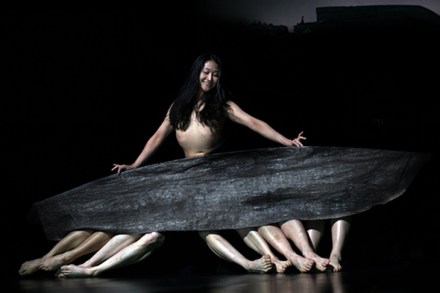
Medusa is the bad hair day from Hades. Sidi Larbi Cherkaoui’s retelling of the Greek myth is frizzy, tangled and splitting at the ends. The premise is promising. This Medusa story is a Perseus prequel: the girl who became a gorgon. The young Medusa (Natalia Osipova) is a priestess at the temple of Athena (Olivia Cowley). Her beauty is legend and the sea god Poseidon (Ryoichi Hirano) is keen to get his webs on her. Poseidon rapes Medusa and angers the virgin goddess Athena. But it is Medusa, not Poseidon, who is punished. Athena makes Medusa a monster. Then along comes Perseus (Matthew Ball), no hero he, to cut Medusa a savage short back and sides.

Vampire Weekend: Father of the Bride

Grade: B– One of the things not to like about Vampire Weekend, other than their cloying preppiness, Ezra Koenig’s ingratiating voice, the bizarre cultural appropriation that never gets called out and the Upper West Side archness of the lyrics, is the fact they rarely put more than two decent songs on an album. That’s true right back to their very first: does anyone remember any song other than ‘Oxford Comma’ (their best by a mile) and ‘A-Punk’? This latest is a double album, so, faithfully sticking to the template, you get four decent songs. Much of it, actually, is pleasant in a slightly insipid Paul Simon kinda way. Very little offends, the hideous clunker ‘Sunflower’ aside.

Peter Doherty & the Puta Madres

Grade: A Old skag head’s back, then — older (40 now!), probably none the wiser, still a very good songwriter. This may be the best thing he’s ever done, at least since those incendiary first moments of the Libertines. Yeah, I can do without the affected drawl skittering this way and that around the melody — he’s better doing his affected Steve Harley yelp — but there’s not too much of that, still less the old angular post-punk guitar. Instead you get the occasional lo-fi shambolic babyish jug-band thrash, all of which are good, and a bunch of slower songs illustrated with violin and delicately picked guitar.

What next for Notre Dame?

Notre Dame is only important from a Shakespeare’s-birthplace point of view. Architecturally it is a nullity beside the cathedrals of Beauvais and Laon, Albi and Marseille, Rouen and Clermont-Ferrand (a sinister marvel of black tufa). The ashes of the cathedral are now the site of a proxy struggle between some of the greatest fortunes on the planet. The struggle has begun with the architectural competition announced by the widely loathed Macron and the so far less loathed PM Édouard Philippe. How will the competition be conducted?

Billie Eilish: When We All Fall Asleep, Where Do We Go?

Grade: A– If your 12-year-old daughter’s a bit thick, she probably likes Ariana Grande. Come on, dads — you’ve got to face up to this stuff, you’ve got to JUDGE. Be ruthless. If, however, she’s a bit smarter, but also sullen, lazy and probably prone to self-harming, she’ll be a big Billie Eilish fan. Only just 17, from Los Angeles, Eilish is kind of sparse and woke emo electropop misery, very self-consciously ‘edgy’. An agreeably large number of her songs seem to be about killing herself, or just ceasing to exist. The rest are a little darker, and terminally angst-ridden.

Electrifying and strange

‘Where was the Kahlo brow?’ asked my guest in the first interval of English National Ballet’s She Persisted, a triple bill celebrating female choreographers. She was right: Frida had been plucked. It was an odd decision for a production that does not otherwise shy from ugliness. Broken Wings, a ballet inspired by the life of Frida Kahlo by Belgian-Colombian choreographer Annabelle Lopez Ochoa, was first performed in 2016 and is revived here in a carnival of Tehuana skirts, antler bonnets and capering day-of-the-dead skeletons. The surrealist André Breton likened Kahlo’s art to ‘a ribbon around a bomb’ and that is Katja Khaniukova’s Kahlo: silken and explosive. We see her first as a teenager, all possibility, lifts and lightness.

Menace and magnificence

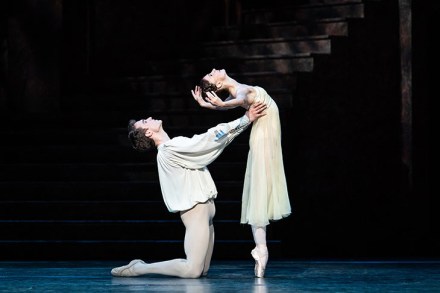
Two households, both alike in dignity. Capulets in red tights, Montagues in green. Kenneth MacMillan’s Romeo and Juliet opens in a piazza where the clash of swords makes a fifth section of the orchestra. Strings, woodwind, brass, percussion… and steel. If Shakespeare’s young bloods and blades once seemed remotely Renaissance, made romantic by distance, Verona’s knife-crime crisis is now horribly real and present. Romeo, Mercutio and Benvolio (Matthew Ball, Valentino Zucchetti and James Hay) make a convincing gang: pumped-up, freewheeling, anarchic. They goose the harlots, twit the nurse and goad each other in reckless acts of lads, lads, lads bravado. Their bragging, ragging gatecrashers’ dance is a tour de force.

Sublime salvage

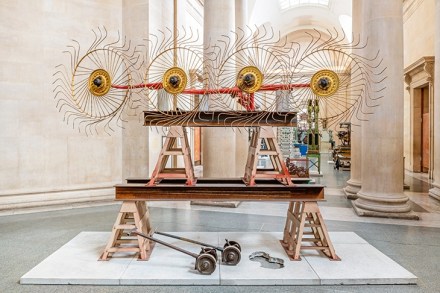
There was a moment more than 20 years ago when Bankside Power Station was derelict but its transformation into Tate Modern had not yet begun. I remember thinking, on a visit to the site, how beautiful and impressive the huge rusting generators looked — like enormous real-life sculptures by Anthony Caro. Nothing that has since been exhibited in what came to be called the Turbine Hall has looked quite so strong. A quarter of a century later, the artist Mike Nelson has reversed the process — not at Tate Modern, but at Tate Britain where he has filled the Duveen Galleries with massive pieces of redundant machinery: cement mixers, engine blocks, metal filing cabinets, drill bits, racks, scaffolding and pallets of rough, functional wood.

Some like it hot | 14 March 2019

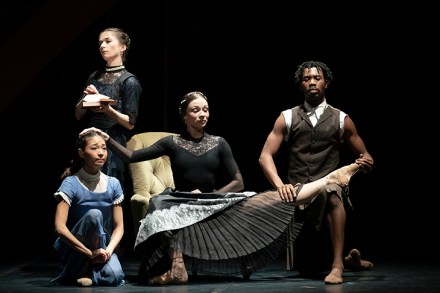
Blame Kenneth MacMillan. The great Royal Ballet choreographer of the 1960s, 70s and 80s was convinced that narrative dance could and should extend its reach beyond boy meets sylph and began wrestling with heavyweight essay subjects such as the fall of the Austro-Hungarian empire (Mayerling) or the last of the Romanovs (Anastasia). And now look: Queen Victoria, the pointe shoe years, a bold, good-looking ballet that almost triumphs over the absurdity of its premise. Cathy Marston’s latest work for Northern Ballet follows the success of her 2016 Jane Eyre, a spare, clever reworking of the novel that will be danced by American Ballet Theatre in New York this June.

Short circuit

Choreographer Richard Alston is now 70 and his latest outing at Sadler’s Wells is a greatest hits medley. As with all clip shows, some of it is super, some soporific and some merely meh. We begin with Martin Lawrance’s Detour, first performed last year. The piece is a powerful hybrid of fluid dance and martial arts: kung fu meets pas de deux. The raking lamps by designer Zeynep Kepekli spotlight dancers in washed indigo and ochre tunics. The final image of a male dancer spinning his female partner like a storm-warning weather vane is striking. The trouble with minimalist soundscapes (very Tubular Bells) is that unless the dancers control both breathing and landings, it all gets a bit huffy, puffy, thud.

Keep politics out of art

If you want to lose friends and alienate people in the art world, try telling them you support Britain leaving the EU. As someone on the left, I’ve always argued a left-wing case for leaving. It is, to say the least, an unfashionable position, usually met with anxious looks, sullen silence or overt hostility from one or other artist, curator or art bureaucrat. That the art world should be against Brexit should come as little surprise.

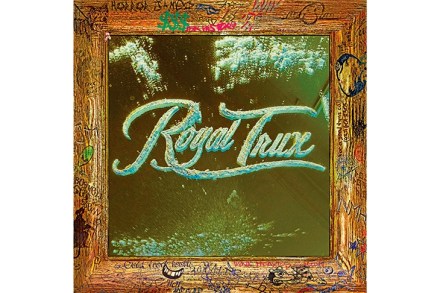
Royal Trux: White Stuff

Grade:A Royal Trux are back — kind of. Singer (if that’s what you want to call what she does) Jennifer Herrema is ankle tagged for some misdemeanour, almost certainly involving narcotics, so may not show up at some gigs to promote the new album. And her partner and ex-husband Neil Hagerty has washed his hands of the whole business: ‘The album — I didn’t approve of it. I have no idea what it is. I’ve heard like ten seconds of one song. I’m out, man.’ So as ever, it’s chaos all round, opiate chaos. How these two people are still alive is a wonder. How they crawled from their shack in Virginia to muster the energy for a new album is also a miracle. A wonderful miracle.

You’ve been trolled

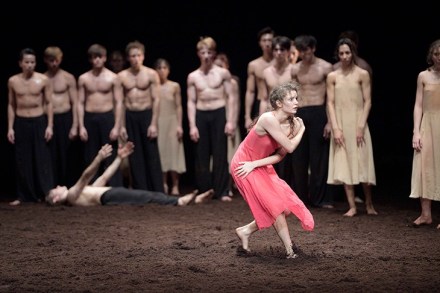
Please believe that I try to give every production my full attention, to do due diligence, to blink and miss nothing. But when, halfway through Tanztheater Wuppertal Pina Bausch’s Since She, one of the male dancers appeared on stage with cowbells attached to his willy, I’m afraid I spent a fair few minutes looking hard at my notebook. The cowbells are not the strangest thing in this night of the grotesque. Since She is both danse macabre and Grand Guignol. A woodchipper whirrs at the back of the stage, the set is a mountain of mattresses. One man sniffs a sausage, another turns a spit. A woman defecates into an omelette, another is dragged across stage with wine glasses balanced on the fan of her hair.

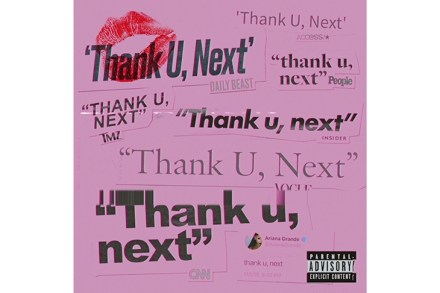
Ariana Grande: Thank U, Next

Grade: D Among the many reasons for moving to Iran is this vapid, talentless, derivative, hyperbolically oversexed drivel aimed at your 11-year-old daughter. The land of the mad mullahs is about the only place on earth you’ll be able to avoid this unmitigated crap, a collection of chemically processed ur-songs that make Taylor Swift seem like Debussy. It’s No. 1 everywhere you look. The UK, the USA, Australia, Ireland… hell, you hear this stuff and think to yourself, Christ, I have to escape — maybe to some glacier in the far north of Iceland, or to the wolf-infested lower slopes of the Tatra mountains in Slovakia. Nah, sorry. No. 1 in those places too. Face it: Iran or bust. Forswear alcohol and infidelism.

On Van Gogh and Rembrandt

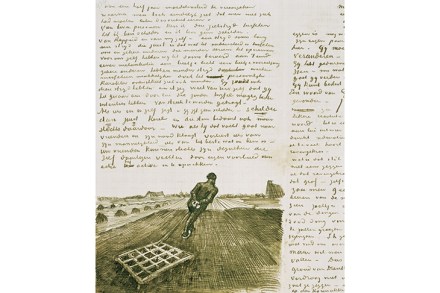
Being in the south of France obviously gave Vincent an enormous joy, which visibly comes out in the paintings. That’s what people feel when they look at them. They are so incredibly direct. I remember in some of his letters Vincent saying that he was aware he saw more clearly than other people. It was an intense vision… [H]e must have been doing some very concentrated looking. My God! After working for a long time, I get very tired eyes. I just have to close them… Photographs of those fields around Arles that Van Gogh painted wouldn’t interest us much. It’s a rather boring, flat landscape. Vincent makes us see a great deal more than the camera could.

Dancing up a La Mancha storm

The trouble with Don Quixote is Don Quixote. Whenever the doddering, delusional Don is onstage, tilting at windmills, riding his straw-and-sawdust nag on wheels, jousting with bedposts, our spirits and sympathies suffer. Quixote’s quest only really works as an excuse for Kitri, Basilio, Espada the Matador and Mercedes the street minx to dance up a La Mancha storm. This they do, with bells on. In toreador waistcoat, tight taleguilla and pink stockings to match his cape, Ryoichi Hirano is the Mata-phwoar. The corps de ballet swoon and flutter. He is sexy, even caddish. I was a Hirano doubter, but this was a magnificent performance: athletic power matched by classical control. A bullfighter one moment, ballerino the next. Laura Morera as his firebrand lover Mercedes is underpowered.

Outsider art | 21 February 2019

If you’re tired of hygge then you’ll like Harald Sohlberg. The Norwegian painter  eschewed the cosy fireside for the great outdoors, eager to see what view might greet him as he wandered the woods and country roads of Norway in the failing light. While his contemporary Nikolai Astrup filled his landscapes with people, Sohlberg preferred to bring nature to the fore, at once unnerved and mesmerised by its power. He excelled at depicting the scene just stumbled upon or left behind. In ‘Summer Night’ (1899), a table is set for two on a veranda overlooking the Kristiania Fjord off what is now Oslo. The glasses are half full, the fruit sliced but abandoned, the door of the house ajar. Have the diners slipped inside? Then look at the sunset they are missing.

The Dandy Warhols: Why You So Crazy

Grade: A– I’m here to make you feel old. It’s now nearly 20 years since the pleasing, laconic, Stones pastiche of ‘Bohemian Like You’ hit the charts, the breakthrough song of these faux-indie Portland slackers. They were ever a little despised, even then, partly for their pop sensibilities and partly because there is indeed something supremely irritating about them. Courtney Taylor-Taylor’s confected, ironic vocals, for a start. Courtney Taylor-Taylor’s name, for a second. Everything was a knowing pastiche, the catchy slabs of krautrock, the electronic noodling, the interminable hippy mantras. But they could write songs, at least — and they were cutely inventive with noise. Not much has changed — neither the format nor the derision.

Resident Evil 2

Grade: B Resident Evil 2 takes the original zombie shooter, which has become a cult classic and, to many, the quintessential horror video game, and gives it a lick of digital paint. Gone are the blocky hallways of the Raccoon City police station, along with the slow moving hordes of undead who, if you squinted, might’ve had a pixel of drool at the corner of their mouth. In their place is a German expressionist labyrinth of disorientating shadows, and antagonists so realistically putrefied the game ought to come with the sort of warnings they put on particularly pungent cheese.