Leading article

Theresa’s first mistake

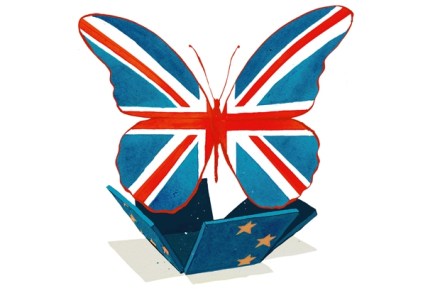
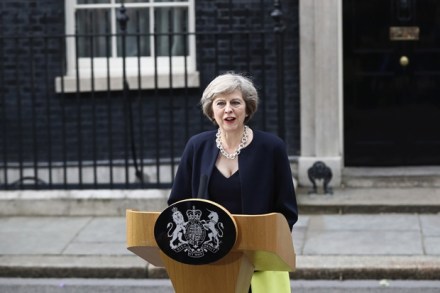
This week's lead article, as read by Lara Prendergast Helga Hunter met her husband Michael when he was a Scots Guardsman serving in Münster in 1968. She moved back with him, and they have lived in Britain ever since. Last week, she was astonished to receive a letter from the Scottish National Party saying that she is still ‘welcome in Scotland’ and faces ‘no immediate changes’ to her status due to the Brexit vote. But as a German national, she now faces ‘great uncertainty over how events will unfold’. To the SNP’s enemies, this seemed a deplorable scare tactic intended to fuel indignation and stoke demand for a second independence referendum. It’s certainly deplorable. But in fact, the scare tactic came from Downing Street.
Cameron’s Legacy

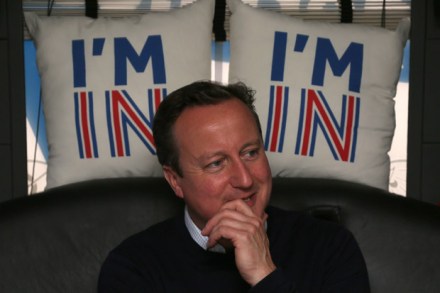
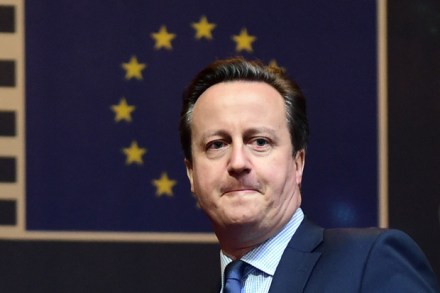
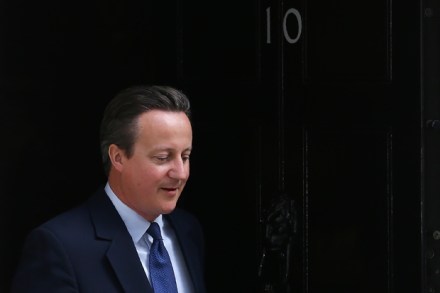
Midway through his final cabinet meeting, David Cameron realised — with some horror — that it had turned into a political wake. Theresa May had just lavished praise upon him, and his eyes had moistened. Then it was George Osborne’s turn: the Chancellor was a bit more humorous, but no less affectionate: ‘Being English, David, you’ll hate all this praise,’ he said. ‘You’re quite right,’ Cameron replied. ‘I am English, and I don’t much like it.’ Fearing that every member of his government was about to deliver an elegy, he brought the meeting to an abrupt end. Defining Cameron’s legacy is an important task for the Conservatives if they are to build on it.

The shame of Iraq

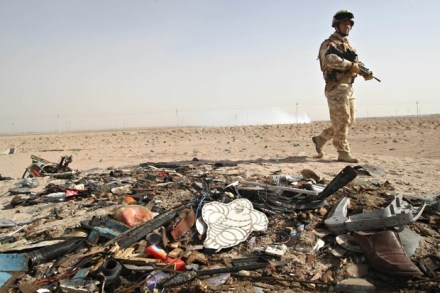
‘If it falls apart, everything falls apart in the region’ — Note from Tony Blair to George W. Bush, 2 June 2003.   Instead of asking why we fought the war, we should ask why we lost The extraordinary length of time that we have had to wait for Sir John Chilcot’s report into the 2003 invasion of Iraq has not made the end result any more satisfying. For some, nothing less than the indictment of Tony Blair on war crime charges would have sufficed. As for Blair himself, and many of those who surrounded him when the decision was made to remove Saddam Hussein from power, they will go on believing until their dying day that not only was the war just, but there was nothing much wrong with the way in which it was sold to the public and to Parliament.

A vote of confidence

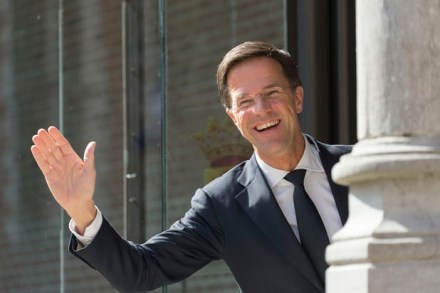
During the referendum campaign, it seemed at times as if a competition was on to issue the most hyperbolic claim of what might happen should the British public vote to leave the European Union. Now politicians and commentators are competing to come up with the most hysterical assessment of the British decision to leave. Leading the field is Mark Rutte, the Dutch Prime Minister, who declared that ‘England has collapsed: politically, monetarily, constitutionally and economically.’ In other words: without us, you’re nothing. Politics in collapse?

Can you forgive him? | 23 June 2016

David Cameron bet everything on winning this European Union referendum. He lost. His resignation was inevitable, but the timing was not. Indeed, scores of pro-Brexit Tory MPs had signed a letter asking him to stay as Prime Minister - or, at the very least, not walk out of No.10 on the morning after the vote. Yes, he would not be the best person to lead Brexit talks – but these talks could be several months, perhaps years away. So there was no reason to rush for the exit and plenty reason not to do so. Brexit vote was always going to create uncertainty in the financial markets. Adding political uncertainty, in the form of a Prime Ministerial resignation, was never going to help.

Out – and into the world

  The Spectator has a long record of being isolated, but right. We supported the north against the slave-owning south in the American civil war at a time when news-papers (and politicians) could not see past corporate interests. We argued for the decriminalisation of homosexuality a decade before it happened, and were denounced as the ‘bugger’s bugle’ for our troubles. We alone supported Margaret Thatcher when she first stood for the Tory leadership. And when Britain last held a referendum on Europe, every newspaper in the land advocated a ‘yes’ vote. Only two national titles backed what is now called Brexit: the Morning Star and The Spectator. Our concern then was simple: we did not believe that the Common Market was just about trade.

The leap

This week the Prime Minister devoted a speech to what he regarded as six lies being told by his opponents in the EU referendum campaign. He later confessed that the idea for the speech had come to him while watching the news at 9 p.m. the previous evening. It would have been better if he had contented himself with shouting at the television, rather than adding yet more rancour to what has become a slanging match. Most voters tune into an election campaign only in its final few weeks; those who do so now will find nothing but hysteria, hyperventilation and obloquy. Where, it is often asked, are the facts? If we can distil the arguments down to the most salient points, what are they?

Continental drift | 2 June 2016

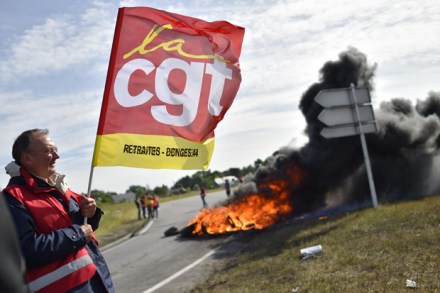
It is a long time since the term ‘sick man of Europe’ could be applied to Britain. France is now a worthier candidate for the accolade — it -increasingly resembles a tribute act to 1970s Britain. A package of modest labour-market reforms presented by a socialist president has provoked national strikes on the railways and Air France. This week, the streets of Paris resembled one big Grunwick or Saltley Gate — the trials of strength between employer and union in which so many of Britain’s most bolshy trade unionists cut their teeth. This week is not a one-off: in recent years France has had a strike rate more than twice that of Denmark, its nearest European competitor. Britain now looks a paradigm of -industrial virtue by comparison.

Losing faith

A landmark in national life has just been passed. For the first time in recorded history, those declaring themselves to have no religion have exceeded the number of Christians in Britain. Some 44 per cent of us regard ourselves as Christian, 8 per cent follow another religion and 48 per cent follow none. The decline of Christianity is perhaps the biggest single change in Britain over the past century. For some time, it has been a stretch to describe Britain as a Christian country. We can more accurately be described now as a secular nation with fading Christian institutions. There is nothing new in the decline of the church, but until recently it had been a slow decline.

Lies, damned lies and…

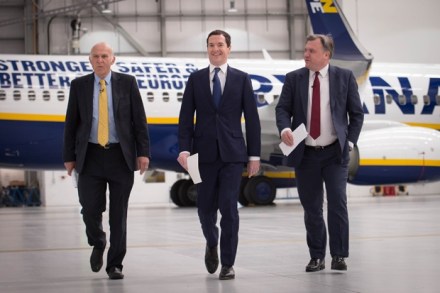
A Ryanair plane in a Stansted hangar was not the best backdrop for George Osborne’s claim that the economic argument about the European Union is now over and that his ‘consensus’ has prevailed. In recent years, Ryanair has lost its status as the fastest-growing budget airline in Europe: that honour goes to Norwegian Air, which has thrived outside the EU. And on the day of the Chancellor’s speech, a group of Ryanair passengers had announced their intention to take out a lawsuit against the company for what they see as unfair tricks to disguise the true cost of tickets. The Chancellor does the reverse of Ryanair: he tries to frighten us about the imaginary costs and charges of a ticket to Brexit.

What Brexit won’t fix

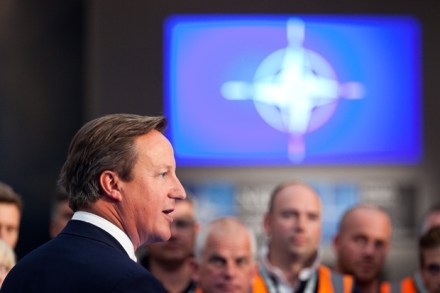
The Leave campaign was right to pour scorn on David Cameron’s warning this week that Brexit could threaten Europe’s military stability and lead to war. Boris Johnson mocks the Prime Minister about his prophecy on page 14. If Cameron really believed that Britain leaving the EU could lead to war in Europe, why on earth did he risk having a referendum at all? Why was he suggesting until a few weeks before his negotiations with EU leaders that he would consider voting for Brexit if he didn’t get his way? It’s easy to tease the increasingly shrill alarmism of the Remain campaign. But it is harder to say how exactly leaving the EU would make things better.

The imposter

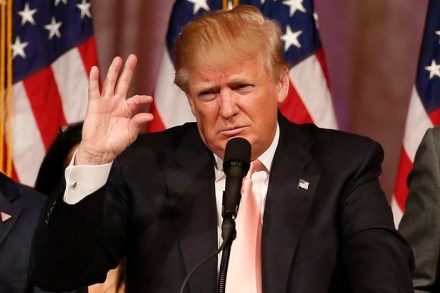
Following Tuesday night’s Indiana primaries, the race for the Republican nomination is effectively over. Talk of Donald Trump being overhauled in a contested convention in July evaporated when Ted Cruz withdrew from the race after seven successive defeats. Compromise candidates have ruled themselves out, and Trump’s former opponents are reluctantly rallying around. It really has come to this: the people of the most powerful country on earth will be asked to choose between Hillary Clinton and her former campaign donor Donald Trump. It cannot be assumed that Trump will be defeated in November. This week, for the first time, a poll put him ahead of her.

Fear and loathing

Strange as it may seem, there are still people around David Cameron who regard the Scottish referendum campaign as a great success. Yes, they say, the nationalists didn’t like the original ‘Project Fear’ — the attempt to frighten Scotland into voting no — but it worked. Alex Salmond was defeated by a 10 per cent margin — proof, it’s argued, that relentless negativity works. Those who complain about it are either losers, or too squeamish to win. Andrew Cooper, chief of the Scottish ‘in’ campaign, said afterwards that the only criticism he would accept is that it was not negative enough. This attitude is a poison in the bloodstream of the Conservative party.

Cut the claptrap

So far the campaign for the EU referendum has resembled a contest as to which side can spin the most lurid and least plausible horror stories. On the one hand, the ‘in’ campaign claims that we’ll be £4,300 worse off if we leave; that budget airlines will stop serving Britain and that we will become more prone to terror attacks. Not to be outdone, the ‘out’ side warns that we will be crushed by a fresh avalanche of regulation and immigration, and more prone to terror attacks.

Fit to print

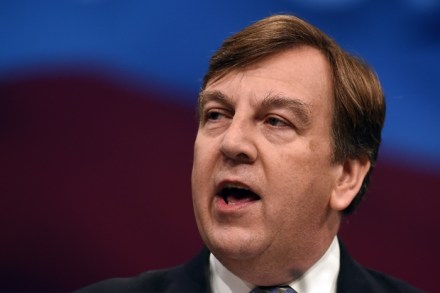
For weeks, Westminster has been full of rumours about the private life of a certain cabinet member. It was said he had started to visit a dominatrix in Earl’s Court but ended up falling in love with her and taking her to official functions. Like a Westminster remake of the film Pretty Woman, in fact, but with the Culture Secretary, John Whitting-dale, playing the part of Richard Gere. There was much comment in Parliament about this, and jokes about what London is coming to if an MP has to travel all the way to Earl’s Court for such services, when they used to be available a stone’s throw away from the Commons. And on it went. The story did not appear in the press for a simple reason: it was, in most part, an invention.

The road to Panama

The 11 million documents leaked from Panama lawyers Mossack Fonseca tell us much that we know already. It’s hardly news that the Central American state is a popular destination for those who dislike paying tax. But to obsess about this aspect of the story, as so many did this week, would be to miss the most striking discovery, which is just how many politicians and government officials have been using Panama to disguise their extraordinary wealth. Few were under any illusions about Vladimir Putin being a good and faithful public servant, yet it comes as a surprise that he appears to have a personal fortune that would have made the tsars look like paupers.

Power failure | 31 March 2016

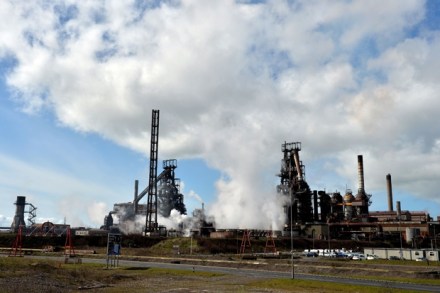
A fortnight ago, the energy minister, Andrea Leadsom, declared grandly that Britain, alone in the world, would commit to a target of reducing net carbon emissions to zero. ‘The question is not whether but how we do it,’ she told Parliament. It is now becoming painfully clear how this target will be reached: not by eliminating our carbon emissions but by exporting them, along with thousands of jobs and much of our manufacturing industry. This week, Tata Steel announced that its entire UK business is to be put up for sale. That came after Stephen Kinnock, whose South Wales constituency includes Tata’s giant plant at Port Talbot, joined a union delegation to the headquarters of Tata Steel in India to beg the company to keep the plant open.

The jihad continues

On Tuesday morning Belgium was the latest European country to suffer a major terrorist attack. It is a disturbing reminder of the war that has not gone away. After the arrest of Salah Abdeslam, chief suspect over atrocities at the Bataclan centre in Paris last November, Belgian officials warned of the prospect of revenge attacks: perhaps spectacular atrocities, aiming at killing hundreds. They came four days later in Brussels airport and Metro — a demonstration of the jihadis’ ability to act quickly. After such an attack we can expect to be offered a blizzard of explanations, many of them erroneous. One commonly heard claim is that Islamist terrorism is a response to western foreign policy. Yet few countries have been less active in foreign policy than Belgium.

Why Trump prevailed

If the Republican party were a company, it would now file for bankruptcy. Donald Trump, arguably the most grotesque candidate ever to have run for the Oval Office, seems certain to be the party’s presidential nominee. The former favourite, Marco Rubio, lost in his home state of Florida on Tuesday and has now bowed out of the race. After seven years of deeply unimpressive government from a divisive and ineffectual Democratic president, American conservatism has been unable to offer voters a convincing alternative. A candidate as flawed as Hillary Clinton should be easy to beat.

Turkey’s blackmail

Looked at from the narrow perspective of how to deal with the lethal business of human trafficking across the Aegean, this week’s deal between the EU and Turkey shows some encouraging signs. Slowly, the EU seems to be realising that the surest way to stop migrants dying in unseaworthy boats is to adopt similar measures to those used by Tony Abbott the former Australian Prime Minister: turn back the boats, and deport those who land illegally. The Australians paid Malaysia to help handle the migrant problem. The EU is paying Turkey more than £4 billion over the next three years to contain 2.5 million refugees. The problem, however, is that Turkey is being offered more than money.