Leading article

Power and the people

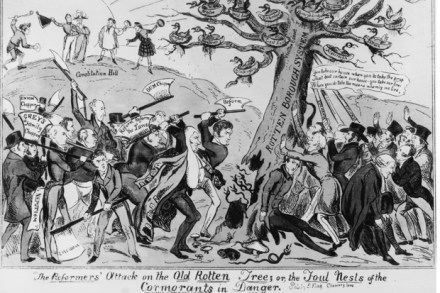
When The Spectator was founded 188 years ago, it became part of what would now be described as a populist insurgency. An out-of-touch Westminster elite, we said, was speaking a different language to the rest of London, let alone the rest of the country. Too many ‘of the bons mots vented in the House of Commons appear stale and flat by the time they have travelled as far as Wellington Street’. This would be remedied, we argued, by extending the franchise and granting the vote to the emerging middle class. Our Tory critics said any step towards democracy — a word which then caused a shudder — would start a descent into chaos. On the contrary, we said, the choice was between reform or a ‘revolution of the most sweeping character’.
Brexit strategy

For months, now, a hunt has been on for the government’s Brexit strategy. Theresa May has quite rightly refused to disclose it. She knows that the European Union needs to be seen to make Britain suffer. She will have to ask for for a lot, only to back down so the EU can have its pound of British flesh. The hope is that she can then emerge with what she wanted all along. So a game of bluff is under way. This has created a rather unsatisfactory situation where Parliament wants to know where she will draw the line, and she refuses to say. Her every word is scoured for clues. None have been forthcoming.

Just managing

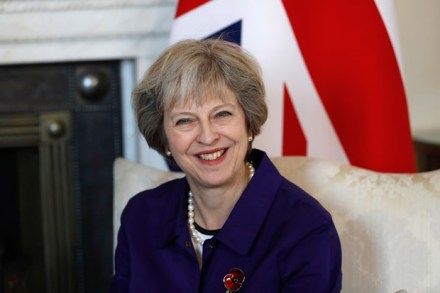
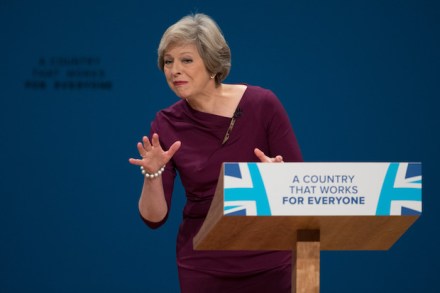
From the moment she arrived in 10 Downing Street, Theresa May has been commendably clear about her economic priorities for Britain. She wants the country to be a beacon of free trade, at a time when protectionism is on the rise the world over. She is annoyed at the way in which quantitative easing has manipulated asset prices, making property unaffordable. And while David Cameron was very successful in raising the incomes of those at the bottom, she is concerned that those in the middle have not fared as well. She wants a ‘country that works for everyone’ — that is to say, one where effort is always rewarded. This is, alas, no cliché.

Jail break

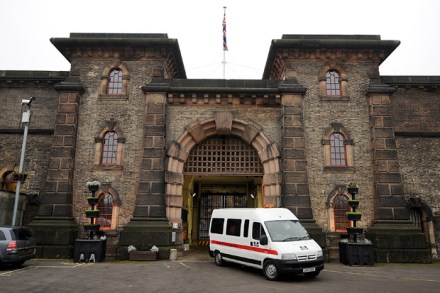
One of the stated objectives of this week’s brief strike by prison officers was to publicise the dire conditions in many of our jails. In this regard, as in many others, it was a failure. The strike triggered discussions as to whether it was legal (it wasn’t, the High Court ruled) and questions about how exactly it helped prison safety to abandon the wings to the inmates for the day. But there is all too little awareness of or concern about the increasingly desperate living conditions of those sentenced to spend time at Her Majesty’s pleasure. Order seems to be breaking down.

America’s retreat

Donald Trump predicted that his election would be ‘Brexit times ten’ — which, as far as the stockmarket reaction was concerned, had some merit. The dollar plunged, and the Dow Jones along with it. Once again, the pollsters have been confounded. Once again, political analysts have been left asking whether they know their country at all. And once again we can see the same group of voters at the forefront: the older, poorer ones who are concerned about demographic change and angry about being ignored for too long. In Britain, and now in America, they are the new revolutionary class. This is where the analogies with Brexit end. Vote Leave, the campaign for Britain to leave the European Union, was led by people who were liberal, globally minded and optimistic.

A passage to India | 3 November 2016

When a Prime Minister flies off abroad with a few business-leaders it is seldom worthy of comment. Such trade missions tend to achieve little, beyond generating headlines intended to flaunt politicians’ pro-business credentials. But with the impending departure of Britain from the European Union,-Theresa May’s visit to India next week, accompanied by Sir James Dyson and others, has huge significance. For the first time in four decades, a British Prime Minister can discuss doing trade deals — something which we have until now been forced to contract out to officials in Brussels. Mrs May has chosen her destination shrewdly. With its rapidly expanding economy and the gradual liberalisation of economic policy, India is everything that the EU isn’t.

Flights of fancy | 27 October 2016

An extra runway for Heathrow was first proposed by a Labour government — not Gordon Brown’s, or Tony Blair’s, but Clement Attlee’s in 1949. The revived scheme, announced in 2003, has taken 13 years to win government approval. Even now it’s unclear whether it will ever be built, given the legal, practical and political obstacles. The MPs who will vote on this in a year’s time will have difficult questions to answer. Is it wise to further entrench the power and pull of Europe’s busiest airport, rather than expand Gatwick and promote competition? And must we expect regional traffic to go via Heathrow for long-haul flights? Why not allow smaller airports to expand, so that Mancunians can fly to Manchuria without needing to go near London?

When Isis comes home

The Islamic State’s pretence to nationhood was based on the holding of territory. With the battle for Mosul this week, together with the loss of the land that it controlled in Syria, that pretence is becoming harder to maintain. The area involved is now limited to a few shattered cities, and corridors between them. The decline of this terror organisation is to be welcomed. But this is a war which can have no neat ending. If Isis were a genuine state, it would by now be forced to consider unconditional surrender. That is not going to happen. More probably it will dissolve, its leaders and lesser agents making an escape or going into hiding. There is a danger that many Isis fighters will attempt to return to the European cities from which they came and continue an underground jihad.

Universities challenged

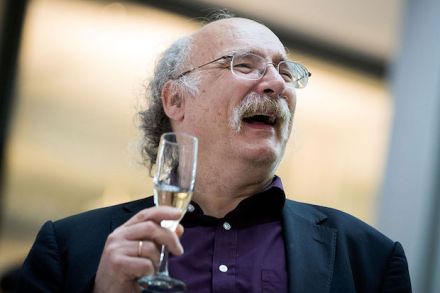
On the face of it, this year’s Nobel Prize awards have been a triumph for British scientists. No fewer than five laureates come from these shores: three physicists, one chemist and an economist. But before anyone starts praising our higher education system, there is one small snag: all five are currently working at US universities. David Thouless, who was awarded half the Physics prize, has followed a typical career path. After taking a degree at Cambridge, he took a PhD at Cornell University and a postdoc at the University of California before heading back to Britain, where he worked for 13 years at the University of Birmingham. There, he started the work that would eventually win him his Nobel prize.

Where are the ideas?

The Conservative party conference in Birmingham this week seemed a remarkably relaxed affair. The European question has been settled. Seldom has victory in the next-election looked more secure. The Labour conference in Liverpool had been a debacle, as the hard left set about picking off the remaining moderates. Diane James has resigned as Ukip leader after 18 days. It’s quite possible that her replacement could transform Ukip into a new working-class party — and then do to Labour in the north of England what the SNP has done to it in Scotland. One cabinet member put it well: the Tory party, he said, was like a piece of elastic that had been stretched much too far under David Cameron but has now been allowed to revert to a more natural position.

Deadly silence

There was a time when the humanitarian crisis in Aleppo would have featured strongly in political debate in Britain. Just two weeks after a negotiated ceasefire appeared to have provided some respite, a war of attrition in Syria’s second largest city is escalating into a vast human tragedy. Last Saturday, a bomb dropped by Syrian government forces knocked out a pumping station which had been supplying water to two million people, 250,000 of whom are besieged in the rebel-held east of the city. On the same day, at least 45 people, many of them children, were killed by barrel bombs dropped indiscriminately on civilians — a now common occurrence. Food supplies had already been running low, supply lines to rebel areas having been severed in early September.

Borderline sanity

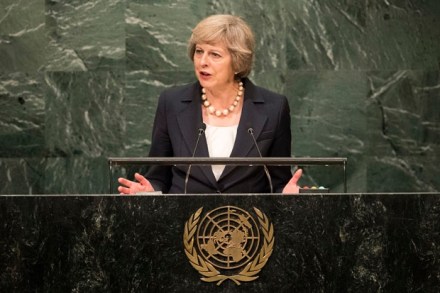
Only now does Angela Merkel concede that her admitting a million refugees last year was a mistake. It was obvious to most people in Europe at the time that her warm-hearted gesture would lead to catastrophic results. In declaring that all Syrian refugees would be welcome if they made it to Germany, she doubled the fortunes of the human trafficking industry. The asylum seekers came from Syria and North Africa through Austria and Hungary, having landed on the shores of Italy and Greece. Thousands died on the way. When Theresa May addressed the United Nations this week in New York, she was able to point to a British way of handling the crisis.

Defending Dave’s legacy

It is too early to tell what sort of Prime Minister Theresa May will turn out to be, but we already know who she does not wish to be. From the moment that she arrived in Downing Street she has been inclined to define herself as the Conservative antithesis of David Cameron. She has developed a code for it, saying she’s for ‘the many, not the privileged few’ — as if she is still seeking to portray the Tories as a Nasty Party that must wash away the memory of its old leader. David Cameron got the message and resigned this week: next, he’ll be airbrushed out of No. 10’s photographs to complete his transition from Prime Minister to unperson.

Migrant benefits

Calm is slowly returning to the debate about Britain and Europe. The shrillness of the referendum campaign, and the hysteria from people who ought to have known better, is giving way to an acceptance that the end is not nigh and that things could be as good, if not better, than before. The idea that the British public had somehow voted for a recession is being steadily abandoned. The next stage is to accept that Brexit was not a populist yawp about protecting our borders. It was not a demand to stop immigration, but to manage it better. So when Theresa May rejected an Australian-style points-based immigration system this week, it did not mean that she had betrayed Brexit or shown her desire to water down the whole process.

A rotten windfall

It’s strange that, even now, the Brexit vote is routinely referred to as an expression of anger or frustration — as if the most easily baffled half of the population had voted in response to forces they could not understand. In fact, the result of the 23 June referendum seems to look wiser with every week that has passed. Of course, leaving has its risks. But 52 per cent of voters judged that a greater one lay in staying in a European Union that is changing all the time — and invariably for the worse.

Better together

This time two years ago, the United Kingdom stood on the brink of dissolution. The referendum on Scottish independence hung in the balance and momentum was with the nationalists. The optimism and energy of Alex Salmond’s campaign stood in admirable contrast to the shrill hysteria of Project Fear, the name given to a unionist campaign that churned out ever-less-credible warnings about what would happen after separation. The union was saved, but 45 per cent of Scots had voted to leave it. So the referendum had not closed the question, but left it wide open. At the time, the North Sea oil sector was still in fairly good health. In the SNP’s economic manifesto for independence, it gave estimates of up to £7.9 billion a year for oil revenues.

Defending Brexit

One of the many incorrect predictions about this year’s referendum was that those who voted for Brexit would soon regret it. The theory was that these deluded souls only intended to lodge a protest vote, and would be overcome with buyers’ remorse as Britain fell headlong into a deep recession. Two months after the referendum, there is precious little regret. Polls suggest that just 5 per cent of those who backed Brexit wish they hadn’t; the same is true for those who voted Remain. However, the Remainers have moved quickly and effectively into post-campaign mode and have found a new vocabulary. Their new enemy is ‘hard Brexit’. They seize on every piece of bad economic news while rubbishing renegotiation prospects.

China syndrome

The Chinese government is unlikely to give Theresa May a panda in the near future. This week the country’s ambassador to London, Liu Xiaoming, left no one in any doubt that President Xi Jinping takes a dim view of Mrs May’s decision to review the deal for a new nuclear power station at Hinkley Point in Somerset — a deal through which China General Nuclear, the state nuclear-energy company, would have a one-third share. The Prime Minister was told that Anglo-Chinese relations are at a-‘critical historical juncture’. So she’d better play-nicely and approve that power station — or risk the wrath of Beijing.

Saving refugee lives

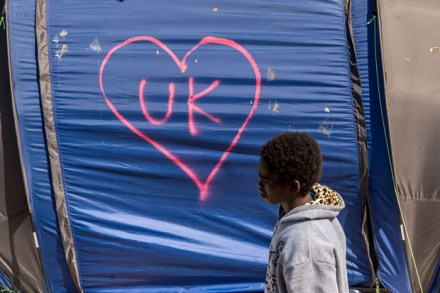
How should a country deal with refugees? This week the British government received an important legal vindication of its approach: the Court of Appeal overturned a High Court ruling in January that four Syrian refugees resident in the jungle camp in Calais could travel to Britain to have their asylum applications heard here. The Spectator’s leader, read by Lara Prendergast Under the Dublin Regulation, which governs the handling of refugees within the EU, it ought not to be possible for migrants in Calais to travel to Britain to make asylum claims. The rules are clear: refugees must make their asylum claims in the first safe country in which they arrive.

Hope vs gloom

For all Gordon Brown’s economic mistakes, he at least tried to build confidence in the British economy. In the build-up to the European Union referendum, David Cameron and George Osborne did the opposite. Osborne, as Chancellor, ignored the good news, accentuated the bad and tried to portray Britain as an economic weakling propped up by EU membership. He was joined by a great many investment banks who produced analyses saying that Britain’s life outside the EU would be catastrophic. Since the referendum, these anticipations of doom have continued. It is rather strange to watch. Encouraging economic news — the increase in high-street spending, the buoyant demand for jobs through recruitment agencies — is brushed aside.