Leading article

No left turn

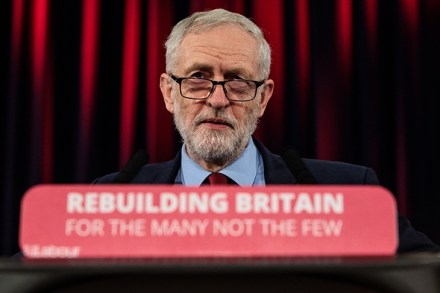
It would be easy to dismiss Jeremy Corbyn’s launch of the Labour party’s election campaign this week on the grounds that hardly anyone believes he has the slightest chance of becoming prime minister. But given that David Cameron was given a 0.5 per cent chance of winning a majority, and Donald Trump a 1 per cent chance of the presidency, it would be foolish not to take the main opposition party seriously. At the very least, Corbyn’s ideas need to be examined in order to understand why Labour finds itself in the position it does, and why no party leader to the left of Tony Blair has won a general election in over 40 years.
The art of the deal

If elections were decided on voter enthusiasm rather than on plain numbers, Marine Le Pen would win this weekend’s battle for the French presidency. But it seems likely that Emmanuel Macron’s more numerous but less passionate supporters will prevail — more for dislike of her than admiration of him. It is when he ends up in the Elysée that his problems will start. Can a president without a party command support in the National Assembly? Who will he appoint to his government? How quickly might it unravel? Domestic woes will likely consume Macron, with foreign policy a luxury he might not be able to afford. Reports of his hostility to Brexit are exaggerated: his adviser Jean Pisani-Ferry wrote a paper highlighting the folly of being beastly to the British.

Uniting the kingdom

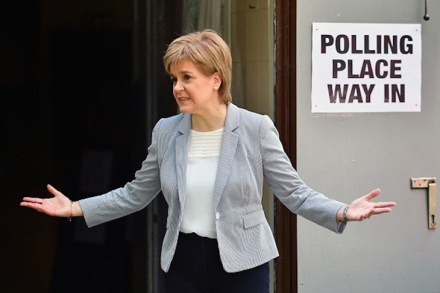
When launching the Scottish National Party’s election campaign, Nicola Sturgeon said the word ‘Tory’ 20 times in 20 minutes. For much of her political lifetime, it has been used by the SNP as the dirtiest word in Scottish politics. Nationalists have long liked to portray the Conservatives as the successors to Edward Longshanks: an occupying army with little affinity for the people they were trying to govern. But things are changing fast in Scotland. Amid the other political dramas of the past few months, the revival of Tory support north of the border has gone relatively unnoticed. They had only one MP after the last election, but a poll this week puts them on 33 per cent in Scotland — enough to win 12 seats.

May’s manifesto

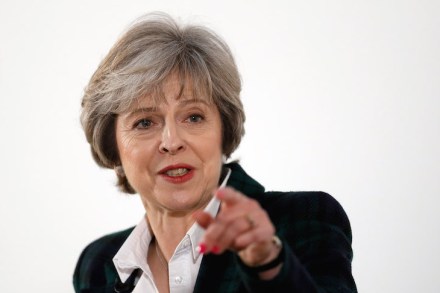
Never has the Conservative party entered a general election campaign feeling more confident about victory. Much of that confidence is due to the abject weakness of the Labour party, but much is also due to Theresa May. Since taking office she has made remarkable progress in setting out a clear vision of Brexit, unifying her party and stabilising the government. The levels of public approval she enjoys are so high that she will probably be forgiven for all the times she promised not to call a snap election. The reasons that she gave for the election — that she faces ferocious opposition from the Labour party and the Liberal Democrats — are spurious. She is holding a general election because she is a new Prime Minister who needs her own mandate.

Parting on good terms

Many EU officials would like to present the Brexit negotiations as a case of one nervous member, weak at the knees, appearing before a menacing and united panel of 27. But that ignores the political and ideological rifts which are already apparent in the EU. Britain’s departure not only necessitates the creation of a new relationship between us and them; it fundamentally shifts the balance in EU politics. As Angela Merkel has been worrying aloud in recent weeks, the northern European countries which have always tended to take a liberal position on economics and trade are going to have a harder job fighting off the protectionist instincts of the south.

Regressive Conservatism

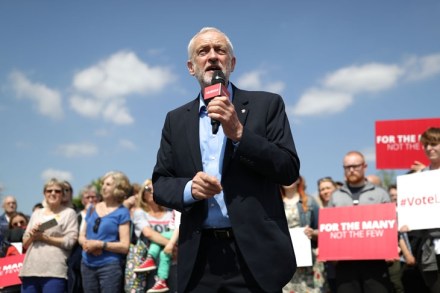
Jeremy Corbyn’s leadership of the Labour party is coming to resemble a drunk trying to get home on a bike. Most of the time he just pushes it along, but occasionally he mounts the saddle and whirls into action — only to find himself swiftly spread-eagled on the road. Take next month’s local elections. Corbyn launched his party’s campaign trying to bemoan the state of Britain. There are plenty of statistics which he could have trotted out to depict a country underperforming on living standards, debt levels and social mobility. But he chose to cite a supposed decline in life expectancy — which is demonstrably and famously wrong.

Moving on | 30 March 2017

Most people are glad to see the end of a referendum campaign, but the losing side always wants to keep going. Nicola Sturgeon has this week demanded a second vote on independence, in defiance of public opinion. And as Brexit talks begin, the country is still divided, with many people wishing to see the negotiations break down and the referendum result be overturned. The Prime Minister will need to fight these two battles in different ways. In Scotland, she must take care not to fall into the nationalists’ traps. Ms Sturgeon ran for office promising not to call a second referendum unless it was ‘clear’ that a ‘majority of people wanted a referendum’. At the time, the SNP expected support for independence to rise.

Saving the children

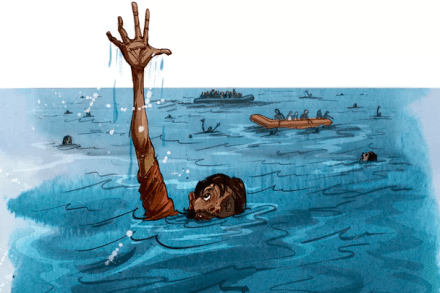
When a humanitarian tragedy disappears from our newspapers, there are two possibilities: that the crisis is over and life for survivors is gradually returning to normal — or that the human toll has become so routine as to no longer be considered newsworthy. Sadly, the deaths of migrants from North Africa and the Middle East as they attempt to cross the Mediterranean to seek a new life in Europe fall into the latter category. Eighteen months after the photographs of little Alan Kurdi’s body on a Turkish beach generated a huge swell of public emotion, entire families are still dying on a regular basis. In the first ten weeks of this year, some 525 people were lost crossing the Mediterranean. Europe is still no closer to ending this outrage.

Hammond’s humiliation

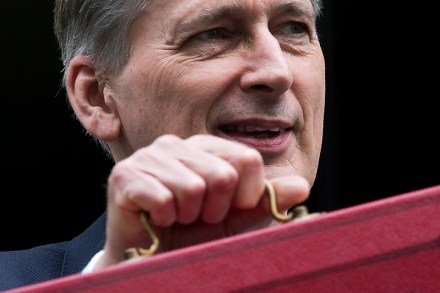
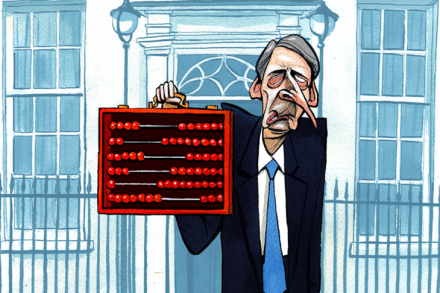
After Philip Hammond delivered his Budget last week, he went to speak to a meeting of Conservative backbench MPs. Several were deeply alarmed about his tearing up of their manifesto pledge not to raise National Insurance. One asked him how sure he was about all this. Would they find themselves going out to defend this tax rise to their constituents, only to find him abandoning the policy later? No, the Chancellor replied, he would not change his mind. This tax rise was the centrepiece of his Budget, and it could not be scrapped. He was not for turning. For a Chancellor to abandon his main Budget policy within a week is nothing less than extraordinary. It suggests a staggering lack of communication, forethought and basic political competence.

Ambition deficit

Some Budgets are historic, most are boring and a small number can be remembered as a disaster. After just a few months, Philip Hammond has managed a budget - his first - that can be placed in this last category. Economically, it made very little difference. Politically, it is shaping up to be a disaster. His Budget was supposed to have been conducted under the pledge, issued no fewer than four times in the 2015 Conservative manifesto, that his party not raise taxes. ‘Instead, we will ease the burden of taxation,’ the Tories promised. It seems plausible enough, and the Conservatives were returned with an absolute majority.

Carry on, Major

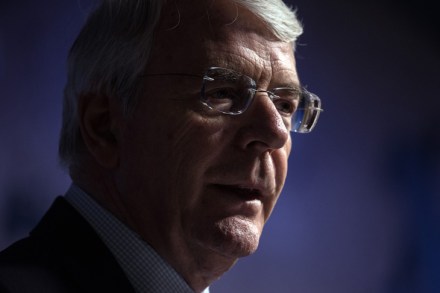
As Prime Minister, John Major was intolerant of opposition from within the Conservative party over the EU — memorably calling Maastricht rebels ‘bastards’. It was unwise, and the bad blood it created within his party has been swirling around ever since. Now that the tables have turned and Sir John now finds himself the rebellious outsider on Europe, it is tempting for those on the Conservative party’s Eurosceptic wing, who for so long were denounced as freaks, fruitcakes and swivel--eyed loons, to take the same approach. Their instinct is to denounce Sir John, Michael Heseltine, Ken Clarke and others as dinosaurs seeking to deny the will of the British people.

Lost boys | 23 February 2017

For a body supposedly committed to eliminating inequality between the sexes, the Women and Equalities Select Committee don’t exactly lead from the front. Only three of the 11 members are men. To some, this will be a welcome corrective to the still male-dominated House of Commons. To others (such as Philip Davies, one of the three male members), it is a sign of how, in Westminster, the cause of equality is narrowly focused on the interests of white professional women. There is not a single ethnic minority representative on the committee. This week, committee chair Maria Miller announced her ‘deep disappointment’ that the government has not adopted their proposals on closing the gender pay gap.

Labour’s love lost

Just as it seems that Labour has reached the bottom of the abyss, Jeremy Corbyn and his party somehow manage to find a new low. The latest nationwide poll puts them at 24 per cent, trailing the Tories by 16 points. No wonder Labour MPs look so boot-faced around Parliament, and an increasing number are hunting for jobs elsewhere. If a general election were called now, the Conservatives would win a huge majority. Labour would be further than ever from power, arguably even finished as a major parliamentary force. Polls are not rock-solid indicators of future electoral success or failure, but Labour’s ratings are so abysmal as to suggest a party facing an existential crisis.

Trump fever

Throughout John Bercow’s political career he has felt the need to atone for his student days when he was a member of the Monday Club. The Monday Club’s policy called for an end to Pakistani immigration, voluntary repatriation, and other ideas that would make Donald Trump blanch. Bercow now parades himself as a champion of liberal values and this week declared that he would not invite Trump to address Parliament on account of his ‘racism’ and ‘sexism’. He had welcomed China’s Xi Jinping and Indonesia’s President Yudhoyono, but decided he must draw the line at the President of the United States. In so doing, Bercow has helped demonstrate why Trump won the American presidential election. Through his bombastic language and taunting 3 a.m.

Victims of hysteria

This week, 49,000 gay men were granted posthumous pardons. Had Harold Macmillan’s government taken notice of this magazine in 1957 that number would have been far smaller. After the Wolfenden Report, we called for decriminalisation of homosexual acts between consenting adults and at the time we stood out among Fleet Street publications in taking this view, earning us the appellation ‘The Bugger’s Bugle’. It would be tempting to think that the pardons, which form part of the Policing and Crime Bill, mark the end of a dark chapter. No longer, we are invited to believe, could good people like Alan Turing — himself pardoned in 2013 — be hounded to their deaths by misplaced and misapplied hysteria.

Trading places | 26 January 2017

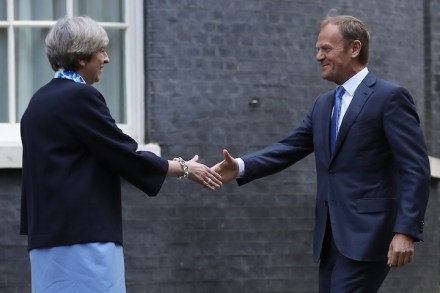
After any other US election it would cause little comment that the new president had chosen the British Prime Minister for his first meeting with a foreign leader. Yet this time, Theresa May’s trip to Washington feels quite a coup. She has fallen out of favour with her fellow EU leaders, sent home from December’s summit in Brussels without any supper as they tried to portray her as internationally isolated. Yet here she is being invited to the White House, lured with the promise of a trade deal. How long ago it seems that Barack Obama was threatening to send Britain to the ‘back of the queue’ if the country voted for Brexit.

Doing Brexit right

From the start of the European Union referendum campaign, competing visions of Brexit have been advocated. To Nigel Farage, the case for leaving the European Union was all about what we did not like (the diktats, the immigration, etc). This played into the caricature cleverly presented by the Remain campaign: the shaking fist of Little England, a country that had had enough of foreigners and the tolerance that the European project represented. Then came the vision put to Britain by the Vote Leave campaign, articulated by Michael Gove and Boris Johnson. It was of a globally minded Britain, fed up with the EU’s parochialism. A country itching to go out and into the world. Theresa May has now firmly endorsed the Boris Johnson vision.

No, he didn’t

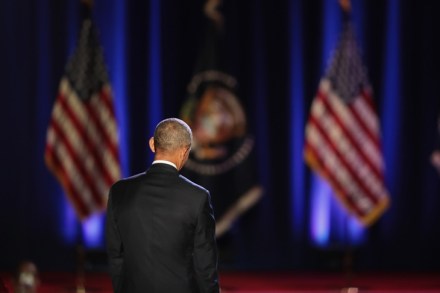
The irony of Barack Obama’s presidency is that while it began at a time when it seemed America’s fortunes could only improve, his inauguration day turned out to be his personal high water mark. The retiring President’s speech in Chicago this week contained flashes of the optimism that he brought to a country and a world which was reeling from the banking crisis and mired in the deepest recession since the 1930s. It recalled the sense of hope that he would lift America’s reputation abroad, shattered as it was by the Iraq war. Yet eight years on, even Obama’s keenest supporters are struggling to answer: what exactly is his legacy? ‘Yes, we did,’ he roared to the crowd, in reply to his old rallying cry of ‘Yes, we can.’ But did what?

Sir Ivan’s exit

The wonder about Sir Ivan Rogers’s resignation as Britain’s ambassador to the EU is that he was still in the job. He may have possessed useful knowledge about the workings of the EU, but he was also heavily associated with a failed way of conducting negotiations with it. It was he who advised David Cameron last February on his unsuccessful renegotiations of Britain’s relationship with the EU, which failed to convince the British people to vote to remain in the union. It would have been better and less disruptive had he resigned in the wake of the referendum last June, along with the Prime Minister.

Keep the press free

It is said that the case for freedom of expression needs to be restated in every generation, but things move faster in the digital era. Just three years after an attempt at state regulation of the press ended in ignominious failure, a fresh effort is being made. The government has begun a consultation on a plan to impose stiff financial penalties on newspapers who refuse to sign up to a state-approved regulator. Anyone wishing to give their opinion on such a regime has until 10 January. It is odd, for a start, that Theresa May’s government feels the need to consult on whether it has a duty to uphold fundamental British liberties.