Leading article

Will Spain learn?

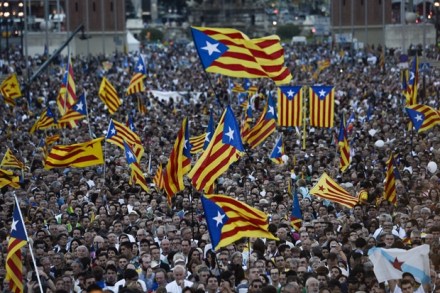
One of the unforeseen consequences of the reunification of Europe after the Cold War has been a resurgence of independence movements in western Europe. Emboldened by a greater sense of security and influenced by the rebirth of independent nations to the east, separatist parties have begun to challenge the boundaries of nation states which a quarter of a century ago we took for granted. Scotland’s near miss — a 45 per cent vote for ‘yes’ — inspired the leader of Spain’s Catalonia region, Artur Mas, to launch his own vote on secession. This week, forbidden by Madrid from calling a referendum, he called regional elections in which pro-independence parties formed a bloc: effectively a test, they claimed, of voters’ desire for independence.
The Pope’s moment

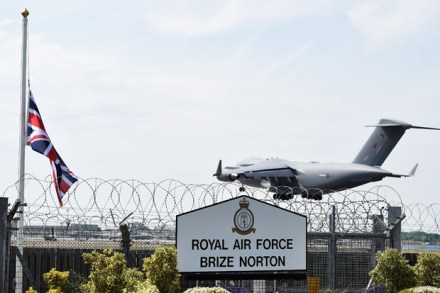
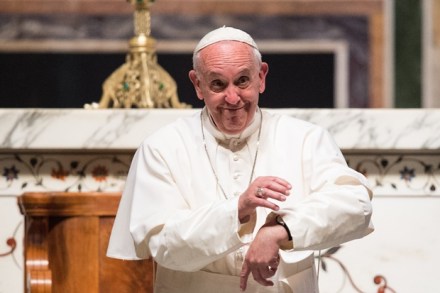
On Tuesday, Pope Francis set foot in the United States for the first time in his life. His plane touched down at Andrews Air Force Base, Maryland, where American presidents depart and arrive on Air Force One. But, according to a Spanish journalist on the papal plane, this was not how Francis had wanted to arrive. He would have preferred to cross over from Tijuana, the grubby Mexican city menaced by drug gangs from which countless migrants slip across the border into California. In other words, if the report is true, the Pope wished to turn his arrival into a political gesture, aligning himself with America’s 11.

The right answer

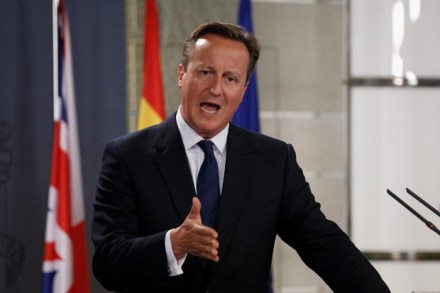
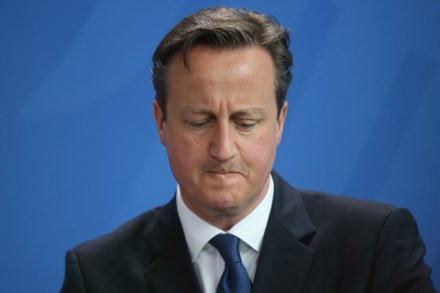
David Cameron might not be remembered as the best prime minister in modern British history but he will probably be remembered as the luckiest. Jeremy Corbyn’s election as leader of the Labour party is proving worse — or, for the Tories, better — than anyone could have imagined. His wrecking ball is busy destroying everything that was built by Labour’s modernisers. He does not lack authenticity, belief and passion — but his beliefs are ones which would be more at home in a 1920s plenary meeting of the Moscow Soviet than in contemporary British living rooms. The Chancellor sees Corbyn’s leadership as a chance to further blacken Labour’s name.

The fog of law

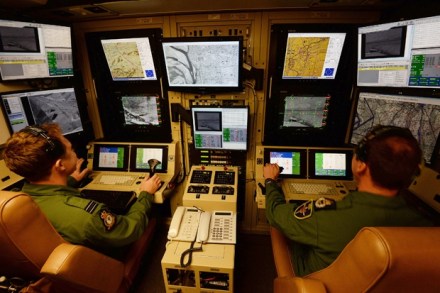
Not even Jeremy Corbyn lamented the death of Reyaad Khan, who was killed by an RAF drone in Syria after joining the Islamic State. He was a straight-A student from Cardiff who had the freedom to do anything with his life, but chose to turn his back on Britain and join a band of Islamofascists. He had been working hand-in-glove with Junaid Hussain, a talented computer hacker from Birmingham who fled to Syria; the two of them had been making detailed plans for attacks on Britain. But the RAF’s involvement in the strike marks a new chapter in British warfare. The motive for the action was simple: Khan was planning to inflict great harm on British people, and in the absence of alternatives, the RAF struck when they had the chance.

Elizabeth the Great

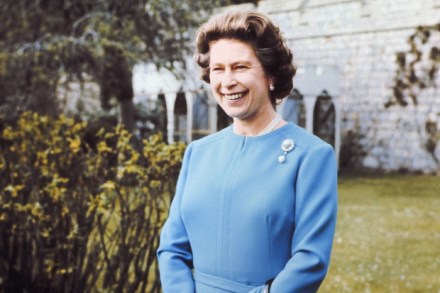
That the Queen has lived to become our longest-reigning monarch — a milestone which she will mark quietly with a lunch next Wednesday — is in itself a sign of the golden age of prosperity which has been the second Elizabethan age. Over the 63 years of her reign, life expectancy for women has increased by a dozen years, to 83. The Queen may be remarkable for her age, but she is far from alone in modern Britain for having lived to a great age in good health. A team of 12 is now needed to send out royal telegrams congratulating those of her subjects to celebrate their 100th birthday. To the increase in longevity over the past six decades can be added huge economic and social advancements.

Gamblin’ man

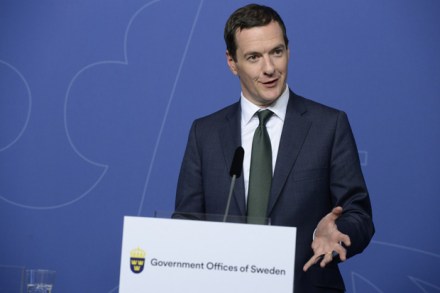
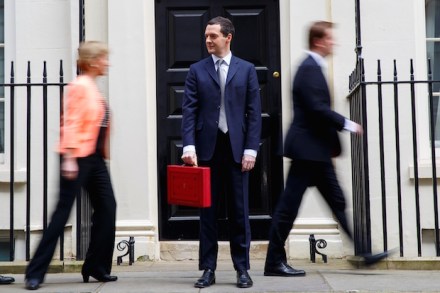
When George Osborne visited Sweden, Finland and Denmark  the stock markets of each country promptly fell by about 5 per cent. As soon as he left, they recovered. A coincidence, of course: Osborne’s tour coincided with stock-market jitters, but this nonetheless forced him to look over the precipice — and panic. Britain, he warned, was ‘not immune to what goes on in the world’. Not for the first time, we saw his lips moving but heard Gordon Brown’s voice. ‘We are much better prepared than we would have been a few years ago for this kind of shock,’ he added. If only this were true. As the Chancellor knows, we are far more vulnerable than we were last time.

Get fracking

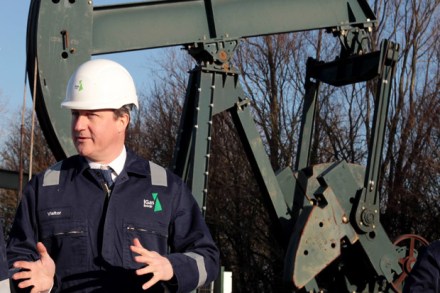
Over the past week, the government has finally made a decisive move to kickstart a fracking industry in Britain. Licences have been issued for shale gas exploration and the planning process streamlined so that in future, if local councils fail to make decisions within 16 weeks, the communities secretary will step in and adjudicate. It’s excellent news that the years of prevarication over shale seem finally to have come to a close, and greatly to the credit of our Climate Change Secretary, Amber Rudd, and Communities Secretary, Greg Clark. But the dismally slow speed at which our much-vaunted ‘shale revolution’ has taken place will end up costing this country.

Stop health tourism

Speaking after the Stafford hospital scandal in 2010, the then newly appointed Health Secretary, Andrew Lansley, grandly announced plans for a charter to support whistleblowers. The government, he said, would ‘create an expectation that NHS staff will raise concerns about safety, malpractice and wrongdoing as early as possible’. We now know just how that fine pledge worked out. In 2013 this magazine ran a piece by J. Meirion Thomas, then a cancer specialist at the Royal Marsden hospital in London, about his concerns at how the NHS was being exploited by health tourists. He had tried, he said, to expose an ineligible foreign patient but had as a result been accused of unethical behaviour. Meanwhile, the scale of health tourism in the NHS is becoming clearer by the day.

Ted talk

There was a grim inevitability that the name Edward Heath would one day be trawled up in connection with allegations of sexual abuse of children. As one of our few unmarried prime ministers, Heath always attracted speculation about his sexuality. The public image of a private man wedded to his career, content to spend his spare time playing music and sailing, has long given way to a presumption that he must have been a repressed homosexual. Because of our national obsession with paedophilia, this in turn has all too easily morphed into the suspicion that he had a sexual interest in underage boys. Anyone who tells the police that they were sexually assaulted as a child should be taken seriously, whatever the social and professional status of the alleged abuser.

House in order

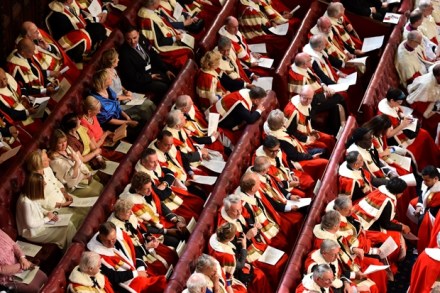
The shaming of Lord Sewel was a classic tabloid exposé. The fact that a peer of the realm (albeit one appointed by Tony Blair) was caught on camera apparently ingesting Class A drugs in the company of prostitutes is a good enough story in itself. The fact that the peer in question was chairman of the Lords privileges and conduct committee while he was doing so makes it very near to red-top nirvana. Since the publication of the story — and scores of lavish accompanying photographs — the peer’s Pimlico flat has been raided by police (who battered down a door to gain access), and Lord Sewel has resigned from the House of Lords, expressing the correct and noble sentiment that he can ‘best serve the House by leaving it’.

Giving up the fight

"Whether it’s in Iraq, Syria, Libya or elsewhere — as Prime Minister, if I believe there is a specific threat to the British people, would I be prepared to authorise action to neutralise that threat? Yes, I would." It is almost two years since David Cameron lost a vote on intervening in the Syrian war and he has barely spoken about foreign affairs since. He is now slowly returning to the subject, making the case for pursuing Islamic State in Syria. The recent murder of 30 British holidaymakers in Tunisia was almost certainly planned in Isis’s Syrian stronghold of Raqqa. The Prime Minister is making the fairly simple case that the military ought to be able to pursue the enemy. But there is no chance of the RAF ‘neutralising’ the threat.

Gambling on Iran

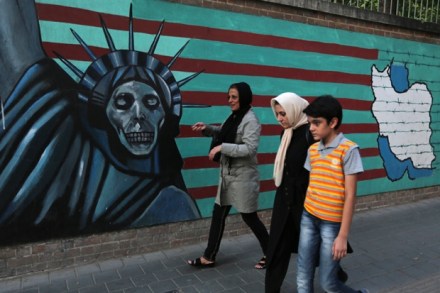
Iran is, beyond doubt, a sponsor of terrorism and this week it has been made much stronger. It has (again) agreed not to make a nuclear bomb and in return trade sanctions are being dropped — so money will start to flow in once more. We can be sure that the cash will soon find its way to Hezbollah in Syria, and to what remains of Bashar al-Assad’s regime. A stronger Iran means a longer and bloodier Syrian civil war, a more vulnerable Israel and a further injection of money and arms into the world’s deadliest war zones. None of this is in doubt. The question is whether, after this week’s deal, Iran will be less likely to menace the region as a nuclear power.

One-nation economics

In his hastily scripted victory speech, David Cameron hit upon a mission that he wanted to define his remaining years in office. ‘I want my party, and I hope the government I would like to lead, to reclaim a mantle that we should never have lost: the mantle of one nation,’ he said. The problem was obvious: how could he reconcile this phrase with the hideous financial decisions that he had to make in office? With having to decimate not just unemployment benefits, but the support given to the millions trapped in low pay? George Osborne started to give his answer with his Budget this week. His main decision was a to introduce a new ‘living wage’ of £7.20 an hour, rising to £9 an hour by 2020.

Fracking Lancashire

That democracy is a superior form of government to any other goes without saying. But in order to function, it has to be conducted in such a way and on such a scale as to ensure that the people or their elected representatives are making decisions based on genuine alternatives. With this week’s decision by Lancashire County Council to reject a second application for fracking on a site near Blackpool, something has gone seriously wrong. An important national issue has been allowed to be settled according to purely local concerns.

Laying down the law

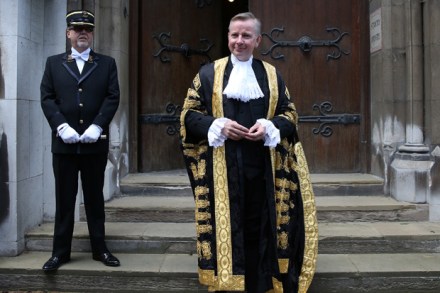
A great test of political leadership is how well you deal with vested interests on your own side. In his first speech as Lord Chancellor this week, Michael Gove has shown himself willing to tackle a profession which has long been comfortable with Conservative governments and whose reform, as a consequence, is long overdue. A legal system designed from scratch would not resemble what we have now. The only thing wrong with Michael Gove’s observation that Britain has a ‘two-nation’ justice system is that he should really have said three nations. Like the central London property market, the courts have become the preserve of the very rich and the very poor. The middle is excluded. The rich can afford to revel in the pantomime.

Let Greece go

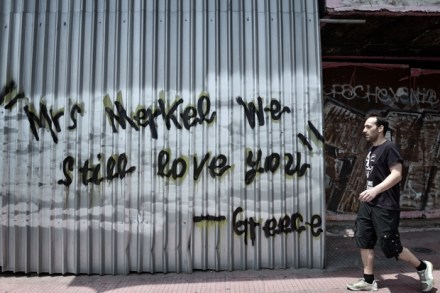
The campaign to keep Greece in the euro has resulted in five years of groundhog days. The unfortunate country seems to be forever approaching a day of repayments it cannot afford. Ministers and diplomats assemble to thrash out a deal. Meetings collapse in bad temper, and markets sink. Then, at the eleventh hour, a deal is somehow forged. Greece agrees to reforms which seek to cut spending and balance the books in return for billions of pounds of bailout cash. Markets rebound. The money is paid, the debt repayments met. And then all starts to go wrong again. A few months later we are back where we began. Anyone who hoped the election of Greece’s Syriza government in January would break the cycle has been disappointed.

A lot to ask

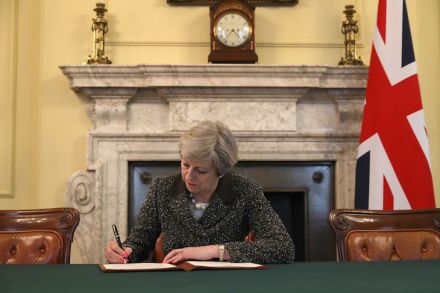
David Cameron is now facing the biggest challenge of his leadership: how to renegotiate Britain’s membership of the EU without destroying his party. His dilemma mirrors the situation of Harold Wilson 40 years ago this month. So far, the old Labour man looks the better strategist. Wilson, who had a majority of three, avoided mass resignations from his cabinet by suspending the convention that members of the government must back its entire programme in public. Of his 23 cabinet ministers, seven joined the campaign for Britain to leave the EU. They didn’t win the argument — but they ensured that the question was properly debated, and settled for many years afterwards. David Cameron need only have followed that example.

Who’s listening?

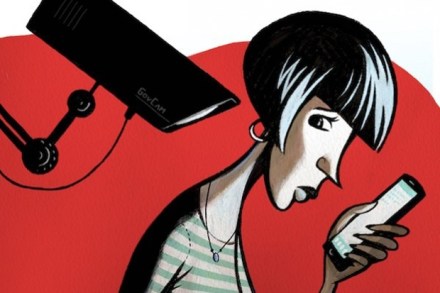
[audioplayer src="http://rss.acast.com/viewfrom22/thehighpriestsofhealth/media.mp3" title="Fraser Nelson and Paul Staines discuss the collapse of the Andy Coulson perjury trail" startat=1402] Listen [/audioplayer]Britain and America, as George Bernard Shaw is reputed to have said, are two countries divided by their common language. As of this week they are divided by something else, too: their common interest in the fight against terrorism. While David Cameron’s government has announced an Investigatory Powers Bill to beef up surveillance powers, the US Senate voted to allow the surveillance powers in the Patriot Act to expire. American spies will have replacement powers soon, but ones that do not enable the routine surveillance of citizens.

Redefining aid

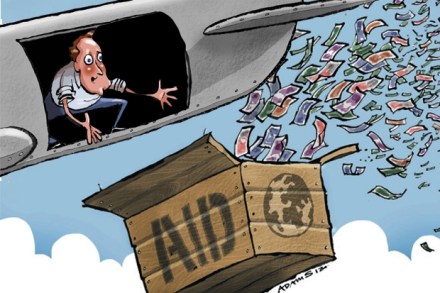
In this week’s Queen’s Speech, the government promised as usual to cut red tape for businesses. But David Cameron is remarkable in his enthusiasm for simultaneously wrapping his own government in red tape. He has proposed a law to prevent the Chancellor raising rates of income tax, and in one of the last acts of the coalition he pushed through a law which commits British governments for ever after to spent at least 0.7 per cent of Gross National Income (GNI) on international aid. There is little chance of the Prime Minister failing to meet his self-imposed spending target. Civil servants at the Department for International Development (DfiD) have proved themselves to be more than equal to the task of shovelling money in the direction of developing nations.

Isis rising

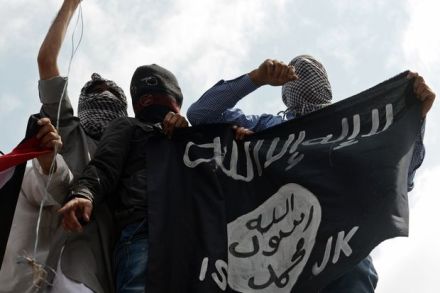
[audioplayer src="http://rss.acast.com/viewfrom22/michaelgovesfightforjustice/media.mp3" title="Fraser Nelson and Freddy Gray discuss the march of the Islamic State" startat=1785] Listen [/audioplayer]In recent months, as the country went through a general election, our focus has been on our own domestic debates. Meanwhile, the situation in Iraq has deteriorated significantly. After intense fighting, the jihadist group Isis has now taken the city of Ramadi. They already control Fallujah and Mosul. A growing body of opinion says that something must be done, before the group moves on Baghdad or organises a major terror strike over here. But what? There are plenty of reasons not to take action. Our interventions in Iraq have not been successful, to put it mildly.