Leading article

The prying game

One of the marks of a good Home Secretary is a healthy wariness of those in authority who come begging for ever-greater powers. The former Labour Home Secretary Charles Clarke failed on that score. Just over a decade ago, the police persuaded him that they needed the freedom to lock up terror suspects for 90 days without trial. The rebels who defeated the Labour plan were right: ten years later no one has presented a case of a suspect who committed an act of terror because they had to be released before the 90 days were up. Theresa May, who has confronted the police unions with such admirable fortitude, is now showing worrying signs of falling into the same trap as Clarke.

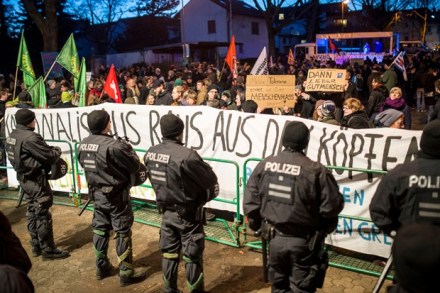
Driven to extremes

Imagine if Nigel Farage declared that police should be ready to shoot migrants trying to make it from Calais to Britain; saying: ‘I don’t want to do this, but the use of armed force is there as a last resort.’ And imagine that in spite of this — or perhaps because of it — Ukip were to overtake the Labour party in a national poll to become the most popular opposition party. This, in effect, is what is happening in Germany. The words above were spoken by Frauke Petry, leader of Alternative für Deutschland (AfD), the insurgent party which is threatening to make large gains in state elections in three key German regions next month.

The EU must change

David Cameron’s attempt to renegotiate Britain’s EU membership has served as a powerful reminder of the case for leaving. The EU is designed in such a way that almost no sensible proposal can be passed. If one member state has a good idea, the other 27 members demand a price for approving it, or they demand concessions until it is completely watered down. If the leader of a country protests, the response is clear: What are you going to do? Walk away? You wouldn’t dare. The EU’s power-mongering has a cost. The euro has hideously distorted the economies of the member states that adopted it, and the abolition of so many border controls has worsened the immigration crisis — which, in much of Europe, has fostered a political crisis.

Flying doctors

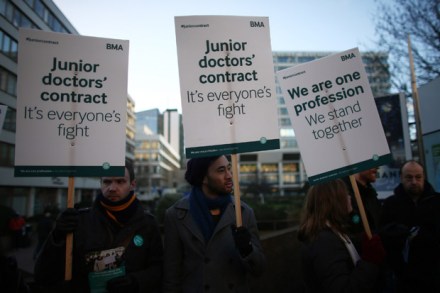
A few months ago, paramedics were on the brink of industrial action. They had legitimate grievances. Ambulance services were being run down, their staffing levels were dangerously thin — and the mismanagement (much of it exposed by Mary Wakefield in The Spectator) was horrendous. But in the end they stepped back from the brink — for good reason. It went against their nature to endanger lives, and in addition it would have been a tactical mistake. If a single patient died as a result of the strike, paramedics would have lost public sympathy. Should a nationalised health service really use the unwell as a bargaining chip? English doctors have not shown the same strategic foresight.

Cameron’s “deal” has backfired – badly. So what will he do now?

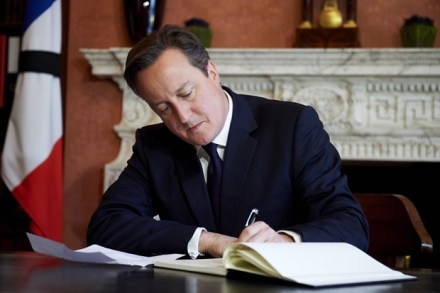
Throughout his negotiations with the European Union, David Cameron was fatally undermined by his own lack of resolve. He was never going to recommend an ‘out’ vote in his referendum, as the other leaders knew. He promised a referendum three years ago, not from any great sense of conviction, but as a ploy to stop his party talking about Europe until after a general election which he half-expected to lose. Then, in May last year, he found himself with a majority — and in a position to renegotiate. But not in a position to win, and for a simple -reason: the other side always knew that he’d say yes, no matter what.

‘In’ trouble

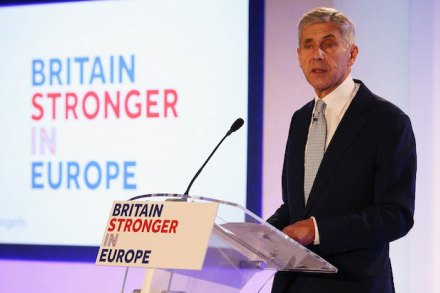
David Cameron wants to get the European Union referendum over with quickly — and understandably so. Things are still going well for him, and his political opposition is in disarray. The ‘in’ campaign will draw heavily upon his personal authority and the public is not (yet) fed up with him. Ideally, he wants to start campaigning next month — and many of his allies are at it already. Opinion polls show a large number of undecided voters. So this may very well be a campaign where a great many are open to persuasion and hoping for a high-quality debate. They will have been disappointed so far. The ‘in’ campaign has been up and running for months, and recently secured large donations from Goldman Sachs and other American megabanks.

Safety first | 21 January 2016

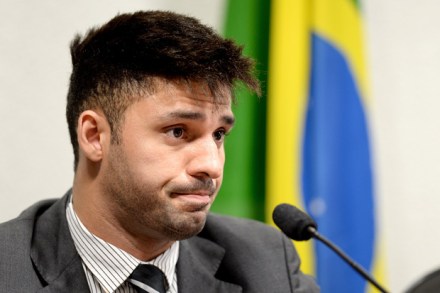
This week brings to a close an absurdly overblown cause célèbre. The Court of Appeal ruled that David Miranda’s detention at Heathrow three years ago under the Terrorism Act was lawful. He had been part of a professional operation leaking classified information to the Guardian, which compromised British and American national security. Yet the judgement was hailed as a victory for Miranda because the court also noted that the Terrorism Act didn’t include sufficient protection for journalists carrying sensitive information. It asked Parliament to look again, in order that it be compatible with the European Convention on Human Rights — even though, in this case, there was no breach. This magazine is a staunch defender of press freedom.

Pickets of privilege

Treatment for that once-virulent condition, the British disease of strikes, has largely been successful. The number of working days lost to industrial action in the first ten months of last year was the second-lowest since records began. Pay and conditions have been relentlessly improving. Since the Winter of Discontent in 1979, the average worker’s disposable income has almost doubled. And no thanks to pressure from trade unions: the steady progress comes from the transformative effects of an open economy and a free market. In the 1970s and early 1980, it was miners, steel workers, railwaymen, bin men, and British Leyland car workers who earned the worst reputations for trade union militancy.

Through the roof

When David Cameron said this week that he is worried his children would not be able to afford to buy their own homes, he struck on one of the greatest economic problems of his premiership. The old British promise is that if you work hard and make the right decisions, you can advance in life and own your own home. This is the ladder that most aspire to climb. But for an entire generation, even the hope of home ownership is slipping out of view. A huge number of young Britons cannot hope to have the kind of life their parents enjoyed. The Prime Minister must know he is on dangerous ground here. His own children, of course, will not have to worry — just as he did not have to worry.

Soggy thinking

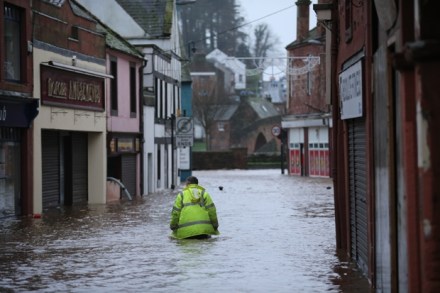
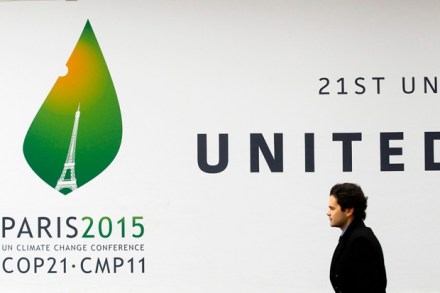
As the chairman of the Committee on Climate Change, Lord Deben, observed this week, there is a bizarre dislocation between the government’s pronouncements on climate change and its attitude towards spending on flood defences. Only a month ago, David Cameron was at the Paris climate summit lending his weight to apocalyptic warnings of flood and tempest unless the world acted quickly to reduce carbon emissions. Yet with tracts of northern cities underwater, his government continues with a make-do-and-mend flood-defence policy which, never mind climate change, is incapable of dealing with the climate we already have. While lecturing us on the threat of greater rainfall and rising sea levels, the government has reduced spending on flood defence.

State of the Union

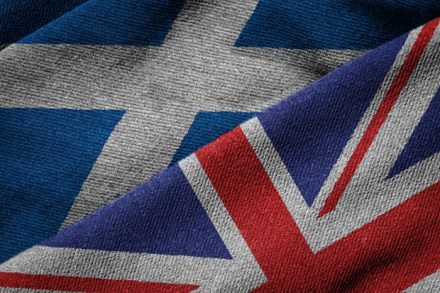
Last year, the United Kingdom came within 384,000 votes of destruction. A referendum designed to crush the Scottish nationalists instead saw them win 45 per cent of the vote — and become stronger than ever. Since then, the SNP has taken almost every Scottish seat in the Commons and is preparing for another landslide in the Holyrood election next year — giving Nicola Sturgeon the power to threaten a second referendum. We may be just a few years away from a second battle for Britain. In her short time as First Minister, Sturgeon has established herself as one of the most formidable politicians in Europe. She has raised a rebel army that she inspires with talk of destiny and dreams — while her opponents drone on about banks and the Barnett formula.

It is time to join the fight against IS in Syria

The Islamic State is as monstrous an enemy as we have seen in recent history. It crucifies and decapitates its victims, holds teenage girls in slavery and burns captives alive. It is wrong to call it a medieval force, because such institutionalised barbarity was seldom seen in medieval times. As far as five centuries of records from the Ottoman Empire can establish, stoning was authorised only once. Isis now regularly stones suspected adulterers to death. It is not seeking inspiration from the Middle Ages. We are witnessing a modern form of evil — and it is spreading fast.

The ringfence cycle

By now, George Osborne had hoped to have completed his austerity programme. Instead, he finds himself making what is, still, the most ambitious round of cuts of any finance minister in the developed world. The Chancellor is paying the price for the leisurely pace that he decided to take in the last parliament - due to his habit of buying time by deferring pain. The Chancellor still doesn’t seem to be in too much of a rush. In his spending review statement this week, he decided to spend some £83 billion more over the parliament than he said he would at the general election.  Foreign aid is not just protected, but will increase by some £3 billion - more than the budget for the Home Office.

A better way

To say that the Paris attacks could have happened in Britain is not enough. Such attacks are being attempted here with terrifying regularity —seven have been thwarted so far this year alone. MI5’s official assessment is that a terrorist attack on British soil is ‘highly likely’. Our security services have so far been very good at keeping us safe. But as the IRA famously put it, spies have to be lucky all of the time, terrorists have to be lucky only once. So it is impossible for Britain to view events on the continent with any sense of complacency. Still, the Prime Minister was justified in pointing out last week that the more we learn about what happened in Paris, the more it justifies the policies that Britain has pursued.

Pry another day

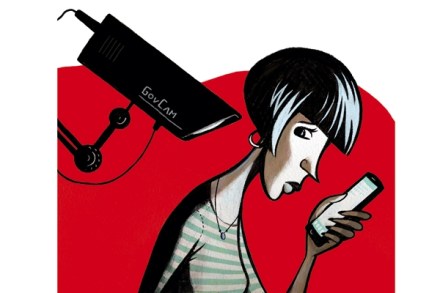
Were David Cameron in any way adept at spin, it would be tempting to think that the publication of the Investigatory Powers Bill had been deliberately timed so as to coincide with the opening of Spectre, the new James Bond film. The debate over the bill has turned into a question of whether we trust our spies, which by and large we do. But the real question to be asked is whether we trust the taxman, the police and our town halls with the powers of espionage — and that is another matter entirely. The Investigatory Powers Bill does not actually contain new powers for the security services, who can already tap phones and access emails and have done for decades.

Hot air summit

The delegates who will gather for the star-studded Paris climate summit include celebrities, presidents and perhaps even the Pope. Among other things, they will be asked to consider the formation of an ‘International Tribunal of Climate Justice’, which developed countries would be hauled before for breaching agreed limits on greenhouse gas emissions. That the proposed body will seek to be ‘non-punitive, non-adversarial and non-judicial’ does not reassure. A tribunal, if it is worthy of the name, ought to be all those things. Does the threat of climate change really justify such a system? It is disturbing to think how many world leaders and policymakers might casually answer ‘yes’.

The Australian example

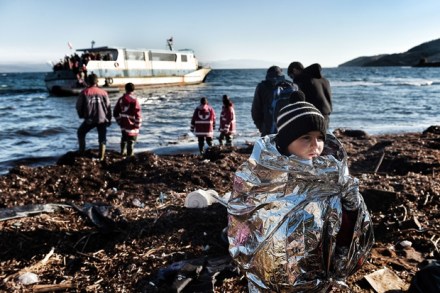
For many years, Australia has been turning away boats filled with migrants. From a remove, this looks cold--hearted — a nation built by immigrants showing no compassion for others who want a better life. But it is precisely because Australia is an immigrant nation that it understands the situation: if you let the boats land, more people come. People traffickers will be encouraged, migrants will be swindled, and their bodies will wash up on your shores. Any country serious about immigration needs a more effective and robust approach. Tony Abbott, the former Prime Minister of Australia, made that point clearly this week on a trip to London.

The human factor | 22 October 2015

Just over 30 years ago, Margaret Thatcher’s government decided to look at local government finance. A young aide, John Redwood, outlined ‘some kind of poll tax which is paid by every elector’. Discussions continued, and bright young men (including the young Oliver Letwin) assured the Prime Minister that the figures would all stack up. Unpopular to start with, perhaps, but necessary. Later, Kenneth Baker had a niggle: ‘If I’m on Question Time and I’m asked “Why must the Duke and the dustman pay the same?” there’s no answer.’ Last week the energy secretary Amber Rudd was on Question Time.

Britain should not mistake its allies for friends

It would be hard to dream up a more absurd piece of political satire than an agency of the British government called Just Solutions International winning a contract to train prison officers in a country that has executed 175 people in the past year, many of them in public beheadings for offences such as sorcery, witchcraft, adultery and political activism. That it sought this contract in the first place is a sign of the great void at the heart of our foreign policy. This week, the Justice Secretary, Michael Gove, pulled out of the deal with Saudi Arabia — thereby attracting the ire of the Foreign Secretary, Philip Hammond, who called him ‘naive’ for doing so. That is a word better applied to Mr Hammond.

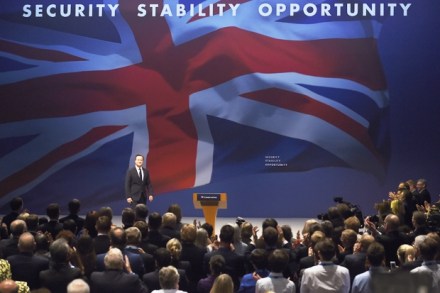
This is the Tories’ golden chance to seize the centre ground

Political party conferences have, in recent years, felt like an empty ritual. They used to be convened in seaside towns, so grassroots activists could find affordable accommodation. Now they are usually held in cities, so lobbyists can find better restaurants. Activists have been supplanted by members of the political class who are charged £500 a ticket. In the fringe debates, speakers face a volley of questions from people paid to ask them — on pensions, subsidies for green energy and the like. Politicians spend all day talking to journalists, and real politics vanishes. This year, however, politics has returned.